Preparing the next generation of Sustainably Minded Engineers
As world leaders gathered in the United Kingdom this fall to address the climate crisis, a team of researchers at the University of Delaware prepared to produce the next generation of sustainably minded engineers.
Thanks to $420,000 in funding from the National Science Foundation Division of Engineering Education, the College of Engineering’s Jovan Tatar and Mark Nejad are launching a new Research Experiences for Undergraduates (REU) Site in Sustainable, Resilient Transportation Systems at UD in the summer of 2022, when a diverse group of students will have an opportunity to discover practical alternatives to one of the world’s largest climate change contributors: the transportation sector.
Ground transportation accounts for 10% of global emissions, according to the 2021 UN Climate Change Conference (COP26), “and its emissions are rising faster than those of any other sector.” According to the U.S. Environmental Protection Agency, emissions from transportation are the largest contributor to greenhouse gas emissions in America, accounting for nearly 30% of all greenhouse gas emissions from the United States.
But as of right now, the U.S. and many other nations have no official targets or plans to phase out internal combustion engine cars, according to COP26.
“Climate change is a huge problem,” said Tatar, an assistant professor in UD’s Department of Civil and Environmental Engineering and project leader. “The overarching objective is for us to actually reduce the impacts of transportation on climate change by reducing emissions.”
The program, which is essentially a 10-week paid summer internship, will look at everything from replacing concrete or asphalt paving with naturally derived or “carbon-negative” materials to redesigning entire transportation systems with resilience in mind over the next three years (possibly longer if additional funding is made available, Tatar said).
Ten students, who may not have otherwise had access to such research opportunities, will be accepted into the program each year it is running. Participating universities include Delaware State University, the Inter-American University of Puerto Rico Bayamón Campus, Lincoln University, Morgan State University, the University of Puerto Rico Mayaguez, the University of Maryland Eastern Shore and Xavier University.
“The impact of transportation on climate change is a complex problem that requires a diverse set of experts that can connect their research in innovative ways,” said Tatar. “By partnering with these institutions, we can give these students and future engineers the opportunity to contribute to these important research-based solutions.”
In addition to this new REU Site in Sustainable, Resilient Transportation Systems, UD hosts three other REU summer programs in marine sciences, biomedical engineering foundations in “impactful research, science and technology” and a chemical sciences leadership initiative for students with disabilities.
For this project, Tatar and Nejad have recruited several other UD professors to teach students to research the environmental footprint of products used in the world of transportation, biosourcing materials to move away from petroleum-based products, finding innovations for electric vehicle batteries and more.
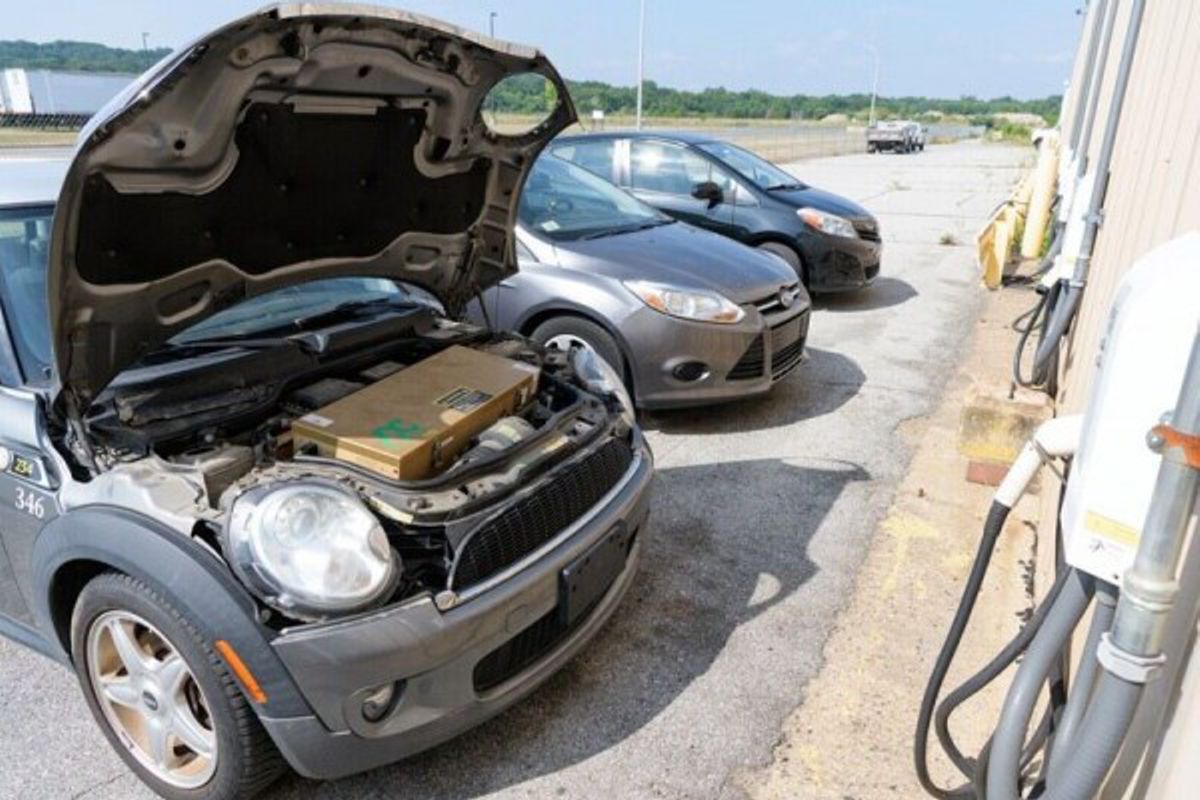
“Electric vehicles in general are an important piece of sustainability, at least in terms of decarbonization,” said Assistant Professor Koffi Pierre Yao with UD’s Department of Mechanical Engineering, who is exploring new types of battery systems to improve electric vehicle energy efficiencies. “The importance of this program is clear: It’s training the next workforce of people who are going to do this work in the future, especially because we are and we need to transition so quickly. The benefit is obvious.”
Undergraduate students participating in the program will look at the climate change-driven problems in transportation through three main lenses: Electric and autonomous vehicles, green materials and structures, and resilient infrastructure. In each, there is a focus on reducing the environmental footprint of materials used in the transportation industry, from the vehicles themselves to roadways and infrastructure systems.
“This is certainly an area where there’s a need for real innovation,” said Michael Chajes, civil and environmental engineering professor and dean of UD’s Honors College. “The work here can have an impact on the state and more broadly on the nation.”
The program will include individualized and group experiences as students work with research mentors, graduate students and in UD laboratories. Field trips, professional development seminars and technical workshops, as well as social events and a journal club will also be included. All instruction will include a “transdisciplinary perspective” aimed at preparing students for graduate school and their future careers.
Applications will be accepted beginning in January 2022, and any undergraduate student studying science or engineering is encouraged to apply at www.reu-transportation.com. Participating students are eligible for a $6,000 stipend, which will be distributed over the 10-week program. The program will also cover transportation and lodging expenses.
Students will be able to select their top choices for specific projects to embark on through the summer research program, such as optimizing charging for electric vehicles or researching new materials that could be used in transportation-sector construction projects.
“Because of new technologies, there are so many open research problems, specifically in terms of reducing the carbon footprint of these vehicles,” said Nejad, noting that the transportation sector has the ability to reduce its carbon footprint faster than others.
By spanning a wide range of expertise, from material sciences to social sciences, Tatar and Nejad are also aiming to ensure diversity at every level within the program. They’re hoping that by opening up this REU site to non-UD students that it will not only diversify the campus, but also allow for underrepresented students to help find solutions to a global problem.
“It takes interactions between students and faculty from diverse disciplines and backgrounds to spark new and exciting research ideas,” Tatar said. “This kind of inclusivity is our best bet if we want to address the very complicated problems related to creating a more sustainable future.”