bauma set to explore Autonomous Construction
There may be many hurdles to overcome—The development of autonomous construction machines is currently among the main goals of manufacturers and research institutes alike. Accordingly, many aspects of this topic will be echoed at bauma, which will take place in Munich from October 24–30, 2022.
Machines that drive and work autonomously are among the big visions for the future of the construction industry. “However, ‘true’ autonomy in construction machines is highly unlikely in the foreseeable future, because—unlike in the self-contained working environment of a quarry or mine, for example—there are complex technical and safety-related challenges,” says Tim-Oliver Müller.
The Director of the Hauptverband der Deutschen Bauindustrie e.V. believes that it is far more realistic and achievable for the construction industry to develop and use “intelligent” construction machines with semi-automated, automated or supporting functions—and to do so for selected construction processes, such as in earthwork, road construction or special heavy construction.
“Such solutions have the potential for noticeable increases in efficiency and productivity,” Müller says. They could relieve the machine operators of repetitive and tiring activities. The industry expert points out that intelligent machines would also be independent of their individual tasks—an advantage that’s not to be underestimated in times when there is a shortage of skilled workers.
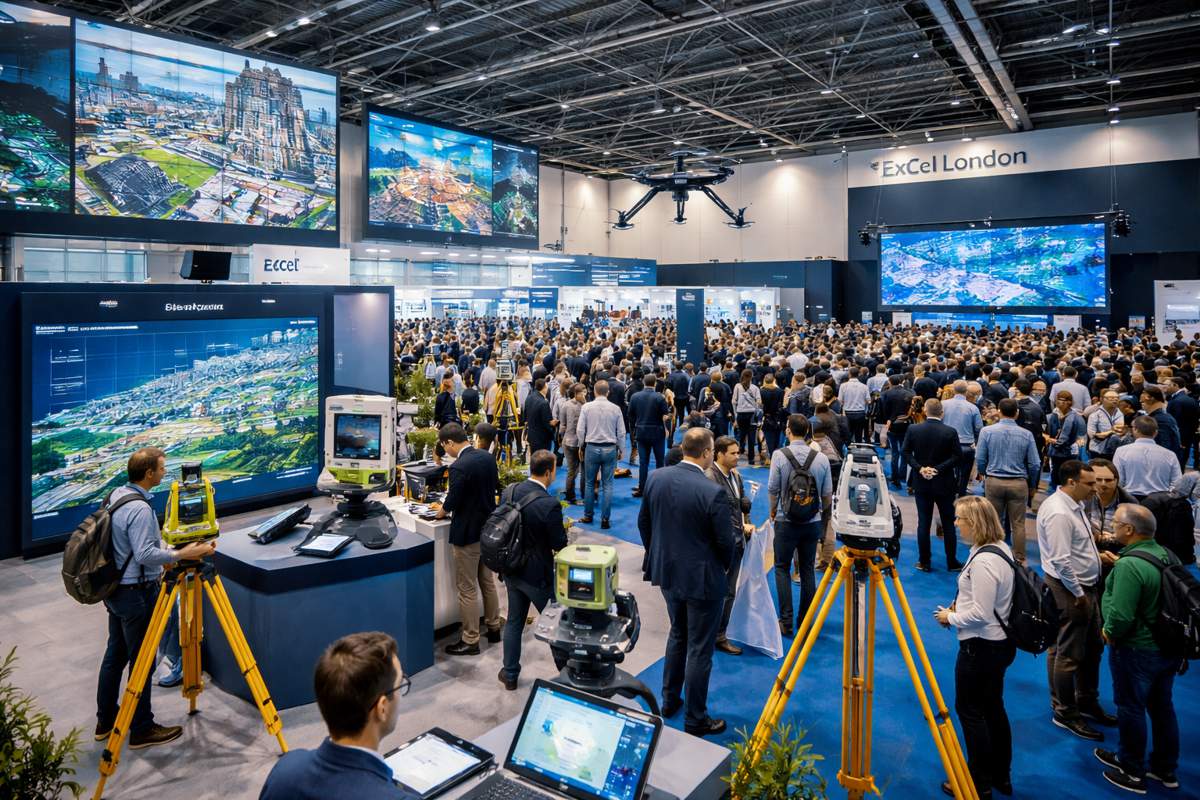
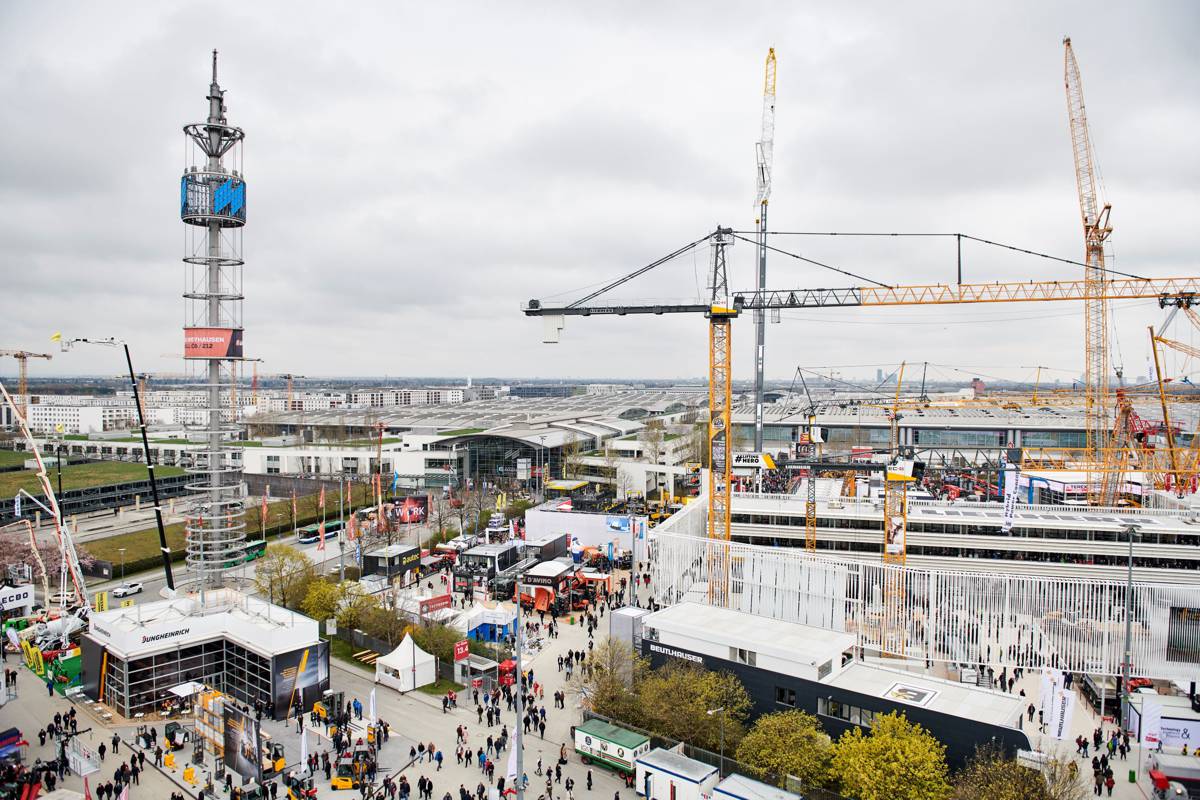
A discussion of the current situation on the path to autonomous or at least intelligent construction machines is possible at bauma 2022, the world’s leading trade fair for construction machinery, building material machines, mining machines, construction vehicles and construction equipment.
MiC 4.0: Laying the foundations for the construction site of the future
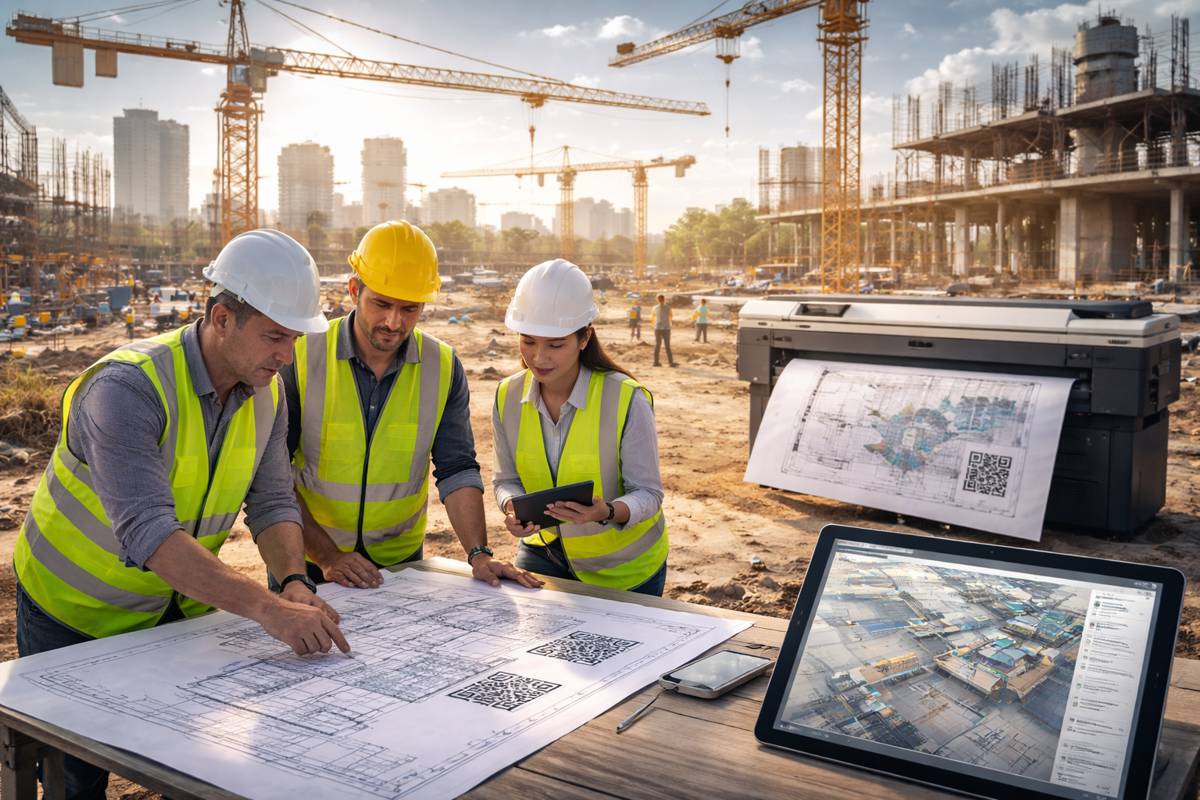
Firstly, in order to enable partial automation even on more complex construction sites, cross-manufacturer machine-to-machine communication is essential. Together with the Main Association of the German Construction Industry (HDB), the Mechanical Engineering Industry Association e. V. (VDMA) wants to create the best conditions for this. For this reason, the associations founded the “Machines in Construction 4.0” (MiC 4.0) working group at bauma 2019.
“We currently have 105 members from seven nations, and 31 working groups,” reports Dr. Darius Soßdorf, the managing director of MiC 4.0. In order for processes on construction sites to run in a more digital, more intelligent and ultimately more autonomous way in future, things like data on the status of machines need to be standardized. This starts with the information on whether a machine is on or off.
“While manufacturers have so far defined this for their products themselves, this now applies to all manufacturers who are committed to MiC 4.0: In any construction machine with an internal combustion engine that sends the signal ‘on’, the crankshaft of the engine rotates,” says Soßdorf. He claims that the joint approach implemented here is entirely new and unique.
This and many other results achieved by MiC 4.0 in the last three years will be presented to the specialist audience in the innovation hall LAB0 at bauma. In addition to the presentation of the documents developed, there will also be a physical demonstration.
Cobots reduce the process time
Maximilian Schöberl from the Chair of Materials Handling, Material Flow, Logistics at the Technical University of Munich expects that, ten years from now, various cobots will be active on construction sites. The term “cobot” is a portmanteau of “collaboration” and “robot”. It refers to robots designed for direct collaboration with humans. Schöberl and a research team from the chair expected to see developments in this direction in the form of a commercially viable, radio-controlled vibratory plate compactor.
This was initially made “automation-ready” with appropriate sensors and control units. Ultimately the scientists coupled the machine to an excavator in the follow-the-leader principle: The excavator created a plane, while the vibratory plate compactor constantly followed it around independently, packing down the bulk. “As a result, the cooperation enabled work steps to be switched in parallel and, in the ideal case, halved the process time,” reports Schöberl.
Mobile robots equipped with sensors for inspection tasks
Can robots help to monitor the status of construction projects, such as the 3.6 km-long Köhlbrand Bridge in Hamburg? That’s one of the questions being worked on by researchers from the Institute for Digital and Autonomous Construction from the Technical University of Hamburg. To do so, they are using a four-legged mobile robot, the I-DOG. The machine is about the size of a poodle and is equipped with sensors for measuring, processing and analysing data on building structures. It is also capable of recording and analysing vibrations, which can be used to detect structural damage.
For its precise localization in space—one of the key requirements of autonomous mobile systems—this mechanical sniffer dog uses Light Detection and Ranging (LiDAR) technology, which allows conclusions to be drawn about its own location based on laser scans.
The aforementioned Hamburg Köhlbrand Bridge acts as a reference object in a project kicked off recently.
To carry out inspections, several I-DOGs are to move around on the monumental construction project, which was put into operation in 1974 and is listed as a cultural monument. They will collect their own data and take on data generated by intelligent sensors permanently installed in the bridge.
“The goal is to have robot fleets that communicate with each other. By combining sensor data, a comprehensive picture of the condition of the building is created with comparatively little effort. We can then enter this into a digital model—for example for renovation planning,” says project manager Prof. Kay Smarsly. You can likewise find out more about the I-DOG and its possible applications in the innovation hall LAB0 at the “Science Hub” stand.