Rebuilding Route E45 in Denmark with Sustainable Cold Recycling
A 6.5 km section of the European Route E 45 highway not far from Denmark’s world famous Legoland theme park had to be completely rehabilitated in both directions. The highly-respected contractor, SR-Gruppen A/S, which already has considerable experience in the use of the sustainable cold recycling method, was commissioned by the Colas Group to carry out the removal of the existing asphalt and the paving of the new base layer.
The tender for the job foresaw the paving of a 20 cm base layer with a cold mix produced by complete recycling of the material from the existing asphalt pavement.
The construction work was carried out by SR-Gruppen A/S with a mobile cold mixing plant KMA 240i from Wirtgen.
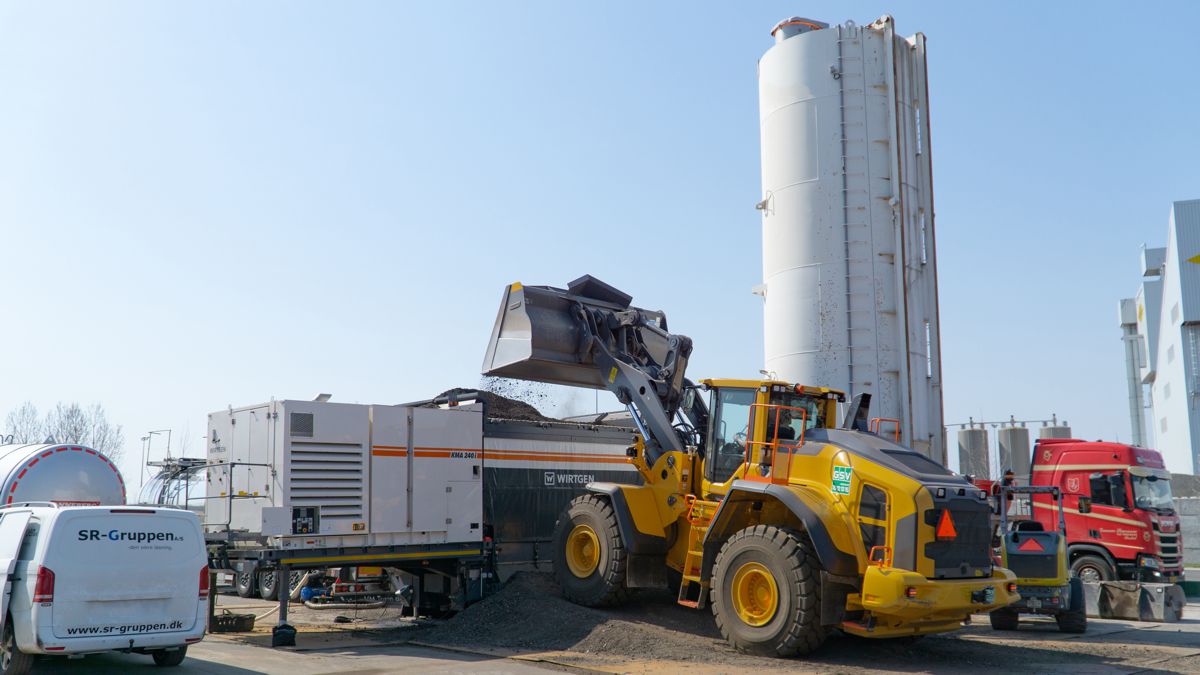
Cold recycling of road surface material is the most sustainable construction method available for structural rehabilitation. Bituminous cold mix, as used here for the paving of the new base layer, is produced by the addition of foamed bitumen to the crushed, milled material and has become established around the globe as an ideal material for paving roads of all load classes.
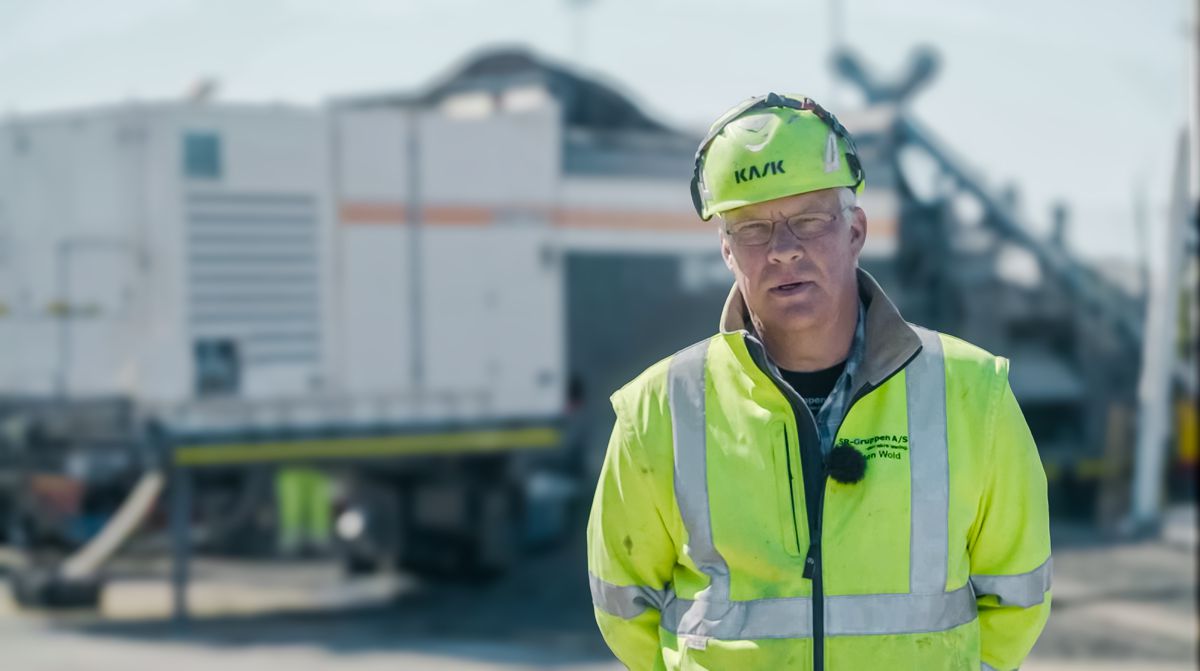
As the deadline for the completion of the project was extremely tight, it was essential to ensure that everything and everybody worked hand-in-hand. ‘We produced up to 300 t of cold mix per hour with the KMA 240i’, reports Morten Wold, Divisional Manager at SR-Gruppen A/S.
The asphalt pavement of the E45 motorway was milled off to a width of between 3.15 m and 5.9 m and a depth of 28 cm by Wirtgen large milling machines W 210i and W 250i. The milled asphalt was transported to a mixing site set up close to the construction site for processing by the KMA 240i. The mobile cold mixing plant enabled the contractor to stay close to the asphalt removal and paving location, which consequently minimised material transport requirements and significantly reduced the overall CO₂ emissions of the construction project.
A suitability test was carried out on the reclaimed asphalt pavement (RAP) before the start of the construction phase. An ideally formulated mix was achieved by the addition of 2.2% of foamed bitumen, 6% of lime and 0.8% of cement.
SR-Gruppen A/S achieved a mix particle size of 0-32 mm by pre-treatment in an impact crusher and then used the KMA 240i to produce up to 300 t of cold mix per hour.
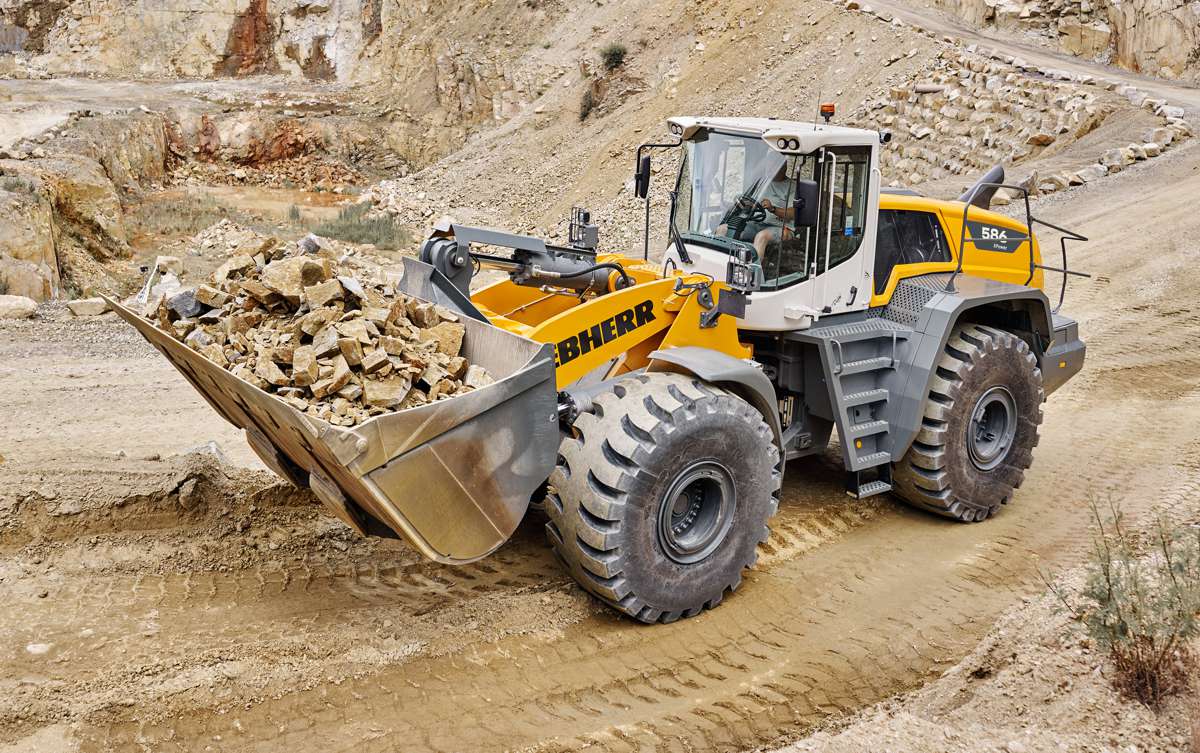
The top quality mix was loaded into the high-capacity receiving hopper of the KMA 240i by a wheel loader and fed to the twin-shaft continuous mixer. The two feed augers of the double-trough system with precision weighing took care of the separate addition of lime and cement binding agents. Wirtgen extended the capabilities of the KMA 240i on the spot by installing an additional feed auger. The continuous weighing system ensured precise dosing of the required additives.
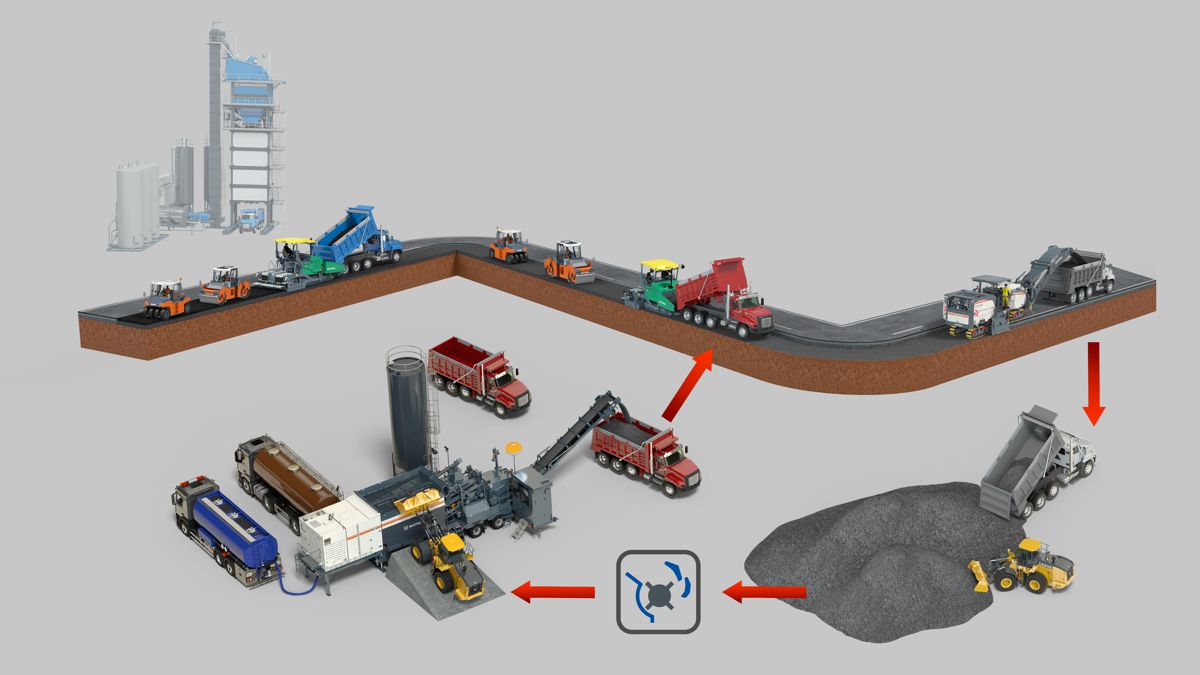
The cold mix was loaded directly into 36.5 t dump semi-trailers by the plant’s high-capacity discharge conveyor and immediately transported back to the construction site. Graders and Hamm rollers prepared and consolidated the frost protection layer beneath the milled off asphalt pavement as a stable roadway for the pavers and trucks following on behind.
A MT 3000-3i Offset mobile feeder from Vögele served as a material feeder to ensure a smooth and seamless material flow on the construction site. The high-capacity receiving hopper of the MT 3000-3i Offset ensures an uninterrupted supply of large quantities of cold mix. As no complete road closures were permitted during the project, the material transport logistics involved were extremely challenging. The MT 3000-3i Offset delivered the decisive leeway required for the complete rehabilitation of two lanes of the motorway in a single pass without the need for closing them to traffic.
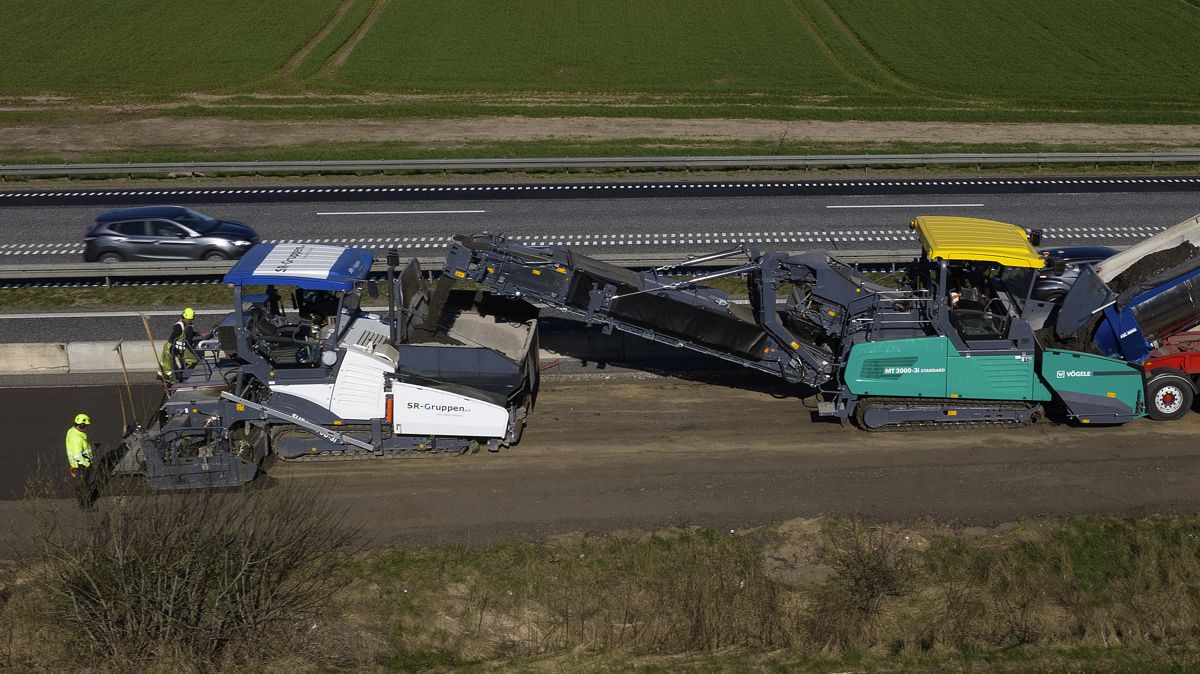
A Vögele SUPER 1900-3i paver laid down the material true to grade and slope to create a 20 cm base layer of cold mix as the new basis of the busy highway. Particular care was taken during the subsequent compaction process. A Hamm HD 120i tandem roller with an operating weight of over 12 t provided the necessary compaction. A Hamm GRW 280i pneumatic-tyre roller then took over the task of thin cape seal surfacing.
After only two days, Colas was able to lay down a binder course and a surface layer with a thickness of 8 cm. Here, Colas chose a polymer-modified asphalt that caters for the special demands on the particularly busy HGV lane. A perfect complement to the base layer of cold recycling mix with foamed bitumen. A Vögele SUPER 1900-3i and a MT 3000-3i Offset worked hand-in-hand here, too.
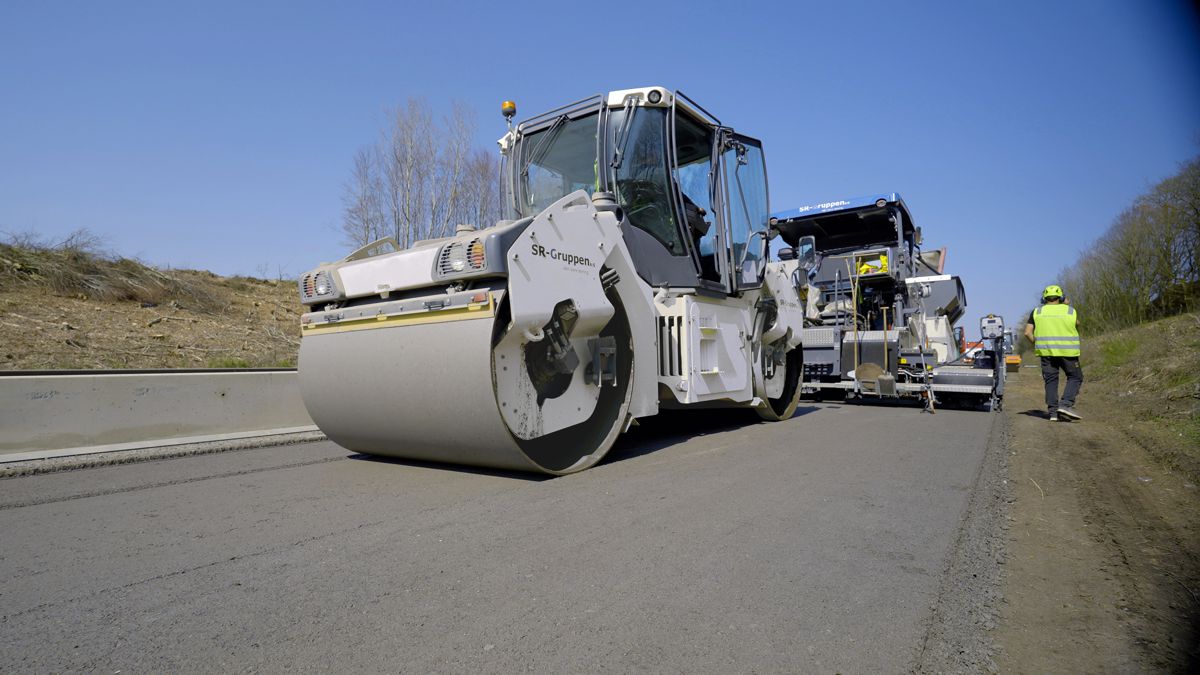
Wirtgen Group machines deployed on the project
- Wirtgen KMA 240i
- Wirtgen W 210i
- Wirtgen W 250i
- Wirtgen W 100 CFi
- 2x Vögele SUPER 1900-3i
- 2x Vögele MT 3000-3i Offset
- Hamm HD 120i
- Hamm GRW 280i
- Hamm H 7i
Project details
- Length of section: 6,500 m
- Width of the section: all lanes, 20.45 m
- Reduction of material transport requirements: > 70%
- Cold mix qty. paved: 51,000 t
- Reduction of CO₂ emissions: > 50%
- Project completion time: 50% faster (approx.)