Bobcat E27 helping dig up Bronze Age Archaeology in the Czech Republic
Bobcat machines are known for their robustness and long life. For example, loaders that have been doing hard work for 30 or more years are no exception. But the Bronze Age? The main material of the machines is steel, yet there is a connection here, albeit a somewhat curious one.
The Bronze Age had several periods and so-called cultures, and a number of finds were common, for example, in the vicinity of Prague in the Czech Republic. The main representative of the Early Bronze Age is the Únetic culture, known thanks to the discoveries of the archaeologist and physician, Dr Čeňek Rýzner. This year is the 100th anniversary of the death of this important researcher.
In the village of Únětice, where the remains of an extensive burial ground containing up to 67 graves with the preserved skeletons of so-called crouchers (the people of the Únětice culture buried their dead in a crouched form) were discovered about 150 years ago. The inhabitants of this village on the borders of Prague are rightly proud of the Únětice culture, the so-called Únětice pot from that time is even on the village’s coat of arms. Therefore, local patriots, in cooperation with the municipal authority, decided to build a monument to Čeňko Rýzner. They chose the approximate location of the discovered excavations on the border of the Únětic and Roztok u Prahy cadastres as a location.
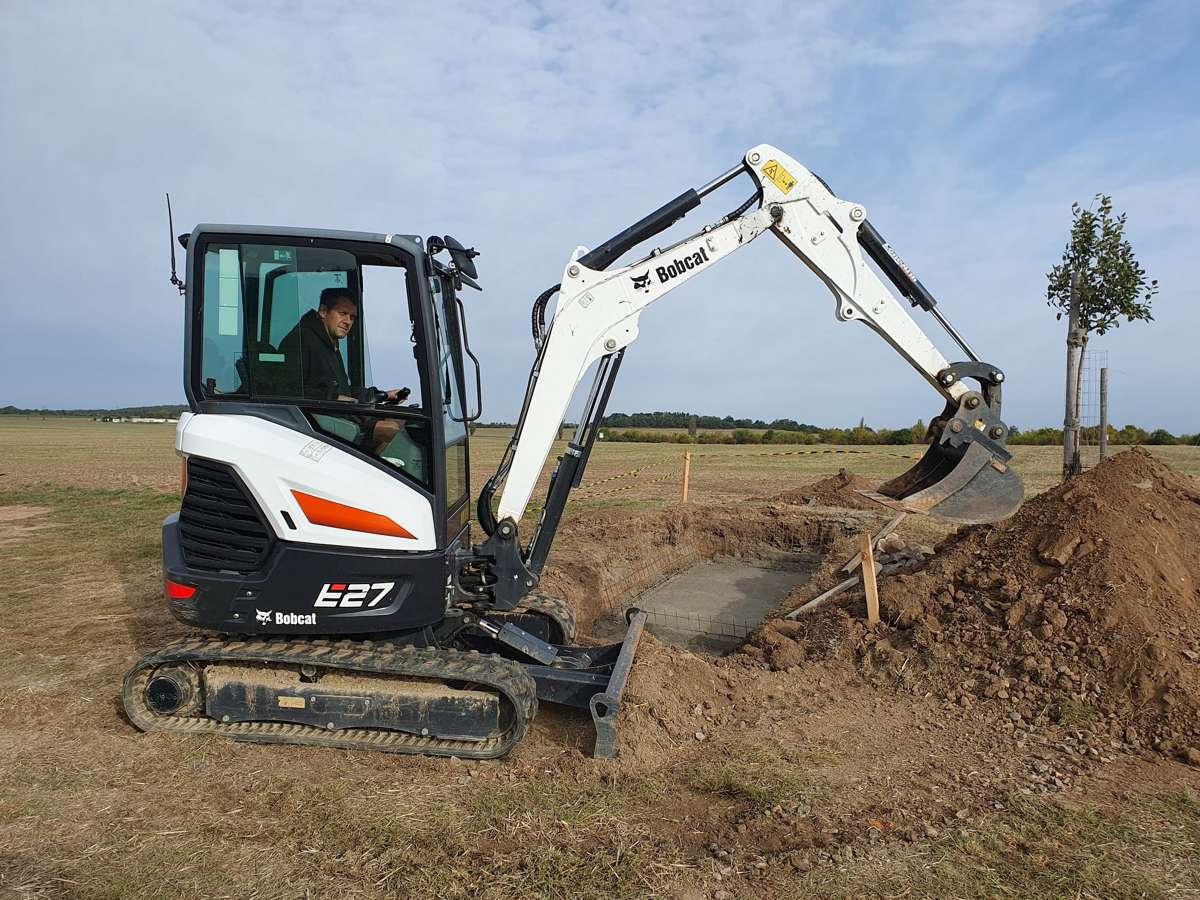
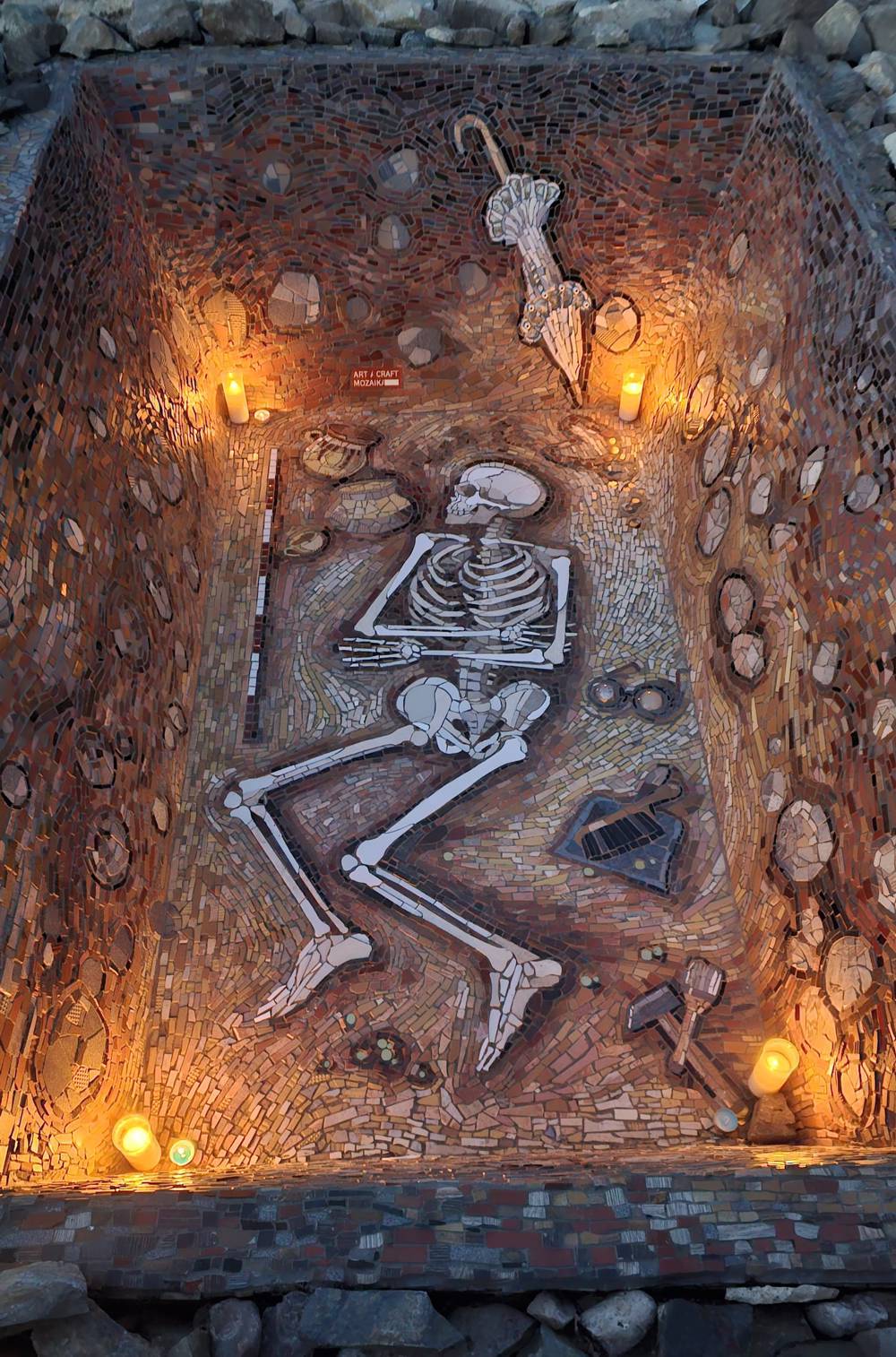
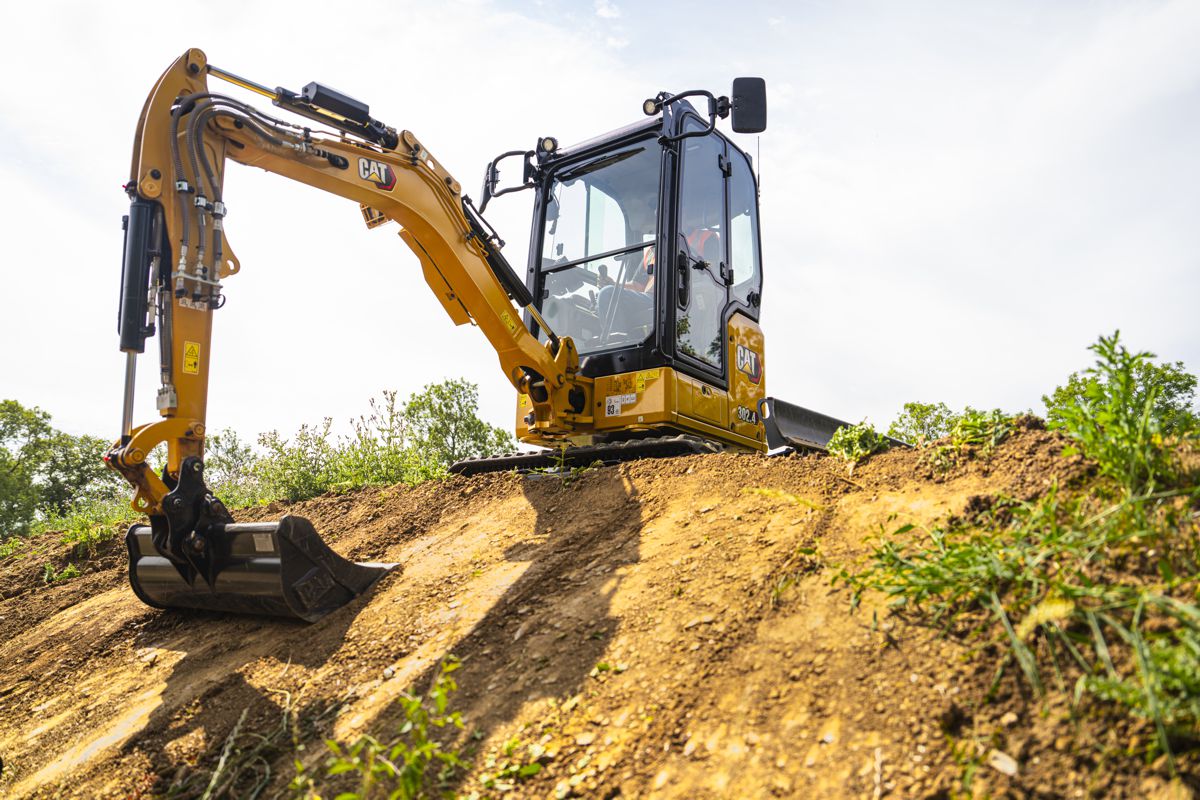
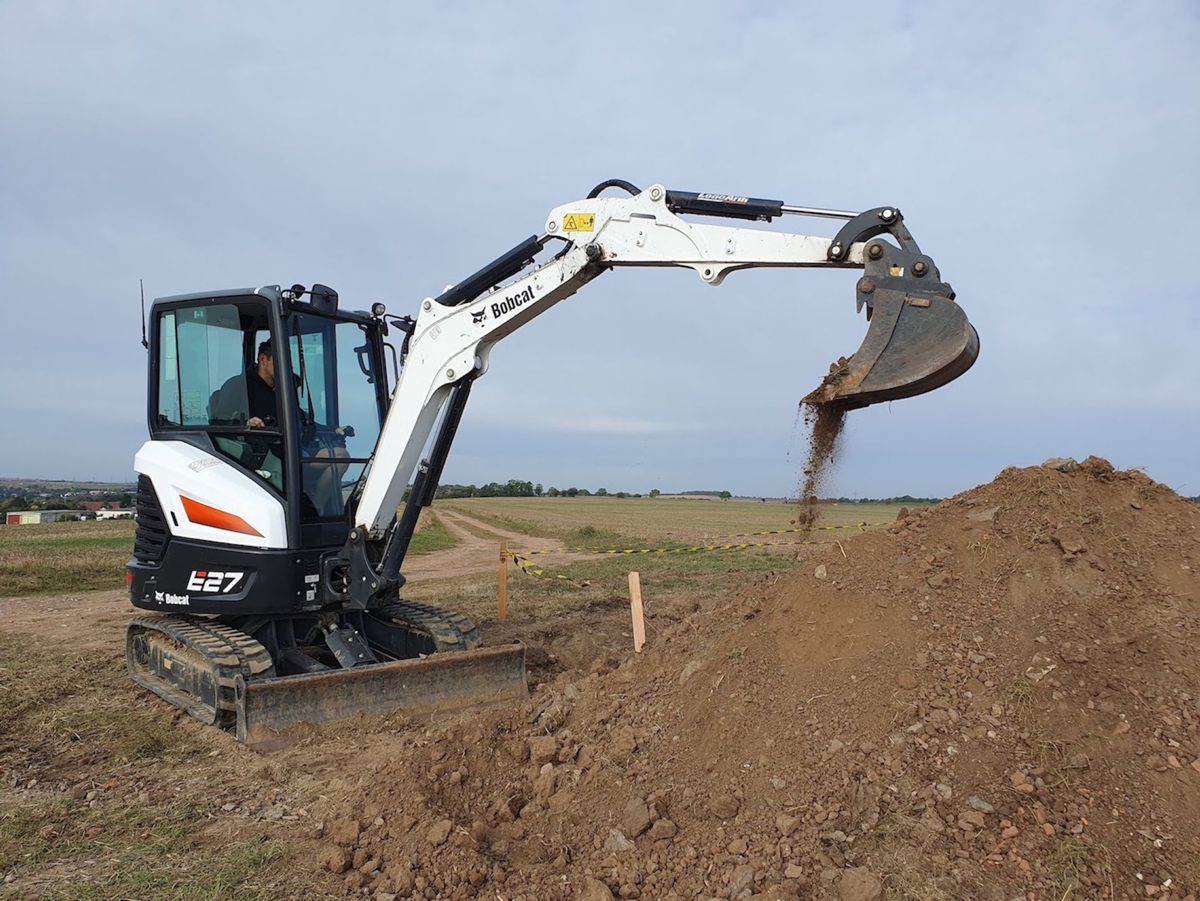
There was a lively discussion about the design and finally, taking into account the character of the landscape and the local habits of coming up with original ideas, the so-called inverted monument was chosen. In practice, it is reminiscent of the graves that Dr Rýzner discovered. In the end, the concept of the monument required the involvement of earthmoving equipment, namely a Bobcat E27 mini-excavator owned by a local company. Experienced operator, Adam Šíma, then excavated the ‘grave’ exactly according to the specifications, and everything was ready for the installation itself, which consisted of a concrete ‘tub’, suitable for the installation of a mosaic ‘shroud’. The concept of the monument was continuously the subject of consultations with archaeologists. The E27 is a popular machine in the Czech Republic with a conventional rear, enabling excellent performance for earthworks in its category.
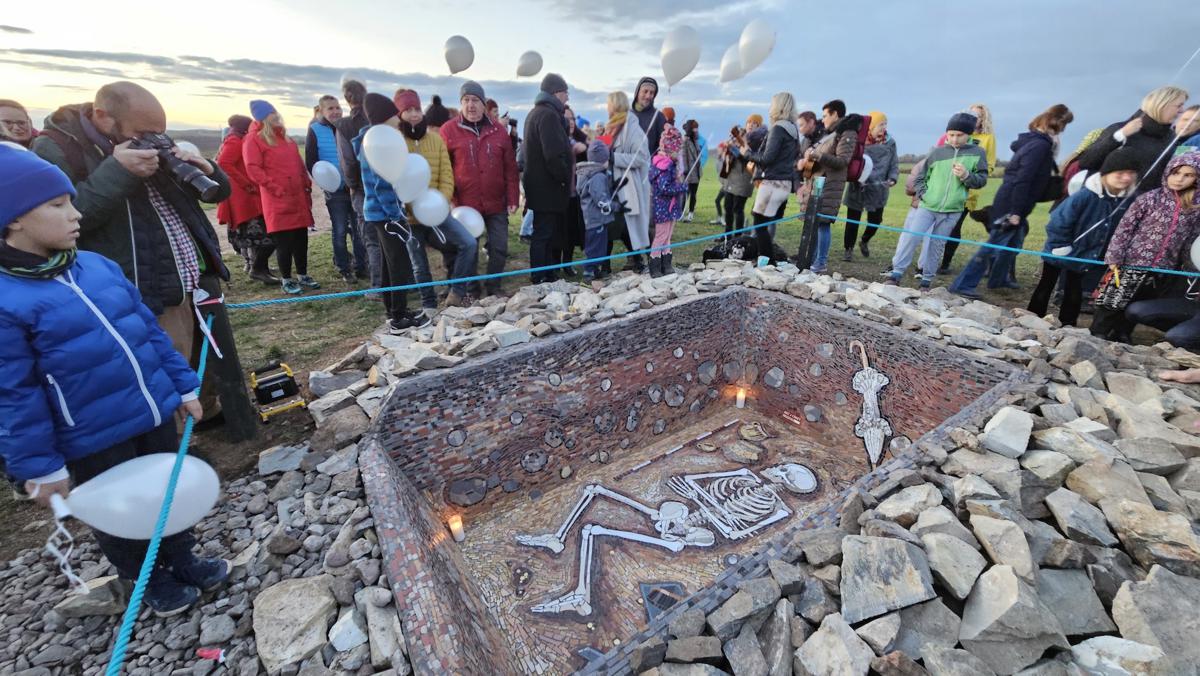
The creator of the original work of art is Magdalena Kracík Štorkánová and her colleagues from Art and Craft Mozaika. “The mosaic is composed of tens of thousands of ceramic pieces, including authentic archaeological fragments. The skeleton in the monument is complemented by artefacts, such as the well-known Únětsk pot, jewelry and currency. We are reminded of the time of Čeňek Rýzner by his glasses and work tools and an umbrella. Visitors can find a lot of other surprises in the mosaic,” comments Magdalena Kracík Štorkánová during the ceremonial unveiling in the presence of more than 150 residents from the surrounding municipalities.
The used Bobcat E27 excavator is not made of bronze, but mainly of hardened steel and is suitable for all small-scale earthworks, where its compact dimensions and easy transportability are an advantage. It is a machine completely developed in the Czech Republic by Bobcat engineers from Dobříš in Central Bohemia, and then manufactured in the local factory for the Czech Republic and the rest of the world. The E27 is a fully equipped machine with a standard overhang and maximum performance – this model in the popular 2-3 tonne category is complemented by the E27z with zero overhang for working in cramped conditions and the E26 intended primarily for the rental market and for less experienced operators.
The Unetic Culture
The Únetic culture arose at the end of the Eneolithic era, around 2300 BC, from the environment of local cultures and under influence from the southeast bearing knowledge of bronze. The Slovak river Žitava formed the eastern border of the inhabited area during its heyday.
Towards the west, the inhabited territory extended to the Rhineland. The northern border was central Germany and Wielkopolska (Poznań), the southern border was the Danube river. The Unetic culture played a leading role in this area of Central Europe for about 500 years, and its core was located in Bohemia. Important trade routes connecting north and south passed through the territory, along which copper, amber and other articles travelled.
The Únetica culture disappeared at the end of the Early Bronze Age, after 1700 BC, echoing in the mound cultures of the Middle Bronze Age.
E27 Compact Excavator Specifications at a Glance
- Operating weight: 2675 kg
- Maximum engine power: 18.5 kW
- Total width: 1550 mm
- Digging depth: 2847 mm
- Dumping height: 3243 mm
- Horizontal reach: 4604 mm
- Bucket digging force: 26.5 kN