Africa’s Largest Onshore Wind Farm Powers Ahead
The European Bank for Reconstruction and Development (EBRD) has taken a monumental step in advancing renewable energy on the African continent.
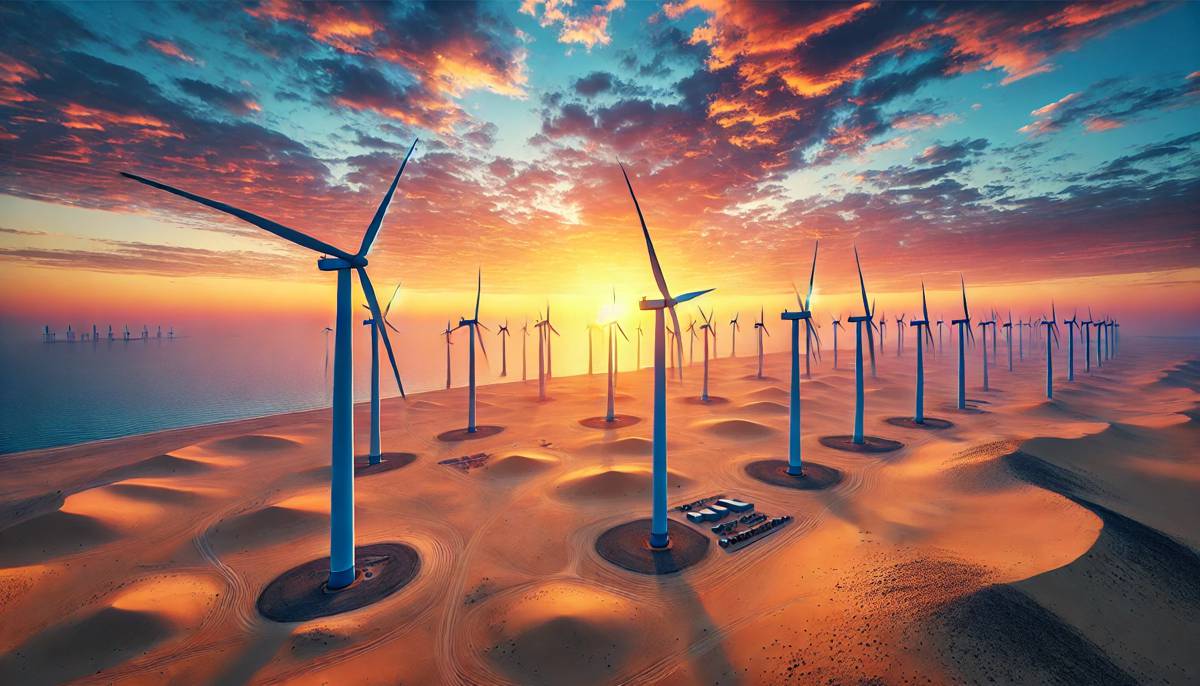
By arranging a syndicated loan of $275 million, the EBRD is driving the construction of the largest onshore wind farm in Africa. This project, aptly named Suez Wind, represents a significant leap forward in Egypt’s renewable energy landscape.
Set to generate over 4,300 GWh of electricity annually, this colossal wind farm will reduce carbon dioxide emissions by more than 2.2 million tonnes each year. Located in the Gulf of Suez, the project exemplifies how clean energy can challenge the dominance of conventional power sources while aligning with Egypt’s ambitious commitments under the Paris Agreement.
Financing the Future
Such an audacious project requires well-orchestrated financial partnerships. The EBRD has contributed $200 million as part of the $275 million syndicated loan, with Arab Bank and Standard Chartered stepping in to provide an additional $75 million of project finance. But the collaborative effort doesn’t stop there.
Co-financing partners include:
- The African Development Bank (AfDB)
- British International Investment (BII)
- Deutsche Investitions- und Entwicklungsgesellschaft (DEG)
- OPEC Fund for International Development
- Arab Petroleum Investments Corporation (APICORP)
This consortium reflects a united commitment to accelerating renewable energy deployment in Africa.

Meeting Egypt’s NWFE Goals
Suez Wind is more than just a renewable energy initiative; it’s a cornerstone of Egypt’s Nexus of Water, Food, and Energy (NWFE) programme. Announced at COP27, NWFE aims to revolutionise Egypt’s energy sector by reducing reliance on fossil fuels and integrating sustainable solutions. The wind farm is among the first flagship projects developed under NWFE’s energy pillar, contributing significantly to the programme’s 10 GW renewable energy target.
Nandita Parshad, Managing Director of EBRD’s Sustainable Infrastructure Group, remarked: “EBRD is proud to be the largest financier of this landmark 1,100 MW wind farm in the Gulf of Suez, also the largest onshore wind farm in the EBRD countries of operation to date. Egypt continues to be a trailblazer for large-scale renewables in Africa: first with the largest solar farm and now the largest wind farm on the continent.”
A Vision for a Greener Egypt
Egypt’s government has set its sights high, aiming to derive 42% of its energy mix from renewable sources by 2030. This ambition is fuelled by partnerships with global entities like the EBRD and leading private developers.
Egypt’s Minister of Planning, Rania A. Al-Mashat, emphasised this vision: “Through our partnership with the EBRD…we are mobilising blended finance to attract private-sector investments in renewable energy. So far, funding has been secured for projects with a capacity of 4.7 GW, and we are working collaboratively to meet the programme’s targets.”
The ripple effects of these initiatives are evident. By decarbonising its energy sector, Egypt is making strides toward sustainable development while showcasing a replicable model for other nations.
Who’s Behind Suez Wind?
This ground-breaking project is being spearheaded by a special project company jointly owned by ACWA Power and HAU Energy. ACWA Power, a global leader in power generation and water desalination, brings a wealth of expertise to the table. HAU Energy, a renewable energy platform supported by EBRD alongside Hassan Allam Utilities and Meridiam Africa Investments, provides innovative solutions to the renewable energy sector.
Their combined efforts are turning vision into reality, creating a state-of-the-art wind farm that’s expected to provide affordable, sustainable energy.
Egypt and EBRD’s Partnership
Egypt’s collaboration with the EBRD has been transformative. Since the EBRD began operations in the country in 2012, it has invested nearly €13.3 billion across 194 projects. The focus areas extend beyond energy, encompassing financial services, transport, agribusiness, manufacturing, and municipal infrastructure.
From the world’s largest solar farm at Benban to the ambitious Suez Wind project, Egypt has solidified its position as a renewable energy leader in Africa. The benefits extend beyond clean power, driving economic growth, job creation, and technological innovation.
Building Momentum for a Sustainable Future
Africa’s largest onshore wind farm is a bold statement that renewable energy can drive not only sustainability but also economic progress.
As this project nears completion, it serves as a beacon of what’s possible when nations, financial institutions, and private companies unite with a shared vision. Egypt’s leadership in renewable energy proves that the path to sustainability is paved with ambition, collaboration, and innovation.