Autonomous Trucking is Reshaping Long-Haul Logistics
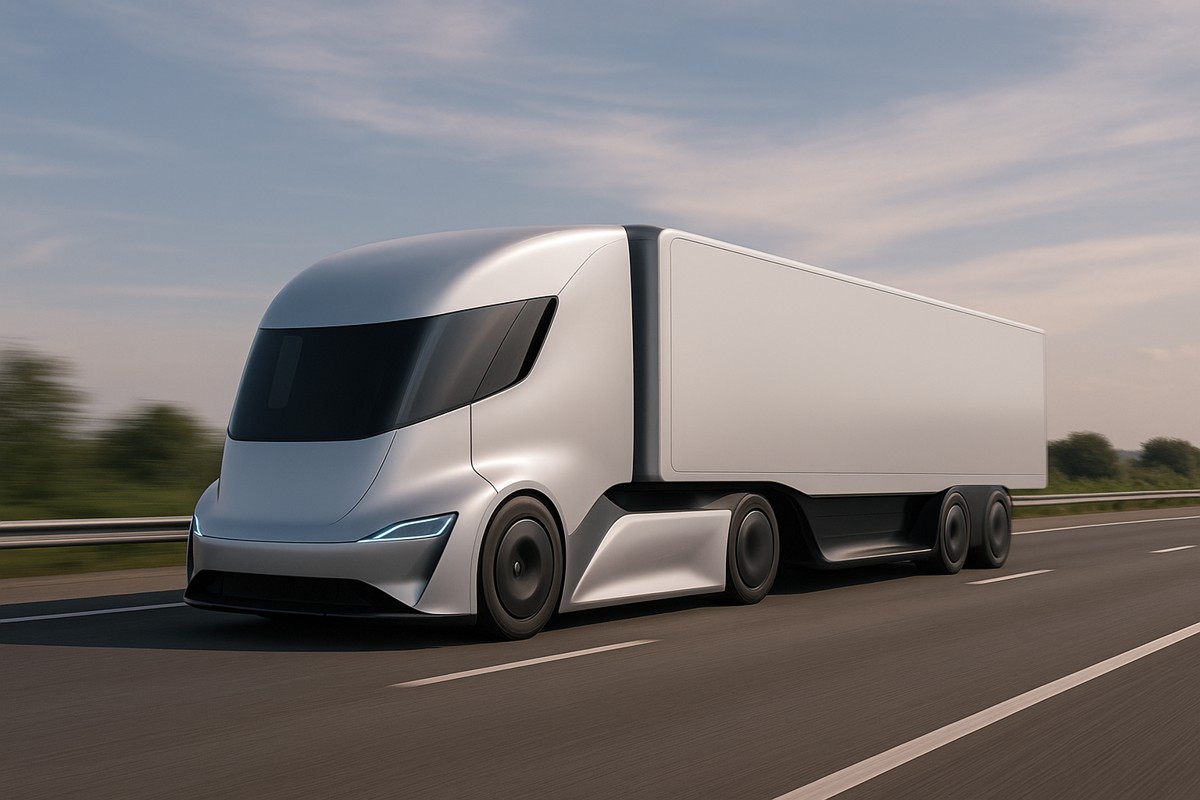
Autonomous driving technology might be hogging the headlines for city streets and robo-taxis, but the real disruptor is cruising quietly along our highways. Long-haul freight transport, particularly hub-to-hub trucking, has emerged as one of the most immediate and viable frontiers for autonomy. And let’s face it, when it comes to sheer mileage, predictability, and operational payoff, these long, open stretches of motorway offer autonomy a much smoother ride.
Unlike the chaos of urban mobility—jam-packed junctions, rogue cyclists, and jaywalking pedestrians—the motorway is a simpler beast. With fixed, repeatable routes and fewer surprises, autonomous vehicles (AVs) can hit their stride. And they are. Pilot programmes for autonomous trucks are already underway in North America, Europe, and Asia, connecting logistics hubs with minimal human input.
Why the Open Road Makes Sense
So, what makes long-haul freight such fertile ground for autonomy?
-
Predictable routes: Hub-to-hub lanes rarely change and are often digitally mapped to the centimetre.
-
Reduced complexity: Limited junctions and little pedestrian interference mean fewer variables to contend with.
-
No driver fatigue: Machines don’t need coffee breaks, rest stops, or sleep—they can keep going long after human stamina fades.
-
Alleviating driver shortages: Let’s not forget the elephant in the room. With the logistics sector struggling to recruit and retain drivers, AVs offer much-needed relief.
According to the 2025 PAVE Europe White Paper: “Long-haul transport offers exceptional potential, with AVs significantly improving efficiency on predictable routes while easing labour shortages.”
That’s not just hype; it’s the direction the industry’s already steering towards.
What Long-Haul Autonomy Actually Demands
Now, before we start thinking all it takes is fancy cruise control, let’s dial in on the complexity. Autonomous highway operations demand far more than just staying in lane or keeping a safe distance.
The key technological requirements include:
-
Fail-operational design: Vehicles must remain safe even if a system fails mid-route.
-
All-weather reliability: Rain, snow, glare—autonomy has to handle them all.
-
Backend integration: Fleet operators need real-time data, diagnostic tools, and seamless communication with logistics platforms.
-
Remote monitoring: If things go south, there has to be an option for human teleoperation.
That’s a tall order, and very few solutions out there are ticking all those boxes. But one that does is Arnold NextG’s NX NextMotion.
The NX NextMotion Platform
Arnold NextG isn’t just thinking about autonomous systems—they’re building the backbone of them. The NX NextMotion is a Drive-by-Wire platform engineered specifically for autonomous heavy vehicles. It does away with old-school mechanical linkages in favour of fully electronic, multi-redundant actuation systems for steering, braking, and propulsion.
Think of it less like a component and more like a mission-critical control centre. For OEMs and platform developers, it offers a safe, certifiable, and customisable foundation to build their autonomous stacks.
Among its standout features:
-
Redundant logic and failover systems to handle critical failures
-
SAFE_CAN protocol for secure, real-time communication between systems
-
Deterministic sensor fusion for accurate environmental awareness
-
Teleoperation compatibility for human oversight
-
Over-the-air (OTA) updates for live diagnostics and performance tuning
It’s not just clever engineering. It’s a regulatory and commercial enabler.
Safety Isn’t Optional
Reliability alone doesn’t cut it. When you’re talking about 40-tonne vehicles moving at motorway speeds, safety has to be built in, not bolted on. NX NextMotion shines here too, boasting top-tier certifications across the board.
-
ASIL D (ISO 26262): The gold standard in automotive safety integrity
-
SIL 3 (IEC 61508): Trusted for safety-critical industrial applications
-
UNECE R155 / ISO 21434: Full compliance with modern cybersecurity protocols
This level of compliance isn’t just for show—it enables the next stage of AV deployment:
-
Operational Design Domain (ODD)-based rollouts: Clearly defined operational boundaries for where and how AVs function
-
Reduced on-site staffing: Thanks to remote monitoring and autonomous operation
-
Regulatory readiness: Meeting the standards needed for road approvals and fleet deployment
With these credentials, NX NextMotion moves autonomy out of the testing lab and onto real roads.
It’s Already Rolling
This isn’t a sci-fi pitch; it’s happening now. Across Europe and the US, autonomous trucks equipped with advanced Drive-by-Wire systems like NX NextMotion are actively being piloted between distribution centres. The route is predictable, the operation is scalable, and the safety case is strong.
“Autonomous freight is coming. The control technology is already here,” states Arnold NextG.
The message is clear: with infrastructure catching up and software stacks maturing, what remains is the reliable, fail-safe hardware that can bridge the two. That’s exactly what NX NextMotion provides.
From Vision to Approval
Arnold NextG isn’t just another tech vendor. They’re acting as a pre-developer, incubator, and system integrator. From concept development to road approval, they provide comprehensive support for deploying autonomous freight systems.
With NX NextMotion’s platform-agnostic architecture, it can be integrated into a wide range of vehicle formats, whether it’s for teleoperation, full autonomy, or even platooning scenarios. This level of flexibility ensures that stakeholders can invest today without locking themselves into tomorrow’s limitations.
Keeping the Freight Industry Moving Forward
As transport demand grows and driver shortages intensify, the long-haul logistics sector needs a rethink. Autonomous technology, led by solutions like NX NextMotion, provides a practical, scalable path forward. With safety, flexibility, and certification baked in, it offers freight operators a chance to modernise without compromising.
In a world where uptime is king and efficiency is currency, the road ahead is being paved by autonomy—and Arnold NextG is laying down the tarmac.