SonicEdge Redefining Audio Architecture for AI Hearables at CES
At CES 2026, SonicEdge set out a clear marker for where the future of miniature audio is heading. The micro-acoustic innovator announced a strategic partnership with a leading global semiconductor manufacturer to integrate its proprietary modulated ultrasound intellectual property directly into next-generation audio chipsets. Rather than treating sound generation as an add-on or peripheral function, the collaboration embeds SonicEdge technology at the silicon level, allowing chipsets to natively drive modulated ultrasound speakers.
This move signals more than a single commercial agreement. It reflects a broader industry recognition that traditional audio architectures are reaching their limits, particularly in devices where space, power efficiency and intelligent processing must coexist. By integrating modulated ultrasound IP directly into chipsets, semiconductor manufacturers can offer OEMs a streamlined, ready-to-deploy audio foundation that reduces development friction and accelerates time to market.
Semiconductor Integration as an Adoption Catalyst
Embedding SonicEdge technology at the chip level removes many of the barriers that have historically slowed the adoption of new audio formats. OEMs no longer need to engineer bespoke interfaces or accommodate complex integration workflows. Instead, native chipset support establishes modulated ultrasound as a standard capability, not an experimental feature.
The implications for product designers are significant. With fewer constraints on board layout and component placement, manufacturers can prioritise slimmer form factors, longer battery life and more advanced AI processing. In space-constrained devices such as hearables and wearables, these gains often determine whether a product concept is commercially viable or quietly shelved.
As the industry digests this announcement, additional semiconductor companies are expected to follow suit. Once a technology is validated at the silicon level, momentum tends to build quickly, particularly when it aligns with the roadmap of AI-enabled consumer electronics.
Rethinking Acoustics for AI-Enabled Devices
AI-powered hearables demand more than incremental improvements in sound quality. They require an acoustic architecture that supports continuous sensing, ultra-low latency processing and adaptive performance in dynamic environments. Traditional miniature speakers struggle to meet these demands without compromising size or power consumption.
SonicEdge positions modulated ultrasound as the enabling technology for this next phase. By shifting how sound is generated and controlled, the approach delivers higher performance from smaller transducers while maintaining energy efficiency. This architectural rethink aligns closely with the needs of AI-driven applications such as real-time language translation, health monitoring and contextual audio enhancement.
Reflecting on this shift, Dr. Moti Margalit, CEO and Co-founder of SonicEdge, explained the industry perspective: “Chip manufacturers today understand that AI-enabled hearables demand a fundamentally different acoustic architecture. Modulated ultrasound delivers the performance, miniaturization, and power efficiency these devices require, and we’re seeing rapid industry movement to adopt this technology.”
Commercial Traction and Patent Strength
SonicEdge enters this new phase with considerable technical and commercial credibility. The company’s portfolio includes more than 25 patents covering core aspects of modulated ultrasound sound generation and system integration. These patents underpin a growing number of commercial deployments, demonstrating that the technology is not confined to laboratory prototypes.
Active integration programmes are already underway with key customers across multiple hearables and wearables categories. These collaborations focus on translating the theoretical advantages of modulated ultrasound into tangible product benefits, including clearer audio, reduced distortion and improved spatial performance in compact designs.
Such traction matters in an industry where new audio technologies often struggle to move beyond proof-of-concept. SonicEdge’s ability to progress from patents to production strengthens confidence among chipset partners and device manufacturers alike.
SonicTwin 100 and the Next Generation of Integrated Audio
Looking ahead, SonicEdge is developing a new wave of integrated solutions designed to unlock further performance gains. Central to this roadmap is the SonicTwin 100 platform, known as ST100. This solution combines modulated ultrasound drivers with advanced microphone technology, creating a tightly coupled audio input and output system.
The integration enables breakthroughs in active noise control and ultra-low-latency audio processing, both critical for AI-powered devices that must respond instantly to their surroundings. By reducing processing delays and improving signal fidelity, ST100 supports more natural interaction between users and intelligent systems.
For developers, this level of integration simplifies system design while opening the door to new features that would be difficult to achieve with discrete components. It also reflects a broader industry trend towards multifunctional silicon solutions that consolidate performance and efficiency.
Manufacturing at Scale with Proven Silicon Foundations
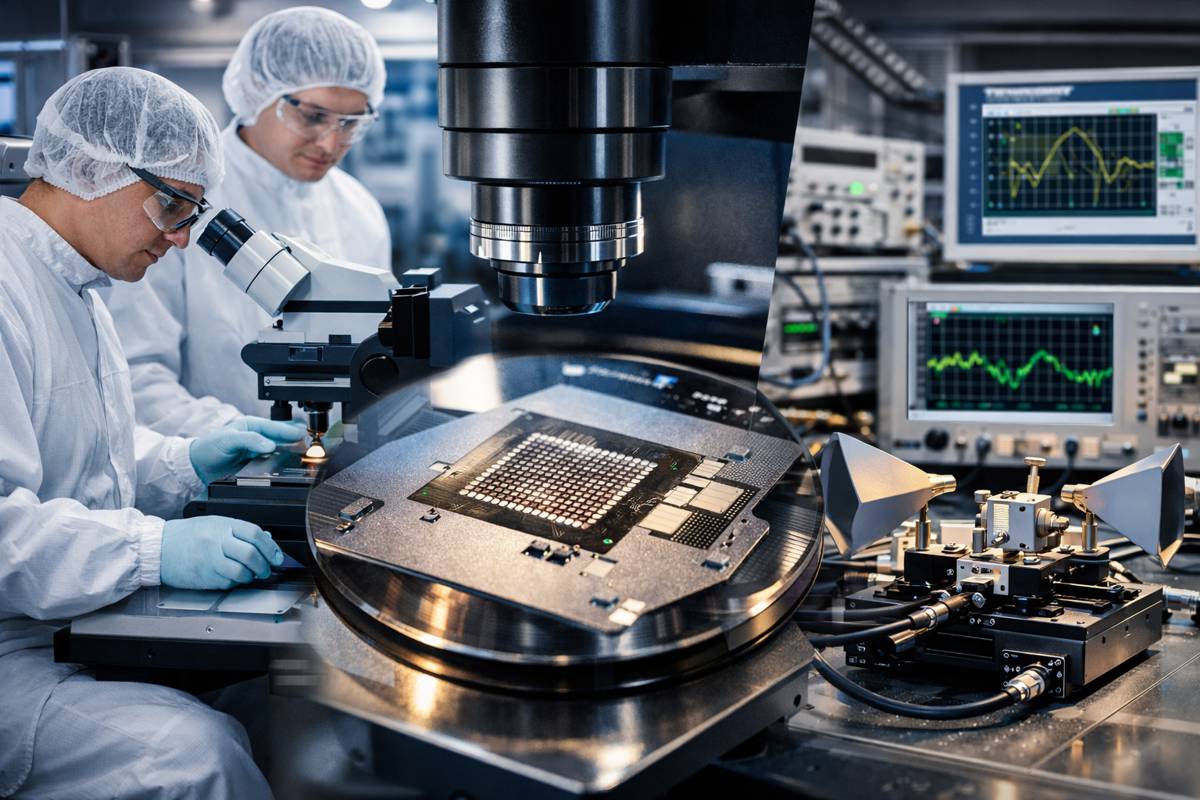
A distinguishing feature of SonicEdge’s approach is its reliance on proven silicon manufacturing processes. Rather than introducing exotic materials or untested fabrication methods, the company builds on the same semiconductor foundations that power billions of devices worldwide, from smartphones to automotive systems.
This choice has practical consequences. It enables high-volume manufacturing with predictable yields, cost efficiency and long-term reliability. For OEMs and investors, these factors reduce risk and support faster adoption across consumer and industrial markets.
SonicEdge notes that performance improvements follow a familiar semiconductor trajectory. With each new generation, sound output from the same physical footprint doubles approximately every two years. This pace mirrors the scaling expectations of the broader electronics industry and reinforces confidence in the technology’s longevity.
Expanding Design Possibilities Through Integration
By combining multiple audio functions into compact packages, SonicEdge is reshaping what designers can achieve within tight physical constraints. Modulated ultrasound speakers, microphones and processing elements can coexist in unified modules, freeing up space for additional sensors, larger batteries or enhanced computing resources.
These design freedoms are particularly valuable in wearables, where ergonomics and aesthetics directly influence user adoption. Smaller, lighter devices with improved audio performance offer manufacturers a competitive edge in crowded markets.
Beyond consumer products, the same principles apply to industrial and enterprise applications. Smart safety equipment, augmented reality headsets and assistive devices all stand to benefit from audio solutions that deliver high performance without imposing size penalties.
Positioning Modulated Ultrasound as a New Standard
The partnership announced at CES 2026 positions modulated ultrasound not as a niche alternative, but as a candidate for industry-wide standardisation. Once embedded at the chipset level, the technology becomes part of the default design toolkit available to OEMs.
As AI capabilities continue to expand across personal and professional devices, demand for responsive, efficient and compact audio systems will only intensify. SonicEdge’s strategy aligns closely with this trajectory, placing the company at the intersection of acoustics, semiconductors and intelligent computing.
With growing patent coverage, active customer programmes and now silicon-level integration, SonicEdge is steadily transforming how sound is generated in the smallest and smartest devices. The ripple effects of this shift are likely to shape the next generation of hearables and wearables for years to come.