CEA Supports Major Hydrogen Energy Association Gathering In London
As governments and industries worldwide grapple with the realities of decarbonisation, hydrogen has steadily emerged as one of the most closely watched energy carriers for heavy industry, transport and infrastructure. In the United Kingdom, the conversation is accelerating rapidly as policymakers, energy companies and manufacturers explore how hydrogen could underpin a cleaner industrial future while strengthening national energy security.
The Construction Equipment Association (CEA) has now confirmed its support for the 2026 annual conference organised by the Hydrogen Energy Association (HEA). The partnership signals growing alignment between the UK’s construction equipment sector and the organisations shaping the hydrogen economy.
Scheduled for 8–9 July 2026 at IET Savoy Place, the two-day event is expected to attract more than 500 industry leaders involved in producing, transporting, storing and deploying hydrogen. For the construction and infrastructure industries, which face mounting pressure to decarbonise operations and equipment fleets, the conference offers a timely opportunity to engage directly with the energy transition taking shape across the UK.
Hydrogen For Infrastructure And Construction
Hydrogen has increasingly become a focal point of energy policy discussions, particularly for sectors that cannot easily electrify. While battery electric systems are gaining traction for passenger vehicles and light transport, heavy industries such as construction, steelmaking, cement production and long-distance transport often require higher energy densities and flexible fuel options.
This is where hydrogen enters the equation. When produced using renewable electricity through electrolysis, so-called green hydrogen can deliver energy with near-zero carbon emissions. Even blue hydrogen, produced from natural gas with carbon capture, is being positioned as a transitional solution while renewable capacity expands.
The UK government has already signalled its ambitions through the UK Hydrogen Strategy, which outlines plans to develop up to 10 gigawatts of low-carbon hydrogen production capacity by 2030. According to government projections, hydrogen could meet between 20% and 35% of the UK’s final energy demand by 2050, supporting decarbonisation across industry, transport and heating.
For construction equipment manufacturers, these developments are more than theoretical. The shift toward low-carbon fuels is beginning to influence equipment design, infrastructure planning and long-term fleet investment decisions.
Connecting Construction Manufacturers To The Hydrogen Value Chain
The CEA’s involvement in the HEA conference reflects the growing overlap between energy policy and the equipment sectors responsible for building and maintaining national infrastructure.
Representing manufacturers, suppliers and service providers across the UK construction equipment industry, the association plays an important role in connecting its members to emerging technology trends and regulatory developments. As alternative fuels gain prominence, engagement with hydrogen stakeholders is becoming increasingly important.
Viki Bell, Chief Executive of the Construction Equipment Association, emphasised the significance of this collaboration: “Hydrogen is an important part of the wider discussion around the UK’s future energy mix, particularly as sectors such as construction and engineering continue to explore alternative power solutions and lower-carbon technologies. The HEA conference brings together the organisations and decision-makers shaping that agenda. As an event partner, the CEA is pleased to support the event and ensure our members have the opportunity to be part of those discussions.”
Her remarks highlight a reality facing many equipment manufacturers today. Decisions about engine technology, fuel systems and powertrains increasingly depend on the direction of national energy infrastructure. Engaging with policymakers and hydrogen developers is therefore essential to understanding how future energy supply will evolve.
A Gathering Of The UK Hydrogen Ecosystem
The HEA conference has established itself as one of the UK’s key annual gatherings for organisations involved in hydrogen and fuel cell technologies. The Hydrogen Energy Association itself represents a wide cross-section of the industry, including energy producers, infrastructure developers, equipment manufacturers, technology innovators and financial investors.
Through this membership network, the organisation works closely with government departments, regulators and international partners to help shape hydrogen policy and accelerate industry development.
Each year, the conference provides a platform where these stakeholders converge to examine progress, identify challenges and coordinate future investment. The 2026 edition is expected to place particular emphasis on the role hydrogen could play in strengthening the UK’s energy resilience while supporting industrial decarbonisation.
This includes discussions around hydrogen production capacity, infrastructure development, supply chains and industrial demand. The conference programme will feature speakers drawn from government agencies, infrastructure operators and leading energy companies that are actively shaping hydrogen deployment in the UK.
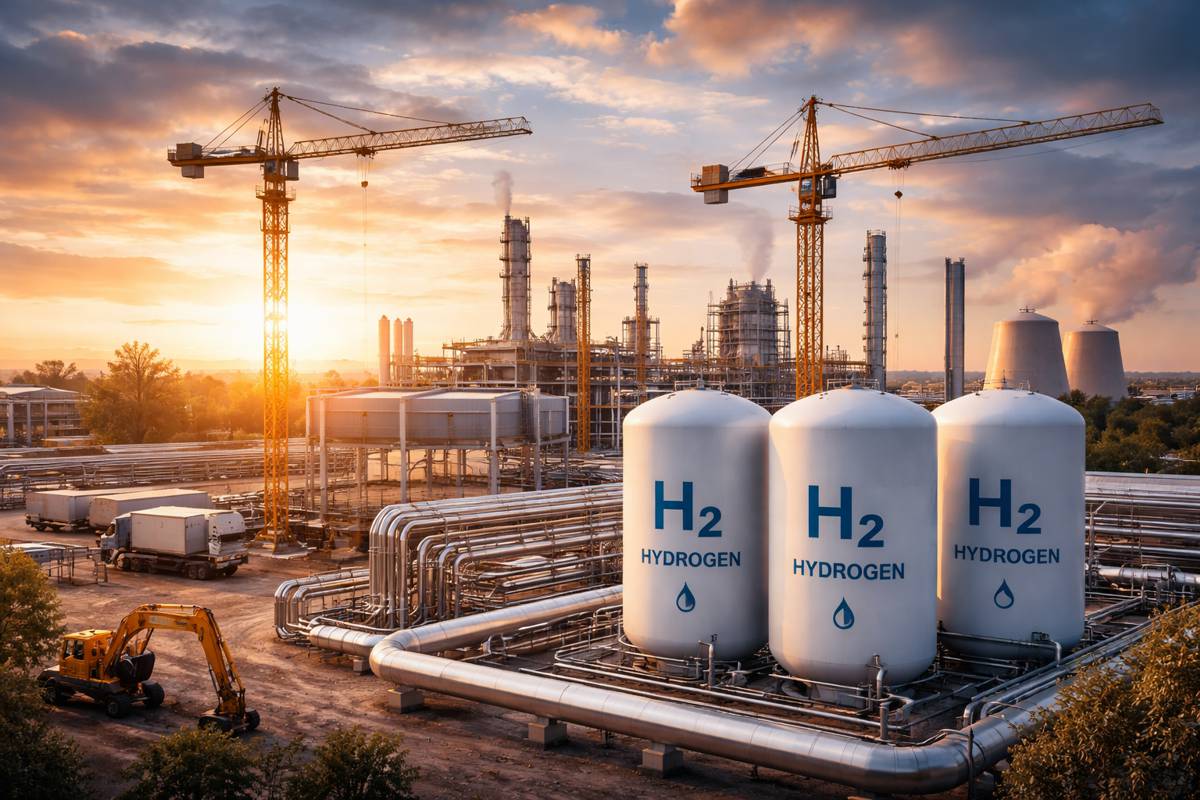
For construction professionals, these conversations are increasingly relevant. Hydrogen infrastructure projects themselves represent major construction undertakings, from electrolysis facilities and storage systems to pipelines, transport networks and refuelling hubs.
Hydrogen Powered Equipment Is Moving From Prototype To Reality
The growing attention surrounding hydrogen is also beginning to translate into practical equipment developments across the construction industry.
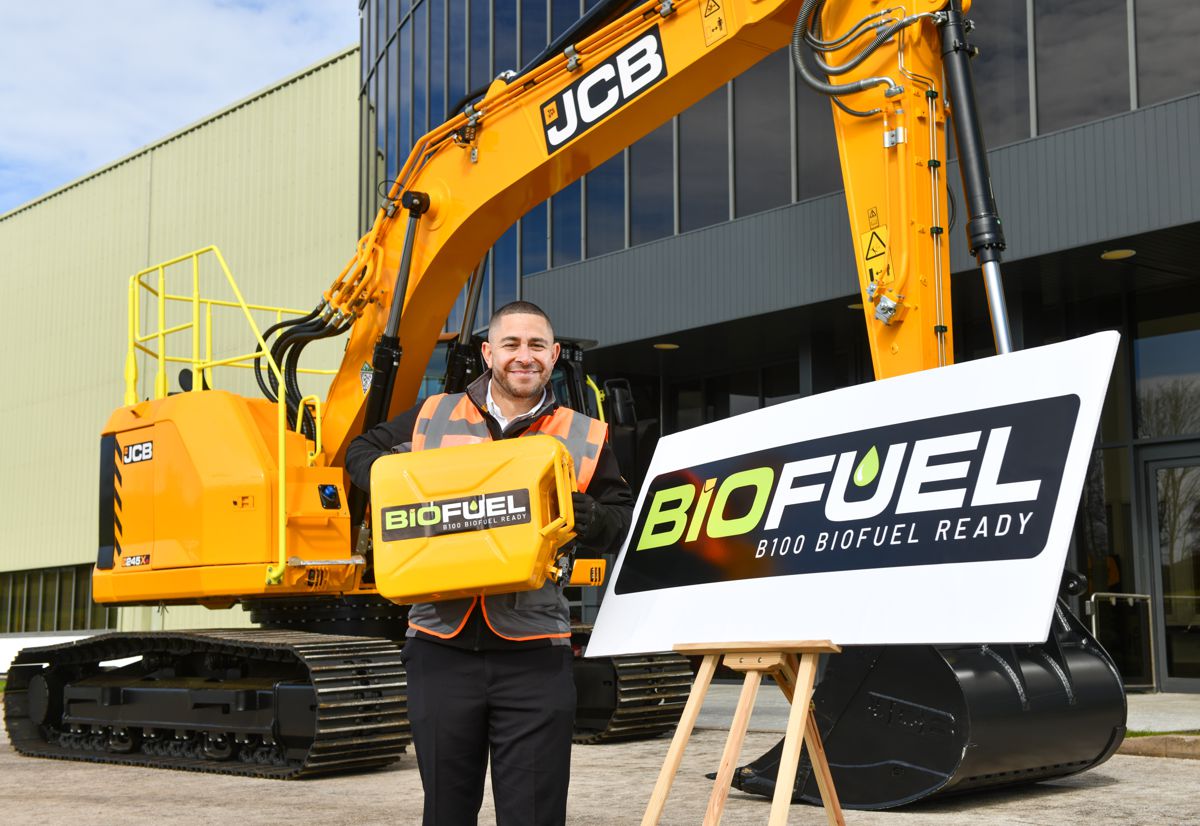
Major manufacturers have already begun exploring hydrogen combustion engines and fuel cell technologies for off-highway machinery. Companies such as JCB have invested heavily in hydrogen-powered internal combustion engines for construction equipment, with prototype excavators already undergoing testing. Meanwhile, manufacturers including Komatsu and Caterpillar are exploring both hydrogen fuel cells and hydrogen-capable engine platforms.
These initiatives reflect the unique challenges of decarbonising heavy equipment. Construction machinery often operates in remote environments where charging infrastructure may be limited, and equipment must deliver high torque and extended operating hours. Hydrogen fuel systems offer one potential pathway for meeting these requirements while reducing emissions.
However, widespread adoption will depend heavily on the availability of hydrogen production and distribution infrastructure. This is precisely where conferences like the HEA gathering play an important role, bringing together energy providers, equipment manufacturers and infrastructure developers to align technology with supply chains.
Building The Infrastructure For A Hydrogen Economy
Hydrogen deployment requires a complex ecosystem of production facilities, transport networks, storage systems and refuelling infrastructure. Unlike electricity, which already benefits from a mature grid network, hydrogen distribution remains in its early stages.
The UK is currently exploring multiple regional hydrogen clusters aimed at supporting industrial decarbonisation. Projects such as the HyNet North West and East Coast Cluster are working to establish integrated hydrogen and carbon capture networks serving energy-intensive industries.
Such initiatives require extensive engineering and construction expertise, from pipeline installation to industrial plant construction. This again places the construction sector squarely at the centre of hydrogen deployment.
By engaging with the HEA conference, the CEA is positioning its members to better understand the infrastructure requirements and business opportunities emerging from these developments.
Policy, Investment And Industrial Strategy
Hydrogen’s future in the UK will ultimately depend on the alignment of policy support, private investment and technological progress. Governments across Europe are increasingly introducing incentive schemes, funding programmes and regulatory frameworks to accelerate low-carbon hydrogen production.
The European Union’s EU Hydrogen Strategy, for example, aims to deploy at least 40 gigawatts of renewable hydrogen electrolyser capacity across Europe by 2030. These policy initiatives are shaping global investment patterns and influencing industrial strategies across multiple sectors.
In the UK, hydrogen has become part of broader discussions around energy independence, particularly in the wake of global energy market volatility. By diversifying energy sources and supporting domestic hydrogen production, policymakers hope to strengthen long-term energy resilience while reducing reliance on imported fossil fuels.
Events such as the HEA conference therefore serve as important forums where policymakers and industry leaders can assess progress and refine their strategies.
Strengthening Industry Collaboration
For the construction equipment sector, engagement with hydrogen stakeholders is about more than simply following energy policy developments. It represents an opportunity to influence the direction of future infrastructure and technology deployment.
As equipment manufacturers experiment with alternative fuels and low-carbon powertrains, collaboration with the energy sector will become increasingly necessary. Hydrogen production facilities, distribution networks and refuelling infrastructure must evolve alongside equipment capabilities if hydrogen-powered machinery is to become commercially viable.
The partnership between the Construction Equipment Association and the Hydrogen Energy Association highlights the growing recognition that energy transition discussions cannot occur in isolation. The industries responsible for building infrastructure and manufacturing equipment must be involved from the outset.
With more than 500 participants expected in attendance, the 2026 conference will provide a valuable platform for exchanging ideas, sharing technical insights and forging partnerships across the hydrogen value chain.
A Turning Point For Industrial Energy Systems
Hydrogen remains a developing technology, and many questions about cost, infrastructure and scalability still need answers. Yet momentum continues to build as governments and industries search for practical pathways to reduce emissions without sacrificing industrial productivity.
For construction professionals, engineers and infrastructure investors, staying connected to these developments is becoming essential. Decisions made today about energy infrastructure and equipment technology will shape the industry landscape for decades.
By supporting the Hydrogen Energy Association’s annual conference, the Construction Equipment Association is helping ensure that the voices of equipment manufacturers and construction specialists are heard in discussions about the UK’s evolving energy system.
As hydrogen strategies move from policy papers to real-world projects, the construction sector will play a critical role in building the facilities, networks and technologies required to make a hydrogen economy possible.