Corrosion Talent Shortages are Becoming a Strategic Risk
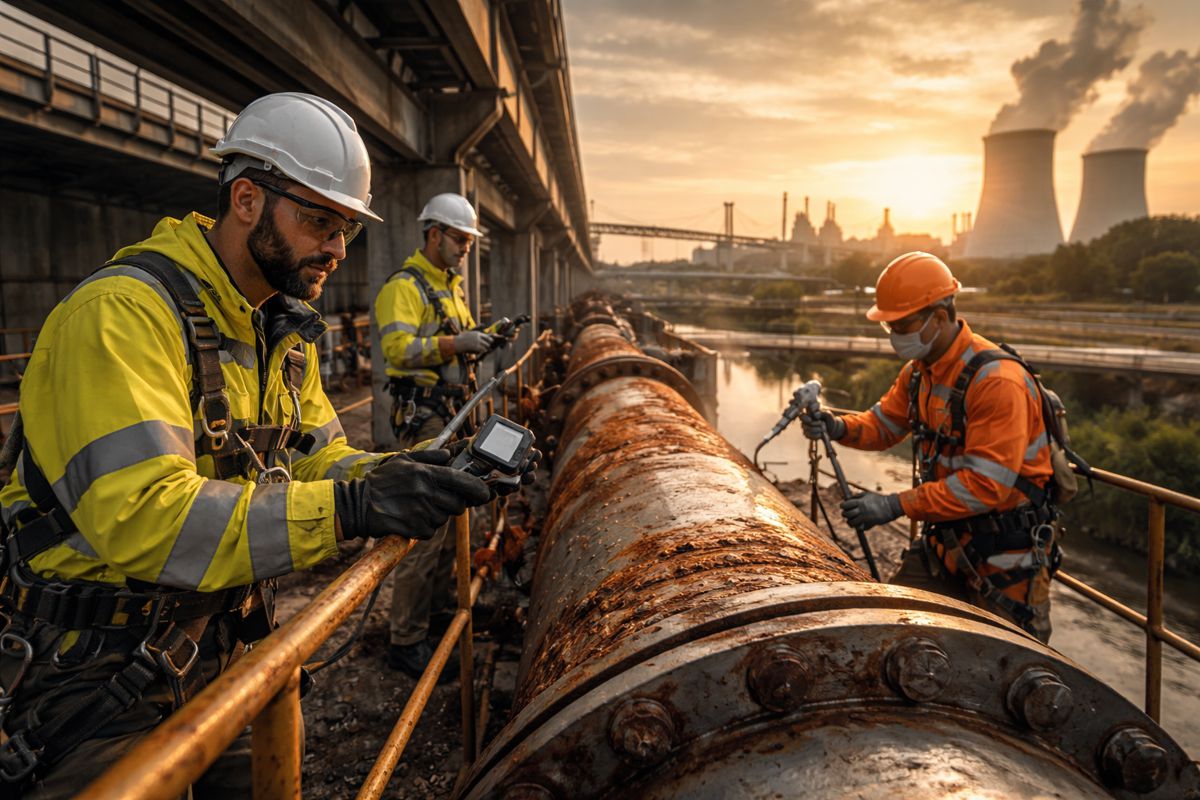
Corrosion rarely grabs headlines, yet its impact is both relentless and expensive. From bridges and pipelines to power grids and maritime assets, the gradual degradation of materials continues to erode the foundations of modern infrastructure. Globally, the cost of corrosion exceeds $2.5 trillion each year, according to industry estimates, placing it among the most significant and persistent economic drains on infrastructure systems.
However, the financial burden only tells part of the story. Left unchecked, corrosion contributes to structural failures, operational disruptions and, in extreme cases, risks to public safety. For infrastructure owners, operators and policymakers, the challenge isn’t simply technical. Increasingly, it’s human. The expertise required to detect, prevent and manage corrosion is becoming harder to find just as demand intensifies.
The launch of TalentForce by the Association for Materials Protection and Performance signals a strategic shift. Rather than focusing solely on technology or standards, the industry is now confronting a more fundamental issue: the people needed to keep critical assets functioning safely and efficiently.
Workforce Shortages Are Now a Strategic Infrastructure Risk
The corrosion and materials protection sector is facing a growing imbalance between demand and available talent. Experienced professionals are retiring in large numbers, while fewer new entrants are stepping in to replace them. At the same time, the skills required for modern asset protection are evolving, driven by digital tools, advanced coatings and stricter performance standards.
External data reinforces the scale of the problem. The U.S. Bureau of Labor Statistics projects a shortfall of 1.7 million infrastructure workers by 2031. Meanwhile, more than 70 percent of employers in corrosion-intensive industries already report significant skills gaps. These shortages aren’t isolated to one region or sector. They cut across energy, transport, construction and marine industries, all of which depend on effective materials protection.
The implications are far-reaching. When qualified inspectors, engineers and technicians are unavailable, early warning signs can be missed. Small issues can escalate into costly repairs or catastrophic failures. In practical terms, workforce shortages translate directly into increased operational risk, higher lifecycle costs and reduced infrastructure resilience.
TalentForce Positions Workforce Development as Core Infrastructure Strategy
Recognising the urgency, AMPP has launched TalentForce as a dedicated workforce development organisation structured as a 501(c)(3) charitable entity. The move reflects a growing consensus that workforce capacity is no longer a secondary concern. It sits at the heart of infrastructure performance.
For more than a century, AMPP and its predecessor organisations have focused on advancing technical standards, certification programmes and professional training. With TalentForce, that expertise is being extended into a broader, coordinated effort to rebuild the talent pipeline itself.
“The science of corrosion control and materials protection has never been stronger,” said Alan Thomas, chairman of TalentForce and CEO of AMPP. “But corrosion is no longer the industry’s only enemy: The workforce shortage is the greatest threat in the future. We know what’s coming and we know what it takes to fix it. TalentForce is how we act now before workforce gaps become infrastructure crises.”
This shift in emphasis reflects a wider industry realisation. Technical solutions alone won’t deliver resilience if there aren’t enough skilled professionals to apply them in the field. Workforce development is increasingly being treated as a form of infrastructure investment in its own right.
Building Awareness of Overlooked but High Value Careers
One of the most persistent challenges facing the sector is visibility. Despite offering strong earning potential, international mobility and long term career progression, roles in corrosion and materials protection remain largely unknown to many job seekers.
TalentForce aims to address this gap by increasing awareness at an earlier stage. Through outreach initiatives and scholarship programmes such as EMERG, the organisation is working to introduce students and career changers to opportunities that often sit outside traditional academic pathways.
This matters more than it might first appear. Many roles in the sector do not require a four year university degree, yet they offer stable, well paid employment and the chance to work across multiple industries. In a labour market increasingly focused on skills over credentials, corrosion-related careers could play a meaningful role in addressing both unemployment and skills shortages.
By making these pathways more visible and accessible, TalentForce is attempting to widen the entry funnel, bringing in candidates who might otherwise never consider the field.
Creating Structured Pathways from Entry Level to Expertise
Awareness alone won’t solve the problem. Entry into the industry must also be practical, affordable and clearly structured. TalentForce’s approach centres on building defined career pathways that guide individuals from initial training through to advanced specialisation.
This includes employer-led apprenticeships, earn-while-you-learn programmes and stackable credentials aligned with real job requirements. By integrating training with employment, the model reduces financial barriers and accelerates workforce readiness.
“We are actively working with employers to co-design registered apprenticeship and training programs tailored to the realities of their field and specific operational needs,” said Katerina Pinchuk, director and board secretary at TalentForce. “When workforce solutions are built with industry, the professionals we develop are ready to step onto a jobsite and contribute from day one, reducing onboarding time for employers and accelerating career momentum for workers.”
The emphasis on practical competence is critical. In infrastructure environments, theoretical knowledge alone isn’t enough. Workers must be able to operate safely and effectively in complex, real world conditions from the outset.
Aligning Training with Industry Standards and Real World Performance
A defining feature of TalentForce is its integration with AMPP’s globally recognised standards and certification frameworks. This alignment ensures that training programmes are not only accessible but also credible and consistent across regions.
In practice, this means moving beyond simple course completion towards demonstrated competence. Workers are assessed against industry benchmarks that reflect actual jobsite demands, improving both quality and reliability.
From an infrastructure perspective, this alignment offers tangible benefits. Asset owners gain confidence that certified professionals meet recognised standards, while contractors and operators benefit from a workforce that can deliver consistent performance across projects and geographies.
It also supports international mobility. As infrastructure projects become increasingly global, the ability to transfer skills and credentials across borders is becoming more important. Standardised training frameworks help bridge this gap.
Partnerships Will Determine Whether the Model Scales
No single organisation can solve a systemic workforce shortage. TalentForce is designed as a collaborative platform, bringing together employers, educational institutions, workforce agencies and government bodies to co-develop solutions.
This partnership-driven approach reflects the complexity of the challenge. Training programmes must be aligned with industry needs, funding mechanisms must be sustainable and outreach efforts must reach diverse populations. Without coordination, efforts risk becoming fragmented and ineffective.
By positioning itself as a central hub, TalentForce aims to scale solutions at a national and potentially international level. This includes aligning curricula with employer requirements, expanding apprenticeship availability and ensuring that training capacity keeps pace with demand.
The success of this model will depend on participation. If industry stakeholders engage actively, the initiative has the potential to reshape how workforce development is approached in corrosion and materials protection.
Upskilling and Reskilling Will Define the Next Phase of Workforce Evolution
While attracting new entrants is essential, retaining and upgrading existing talent is equally important. The tools and technologies used in corrosion management are evolving rapidly, from advanced coatings and sensors to data-driven inspection techniques.
TalentForce addresses this through ongoing upskilling and reskilling initiatives, ensuring that professionals remain current as standards and technologies advance. This continuous learning model reflects a broader shift across infrastructure sectors, where lifelong learning is becoming the norm rather than the exception.
For employers, the benefits are clear. A workforce that adapts to new technologies can deliver greater efficiency, reduce risk and extend asset life cycles. For workers, it offers career progression and long term employability in a changing industry.
Strengthening Infrastructure by Strengthening People
The launch of TalentForce marks a notable shift in how the corrosion and materials protection industry is approaching one of its most pressing challenges. Rather than treating workforce shortages as a secondary issue, the sector is recognising them as a core threat to infrastructure reliability and performance.
By combining awareness, structured pathways, industry-aligned training and collaborative partnerships, the initiative sets out to rebuild the talent pipeline from the ground up. It’s an ambitious undertaking, but one that reflects the scale of the challenge ahead.
If successful, TalentForce could do more than address a labour shortage. It could redefine how workforce development is integrated into infrastructure strategy, ensuring that the people responsible for protecting critical assets are as resilient as the systems they maintain.