Reinventing Industrial Safety with Remote Ultrasonic Inspection Technology
In the world of heavy industry, safety and reliability are never negotiable. From nuclear power plants to petrochemical facilities and offshore infrastructure, the ability to detect structural defects early can mean the difference between routine maintenance and catastrophic failure.
Breakthrough research from the Korea Research Institute of Standards and Science introduces a new direction for non destructive testing that could reshape how critical assets are monitored.
At the heart of this development lies a fundamental rethink of ultrasonic inspection. Traditional approaches have long relied on sensors that must be physically attached to the structure under examination. That requirement has proven to be a persistent bottleneck, particularly in environments where extreme heat, corrosive chemicals or restricted access make installation difficult or outright impossible. By removing the need for direct contact, the new waveguide based system shifts the paradigm from proximity dependent sensing to remote inspection with minimal compromise on accuracy.
This is not simply an incremental improvement. It addresses one of the most stubborn limitations in industrial inspection. In sectors where downtime is costly and safety margins are tight, the ability to monitor assets without exposing personnel or equipment to hazardous conditions carries immediate commercial and operational value.
Why Conventional Ultrasonic Systems Fall Short
Non destructive testing using ultrasonic waves has been a cornerstone of industrial safety for decades. The principle is straightforward. High frequency sound waves are transmitted into a material, and reflections from internal defects are analysed to identify cracks, voids or other irregularities. The method is widely trusted across industries such as aerospace, energy and heavy manufacturing.
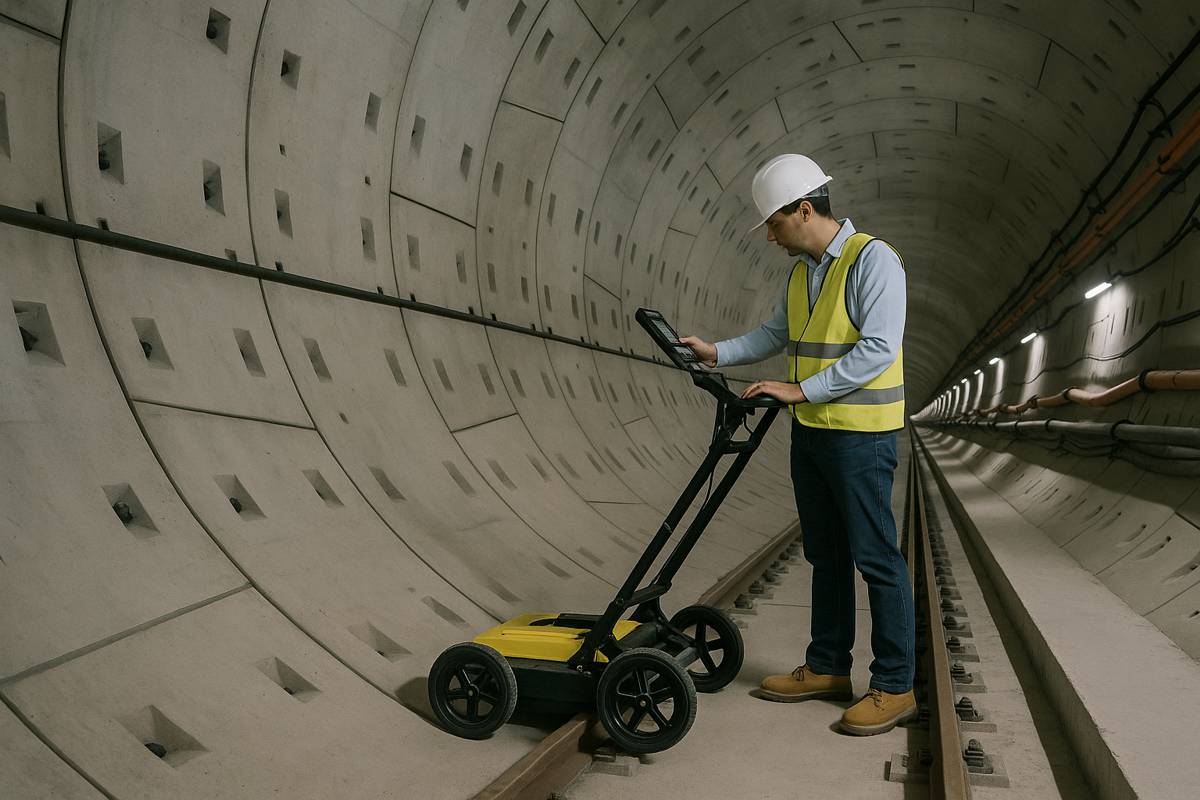
Yet for all its strengths, the technology has its constraints. Conventional ultrasonic transducers must be mounted directly onto the surface being inspected. In high temperature pipelines, for example, sensors can degrade rapidly, leading to frequent replacements and increased maintenance costs. In chemical plants, exposure to aggressive substances can damage equipment and pose risks to technicians during installation.
Moreover, in confined or hazardous spaces, human access is often restricted. Inspection teams may be unable to install sensors at all, leaving critical areas effectively unmonitored. These blind spots introduce uncertainty into asset management strategies and increase the likelihood of undetected failures.
Another challenge lies in achieving full circumferential coverage. Traditional systems designed for 360 degree inspection often rely on multiple segmented sensors arranged around a structure. While this approach extends coverage, it introduces signal interference and distortion. The result is reduced accuracy and increased complexity in signal processing, particularly when attempting to interpret overlapping waveforms.
Waveguide Technology Opens a New Path
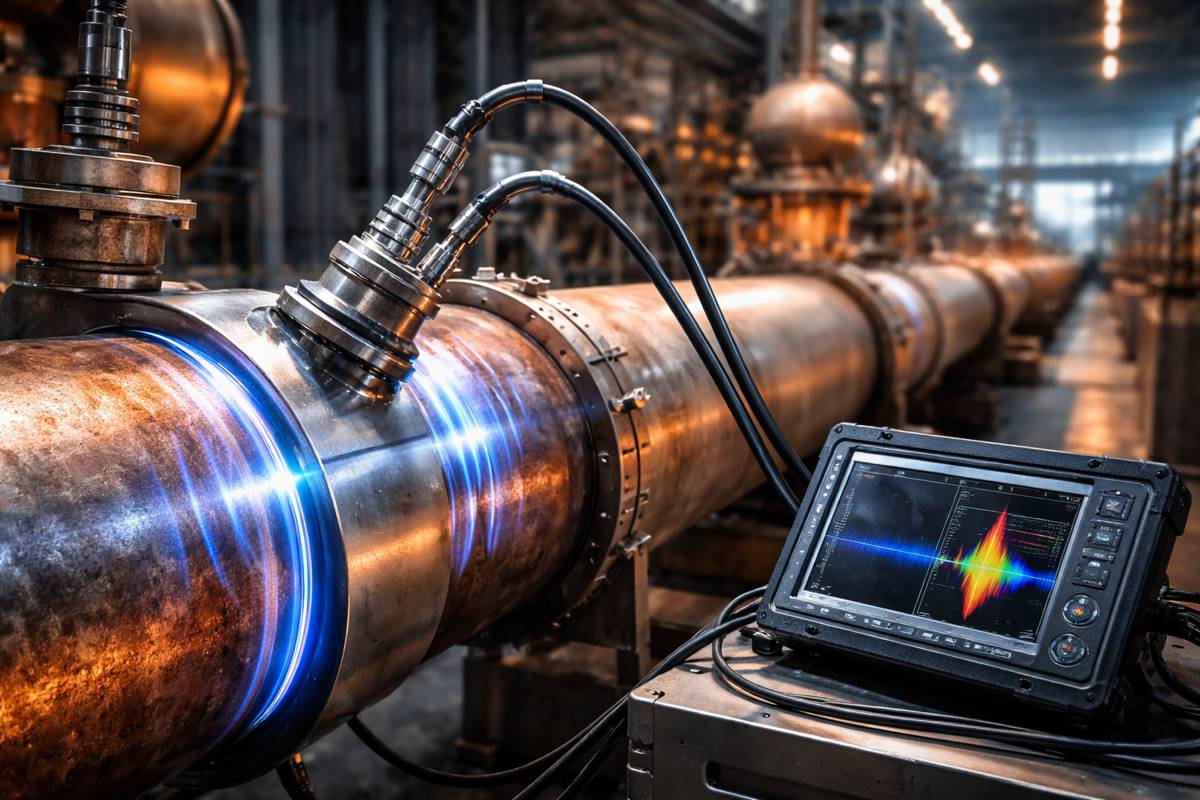
The innovation from KRISS tackles these challenges head on by introducing a waveguide as an intermediary between the sensor and the inspection target. In essence, the waveguide acts as a conduit for ultrasonic energy, allowing signals to be transmitted and received remotely without direct attachment to the structure.
This approach enables the sensor to operate at a safe distance from hostile environments while still delivering precise measurements. The waveguide itself can be engineered to suit specific applications, with variations in material and geometry allowing it to adapt to different industrial conditions. Its end can be shaped to match curved surfaces, ensuring efficient transmission of ultrasonic energy even on complex structures.
What sets this system apart is its use of torsional vibration within a cylindrical waveguide. By generating a twisting motion, similar to wringing a cloth, the system produces ultrasonic waves that propagate uniformly in all directions. This eliminates the need for multiple segmented sensors and avoids the interference issues that have long plagued conventional designs.
The result is a single sensor capable of delivering consistent, high quality data across a full inspection range. It is a simpler, more robust solution that aligns with the growing demand for efficient and scalable inspection technologies.
Performance Gains That Matter in Practice
Laboratory results suggest that the new system achieves a level of performance that goes well beyond existing solutions. Directional uniformity reaches approximately 95 percent, ensuring that signals are evenly distributed around the inspection area. This consistency is critical for accurate defect detection, particularly in large or complex structures.
Equally important is the improvement in signal strength. The system delivers more than 13.7 times the signal amplitude of conventional segmented configurations. In practical terms, this translates into clearer data, faster scanning and the ability to detect smaller defects with greater confidence.
These gains are not merely academic. In real world applications, stronger and more uniform signals reduce the need for repeated inspections and minimise the risk of false negatives. For operators, that means improved reliability and lower inspection costs over time.
The ability to scan wide areas quickly also supports more proactive maintenance strategies. Instead of relying on periodic inspections, facilities can move towards continuous or near real time monitoring, identifying issues before they escalate into major problems.
Expanding the Reach of Inspection into Extreme Conditions
One of the most compelling aspects of the technology is its suitability for extreme environments. High temperature pipelines, submerged structures and chemically aggressive settings have traditionally been difficult to monitor using ultrasonic methods. The waveguide approach changes that equation.
By isolating the sensor from the harshest conditions, the system maintains performance without exposing sensitive components to damage. This opens the door to applications in sectors where inspection has been limited or inconsistent.
In nuclear power plants, for instance, monitoring high temperature piping is critical for preventing leaks and maintaining operational safety. Similarly, in offshore energy and marine infrastructure, the ability to inspect submerged components with precision can significantly reduce maintenance risks and costs.
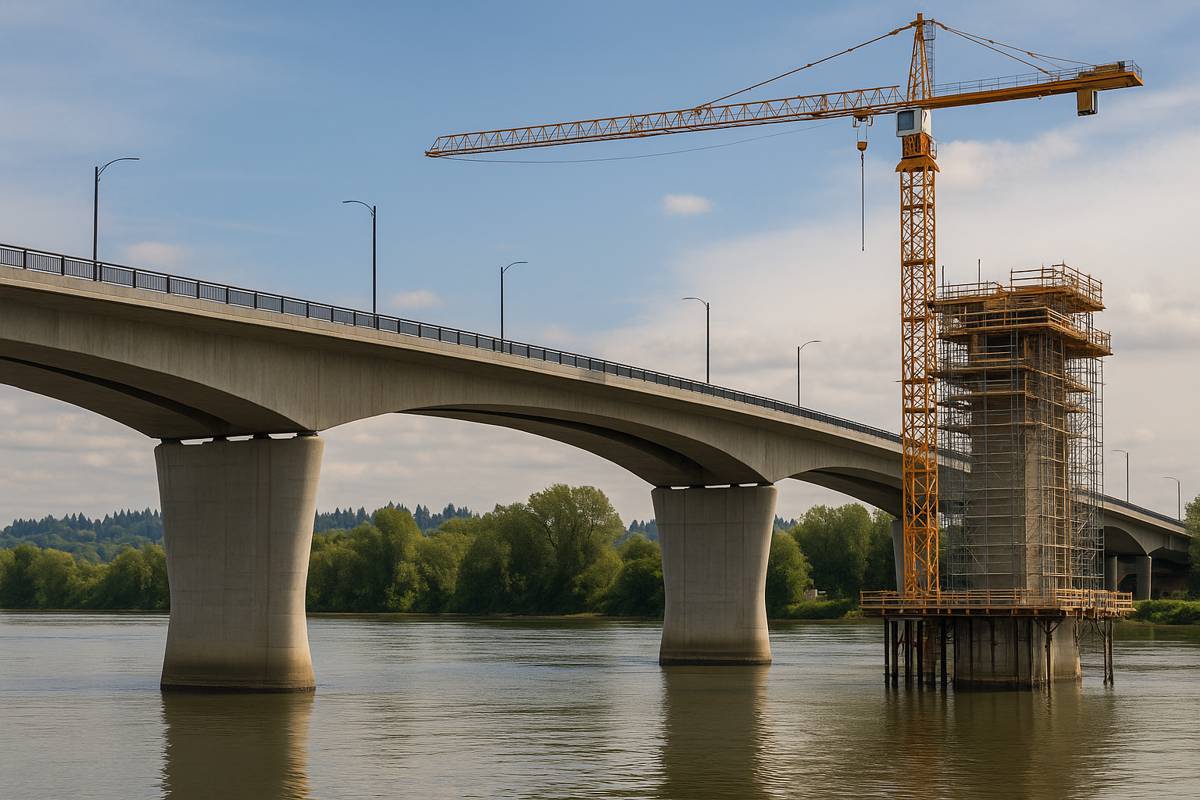
The technology has also demonstrated strong performance in liquid environments, further extending its potential use cases. Large submerged structures such as storage tanks, subsea pipelines and bridge foundations could all benefit from more reliable inspection capabilities.
Reducing Costs While Improving Coverage
Beyond safety and performance, cost efficiency is a key consideration for any industrial technology. Traditional 360 degree ultrasonic systems often require multiple sensors, each adding to the overall expense and complexity of the inspection setup.
The KRISS solution offers a more streamlined alternative. By combining a single sensor with a relatively low cost waveguide structure, it reduces the number of components required while maintaining comprehensive coverage. This simplification can lead to significant savings in both equipment and maintenance.
For asset operators, the implications are clear. Lower upfront costs, reduced maintenance requirements and improved inspection efficiency all contribute to a more sustainable approach to infrastructure management. In an industry where margins can be tight and downtime is costly, these advantages are likely to resonate strongly.
Aligning with Global Trends in Industrial Monitoring
The development arrives at a time when industries worldwide are placing greater emphasis on predictive maintenance and digital monitoring. The integration of advanced sensors with data analytics platforms is becoming standard practice, enabling operators to anticipate failures and optimise performance.
Remote ultrasonic inspection fits neatly into this trend. By providing reliable data from previously inaccessible areas, it enhances the overall visibility of asset conditions. This, in turn, supports more informed decision making and aligns with broader efforts to improve safety and efficiency.
There is also a growing regulatory focus on infrastructure resilience, particularly in sectors such as energy and transport. Governments and operators alike are under pressure to demonstrate that critical assets are being monitored effectively. Technologies that reduce blind spots and improve inspection coverage are therefore likely to gain traction.
A Foundation for Safer and Smarter Infrastructure
The implications of this innovation extend beyond individual facilities. As infrastructure systems become more interconnected and complex, the need for reliable inspection methods will only increase. Technologies that can operate in challenging environments without compromising accuracy will play a crucial role in ensuring long term resilience.
The KRISS waveguide based ultrasonic sensor represents a step in that direction. By addressing longstanding limitations in non destructive testing, it offers a practical solution to a problem that has persisted across multiple industries.
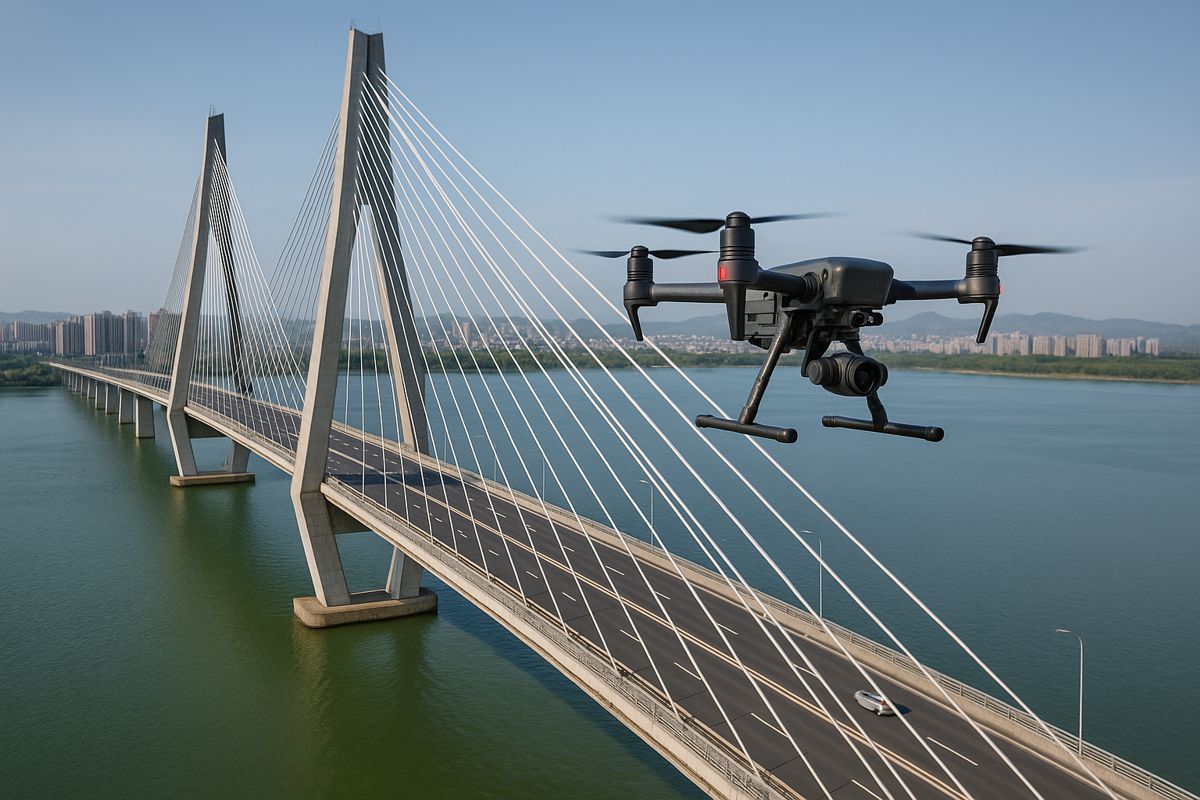
Its potential applications are broad, ranging from energy and manufacturing to transport and civil infrastructure. Wherever there are structures that must be monitored under difficult conditions, the technology provides a new tool for maintaining safety and performance.
In a sector where innovation is often driven by necessity, this development stands out for its ability to combine simplicity with effectiveness. It does not attempt to reinvent ultrasonic testing entirely, but rather refines it in a way that makes it more adaptable to real world challenges.
As industries continue to push the boundaries of what is possible, from deeper offshore operations to more advanced energy systems, the need for reliable inspection technologies will remain constant. Solutions like this one ensure that, even in the most demanding environments, safety does not have to take a back seat.