Guernsey Waterfront Redevelopment Opens Door to Private Investment
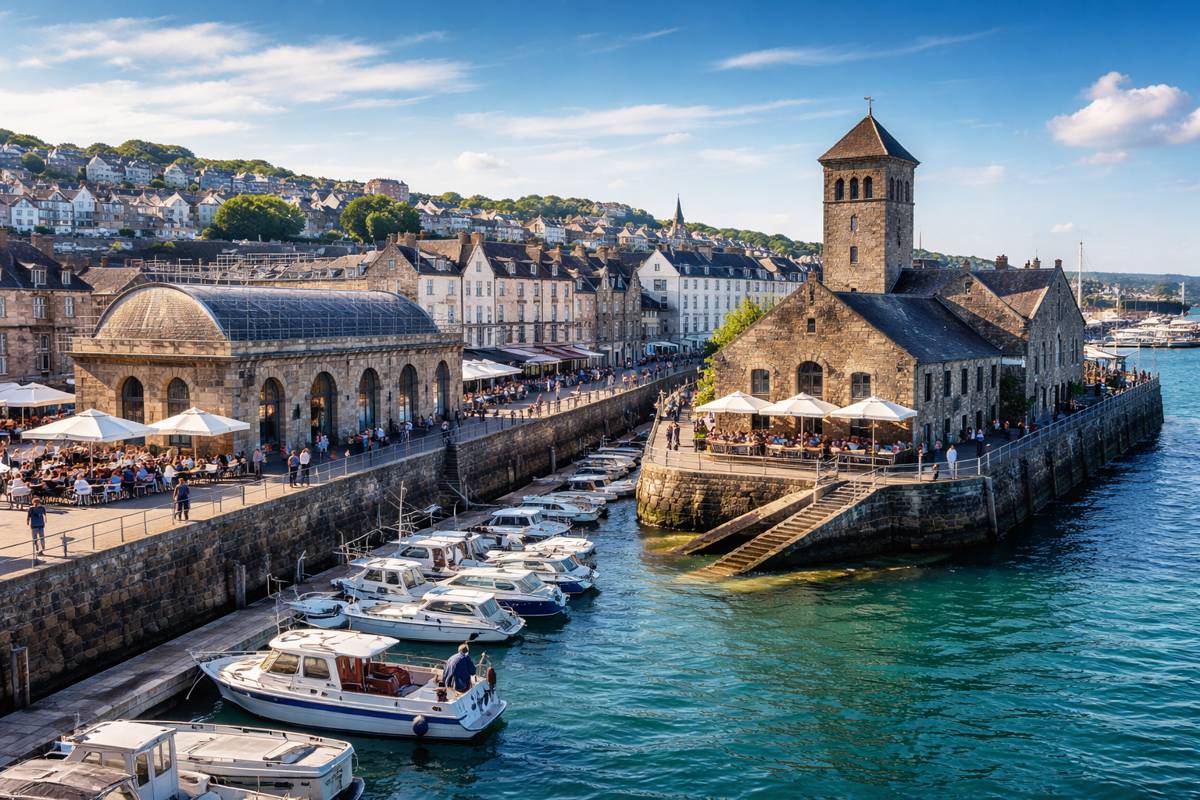
Guernsey’s harbour authority has taken a decisive step towards reshaping part of its historic waterfront, inviting private developers and investors to bring forward proposals for two strategically located sites at St Peter Port. The initiative by Guernsey Ports signals a broader shift in how smaller maritime economies are leveraging private capital to revitalise ageing infrastructure while retaining long-term public ownership.
At the heart of the opportunity lies a familiar challenge across Europe’s coastal towns. Historic harbour assets, often protected and structurally complex, require significant capital investment to remain commercially viable. Rather than pursuing direct public redevelopment, Guernsey Ports is offering long-term leases, a model increasingly adopted across the Channel Islands and wider UK maritime sector to balance heritage preservation with commercial pragmatism.
To manage the process, the authority has appointed Savills as property adviser, with expressions of interest required by 30 April 2026. The move places the project firmly within the global investment landscape, opening the door to developers experienced in adaptive reuse, waterfront regeneration and mixed-use urban schemes.
Briefing
- Guernsey Ports is seeking private investment for two redevelopment sites at St Peter Port Harbour
- Long-term lease model retains public ownership while enabling private capital deployment
- Sites include a historic former slaughterhouse and a prominent pier-front building
- Proposals are open to hospitality, cultural, commercial and mixed-use developments
- Savills is advising on the process, with submissions due by 30 April 2026
A Strategic Shift in Harbour Asset Management
Across Europe, port authorities are increasingly repositioning themselves as asset managers rather than direct developers. In this case, Guernsey Ports is following a well-established path seen in cities such as Liverpool and Rotterdam, where public bodies retain land ownership while unlocking private investment through long-term leasing frameworks.
This approach reduces public sector exposure to construction risk while ensuring that strategic assets remain under long-term civic control. It also aligns with investor expectations. Institutional and private developers alike typically require lease durations that justify capital expenditure, particularly when dealing with heritage-listed structures that often carry higher refurbishment costs and regulatory constraints.
For Guernsey, the stakes are slightly different but no less significant. As a self-governing Crown Dependency with a finance-led economy, the island depends heavily on maintaining an attractive, high-quality urban environment. Waterfront regeneration plays directly into that objective, enhancing both tourism appeal and local economic activity.
Reviving the Former Slaughterhouse
The most architecturally distinctive of the two opportunities is the eastern section of the former slaughterhouse complex. Dating back to the late 19th century, the structure stands out for its use of shaped brown granite sourced from Cobo, a material closely associated with Guernsey’s traditional building techniques.
Its design, featuring rounded ends and robust masonry, mirrors that of the former Fish Market in Market Square and is widely attributed to the same architect, John Newton. That heritage connection adds both value and complexity. Any redevelopment will need to respect the building’s protected status while introducing modern functionality.
Currently, the eastern portion remains underutilised. While the western side has operated successfully as a restaurant since 2017, the eastern section is partially subdivided and occupied by tenants using it for storage. Structurally, the most pressing issue is the roof, which is presently supported by scaffolding and requires substantial repair.
Yet therein lies the opportunity. Developers with experience in adaptive reuse could restore the space to a more open-plan configuration, unlocking its potential for hospitality, cultural or hybrid commercial use. Across Europe, similar projects have demonstrated that sensitively restored heritage buildings can command premium rents and attract high footfall, particularly in waterfront settings.
Victoria Pier and the Case for High-Footfall Development
The second site, located at Victoria Pier, presents a different kind of proposition. Originally constructed in 1898 as an engine house serving the Careening Hard slipway, the building has evolved through several commercial uses, including a tourist information centre and later a restaurant.
Its strength lies in location rather than scale. Positioned at the entrance to the pier, the site benefits from strong pedestrian traffic, proximity to public parking and immediate visibility within the harbour’s busiest zone. For investors, that combination significantly reduces demand risk, particularly for hospitality-led schemes.
Guernsey Ports has highlighted the potential to create a distinctive venue that capitalises on the site’s prominence. In practice, that could translate into anything from a high-end dining concept to a multi-use cultural and leisure space. The flexibility in permitted uses reflects a broader trend in waterfront redevelopment, where single-use schemes are increasingly giving way to mixed-use environments that extend dwell time and diversify revenue streams.
Heritage Constraints Meet Commercial Reality
Balancing conservation with commercial viability is rarely straightforward. Both sites come with heritage considerations that will shape design, materials and construction methods. However, these constraints are not necessarily barriers. In many cases, they enhance long-term asset value by creating distinctive, character-rich environments that are difficult to replicate.
Across the UK and Europe, adaptive reuse has become a cornerstone of sustainable development. According to research from organisations such as Historic England, reusing existing buildings can significantly reduce embodied carbon compared to new construction, while also preserving cultural identity.
For investors, the equation is evolving. ESG considerations, particularly those linked to carbon reduction and heritage preservation, are increasingly influencing funding decisions. Projects that align with these priorities often gain access to more favourable financing conditions, including green loans and sustainability-linked investment structures.
Long-Term Leases and Investor Confidence
The decision to offer long-term leases is central to the viability of the project. Freehold ownership is not on the table, but that is unlikely to deter serious investors. In fact, many institutional developers prefer leasehold arrangements when dealing with public assets, provided the terms are sufficiently long and clearly defined.
In the UK, similar models have been successfully deployed in port cities and transport hubs, enabling significant private investment without relinquishing public control. For Guernsey, this structure ensures that the harbour remains a strategic asset while benefiting from private sector efficiency and innovation.
It also allows for phased investment. Developers can allocate capital incrementally, responding to market demand and operational performance rather than committing to large-scale upfront expenditure. That flexibility is particularly valuable in smaller markets, where demand dynamics can be more volatile.
A Competitive Landscape for Boutique Developments
Unlike large-scale urban regeneration projects, the Guernsey opportunity sits firmly in the boutique category. That does not diminish its appeal. On the contrary, smaller, well-located assets often attract niche investors specialising in high-quality, design-led developments.
The island’s strong financial services sector adds another dimension. With a resident base that includes high-net-worth individuals and international professionals, there is a built-in market for premium hospitality and leisure offerings. At the same time, Guernsey’s position as a tourism destination ensures a steady flow of visitors during peak seasons.
For developers, the challenge will be to strike the right balance between local relevance and visitor appeal. Schemes that integrate both elements are more likely to achieve long-term success, particularly in environments where community sentiment plays a significant role in planning and operational outcomes.
Unlocking Value in Coastal Infrastructure
What emerges from this initiative is a broader narrative about the future of coastal infrastructure. Ports are no longer just gateways for goods and passengers. Increasingly, they are being reimagined as multi-functional urban spaces that combine logistics, leisure and cultural activity.
Guernsey’s approach reflects that evolution. By opening up two historically significant sites to private investment, the island is not simply refurbishing buildings. It is repositioning part of its waterfront as a more dynamic, commercially active environment that can adapt to changing economic conditions.
For the global construction and infrastructure sector, the project offers a compact but telling example of how public authorities are navigating the intersection of heritage, sustainability and investment. It may be small in scale, but the principles underpinning it are widely applicable.
In the end, the success of the initiative will hinge on the quality of proposals received. With the submission deadline set for 30 April 2026, attention now turns to the market. If the right partners come forward, St Peter Port could soon gain two revitalised assets that bridge its past and future in equal measure.