Smarter Crack Detection Signals a Shift in Infrastructure Monitoring
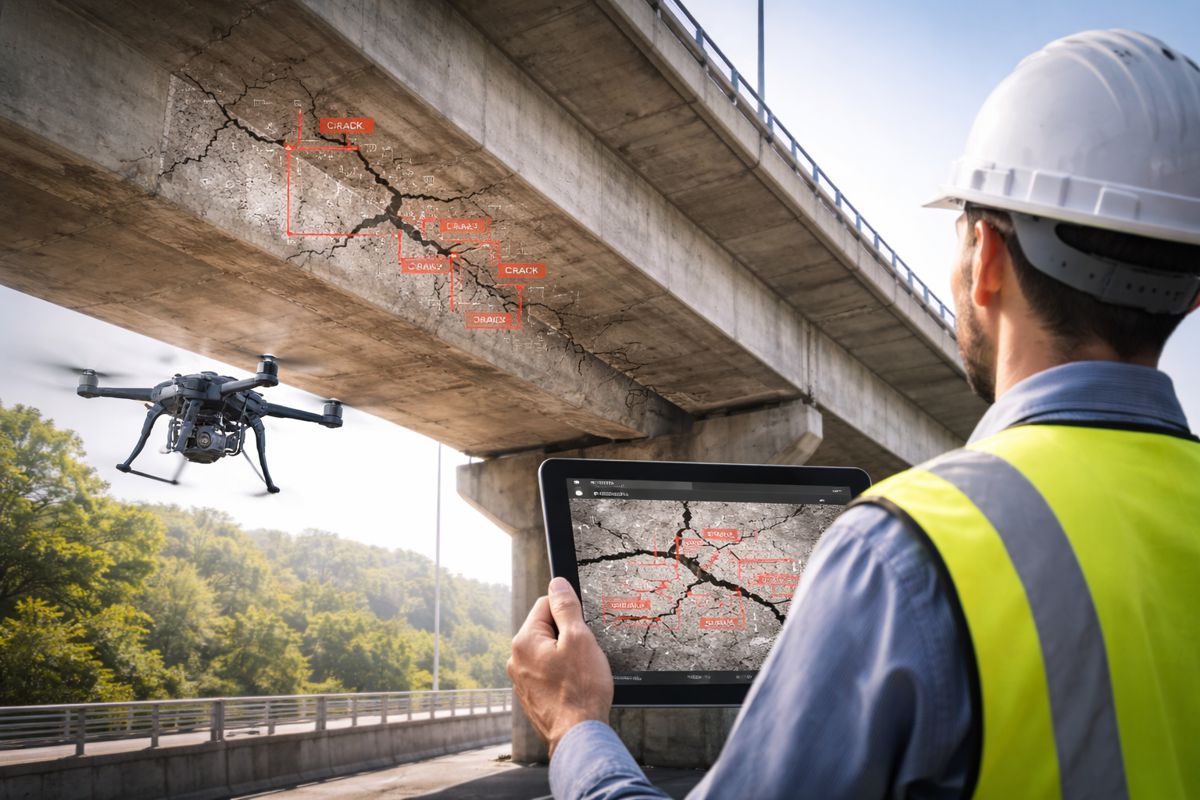
Structural health monitoring has long relied on the ability to detect cracks early, before minor defects escalate into costly failures. Across bridges, highways, tunnels and buildings, these hairline fractures often serve as the first visible sign of deeper structural stress. Miss them, and the consequences can be severe, ranging from accelerated deterioration to outright structural failure. Yet for all its importance, crack detection remains one of the most stubbornly imperfect areas of infrastructure inspection.
Traditional inspection methods still depend heavily on manual surveys. Engineers and inspectors walk structures, visually scanning surfaces, often under time pressure and in less-than-ideal conditions. It is slow work, labour intensive and, crucially, prone to human oversight. Fatigue, lighting conditions, and subjective judgement all influence outcomes. Even with the rise of image-based inspection, many automated systems have struggled to maintain consistent accuracy when deployed beyond controlled environments.
Recent research published in Machine Intelligence Research suggests a turning point may be emerging. A collaborative team from the University of Technology Sydney, American University of Beirut, Chinese Academy of Sciences and Western Sydney University has demonstrated that a self-supervised learning framework based on DINOv2 can detect concrete cracks with remarkable consistency across varied and challenging datasets. More importantly, it does so without the heavy reliance on labelled data that has constrained many previous deep learning approaches.
What emerges is not just a technical improvement, but a shift in how the industry may approach inspection altogether. If models can generalise reliably across different materials, lighting conditions and environments, the long-standing bottleneck of data labelling begins to loosen, opening the door to more scalable and deployable monitoring systems.
Briefing
- Self-supervised DINOv2 framework outperformed several established deep learning models in crack detection
- Demonstrated strong cross-dataset performance across CCiC, Xu, HBC2019 and SDNET2018 datasets
- Reduced dependence on large volumes of labelled data, addressing a major industry constraint
- Maintained high accuracy and recall even under noisy, imbalanced and unfamiliar conditions
- Signals a broader shift towards scalable, automated infrastructure inspection workflows
Moving Beyond the Limits of Supervised Learning
For years, deep learning has promised to transform infrastructure inspection. Convolutional neural networks such as ResNet, VGG and MobileNet have been widely applied to crack detection tasks, often delivering strong performance in controlled settings. However, these models come with a significant caveat. They require extensive labelled datasets, carefully curated and annotated by human experts.
That requirement has proven to be a sticking point. In real-world infrastructure environments, collecting and labelling thousands or millions of crack images across different materials, climates and structural types is both time-consuming and expensive. Even then, models trained on one dataset often struggle when applied to another. A crack on a weathered concrete bridge in a coastal region may look very different from one on a newly poured urban structure.
Class imbalance further complicates matters. In most inspection datasets, non-crack regions vastly outnumber crack pixels. As a result, models can become biased towards predicting the absence of damage, increasing the risk of missed detections. In safety-critical applications, that is a risk few operators are willing to accept.
The research team tackled these limitations head-on by adopting a self-supervised approach. Instead of relying on labelled data from the outset, the model learns general visual features from large volumes of unlabelled images. Only later does it apply these learned representations to specific tasks such as crack classification.
Inside the DinoV2 Framework
At the core of the study is the DinoV2_vits14 model, a vision transformer designed to learn rich image representations without explicit supervision. Images were standardised to a resolution of 224 by 224 pixels before being processed through the model. The extracted features were then passed to a relatively simple two-layer linear classification head.
What stands out is the efficiency of the training process. DinoV2 required just five epochs of training, a fraction of what is typically needed for fully supervised models trained from scratch. For comparison, widely used architectures including ResNet50, ResNet101, VGG16, MobileNetV2 and DenseNet121 were trained under identical conditions to provide a fair benchmark. A self-supervised baseline, MoCo v2, was also included.
The results were telling. On same-dataset evaluations, DinoV2 delivered top performance on three of the four datasets tested. It achieved perfect recall on the Xu dataset, meaning it identified all crack instances without omission. On HBC2019, it recorded an F1-score of 0.9346 and an accuracy of 0.9731. On SDNET2018, it achieved the highest accuracy at 0.9416.
These figures matter, not just for their numerical value, but for what they represent in operational terms. High recall reduces the likelihood of missed defects, while strong F1-scores indicate a balanced performance between precision and recall. In infrastructure inspection, that balance is critical.
Cross Dataset Reliability Changes the Equation
Perhaps the most significant outcome lies in cross-dataset testing. Models were trained on one dataset and evaluated on others, simulating real-world deployment where conditions rarely match training data. Here, DinoV2 maintained consistently strong performance, often leading in both accuracy and F1-score.
This ability to generalise is where many supervised models falter. A system trained on clean, well-lit images may struggle when faced with shadows, stains, rough textures or background noise. By contrast, DinoV2’s self-supervised learning process appears to capture more transferable features, enabling it to recognise crack patterns even in unfamiliar contexts.
For infrastructure operators, this has practical implications. It reduces the need for site-specific retraining and extensive data collection, lowering both cost and deployment time. It also improves confidence in automated systems, particularly when deployed across large and diverse asset portfolios.
Addressing the Data Bottleneck in Infrastructure AI
The shortage of labelled data has long been a limiting factor in applying artificial intelligence to engineering diagnostics. Unlike consumer applications, where labelled images are abundant, infrastructure datasets are often fragmented and context-specific. Each bridge, tunnel or roadway presents unique characteristics.
Self-supervised learning offers a way through this bottleneck. By learning from unlabelled data, models can build a foundational understanding of visual patterns before being fine-tuned for specific tasks. In the case of crack detection, this means recognising subtle variations in texture, shape and contrast that indicate structural damage.
The researchers argue that this capability is central to DinoV2’s performance. By focusing on general feature extraction rather than task-specific patterns, the model remains sensitive to cracks even when data are noisy or imbalanced. That sensitivity is particularly valuable in safety-critical scenarios, where missing a defect carries far greater consequences than raising a false alarm.
Implications for Infrastructure Inspection Workflows
The practical impact of this research extends well beyond academic benchmarks. A crack detection system that requires less manual labelling and performs reliably across different environments could reshape inspection workflows across the industry.
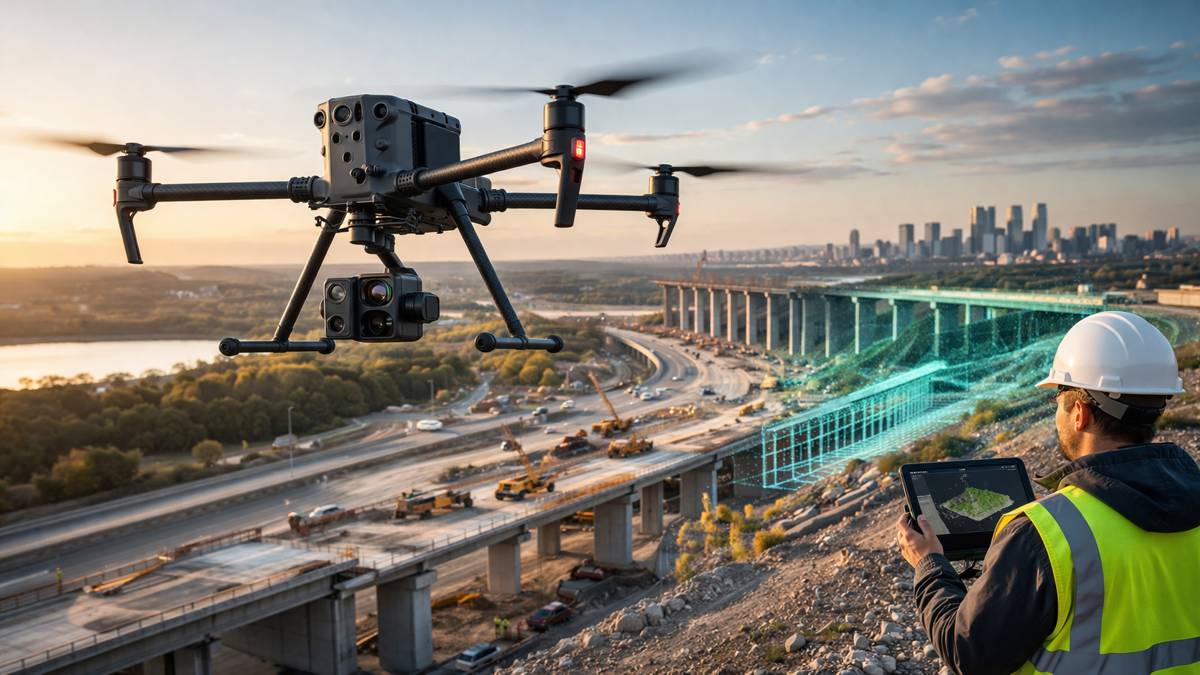
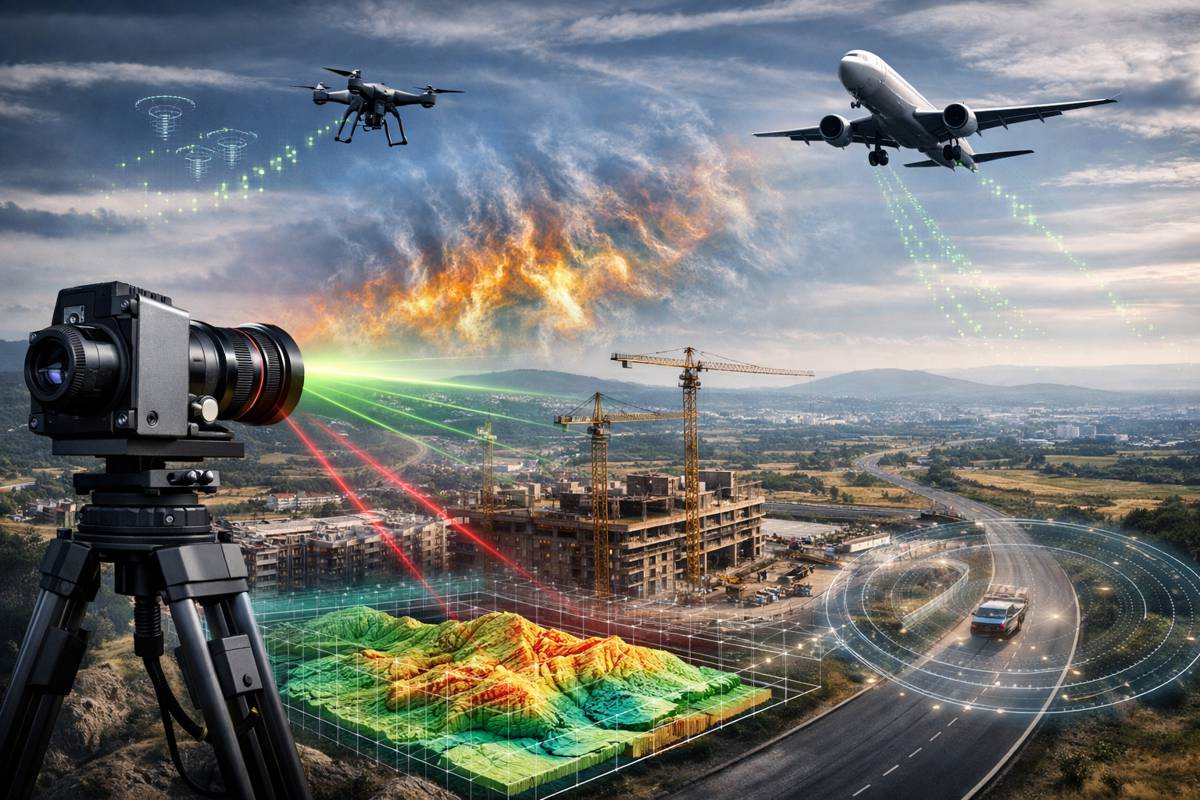
For bridge and highway authorities, this could mean faster assessments using drone imagery or mobile scanning systems. Instead of relying solely on periodic manual inspections, operators could deploy continuous monitoring solutions that flag potential issues in near real time. Maintenance teams could then prioritise interventions based on data-driven insights rather than routine schedules.
In the context of ageing infrastructure, the benefits are particularly compelling. Many assets across Europe and North America are approaching or exceeding their design life. Efficient monitoring becomes essential to manage risk and allocate limited maintenance budgets effectively.
There is also a clear alignment with broader trends in digital construction and asset management. As Building Information Modelling and digital twins gain traction, integrating reliable visual diagnostics becomes a logical next step. Crack detection systems powered by self-supervised learning could feed directly into these digital ecosystems, enhancing both accuracy and responsiveness.
A Step Towards More Autonomous Monitoring
The emergence of self-supervised models like DinoV2 points towards a future where infrastructure monitoring becomes increasingly autonomous. While human oversight will remain essential, the role of inspectors is likely to evolve from manual detection to validation and decision-making.
That shift could improve both efficiency and safety. Inspectors would spend less time in hazardous environments and more time analysing data and planning interventions. At the same time, automated systems could operate at a scale and frequency that manual inspections simply cannot match.
There are still challenges to address. Integration with existing inspection workflows, validation under extreme conditions and regulatory acceptance will all play a role in determining how quickly these technologies are adopted. However, the direction of travel is becoming clearer.
Building Resilience Through Better Detection
Infrastructure resilience depends on the ability to identify and address problems early. Crack detection, though seemingly simple, sits at the heart of that capability. Improvements in this area ripple across the entire lifecycle of an asset, influencing maintenance strategies, safety outcomes and long-term costs.
The findings from this study suggest that self-supervised learning could provide the reliability and scalability that the industry has been seeking. By reducing dependence on labelled data and improving performance across diverse conditions, models like DinoV2 bring automated inspection closer to practical reality.
For policymakers, investors and infrastructure operators, the message is straightforward. Advances in artificial intelligence are beginning to translate into tangible improvements in how assets are monitored and maintained. Those who embrace these tools early may find themselves better equipped to manage ageing infrastructure and rising performance expectations.