Port of Rotterdam Powers Ahead with Shore Energy Infrastructure
Europe’s largest port is taking a decisive step towards reshaping how global shipping interacts with energy infrastructure. A €90 million financing agreement from the European Investment Bank to the Port of Rotterdam Authority marks a significant escalation in the deployment of shore power systems for deep-sea container terminals. Quietly but decisively, this investment signals a shift in how ports are expected to operate in a decarbonising world.
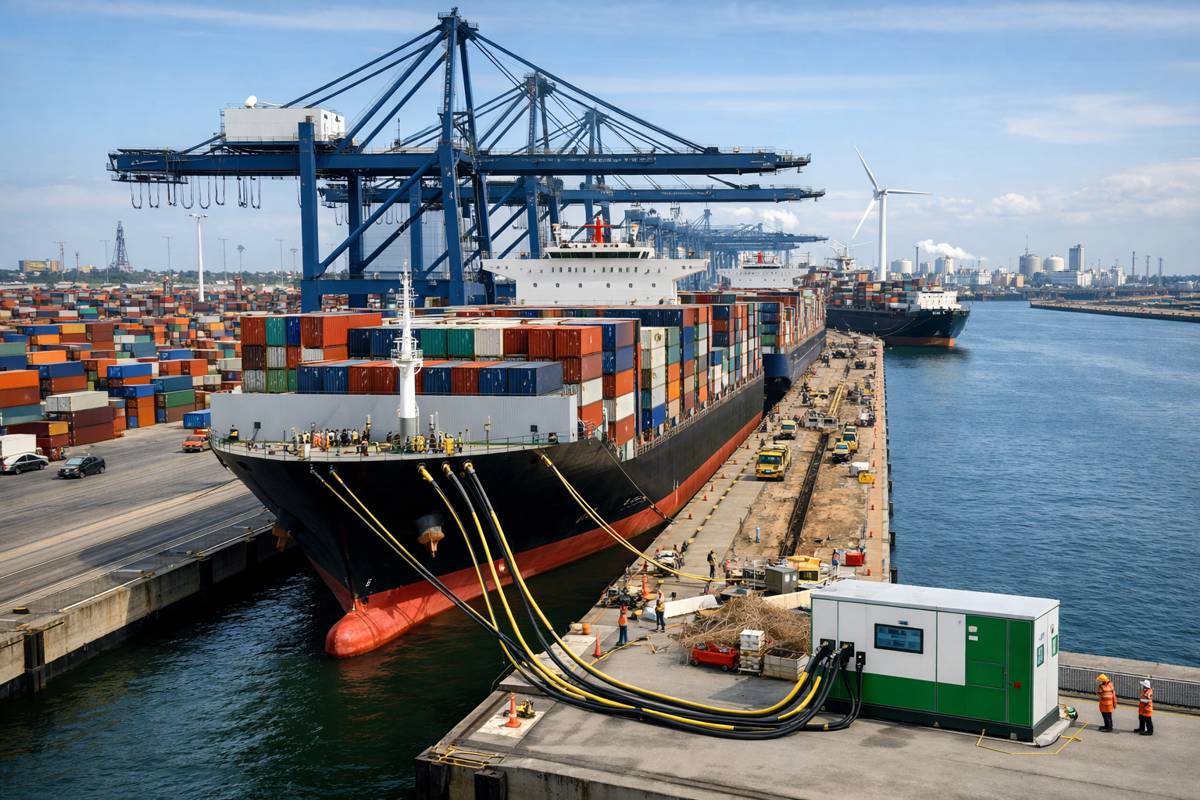
At the heart of the project is Rotterdam Shore Power, a joint venture with Eneco, tasked with delivering a large-scale electrical infrastructure capable of connecting berthed container vessels directly to the grid. Eight kilometres of quay will be fitted with 35 connection points, enabling ships to switch off onboard fossil-fuel generators while docked. It may sound like a technical upgrade, but in practice, it’s a fundamental redesign of port energy systems, one that ripples across shipping, logistics and urban environments alike.
Briefing
- €90 million EIB loan supports large-scale shore power rollout in Rotterdam
- Eight kilometres of quay to be equipped with 35 vessel connection points
- Additional €70 million EU funding through Connecting Europe Facility
- Project reduces emissions, noise and local air pollution from ships at berth
- Operational rollout expected from the second half of 2028
Rewiring the World’s Busiest Trade Gateways
The Port of Rotterdam isn’t just another logistics hub. Handling hundreds of millions of tonnes of cargo annually, it acts as a critical artery for European trade. Any shift in its operational model has consequences well beyond the Netherlands. Electrifying quay-side operations through shore power is one such shift, and it’s long overdue.
Traditionally, even the most advanced container ships rely on auxiliary engines powered by marine fuel to maintain onboard systems while docked. These engines generate carbon emissions, particulate pollution and persistent noise, often within close proximity to densely populated urban areas. Shore power removes that dependency by plugging vessels directly into land-based electricity supplies.
The implications go further than emissions reduction. By transferring energy demand from ships to the grid, ports effectively become integrated components of national energy systems. That opens the door to renewable electricity use, grid balancing strategies and even future smart energy ecosystems where ports act as both consumers and stabilisers of electricity networks.
Infrastructure at Industrial Scale
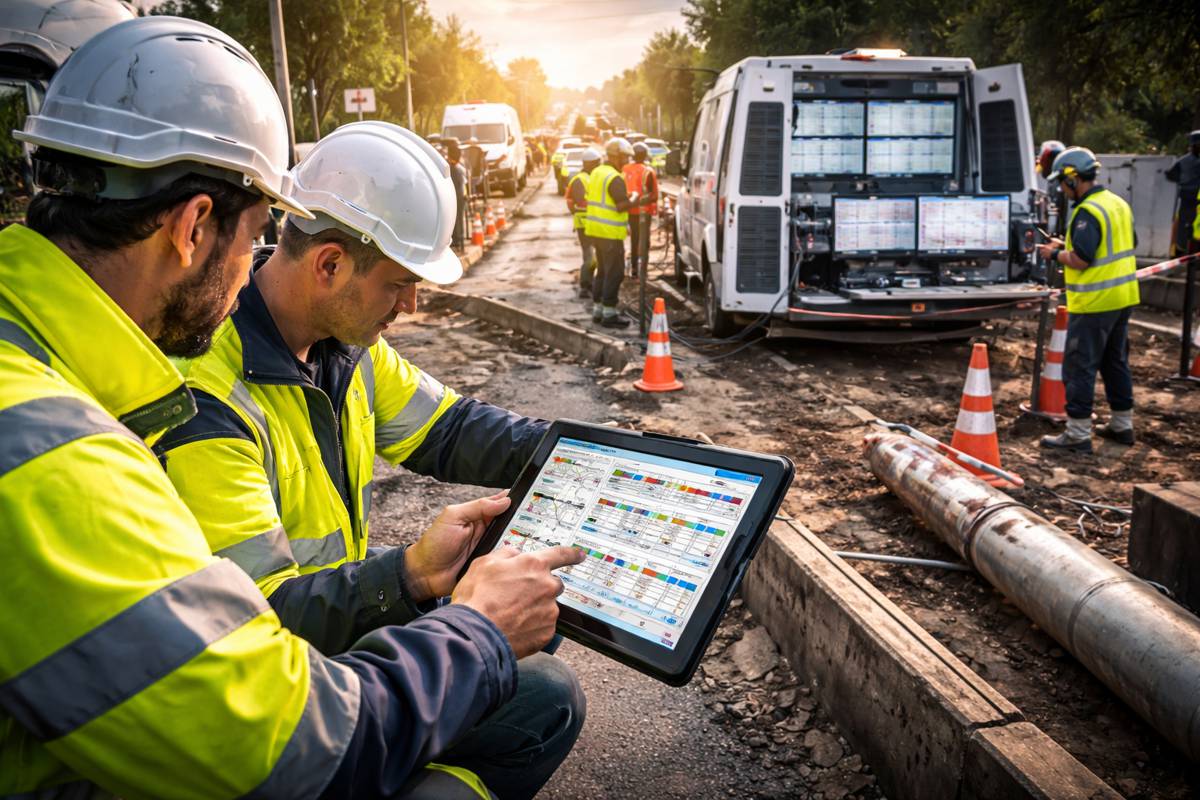
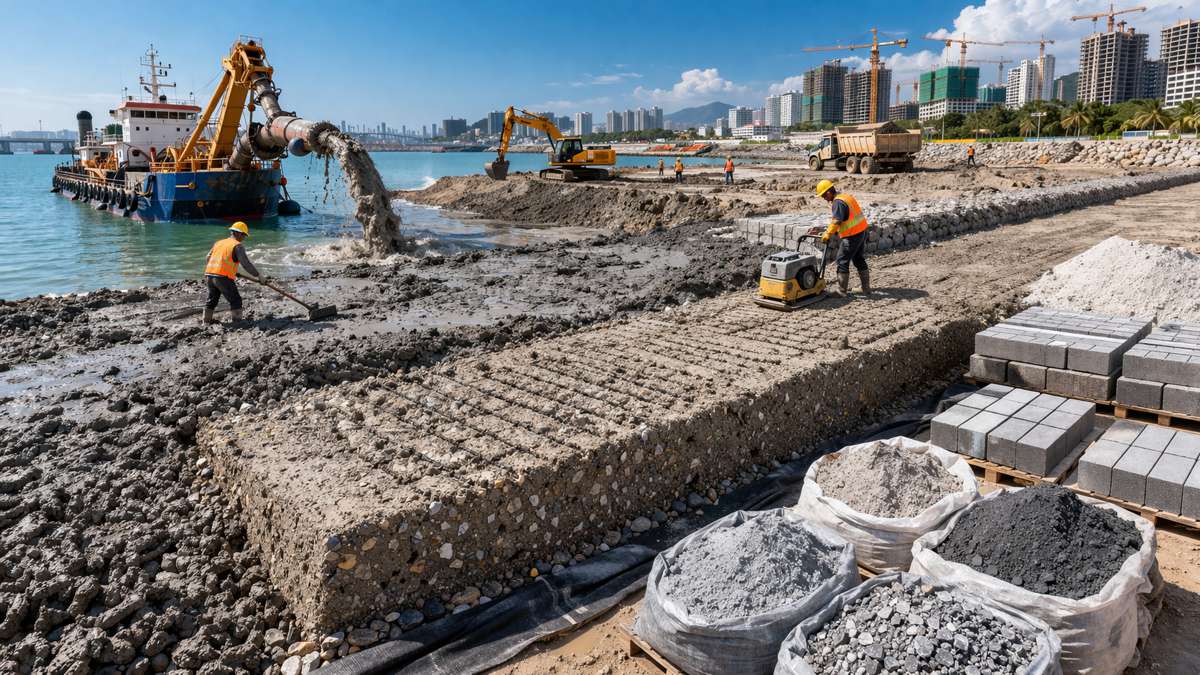
Delivering shore power at Rotterdam isn’t a plug-and-play exercise. It requires substantial civil engineering, electrical integration and coordination across multiple stakeholders. The project includes grid connections, heavy-duty cabling, excavation works and complex installation across operational container terminals, all without disrupting one of the world’s busiest ports.
The scale alone sets it apart. Eight kilometres of quay infrastructure is no minor upgrade. It represents a continuous, high-capacity electrical corridor capable of servicing some of the largest vessels afloat. Each of the 35 connection points must accommodate varying ship designs, power requirements and operational schedules.
Such infrastructure also demands resilience. Ports operate around the clock under harsh environmental conditions, and electrical systems must be robust enough to handle fluctuating loads and maritime wear. In that sense, this project is as much about reliability and engineering precision as it is about sustainability.
Energy Transition Meets Strategic Autonomy
The financing structure behind the project reveals a broader European agenda. Alongside the EIB loan, approximately €70 million in grant funding is being made available through the Connecting Europe Facility, specifically via its Alternative Fuels Infrastructure Facility.
This dual funding model reflects a recognition that infrastructure transitions of this scale require both public investment and long-term financial support. It also highlights the strategic importance of reducing reliance on imported fossil fuels, particularly in an increasingly volatile geopolitical landscape.
Robert de Groot of the EIB captured that sentiment directly, stating: “Rotterdam is Europe’s most important port and continues to innovate to stay at the forefront. Connecting large container ships to shore power is a major step towards reducing our reliance on fossil fuels. This is not only good for the environment, air quality and public health, but also for our economy, as it will help Europe become less dependent on energy from further afield. The geopolitical situation makes it clear that Europe needs greater autonomy when it comes to its energy supply.”
The message is clear. Shore power is no longer just an environmental initiative. It is part of a broader strategy to secure energy independence while maintaining industrial competitiveness.
Keeping Ports Competitive in a Low-Carbon Economy
For port operators, decarbonisation isn’t optional. Regulatory pressure is tightening, customers are demanding cleaner supply chains, and investors are increasingly focused on sustainability metrics. Ports that fail to adapt risk losing relevance in global logistics networks.
Vivienne de Leeuw of the Port of Rotterdam Authority highlighted the balancing act involved: “Shore power plays a vital role in the energy transition. As the port of Rotterdam works towards climate-neutral operations by 2050, while safeguarding its competitive position, investments like this are indispensable. They bring our climate goals within reach and reinforce the port’s role as a sustainable, future-proof container hub in north-west Europe.”
It’s a pragmatic view. Sustainability isn’t being pursued in isolation. It’s being integrated into a broader strategy to ensure the port remains a preferred destination for global shipping lines. As shipping companies face their own decarbonisation targets under frameworks such as the International Maritime Organization’s emissions strategy, ports offering shore power become more attractive partners.
Engineering the Interface Between Ships and Grids
One of the more complex challenges in deploying shore power lies in standardisation. Ships vary widely in their electrical systems, and ensuring compatibility with onshore infrastructure requires adherence to international standards such as IEC/ISO/IEEE 80005.
Rotterdam’s approach reflects a move towards harmonised systems that can accommodate different vessel classes while maintaining safety and efficiency. This includes voltage standardisation, automated connection systems and synchronisation technologies to ensure seamless transitions between onboard and shore-based power.
The engineering challenge doesn’t end at the quay. Grid capacity must be sufficient to handle peak demand when multiple large vessels are connected simultaneously. That raises questions about energy sourcing, grid upgrades and the integration of renewable energy into port operations.
Urban Impact and Public Health Gains
Ports are often located adjacent to major cities, and their environmental footprint has a direct impact on local populations. Air pollution from ships at berth contributes to respiratory illnesses, while noise pollution affects quality of life in surrounding communities.
Shore power addresses both issues head-on. By eliminating the need for onboard generators, it reduces emissions of nitrogen oxides, sulphur oxides and particulate matter. It also significantly lowers noise levels, particularly during night-time operations.
Cecilia Thorfinn from the European Commission underscored the broader policy alignment: “The current geopolitical context forces Europe to make critical choices if it is to remain competitive while also becoming energy independent. For the port of Rotterdam, as Europe’s largest port, more sustainable transport is essential to staying connected. Through Connecting Europe Facility grants, the European Commission is supporting the ambitious rollout of the alternative fuel infrastructure needed to make this happen.”
The benefits, then, are not confined to shipping companies or port operators. They extend to urban environments, public health systems and regional economies.
Phased Delivery and Long-Term Outlook
The rollout of Rotterdam’s shore power infrastructure is expected to begin operations in phases from the second half of 2028. That timeline reflects both the complexity of the project and the need to integrate construction with ongoing port activities.
Phased delivery allows for testing, optimisation and gradual scaling, reducing operational risks while ensuring that lessons learned can be applied to subsequent stages. It also aligns with broader European timelines for decarbonising transport infrastructure.
Looking ahead, the project sets a precedent for other major ports across Europe and beyond. As regulatory frameworks tighten and energy systems evolve, shore power is likely to become a standard feature rather than a competitive differentiator.
Building the Blueprint for Future Ports
What’s unfolding in Rotterdam is more than a single infrastructure project. It’s a template for how ports can evolve into energy hubs that support both logistics and sustainability goals. The integration of electrical infrastructure, renewable energy and digital systems points towards a future where ports are active participants in energy ecosystems.
For the construction and infrastructure sectors, the implications are substantial. Projects of this nature require multidisciplinary expertise, from civil engineering and electrical design to digital integration and project finance. They also create opportunities for innovation in materials, construction methods and operational technologies.
In practical terms, Rotterdam is demonstrating that large-scale infrastructure can adapt to new energy realities without compromising efficiency or competitiveness. It’s not a small undertaking, and it won’t be the last. As other ports follow suit, the lessons learned here will shape the next generation of maritime infrastructure across Europe and beyond.