ERF and IRF Move Toward Unified Global Voice for Road Infrastructure
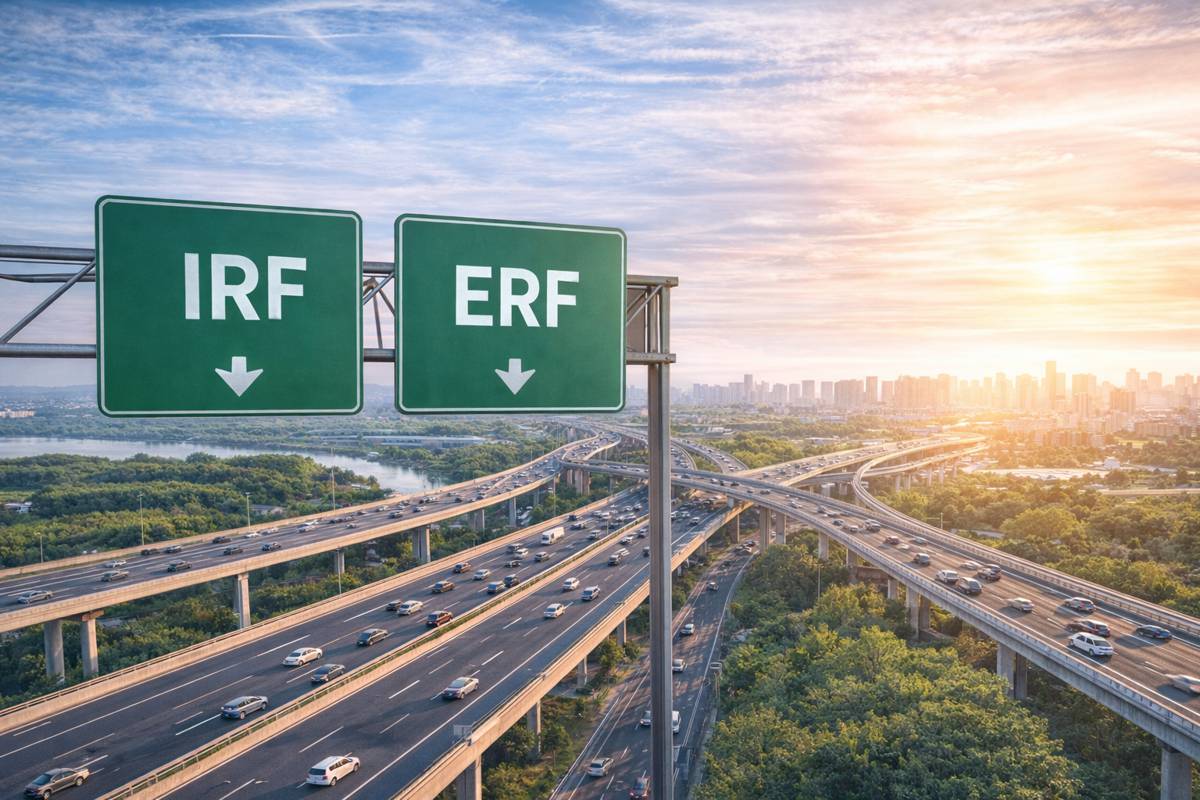
Europe’s road sector and the wider international mobility community are edging closer to a structural shift that could reshape how infrastructure policy, funding and collaboration are coordinated worldwide. The decision by the European Union Road Federation and the International Road Federation to advance their unification process signals more than organisational alignment. It reflects a broader recalibration of how the road and transport ecosystem responds to mounting pressures, from climate resilience to funding reform.
The move follows a strong endorsement from ERF members and initiates a transition phase expected to culminate in full operational integration by January 2027. The unified entity will operate under the IRF name while retaining a reinforced European pillar focused on EU policy engagement and regional priorities. Rather than a symbolic merger, this is being framed as a structural consolidation of expertise, networks and influence across continents.
For construction professionals, investors and policymakers, the implications are immediate. Roads remain the backbone of global logistics, supporting over 80 percent of passenger and freight transport in many regions, according to international transport data. Yet the systems that govern road infrastructure have often been fragmented, with regional bodies operating in parallel rather than in concert. Bringing ERF and IRF under one umbrella introduces the possibility of a more coherent global approach at a time when coherence is in short supply.
Briefing
- ERF and IRF are advancing toward a full unification, with integration targeted for January 2027
- The unified structure will combine European policy strength with global industry reach
- The move responds to funding challenges, climate pressures and digital transformation in infrastructure
- Both organisations will maintain operations during a phased transition through 2026
- Leadership emphasises stronger coordination, knowledge sharing and long-term sector stability
Strengthening institutional alignment across continents
At its core, the unification brings together two organisations with distinct but complementary roles. ERF has long acted as a bridge between European policymakers and industry stakeholders, particularly within Brussels’ regulatory ecosystem. IRF, headquartered in Geneva, has built a global network spanning public authorities, private sector players and development institutions since its founding in 1948.
By aligning these capabilities, the unified federation aims to streamline advocacy efforts and reduce duplication across international forums. Infrastructure policy is increasingly shaped by transnational considerations, including emissions targets, supply chain resilience and financing mechanisms. Fragmented representation can dilute the sector’s voice in these discussions. Consolidation, therefore, offers a more direct line into decision-making arenas where infrastructure priorities compete with broader economic and environmental agendas.
The combined entity is expected to retain ERF’s strong European engagement while leveraging IRF’s global footprint. That dual structure could prove particularly valuable as European regulatory frameworks, such as those linked to decarbonisation and digitalisation, increasingly influence global standards. A unified platform allows those frameworks to be interpreted, adapted and shared across markets more efficiently.
Funding pressures driving structural change
One of the clearest drivers behind the unification is the erosion of traditional road funding models. Fuel-based taxation, long the cornerstone of infrastructure financing, is under strain as vehicle electrification accelerates. This shift is forcing governments to explore alternative mechanisms such as road user charging, congestion pricing and mileage-based systems.
The press release underscores this challenge directly, noting the need for “forward-looking pricing and funding frameworks capable of ensuring resilient, transparent and socially acceptable long-term network stewardship.” That language reflects a growing consensus within the sector that legacy funding models are no longer fit for purpose.
External research supports this assessment. The OECD and World Bank have both highlighted the widening gap between infrastructure investment needs and available funding, particularly in developed economies where maintenance backlogs are growing. In Europe alone, estimates suggest hundreds of billions of euros will be required over the coming decades to maintain and upgrade transport networks in line with climate and digital objectives.
By unifying, ERF and IRF are positioning themselves to play a more active role in shaping these new funding frameworks. A coordinated voice can help influence policy design, ensuring that emerging models are practical for operators while remaining politically and socially viable.
Responding to technological and environmental demands
The road sector is undergoing rapid transformation, driven by digital technologies, automation and the urgent need to decarbonise. Smart infrastructure, connected vehicles and data-driven asset management are no longer niche concepts. They are becoming central to how networks are designed, operated and maintained.
At the same time, climate resilience has moved to the forefront of infrastructure planning. Extreme weather events are placing unprecedented stress on road networks, requiring new design standards and maintenance strategies. The integration of sustainability into infrastructure development is no longer optional; it is a baseline expectation.
The unification of ERF and IRF reflects an understanding that these challenges cannot be addressed in isolation. Knowledge transfer, standardisation and coordinated research efforts are essential. By combining their resources, the organisations aim to accelerate the exchange of best practices and support the development of solutions that can be applied across different regions.
Leadership perspectives on a unified future
The leadership of both organisations has framed the move as a strategic response to evolving sector realities. Dimitrios Mandalozis, President of the International Road Federation, emphasised the broader significance of the decision.
“Road infrastructure sits at the heart of economic competitiveness, social cohesion and territorial connectivity,” he said. “At a time of rapid technological change and mounting climate and investment pressures, stronger institutional coherence enables more effective collaboration.”
His remarks highlight the interconnected nature of modern infrastructure challenges. Economic growth, social inclusion and environmental sustainability are increasingly intertwined, and road networks play a central role in each.
Mandalozis also pointed to the benefits of alignment. “The unification of ERF and IRF reflects a shared commitment to serve road stakeholders with clarity of purpose and strategic stability. By aligning European and global capabilities within a single federation, we are creating a platform that can better anticipate challenges and support practical solutions across regions.”
Joseph Marra, President of the European Union Road Federation, echoed this sentiment while emphasising the European dimension of the integration.
“This is a forward-looking decision shaped by the realities of our time,” said Joseph Marra, President of the European Union Road Federation.
He added further context on how the unified structure will function: “European road actors operate in an increasingly interconnected environment. By aligning ERF and IRF under a single, modernised framework, we are reinforcing Europe’s capacity to influence the global dialogue while maintaining the depth of engagement that characterises our work in Brussels. Our working groups, technical dialogue and institutional relationships remain central to the structure we are building. What changes is our collective scale and reach.”
Transition phase and operational continuity
While the strategic direction is clear, the process itself will unfold over time. The transition phase will extend through 2026, during which both organisations will continue their respective activities. This approach is designed to ensure continuity for members and stakeholders while the legal and governance frameworks for the unified entity are finalised.
Such phased integrations are common in international organisations, particularly when multiple jurisdictions and governance models are involved. Maintaining operational stability during this period is critical, as disruptions could undermine the very benefits the unification seeks to achieve.
Further details are expected to be shared with members and stakeholders throughout the year. These will likely cover governance structures, membership arrangements and the integration of existing programmes and initiatives.
A more connected road sector
The unification of ERF and IRF arrives at a moment when the road sector is under scrutiny and pressure to evolve. Infrastructure is expected to deliver more, from supporting economic recovery to enabling the transition to low-carbon mobility. At the same time, public expectations around transparency, efficiency and sustainability are rising.
In this environment, fragmented representation can hinder progress. A unified federation offers a clearer pathway for collaboration, bringing together diverse stakeholders under a single framework. That, in turn, could help accelerate the adoption of new technologies, improve policy alignment and strengthen the sector’s ability to respond to emerging challenges.
For industry professionals, the message is straightforward. The structures that underpin global road infrastructure are changing, and with them, the mechanisms for influence and collaboration. The coming years will reveal how effectively this unified approach translates into tangible outcomes, but the direction of travel is already set.