Hyundai Motor Group Introduces Next Generation AI Robotics at CES
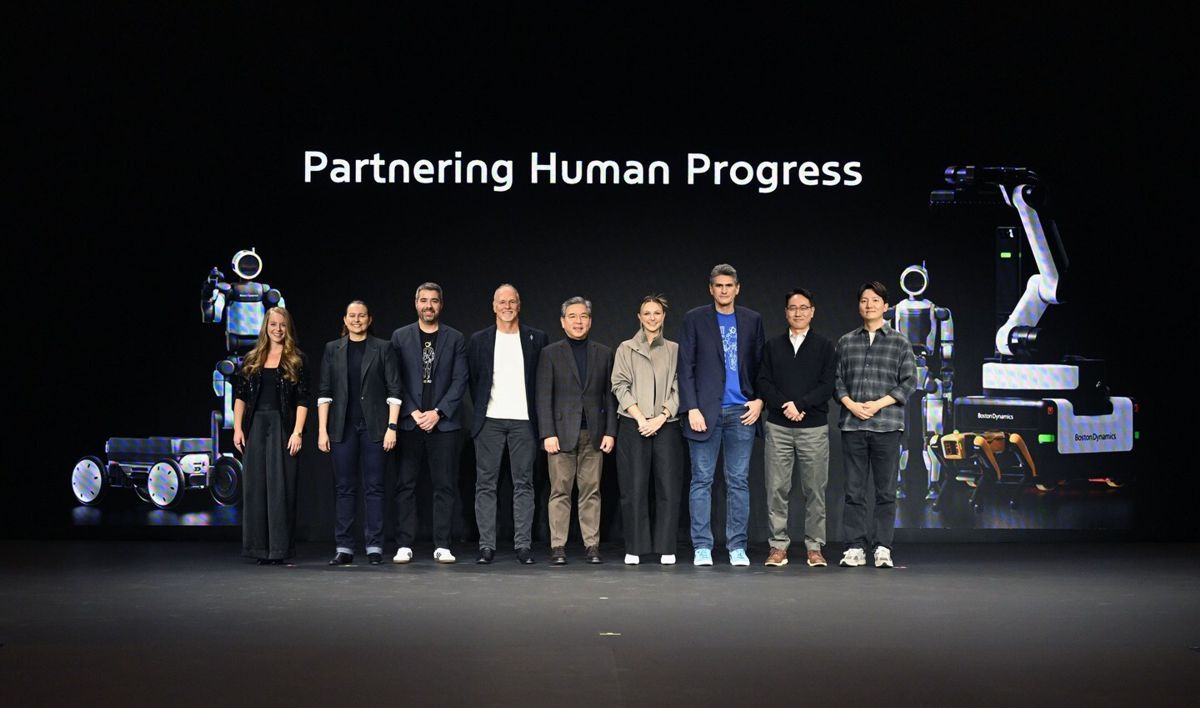
Hyundai Motor Group arrived at CES 2026 with a clear message and a carefully structured plan. The Group is no longer treating robotics as a peripheral technology or a futuristic experiment. Instead, it is placing human-centred AI Robotics at the core of its industrial, manufacturing and societal ambitions. Under the theme Partnering Human Progress, the Group presented a strategy that signals a decisive shift from hardware-led automation towards adaptive, intelligence-driven physical systems designed to work alongside people rather than replace them.
This evolution builds directly on the Group’s CES 2022 theme, Expanding Human Reach. What began as a focus on mechanical capability has matured into a broader vision where robots perceive, learn and act within real-world environments. At the heart of this transition sits Physical AI, a concept that turns data collected through physical interaction into autonomous decision-making. For Hyundai Motor Group, this is not an abstract idea. It is a practical framework that links factories, logistics networks, mobility platforms and robotics into a continuous learning ecosystem.
From Robotics Hardware to Human-Centred Physical AI
The Group’s strategy reframes robotics as an extension of human capability. Rather than positioning machines as substitutes for labour, Hyundai Motor Group is developing co-working robots that reduce physical strain, manage risk and take on repetitive tasks that offer little human value. Manufacturing environments are the first proving ground, not because they are easy, but because they provide structured, high-volume scenarios where safety, precision and efficiency matter every day.
Physical AI plays a central role in this shift. By embedding intelligence directly into machines operating in real environments, the Group enables robots to gather data through sensors, cameras and interaction. That data is then digitised, analysed and fed back into AI models that continuously refine behaviour. Over time, this creates a feedback loop where robots improve not just individually, but as part of a networked system spanning factories, supply chains and distribution hubs.
Partnering Humans and Co-Working Robots
The first pillar of the strategy focuses on direct collaboration between people and machines. Hyundai Motor Group is targeting tasks that are hazardous, physically demanding or monotonous, allowing robots to shoulder the burden while humans retain control, oversight and creative input. This approach recognises that productivity gains are most sustainable when worker wellbeing is treated as a design requirement rather than an afterthought.
Manufacturing plants provide the ideal launch environment. These settings generate vast volumes of structured data and demand consistent performance under strict safety constraints. By introducing AI-driven robots into these environments, the Group can validate real-world performance while refining interaction models between humans and machines. Over time, lessons learned in factories are expected to transfer into logistics, construction support, mobility services and urban infrastructure.
Atlas Moves From Prototype to Production Reality
One of the most closely watched moments of the CES 2026 showcase was the unveiling of the product version of the new Atlas robot. Designed by Boston Dynamics, Atlas represents a step change in humanoid robotics. The robot is engineered to move with agility, balance and dexterity in environments built for humans rather than machines.
Hyundai Motor Group confirmed that Atlas will be deployed at Hyundai Motor Group Metaplant America by 2028, where it will undertake sequencing and material-handling tasks. These are roles that often expose workers to repetitive strain or higher physical risk. By assigning them to Atlas, the Group aims to reduce workplace injuries while maintaining precision and throughput. This deployment also lays the foundation for broader commercialisation, demonstrating how humanoid robots can integrate into existing industrial workflows without requiring wholesale redesign.
Building an End-to-End AI Robotics Value Chain
The second pillar of the strategy centres on partnership with Boston Dynamics and the wider Hyundai Motor Group value network. Rather than treating robotics as a standalone product line, the Group is building an end-to-end AI Robotics value chain that spans design, training, validation, production and service delivery.
Group affiliates including Hyundai Motor, Kia, Hyundai Mobis and Hyundai Glovis are collaborating to align manufacturing expertise, logistics capability and software development. This coordinated approach allows robotics systems to be trained and validated using real production data at scale. Facilities such as the Robot Metaplant Application Center and the Software-Defined Factory platform provide controlled environments where robots can be tested, refined and prepared for commercial deployment.
Data-Driven Training and Validation at Scale
Training AI-powered robots requires more than simulation. It demands exposure to the variability, unpredictability and nuance of real-world environments. Hyundai Motor Group is leveraging its global manufacturing footprint to provide precisely this kind of data-rich training ground. Each factory, logistics hub and distribution centre becomes a source of insight, feeding into AI models that improve performance across the entire network.
This approach also accelerates the path to mass production. By integrating robotics development with established automotive manufacturing processes, the Group can apply decades of experience in quality control, supply chain management and industrial scaling. The result is a platform capable of supporting not only internal deployment, but also external commercial offerings, including Robotics-as-a-Service models that lower barriers to adoption for other industries.
Strategic Partnerships Driving AI Robotics Innovation
The third pillar of the strategy recognises that no single organisation can advance Physical AI alone. Hyundai Motor Group is actively partnering with global AI leaders to accelerate innovation while maintaining a strong focus on safety, reliability and human benefit.
Collaboration between Boston Dynamics and Google DeepMind is a cornerstone of this effort. By combining advanced robotics engineering with cutting-edge AI research, the partnership aims to accelerate the development of next-generation humanoids capable of more nuanced perception, reasoning and interaction. This integration is essential for deploying robots safely and efficiently in environments where humans and machines work side by side.
Establishing the Physical AI Ecosystem
Beyond individual partnerships, Hyundai Motor Group is investing in the broader ecosystem required to support Physical AI at scale. Plans are underway to establish a Physical AI Application Center, designed to coordinate research, development and deployment across multiple industries. This centre will serve as both a testing ground and a collaboration hub, connecting manufacturers, software developers and research institutions.
The Group is also exploring the development of a dedicated robot manufacturing and foundry plant. Built around customised robotics technologies developed through Physical AI, this facility would further integrate design, production and validation. Such an approach shortens development cycles and ensures that robotics systems are optimised for real-world conditions from the outset.
CES 2026 as a Live Demonstration Platform
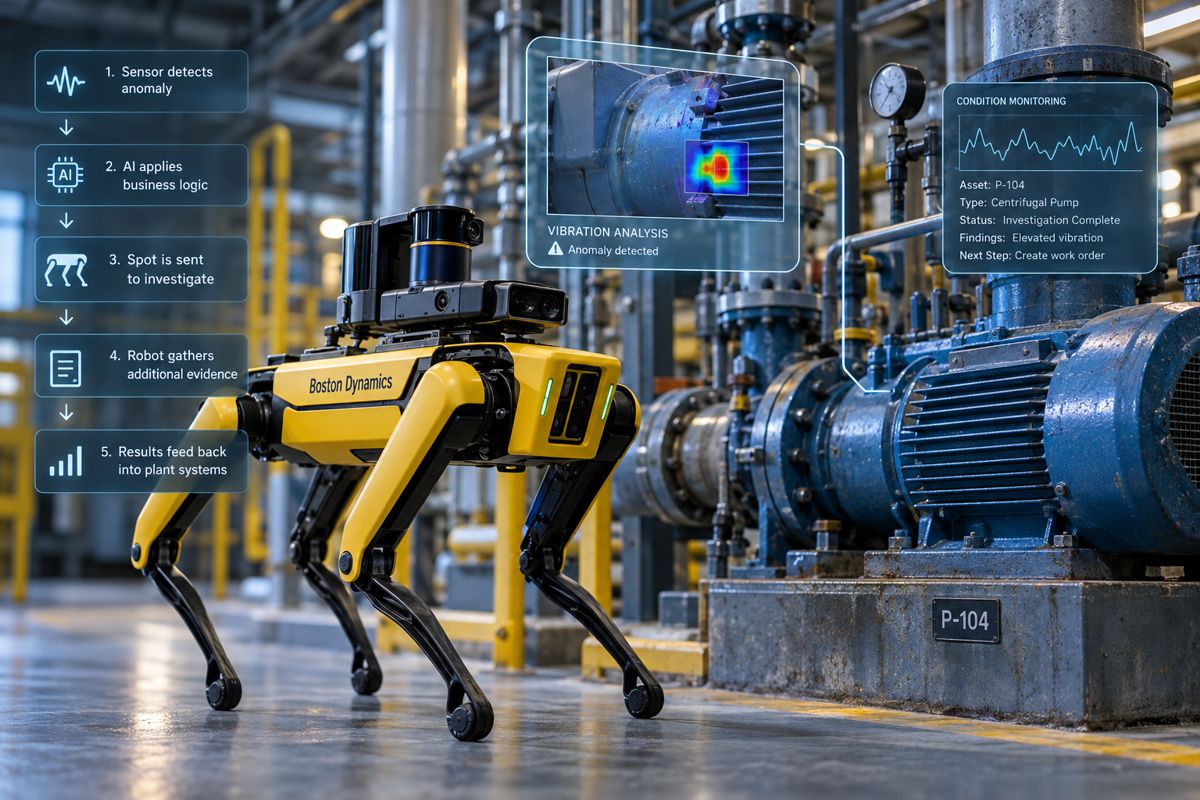
At CES 2026, the Group’s booth brought these ideas to life through live demonstrations and interactive experiences. Atlas was joined by Spot and MobED, each showcasing different aspects of AI Robotics integration. Together, they illustrated how diverse robotic platforms can share data, learn from experience and operate cohesively within a human-centred framework.
These demonstrations were not staged spectacles. They were practical illustrations of a roadmap already in motion. By presenting working systems rather than conceptual renders, Hyundai Motor Group signalled confidence in both the maturity of its technology and the clarity of its long-term vision.
A Foundation for Long-Term Industrial Transformation
Hyundai Motor Group’s AI Robotics Strategy positions Physical AI as a connective tissue linking manufacturing, mobility and robotics into a unified system. By prioritising human-centred design, leveraging its global value chain and forming targeted partnerships, the Group is laying the groundwork for a new era of collaboration between people and intelligent machines.
As data flows from factories to AI models and back into physical systems, continuous improvement becomes embedded in the industrial process itself. The result is not just smarter robots, but more resilient, adaptable and human-friendly industries capable of meeting the demands of a rapidly changing world.