Autonomous Trucking Moves from Experiment to Essential Infrastructure
Autonomous trucking has spent the better part of a decade hovering between promise and proof. Pilot programmes came and went, safety drivers remained firmly behind the wheel, and commercial scale always seemed just a few years away. That balance has now shifted. Gatik has crossed a threshold that few in the sector have reached, moving fully driverless freight operations into sustained, revenue-generating reality across North America.
What sets this milestone apart is not a single technical breakthrough or a carefully managed demonstration route. It is the combination of scale, frequency, regulatory engagement, and commercial reliance. Gatik is operating without a human driver or safety observer in the cab, completing daily deliveries for Fortune 50 retailers, and doing so under long-term commercial contracts valued at more than $600 million. In an industry often dominated by projections and pilot headlines, that level of operational dependence marks a genuine inflection point.
For the wider construction, infrastructure, and logistics ecosystem, the implications extend far beyond autonomous vehicles themselves. Reliable driverless freight directly affects how distribution centres are designed, how regional road networks are utilised, how labour shortages are addressed, and how supply chains absorb economic shocks. In short, autonomous trucking has begun to behave less like a technology experiment and more like critical infrastructure.
From Pilot Routes to Revenue at Scale
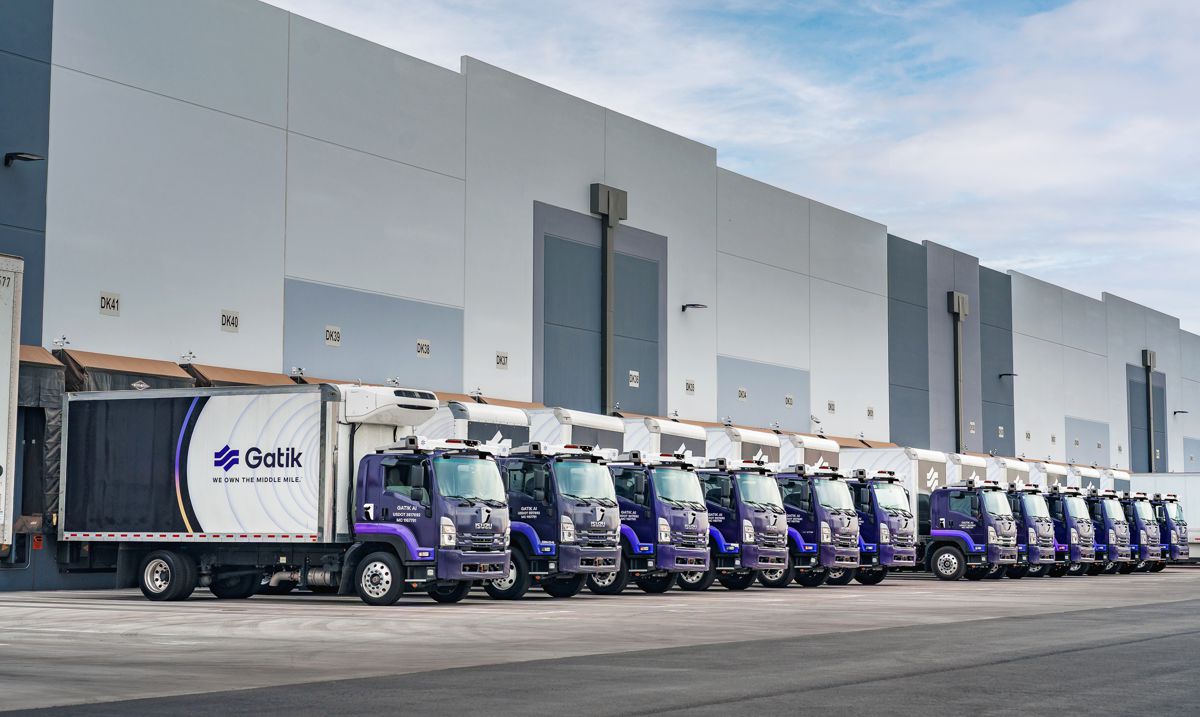
Gatik’s transition to freight-only, fully driverless operations began in mid-2025, following several years of supervised deployments and incremental expansion. Since then, the company has completed more than 60,000 fully driverless orders without incident, operating continuously across highways and surface streets. The figures matter, but so does the context. These are not isolated test loops. They are live logistics routes linking distribution centres, warehouses, and retail stores, often several times per day.
To date, Gatik has logged more than 2,000 hours of driverless operation and over 10,000 autonomous miles on public roads, with routes extending up to 400 miles. Those routes are embedded in dense regional networks where timing, reliability, and predictability are paramount. Missed slots ripple through inventory systems, staffing schedules, and store operations. That retailers continue to rely on these vehicles daily speaks volumes about operational confidence.
The commercial structure reinforces that confidence. Long-term contracted revenue, rather than per-mile trials or subsidised pilots, indicates that autonomous trucking is already being costed into supply chain strategies. For investors and policymakers, this shift from experimental spend to contracted logistics capacity is one of the clearest signals yet that autonomous freight has crossed into mainstream adoption.
Why Regional Logistics Became the Proving Ground
The focus on regional, middle-mile logistics has always been central to Gatik’s approach, and it helps explain why full driverless deployment has arrived here first. Unlike long-haul trucking, regional routes are typically shorter, repeatable, and highly structured. They operate between known facilities with predictable traffic patterns, loading protocols, and delivery windows.
That repeatability simplifies both operational design and risk management. Autonomous systems can be trained on consistent environments, while fleet operators can tightly control variables such as vehicle configuration, maintenance cycles, and route timing. For retailers, the value lies in higher delivery frequency, better inventory smoothing, and reduced exposure to driver availability.
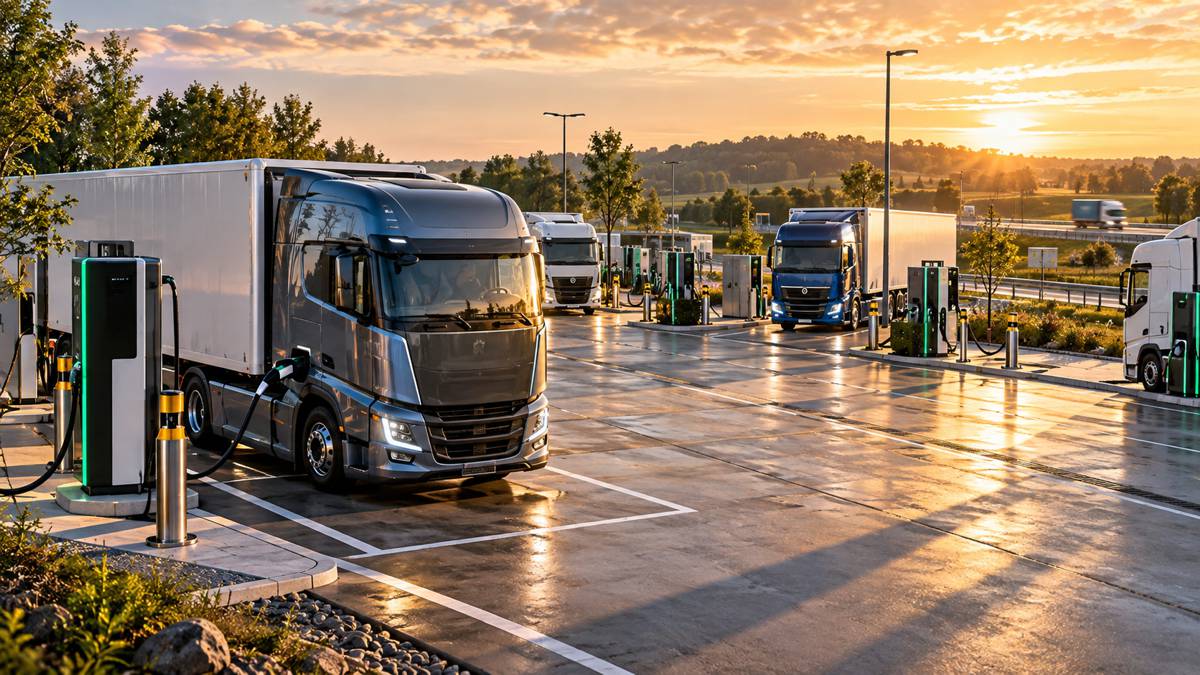
Operating nearly 24 hours a day, Gatik’s 26- and 30-foot trucks move ambient, refrigerated, and frozen goods across regional networks in Texas, Arizona, and Arkansas. These operations directly support grocery and consumer packaged goods supply chains where shelf availability is both commercially critical and politically sensitive. In that sense, autonomous trucking is already influencing food security and price stability at a regional level.
The Technology Behind Consistent Driverless Operations
At the centre of these deployments is the Gatik Driver™, the company’s third-generation autonomous driving system. While many autonomous platforms prioritise raw capability or edge-case performance, Gatik has focused on interpretability, scalability, and consistency. That design philosophy reflects the realities of commercial logistics, where predictability often matters more than theoretical maximum performance.
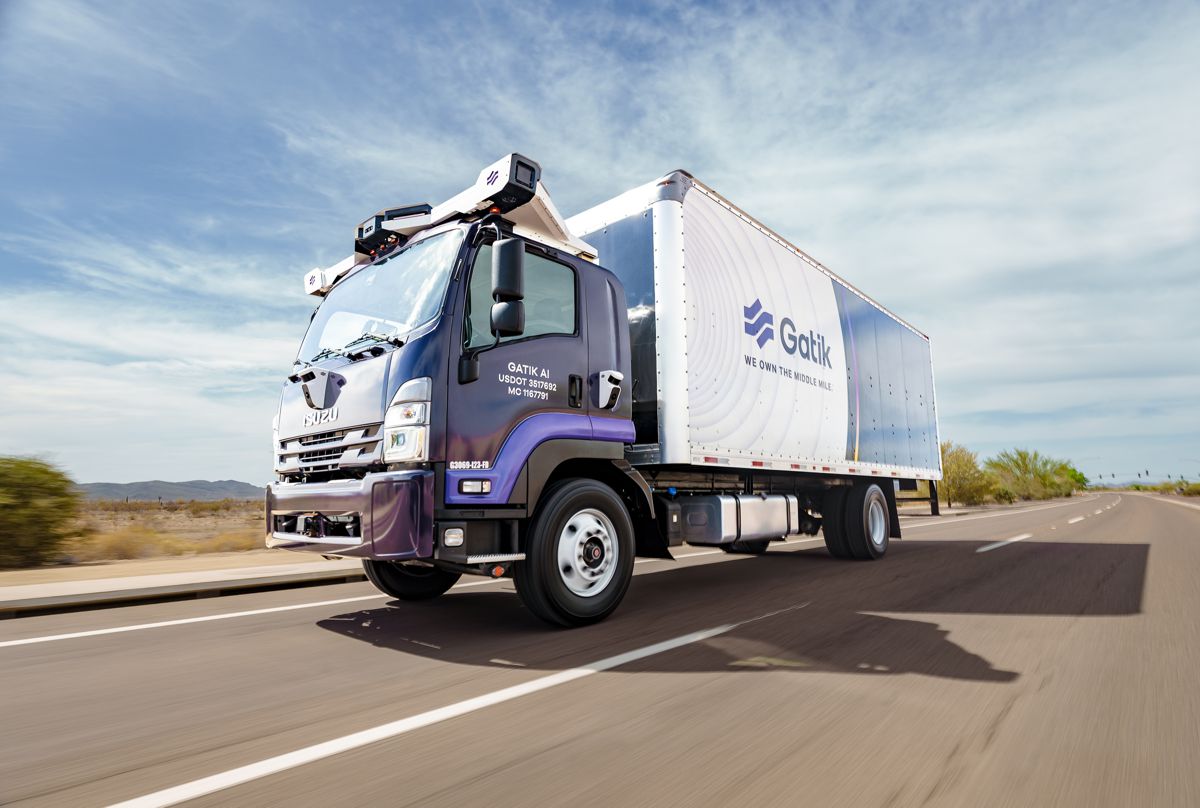
The system combines advanced AI with purpose-built hardware designed specifically for medium-duty freight vehicles. Rather than adapting passenger-car autonomy to trucks, Gatik’s architecture reflects the braking profiles, load dynamics, and duty cycles of commercial fleets. This alignment reduces system complexity and improves reliability over long operating hours.
Crucially, the system has been validated not just in simulations or closed environments, but in sustained real-world use. Operating day and night, across multiple states and road types, the platform has demonstrated the kind of robustness that regulators and logistics partners require before removing the human fallback entirely.
Regulation, Safety, and the Path to Trust
Fully driverless operation on public roads demands more than technical capability. It requires regulatory confidence, transparent safety frameworks, and community engagement. Gatik’s move to freight-only operations followed an independent review of critical elements of its Safety Assessment Framework by globally recognised testing, inspection, and certification organisations experienced in autonomous system assurance.
Beyond third-party review, the company engaged extensively with regulators at both state and federal levels. Briefings were conducted with the Federal Motor Carrier Safety Administration and the National Highway Traffic Safety Administration, alongside state departments of transportation, public safety agencies, and motor vehicle authorities in Texas, Arizona, and Arkansas.
Equally important has been local readiness. Training sessions for first responders and community stakeholders were built into deployment plans, ensuring that emergency services understand vehicle behaviour and response protocols. This layered approach to safety and transparency has helped bridge the gap between regulatory approval and public acceptance.
Commercial Demand Meets Structural Labour Shortages
The timing of Gatik’s expansion is not accidental. North American logistics continues to face persistent driver shortages, rising labour costs, and tightening delivery windows driven by e-commerce and just-in-time retail models. Autonomous trucking does not eliminate these pressures overnight, but it offers a structural response rather than a temporary fix.
By operating continuously and predictably, driverless trucks increase asset utilisation while reducing dependency on scarce human resources. For retailers, that translates into more resilient supply chains and lower exposure to labour volatility. For policymakers, it offers a way to maintain freight capacity without exacerbating workforce pressures in an already stretched sector.
It is telling that demand for Gatik’s services is coming from some of the largest retailers and consumer goods companies in the country. These organisations are notoriously risk-averse when it comes to core operations. Their willingness to integrate fully driverless vehicles into daily logistics suggests that autonomous trucking has reached a level of maturity that cannot be dismissed as experimental.
Manufacturing Partnerships and Scalable Vehicle Platforms
Technology alone does not deliver scale. Vehicle platforms must be reliable, serviceable, and ready for mass production. Gatik’s collaboration with Isuzu Motors Limited addresses this requirement by integrating SAE Level 4 autonomous systems into proven medium-duty truck platforms.
Isuzu’s involvement brings decades of experience in commercial vehicle engineering, durability, and global manufacturing. The partnership supports current operations while laying the groundwork for an autonomous-ready vehicle programme designed for volume production. For the wider industry, this collaboration highlights a critical trend: autonomy is increasingly being embedded at the OEM level rather than retrofitted as an afterthought.
Statements from both companies emphasise a shared focus on reliability and commercial readiness rather than headline-grabbing capability. That alignment is likely to become more common as autonomous logistics moves from specialist deployments to mainstream fleet procurement.
The Wider Technology Ecosystem
Gatik’s progress is also supported by partnerships across the broader technology and logistics landscape. Collaborations with companies such as NVIDIA and Ryder reflect the multi-layered nature of autonomous freight, where compute, vehicle integration, fleet management, and maintenance must work in concert.
These relationships reinforce the idea that autonomous trucking is not a single product but an ecosystem. Success depends on seamless integration between software, hardware, infrastructure, and operations. As deployments scale, that ecosystem approach will become increasingly important for managing costs, maintaining uptime, and ensuring regulatory compliance across jurisdictions.
Implications for Infrastructure and Policy
For infrastructure planners, the emergence of reliable autonomous freight raises new questions about road design, digital infrastructure, and traffic management. Consistent, predictable vehicle behaviour could support smoother traffic flows and reduced congestion on regional corridors. At the same time, increased delivery frequency may place new demands on loading zones, distribution hubs, and peri-urban road networks.
Policymakers will need to balance innovation with oversight, ensuring that safety frameworks evolve alongside deployment realities. Gatik’s experience demonstrates that proactive engagement and transparency can accelerate this process, reducing friction between innovators and regulators.
For the construction and infrastructure sectors, autonomous trucking is no longer a future consideration. It is an active variable influencing how goods move, how facilities are designed, and how investment decisions are made.
A Turning Point for Autonomous Logistics
Gatik’s fully driverless commercial operations represent more than a corporate milestone. They signal a broader shift in how autonomy is being adopted across the logistics sector. Moving beyond pilots to sustained, revenue-backed deployments changes the conversation from what might be possible to what is already happening.
As the company prepares to expand into additional US markets, the ripple effects will be felt across supply chains, infrastructure planning, and regulatory frameworks. Autonomous trucking has entered a phase where execution matters more than aspiration. For an industry long defined by incremental change, that is a significant development.