Sany Pushes Boundaries With Massive AI and Electrification Strategy
The global construction equipment sector is entering a decisive phase, and SANY Group is positioning itself at the centre of that shift. With a commitment of RMB 30 billion, roughly $4.2 billion, towards research and development, the company is not simply upgrading its machinery portfolio. It is attempting to rebuild its technological foundations around artificial intelligence, electrification and autonomous systems.
This move reflects a broader structural change across heavy industry. Construction, mining and logistics are no longer defined purely by mechanical performance. Instead, data, software and energy systems are shaping competitiveness. For Sany, this transition is not being treated as incremental. Leadership has framed it in stark terms, with Chairman Xiang Wenbo stating: “It is a matter of either turning around or sinking.” That tone signals a recognition that the rules of the global equipment market are being rewritten.
At its recent Technology Festival, the company outlined how it intends to navigate what executives describe as a “Super VUCA” environment. Volatility, uncertainty, complexity and ambiguity are nothing new in infrastructure, yet the addition of rapid digital transformation and energy transition has intensified the pressure. The convergence of industrial automation and low carbon energy systems is opening a narrow but critical window for companies willing to invest heavily and move quickly.
Briefing
- Sany has committed RMB 30 billion to R&D, maintaining investment at around 5% of annual revenue
- The company is shifting from incremental “AI+” upgrades to a fully integrated “AI-native” engineering approach
- New energy equipment sales reached RMB 8.64 billion in 2025, reflecting strong growth in electrification
- Autonomous construction systems have already been demonstrated in continuous real world operations
- The long term strategy moves Sany from equipment manufacturing to full system solutions, including energy and digital infrastructure
Rewriting the Engineering Playbook With AI Native Systems
Sany’s most significant shift lies in how it defines artificial intelligence within industrial systems. Rather than layering sensors and analytics onto existing machines, the company is restructuring its entire engineering architecture. This approach, described internally as “AI-native”, treats data as the core building block of machinery design.
Li Hongwei explained the distinction clearly: “AI-native means restructuring the entire technology system from the bottom up, using data as the primary driver.” That perspective aligns with broader developments in industrial automation, where digital twins, machine learning models and real time analytics are being integrated directly into operational workflows rather than bolted on afterwards.
Across the wider sector, this shift is becoming increasingly visible. Leading manufacturers are investing in cloud connected equipment, predictive maintenance systems and digital ecosystems that extend beyond the machine itself. However, Sany’s approach suggests a deeper level of integration, where AI is not an enhancement but a defining characteristic of the equipment from inception.
Such a transformation requires more than software development. It demands a global network of expertise, something Sany has been building through R&D hubs in the United States, Europe and Japan. By distributing innovation across key markets, the company is attempting to align its technology stack with regional requirements while maintaining a unified platform.
Sustained Investment Signals Long Term Intent
Heavy equipment manufacturing has traditionally been cyclical, with investment often fluctuating in line with market demand. Sany’s decision to maintain R&D spending at roughly 5% of annual revenue stands out as a deliberate departure from that pattern. Over five years, this has translated into the development of more than 1,000 new products, with over half designed for international markets.
This level of output reflects both scale and ambition. It also mirrors a broader trend across global manufacturing, where leading firms are increasing investment in automation, electrification and digitalisation to remain competitive. Industry data shows that top tier manufacturers are allocating growing portions of revenue to technology development, particularly in areas linked to sustainability and efficiency.
By maintaining high investment during uncertain market conditions, Sany is effectively adopting a counter cyclical strategy. Rather than scaling back, it is using periods of volatility to accelerate innovation. That approach can create a competitive advantage if it results in technologies that reach maturity just as market demand recovers or shifts.
Electrification Moves From Experiment to Core Business
The transition to low emission construction equipment is no longer theoretical. Regulatory pressure, combined with client demand for cleaner operations, is pushing electrification into mainstream adoption. Sany’s recent financial performance suggests it is gaining traction in this space.
In 2025, the company reported new energy equipment sales of RMB 8.64 billion, representing a significant increase year on year. This growth reflects rising demand for electric machinery across construction and mining applications, particularly in regions where emissions regulations are tightening.
What stands out is Sany’s claim of full in house development of its “Core Three” systems, batteries, electric drives and control systems. Control over these components reduces reliance on external suppliers and allows tighter integration between hardware and software. In practical terms, it enables faster iteration, improved performance optimisation and greater flexibility in responding to market requirements.
Across the industry, electrification remains a complex challenge. Battery density, charging infrastructure and total cost of ownership continue to influence adoption rates. However, manufacturers that achieve vertical integration in key technologies are often better positioned to address these challenges, particularly as economies of scale improve.
Autonomous Construction Moves Into Continuous Operation
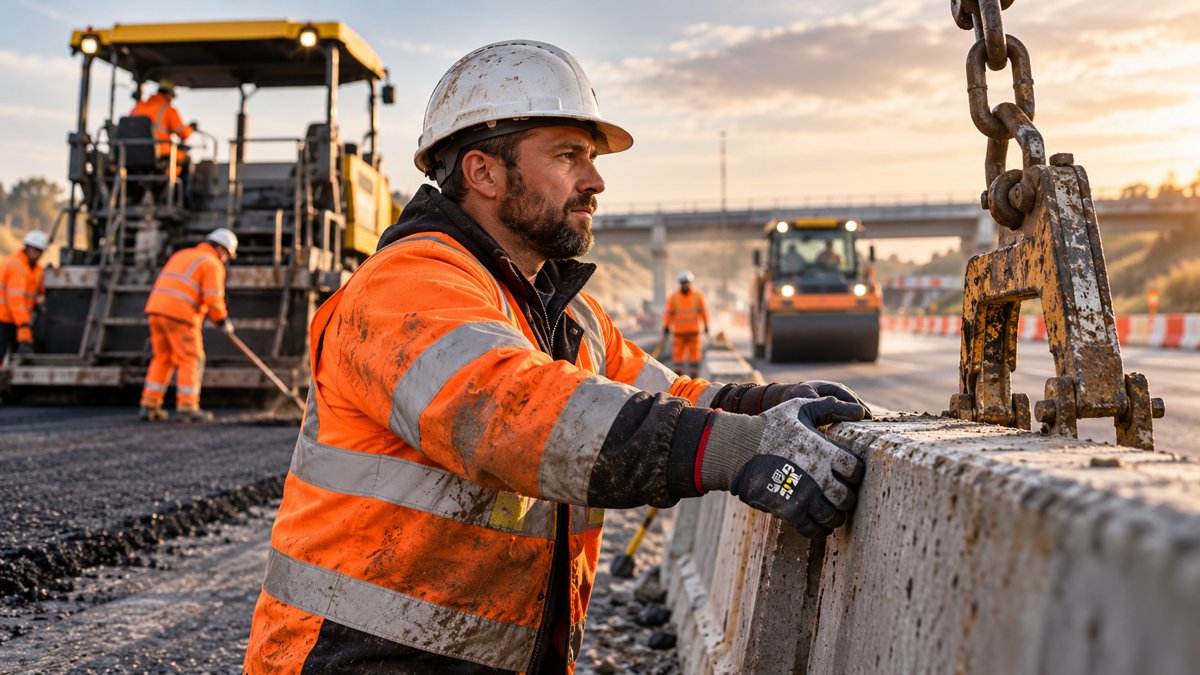
Automation in construction has been discussed for years, yet large scale deployment has remained limited. Sany’s recent demonstration on the Beijing Harbin Expressway offers a glimpse of how that may change. The company deployed a fully autonomous paving and rolling fleet that operated continuously for 20 days, setting a new benchmark for sustained automated construction activity.
This achievement moves the conversation beyond isolated pilot projects. Continuous operation under real world conditions introduces variables such as weather, material consistency and equipment coordination. Successfully managing these factors suggests that autonomous systems are approaching a level of reliability suitable for broader deployment.
The concept of “unmanned swarms” is particularly notable. Instead of focusing on individual machines, Sany is developing coordinated fleets that operate as integrated systems. This aligns with trends in other industries, including logistics and mining, where automation is increasingly implemented at the system level rather than on a machine by machine basis.
However, scaling these systems presents its own challenges. As Li Hongwei noted, the next phase requires vast amounts of high quality operational data. Without sufficient data, machine learning models struggle to adapt to complex environments. Addressing this gap will be critical over the coming years as companies seek to move from controlled demonstrations to widespread adoption.
From Equipment Supplier to Full Chain Solution Provider
Perhaps the most consequential aspect of Sany’s strategy is its move beyond traditional equipment sales. The company is repositioning itself as a provider of integrated solutions that combine machinery, energy systems and digital platforms.
This shift is evident in its “Green Mine” initiative, which brings together electric mining equipment, clean energy generation and intelligent operational systems. The aim is to deliver a complete ecosystem rather than individual products. For clients, this approach can simplify project delivery by reducing the need to coordinate multiple suppliers.
The commercial implications are equally significant. Sany is exploring models such as capacity contracting, where customers pay based on output or performance rather than purchasing equipment outright. This aligns with broader trends towards service based business models in industrial sectors, where value is increasingly tied to outcomes rather than assets.
Globally, this evolution reflects a wider rethinking of how infrastructure projects are delivered and financed. Integrated solutions can improve efficiency, reduce emissions and enhance transparency, particularly when supported by digital platforms that provide real time data and analytics.
Navigating a Changing Global Competitive Landscape
Sany’s strategy is unfolding within a highly competitive global market. Established manufacturers in Europe, North America and Japan are also investing heavily in digitalisation and electrification. At the same time, emerging players are entering the market with innovative approaches and lower cost structures.
What differentiates Sany’s approach is the scale and speed of its investment, combined with a willingness to rethink its core business model. By integrating AI, energy systems and automation into a unified strategy, the company is attempting to leapfrog incremental development cycles.
Its global footprint supports this ambition. Operating in more than 180 countries, with overseas sales accounting for a substantial share of revenue, Sany has access to diverse markets and operational environments. This diversity can accelerate learning and provide a broader data base for refining its technologies.
At the same time, challenges remain. Data availability, regulatory differences and infrastructure limitations can all influence the pace of adoption. Success will depend not only on technological capability but also on the ability to align solutions with local market conditions.
Building the Foundations for the Next Industrial Phase
The convergence of digitalisation and decarbonisation is reshaping the construction and infrastructure sectors. Equipment is becoming more connected, operations more data driven and energy systems more integrated. Companies that adapt quickly stand to benefit, while those that lag risk losing relevance.
Sany’s investment signals a clear intention to be among the former. By committing significant resources to AI, electrification and autonomous systems, it is laying the groundwork for a different kind of industrial enterprise. One that is less defined by machinery alone and more by the systems that connect, power and optimise that machinery.
The outcome of this strategy will unfold over the coming decade. Yet the direction is already clear. Construction equipment is evolving into part of a broader digital and energy ecosystem, and companies that understand this shift are shaping the future of the industry.