UK Quantum Motion raises funds to create fault tolerant quantum processors
Quantum Motion Technologies Ltd, a UK based quantum computing company founded on world leading silicon spin technology and architectures developed at UCL and Oxford University, has announced it has completed an £8.0m series A round of investment.
The raise will enable QMT to develop a fault tolerant quantum processor, based on its patented designs, leveraging the advantages of CMOS manufacturing.
The new funding was led by INKEF capital, a Dutch based venture capital company. The round was supported by new investors Octopus Ventures and the National Security Strategic Investment Fund (NSSIF) as well as existing investors Oxford Sciences Innovation, Parkwalk Advisors and IP Group plc.
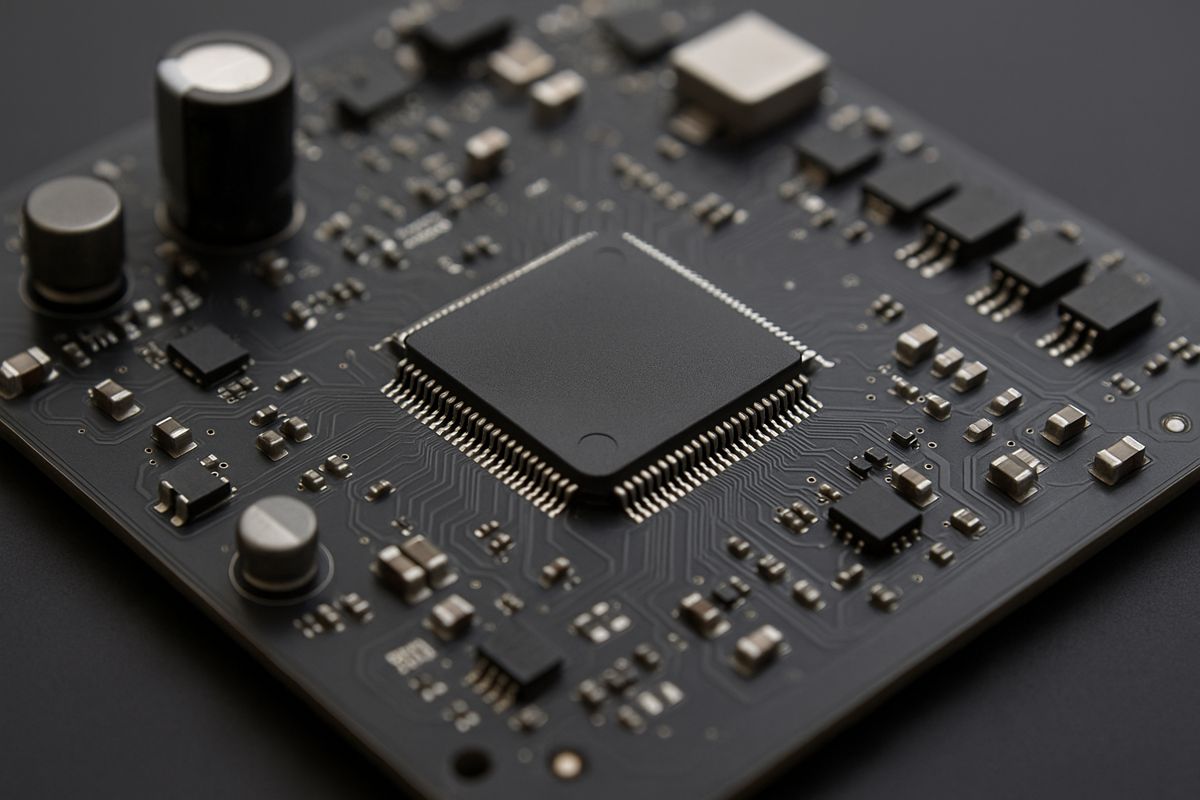
Founded in 2017, Quantum Motion is developing silicon spin-based qubit architectures which are compatible with standard CMOS fabrication and so provide easier scaling to thousands and millions of qubits. This is particularly important to allow the qubit redundancy that is required to make a fully functional, fault tolerant, quantum computer, but also gives the near-term opportunity of easy integration in a hybrid quantum/classical computer. The company is led by founders Prof. Simon Benjamin (Oxford University) and Prof. John Morton (UCL) and commercial director Dr. James Palles Dimmock.
Prof. Morton says: “Silicon electronics has already transformed our society over the past decades, and it has huge potential to deliver the scalable platform that can realise the most profound impacts of quantum computing. We’re very excited to be working with a dream-team of well-aligned investors to achieve this goal.”
Prof. Benjamin comments: “There are many ways to create a quantum computer, but to achieve true fault tolerance and thus explore the deepest and most powerful algorithms, electron spins in silicon may prove to be the best – or even the only – practical solution.”
Robert Jan Galema, Managing Partner at INKEF capital, added: “The microprocessor only really took off when scalable production hit, and complexity, price and size could be reduced. As such, it is no surprise that a lot of learnings and technology behind the silicon microchip can be leveraged for building a scalable quantum computer that is not the size of a football stadium. The QMT team is uniquely positioned to build such a qubit architecture, based in silicon.”
Dr. Manjari Chandran-Ramesh, Investment Director at IP Group and Acting Chair of QMT, said: “We are delighted to welcome such high-quality new investors to join us in supporting the next chapter at Quantum Motion. The company is a great example of a top ‘deep tech’ start-up coming out of the stellar Quantum Computing research in the UK.”