Electric Assisted Vehicles reveals their all-electric mid-mile urban van
Electric Assisted Vehicles Limited (EAV), the Oxford-based sustainable zero-emissions transport manufacturers, have today revealed LINCS, a modular multipurpose lightweight vehicle designed to provide urban light commercial van capability linked to EAV’s e-Cargo 2Cubed and RoRo applications.
LINCS has been designed from the ground-up in association with Saietta Group, whose new in-hub electric motors will power a lightweight skateboard platform developed by EAV. The LINCS platform will contain enclosed Li-ion batteries and become the basis of the new modular vehicle.

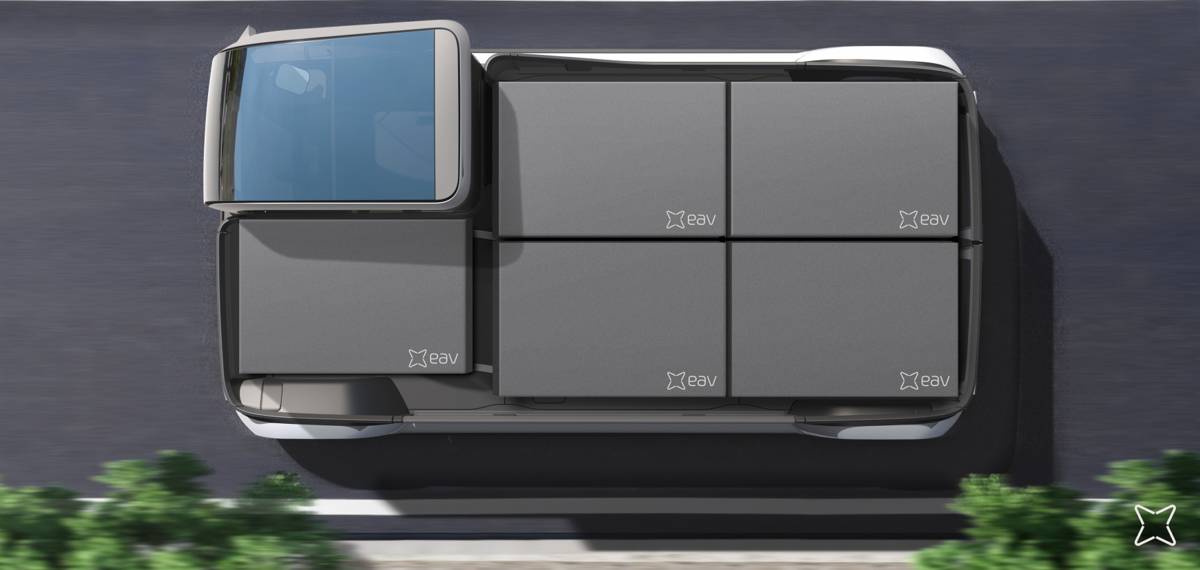
“The operational requirements for LINCS are both complex but also required a simple solution.” said Adam Barmby, CEO and Founder of EAV. “We wanted to produce a multipurpose light commercial vehicle as a logistics platform to transform the way we move people and goods around our urban environment. LINCS, in its logistics role, acts as a fully dynamic ‘hub-and-spoke’ mobile depot vehicle, delivering EAVRoRo boxes to EAV eCargo fleets in various different dynamic optimised locations such as forecourts or car parks. This significantly reduces stem distances and increases operational efficiency within the last mile. LINCS will also be able to operate as a simple covered urban van or open pick-up or drop side. The uniqueness of the design and engineering is in its versatility, packaging, light weight, strength and in the understanding of current and future urban cargo operations which we’ve already been successfully developing with our current EAV models.”
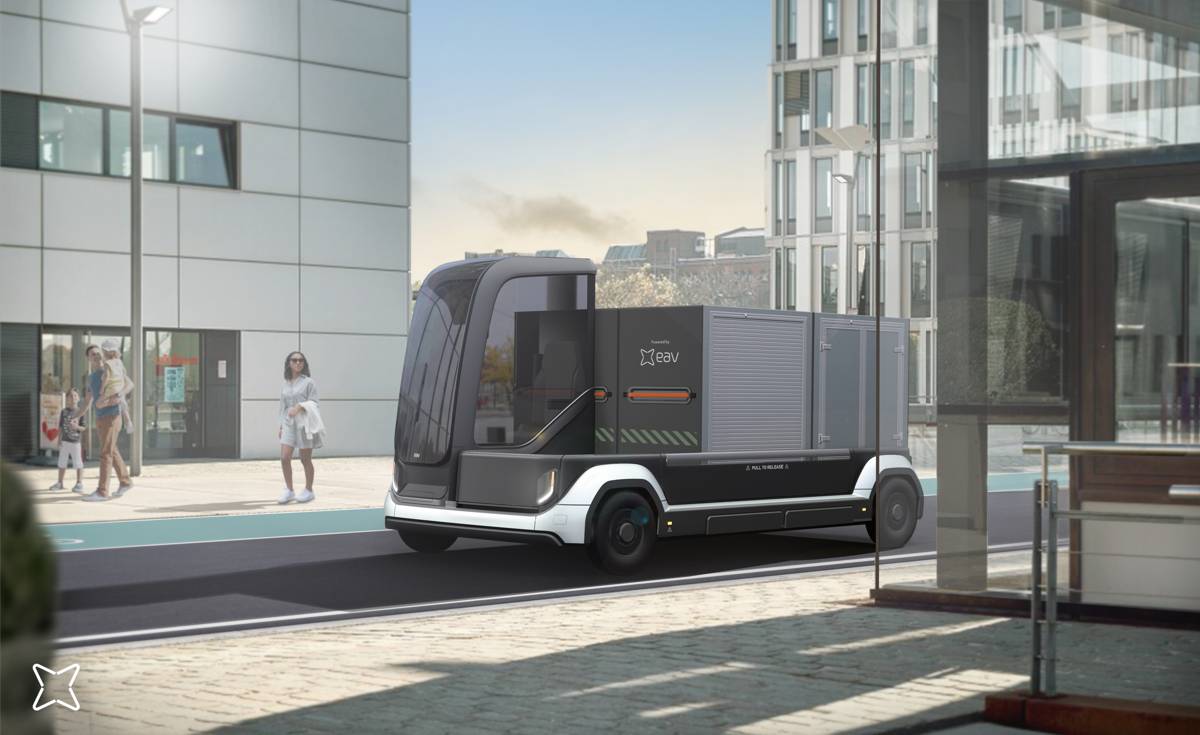
LINCS is built on an aluminium skateboard chassis platform utilising two linked in-hub motors from Saietta Group. The chassis itself contains EAV’s standard removable interchangeable Li-ion battery pack providing a range of up to 100 miles within an urban or intra-urban environment. The driver’s cab is located either on the left or righthand side of the LINCS, depending on the market, and is equipped with ‘EAVAdvanced’ driving controls and in-cab systems. LINCS has been designed and futureproofed for fully autonomous operations which will be developed in conjunction with EAV’s leading technology partners. Uniquely, LINCS also features a ‘Road train’ capability where, on inter-urban or urban deployments, multiple LINCS can be linked together into a single autonomous vehicle.
“EAV is much more than an eCargo bike company. We’re a transport technology solutions business.” commented Nigel Gordon-Stewart, Executive Chairman at EAV. “We developed and launched the EAV2Cubed and its predecessor the EAVan as the foundation of a complete urban Future Transport vision conceived from a blank sheet of paper. In a new, environment and resource conservation-focused world, legacy automotive design and engineering solutions simply don’t work. They’re too heavy, too big and, from a resource and environmental point of view, are just wasteful. LINCS is the next step in our programme which sees a complete replacement of legacy urban road transport with new, sustainable, zero-emissions, environmentally-friendly, safe – but extremely efficient – solutions for cargo and passengers.”
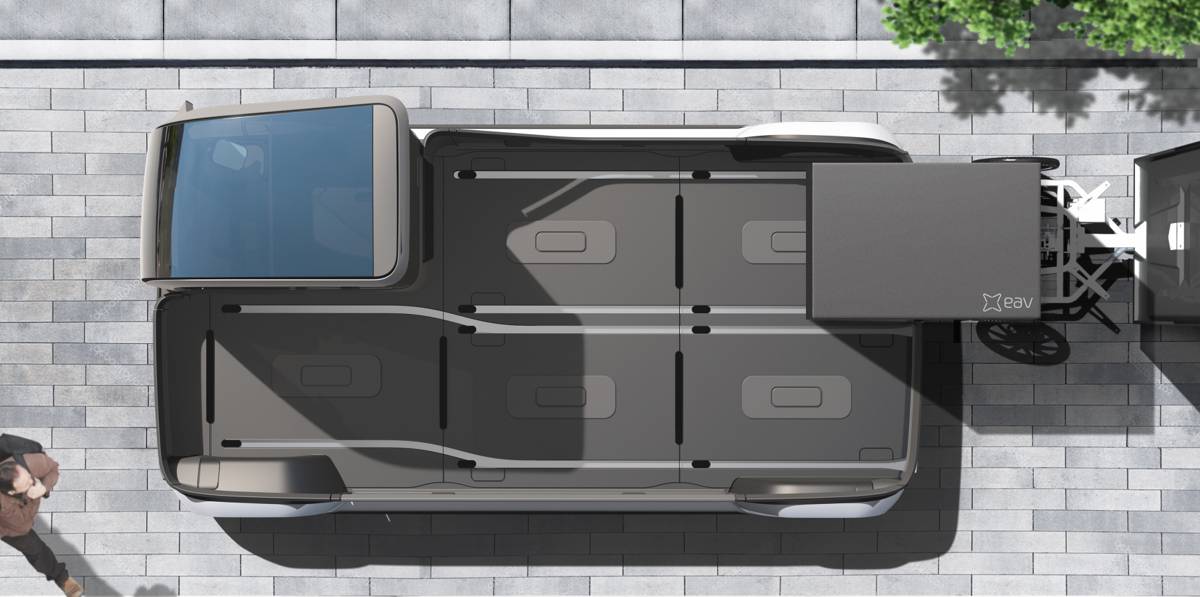
The LINCS platform has all recyclable composite bodywork matching the current materials used on the EAV2Cubed and forthcoming EAVRoRo and EAVGo! vehicles. EAV is currently looking at using this material for the chassis platform in conjunction with fully recyclable aluminium to ensure a complete vehicle life resource management programme.
“Towns and cities are vitally important to future living.” continued Adam Barmby. “We have a duty to urban communities, to the businesses that operate within them providing jobs, commerce and opportunities for the future. Our duty is to provide an efficient commercial and passenger transport system that enhances the quality of life for everyone and everything within that community. We’d identified that vehicle hardware design makes a huge impact to operator efficiencies and cost reductions, especially in a world where 90% of costs are Opex rather than Capex. LINCS, as well as the other EAV vehicles, provide a better, safer, more cost efficient and higher environmental standard. It’s a big culture-shift step to walk away from the current legacy vehicles on the roads. It’s what we’re all used to after all and people don’t like change. But that change must happen and LINCS is a key part of the movement towards an exciting urban Future Transport vision.”