ASU is Redefining Concrete Infrastructure in Arizona
In the sun-scorched expanses of Arizona, where infrastructure ages faster under the punishing desert heat, repairs have long been synonymous with disruption, delays, and eye-watering costs. But thanks to pioneering research at Arizona State University (ASU), a fresh breeze of innovation is shaking up the state’s approach to bridges, railways and roadways.
The big breakthrough? Sustainable concrete mixtures that cut repair times from months to mere days — and at a fraction of the cost. What once took six months now takes ten days. That’s not just impressive, it’s transformative.
From Lab Bench to Highway Benchmarks
ASU’s long-standing expertise in sustainable construction materials has finally made its way off the pages of academic journals and onto the concrete decks of Arizona’s vital infrastructure. For over three decades, faculty have been advancing the science behind concrete. But it’s their recent hands-on collaborations with the Arizona Department of Transportation (ADOT) and Maricopa County Department of Transportation (MCDOT) that are creating headlines and saving taxpayers millions.
Professors Barzin Mobasher and Narayanan Neithalath from ASU’s School of Sustainable Engineering and the Built Environment have led the charge, developing and testing ultra-high-performance concrete (UHPC) in state-of-the-art labs to meet specific structural needs.
Ten Bridges for the Price of One
The turning point came in 2016 when ADOT partnered with ASU to create a high-strength, fatigue-resistant concrete mix that could be produced using local materials. The goal? Fast, efficient bridge repairs without relying on expensive, proprietary mixtures.
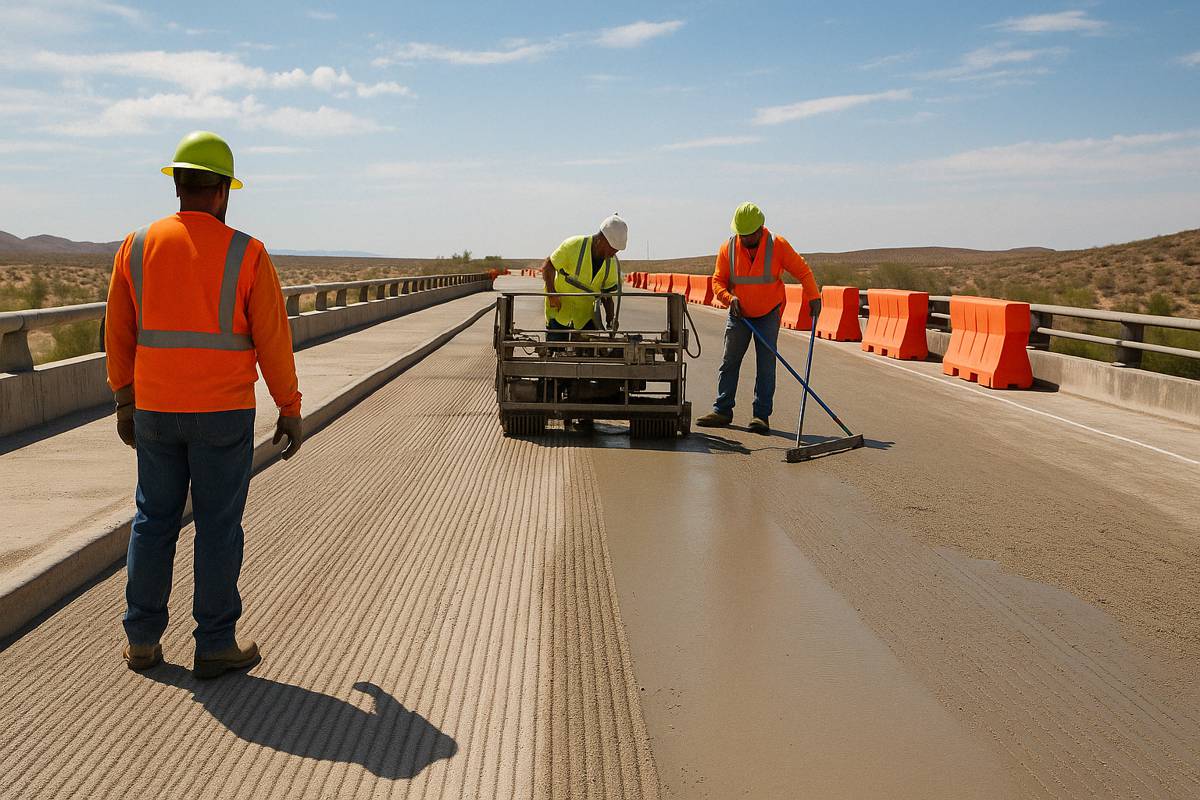
Using full-scale concrete slabs tested under flexure in ASU’s labs, the team crafted a UHPC that ticked every box: speed, strength, cost, and sustainability. Mobasher explained the real-world impact: “A bridge replacement that would normally take six months can now be done in 10 days. ADOT can now repair 10 bridges for the time and budget it used to take for only one.”
That’s a game-changer not just for drivers who rely on safe bridges, but for the state’s bottom line.
Bringing Solutions to the County Level
It wasn’t long before MCDOT came knocking. Struggling with deteriorating precast slab bridges and stuck with expensive out-of-state consultants, they needed help. Traditional grouted joints had begun to fail, leading to corrosion and cracking.
“When adding new steel staples to connect the slabs, UHPC is a viable replacement for grout and a solution to this problem,” said Mobasher. The steel fibres embedded in UHPC bring massive compressive strength and longevity to the repair work.
ASU went a step further: they not only developed a UHPC mix using local suppliers, but trained regional construction firms and 30 local workers in mixing and installing it. Within five days of pouring, the bridge was back in action.
“Now MCDOT has expertise that can be mobilised to handle many similar tasks in some of the most remote places,” Mobasher noted. That’s capacity-building at its best.
And there’s more: projects like these qualify for specific federal grants for innovative infrastructure work, potentially unlocking even more funds for Arizona’s transit upgrades.
Rethinking Reinforcement in Light Rail Projects
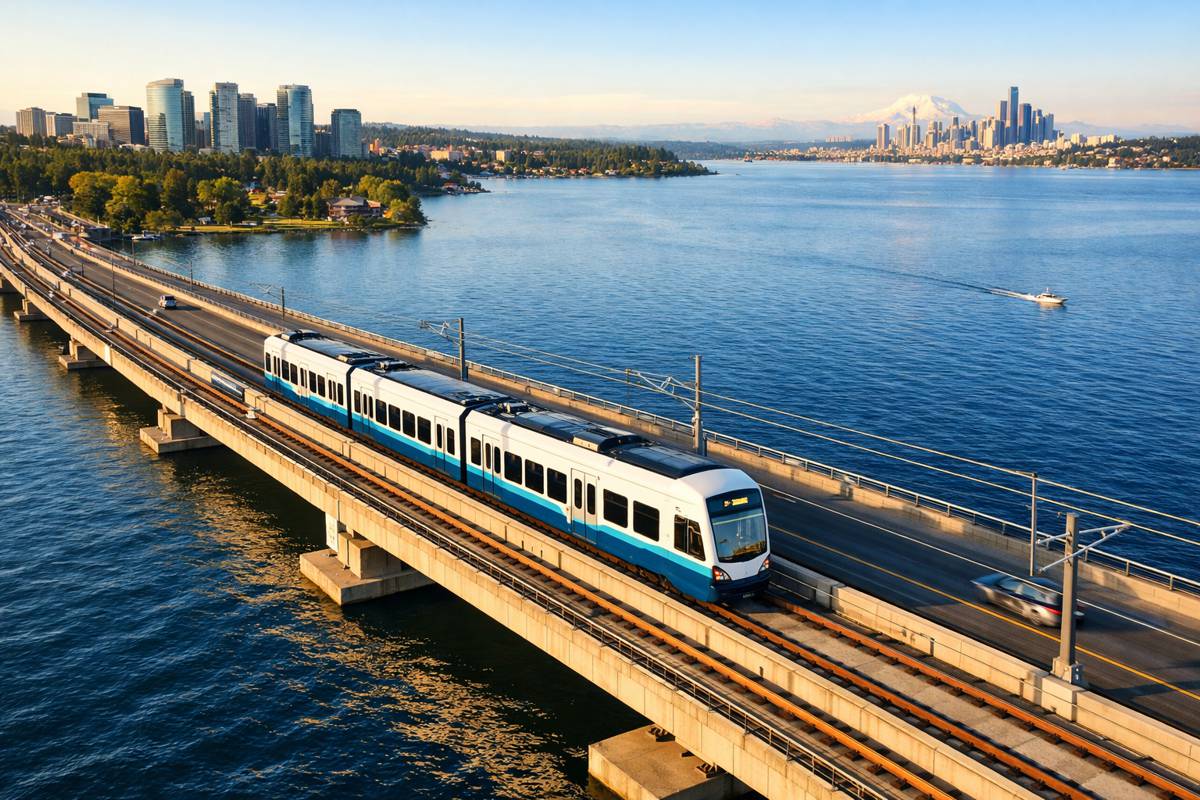
With road bridges taken care of, ASU turned its attention to public transit. When Mobasher pitched the idea of replacing traditional rebar with fibre-reinforced concrete (FRC) for a light rail extension, the Valley Metro Regional Transportation Authority was intrigued.
Traditionally, concrete’s poor tensile strength is counteracted with rebar. But rebar is costly, time-consuming, and notoriously dangerous during installation. Mobasher, who’s been researching FRC for nearly 40 years, saw a better path forward.
The team ran comparative tests between rebar and FRC in full-scale mock-ups. The results were clear: FRC held its own, intercepting cracks and acting like internal Band-Aids.
“It’s an interlocking mechanism,” Mobasher explained. “If the concrete tries to crack, the fibres hold it together and allow it to carry more load.”
Cutting Costs and Concrete
The benefits weren’t just structural. FRC also allowed the project to reduce the thickness of the concrete track slabs from 14.5 inches to 12 inches. That meant less material, less excavation, and faster installation.
In real terms, the 1.6-mile Northwest Extension Phase II slashed installation costs from an estimated $17 million per mile to just $5.3 million. Construction time was nearly halved.
And there were hidden benefits too: safety for construction workers improved significantly. Without the rebar cages, labourers could walk and pour concrete without risking injury.
“It’s still very hard, labour-intensive work, but infinitely more humane,” Mobasher said. “A key mission of sustainable engineering is to focus on long-lasting improvements of the human condition.”
Award-Winning Innovation
The project’s impact didn’t go unnoticed. The light rail extension opened in January 2024 and was named Best in Class in the Airport/Transit category by Engineering News-Record. It was also shortlisted as one of three finalists for ENR’s U.S. Project of the Year.
Based on this success, Valley Metro now plans to implement FRC in future rail projects. That’s a win not just for sustainability and cost-efficiency, but for construction safety and long-term resilience.
“Many times, the true joy is when the result of our work finds applications that make people’s lives easier at a fraction of the cost,” Mobasher said. “The DOT and light rail projects address that aspect.”
Looking Ahead with Confidence
With ASU’s research leading the way, Arizona is proving that innovation isn’t confined to Silicon Valley. Through smart partnerships, local material sourcing, and hands-on training, the state is pioneering infrastructure upgrades that are fast, affordable, and built to last.
The ripple effects are far-reaching:
- Faster repairs mean fewer disruptions.
- Cheaper materials mean wider coverage.
- Improved methods mean safer, more durable infrastructure.
And most importantly, these solutions are scalable. Other states facing similar challenges could take a page from Arizona’s playbook.
When academia meets public works and industry at the right intersection, the results speak for themselves. Roads are repaired in days, railways are reinforced for decades, and the public reaps the benefits.