Turning Waste into Wealth with Liebherr in Switzerland
In the picturesque canton of St. Gallen, where pristine Alpine air meets the rhythm of responsible living, something quietly transformative is happening. Here, compost isn’t just a byproduct – it’s a currency of sustainability.
At the heart of this green revolution is Terre Suisse, one of Switzerland’s leading soil specialists, and their trusted mechanical allies: Liebherr’s mid-sized wheel loaders.
Closing the Loop: The Swiss Circular Economy in Action
Each year, the Verein für Abfallentsorgung (VfA), or Association for Waste Disposal, handles approximately 50,000 cubic metres of green waste. That’s no small feat. This organic refuse, sourced from across the St. Gallen region, is shredded, mixed, and laid to rest on expansive compost heaps in Buchs. Two months later, it emerges reborn as rich, fresh compost.
This isn’t just garden mulch. Some of this compost is passed along to Terre Suisse, where it takes on a new life. Through a refined blending process involving bark humus, wood fibres, and a careful dash of sand, the company produces premium substrates and potting soils designed for professional and domestic use. The result? A fully circular economy that gives back to the land what was once discarded.
“What we do is fundamentally about returning value to the soil,” said a Terre Suisse spokesperson. “It’s a natural cycle that only works when every link in the chain is strong.”
The Powerhouse at the Centre of the Operation
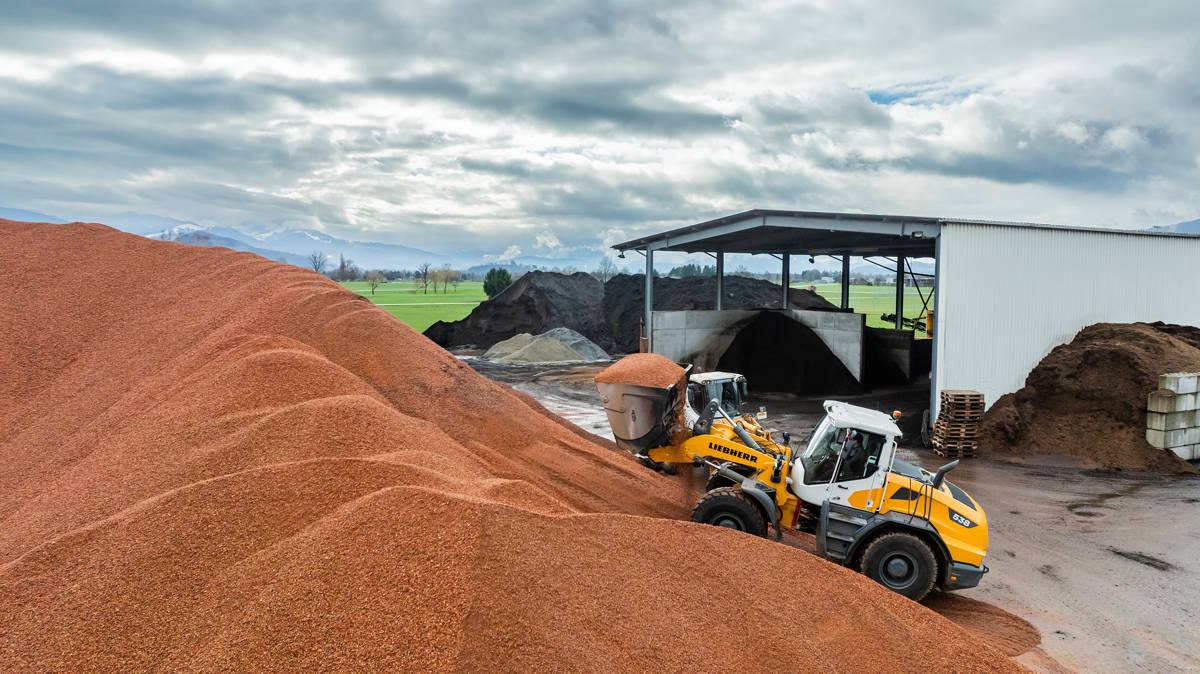
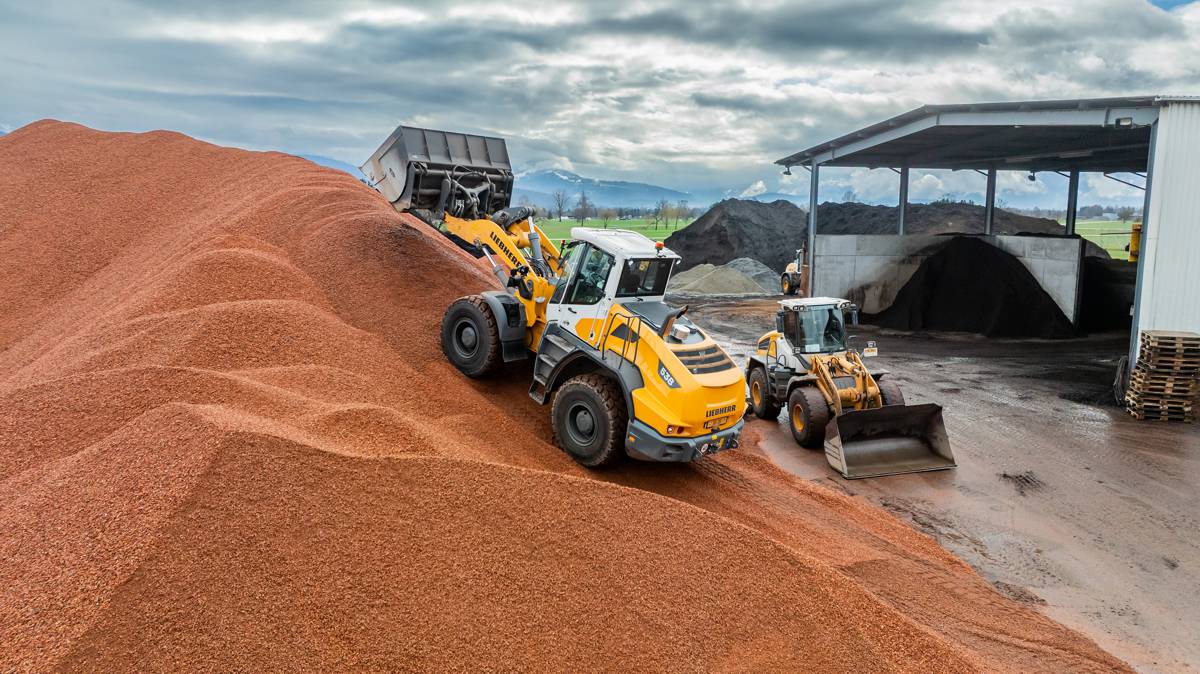
To keep this sustainable ballet running smoothly, Terre Suisse relies heavily on its fleet of Liebherr wheel loaders. These aren’t just any machines. The star of the show is the latest 8th generation L 538, a mid-sized marvel built for agility, endurance, and power.
Fitted with Liebherr’s hydrostatic travel drive, the L 538 delivers impressive torque at lower engine speeds. That translates to lower fuel consumption, quieter operation, and reduced wear and tear. Notably, this power advantage comes into its own during high-intensity tasks like soil heaping and material loading.
“The L 538 offers us the right blend of power and comfort. It’s easy on our operators and tough on the workload,” said a Terre Suisse machine operator. “You can feel the engineering in every movement.”
This isn’t the company’s first dance with Liebherr either. They’ve been running various generations of the brand’s wheel loaders since 2003. It’s a long-standing partnership rooted in dependability and shared environmental values.
Smarter Lifting, Seamless Swapping
The latest Liebherr wheel loaders, including the L 526, L 538, and L 546, have all been upgraded with newly reinforced lifting gear featuring z-bar kinematics. This translates to faster cycles, smoother lift operations, and better material handling.
One of the standout features in the L 538 is the high dump bucket – ideal for quickly filling up screening plants or loading bulk materials onto lorries. The higher reach ensures efficient loading without compromising on stability.
But perhaps the real game-changer is Solidlink: Liebherr’s fully automatic quick coupler system. Operators can switch between hydraulic and mechanical attachments from within the safety and comfort of the cab, all with the push of a button.
“Solidlink has drastically improved our efficiency,” said a site manager at Terre Suisse. “We used to lose valuable minutes swapping gear. Now, we switch in seconds – no manual handling, no risk, and no fuss.”
This upgrade not only reduces downtime but also enhances workplace safety. There’s no need to leave the cab, which reduces the potential for accidents when handling heavy or hydraulic components.
Liebherr and Sustainable Infrastructure
Liebherr’s commitment to sustainability runs far deeper than the technical specs of its machines. The company has been on a long-standing mission to build equipment that supports resource-efficient processes and contributes to long-term environmental goals.
In Switzerland and across Europe, composting has become a cornerstone of urban sustainability. By converting organic waste into valuable growing media, municipalities and private enterprises are reducing landfill use, cutting greenhouse gas emissions, and enriching soil fertility.
Liebherr’s wheel loaders play a critical role in this ecosystem. Their fuel-efficient designs, minimal emissions, and smart systems like Solidlink and hydrostatic drivetrains all contribute to cleaner, quieter, and more effective composting workflows.
According to the European Compost Network, composting green waste helps cut methane emissions from landfills and improves soil’s water retention capacity. In this way, Terre Suisse’s operation in St. Gallen offers a textbook example of local circularity having global relevance.
A Culture of Responsibility
There’s something profoundly Swiss about Terre Suisse’s work ethic. It’s not just about machinery or outputs. It’s about stewardship. Every compost heap turned, every bucket dumped, and every load lifted carries with it a commitment to a more regenerative future.
This approach isn’t limited to Switzerland. Across the globe, more industries are waking up to the benefits of circular economies – and heavy equipment manufacturers like Liebherr are rising to meet the challenge.
Whether it’s through reduced CO2 emissions, advanced automation, or innovative attachment systems, Liebherr is showing that big machines can play a small-footprint role in building greener societies.
“We don’t just see our loaders as equipment,” added a Liebherr engineer. “They’re enablers of sustainable change. When they’re working at their best, so is the planet.”
Cultivating the Future
As climate pressures and environmental policies tighten across Europe, composting operations like Terre Suisse’s will only grow in importance. The ability to turn waste into a regenerative resource isn’t just good practice – it’s becoming vital infrastructure.
In this space, Liebherr’s machines aren’t merely cogs in the wheel. They’re catalysts. Reliable, rugged, and ready to adapt, they help keep the wheels of the circular economy turning – quite literally.
From the alpine slopes of St. Gallen to the gardens of tomorrow, the message is clear: sustainability might begin with waste, but with the right tools, it ends in growth.