Adaptive Safety Thresholds: How a Kazakhstani Methodology Changed Railway Diagnostics Standards
Research engineer Yerlan Daniyarov on the methodology that became a national safety standard in five years.
Five years ago, in 2020, traditional railway infrastructure diagnostics systems in Kazakhstan generated up to 40% false warnings, wasting millions on unnecessary maintenance and creating the risk of missing real safety threats. The solution came in the form of the Adaptive Methodology of Dynamic Safety Thresholds, developed by research engineer Yerlan Daniyarov from Transtelecom JSC.
Today, after five years of validation, the results speak for themselves: 32% improvement in diagnostic accuracy, 84% reduction in false positives, and $15.16 million in economic benefits. Throughout the implementation across 13,500 kilometers of network, not a single infrastructure-related derailment has occurred.
“When we began working on the methodology in 2020, the task seemed simple: improve diagnostic accuracy. But during the research process, it became clear that we needed not a patch for the existing system, but a fundamental rethinking of the approach to safety assessment.”
2020: From Problem to Scientific Hypothesis
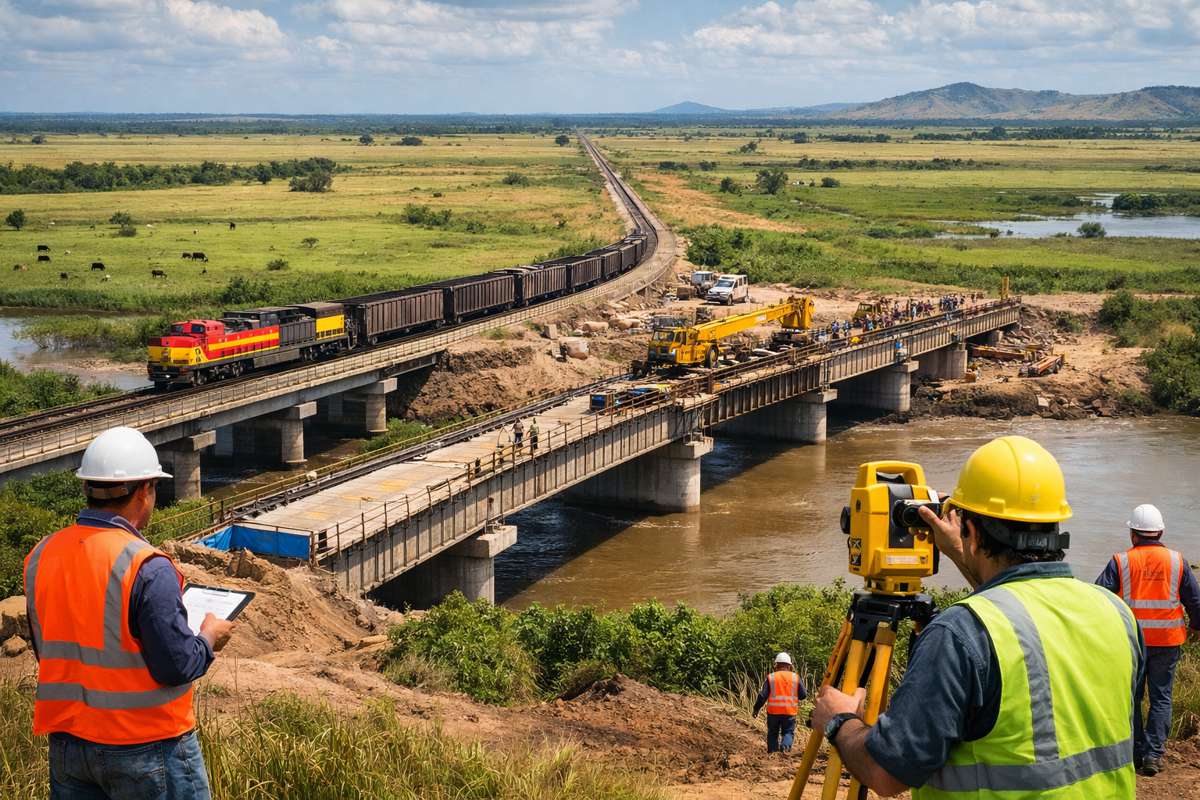
Kazakhstan’s 16,000+ km railway network spans seven climatic zones with annual temperature variations up to 80°C—from the Caspian lowlands to mountain passes with elevation differences exceeding 2,000 meters. By 2020, it became evident that universal static safety thresholds do not work under such diverse conditions.
“Static thresholds ignore physical reality,” Yerlan explains. “A rail at minus 40°C behaves completely differently than at plus 45°C. A section with 90 freight trains per day has different failure modes than a seasonal route. In 2020, we formulated the scientific challenge: create a system that accounts for real operational context.”
The methodology, developed in 2020-2021, employs a five-dimensional calibration matrix. The base threshold is multiplied by coefficients for climatic zone, temperature adjustment, traffic intensity, infrastructure age, and seasonal modifiers. The system analyzes multiple factors simultaneously and adjusts thresholds in real time.

Recognition in the Scientific Community
Yerlan Daniyarov is actively engaged in research work in the field of transport diagnostics and infrastructure digitalization. His research encompasses the application of IoT technologies, predictive analytics, and multimodal diagnostic systems.
A special place in the engineer’s professional activities is occupied by his work as a reviewer for leading scientific publications. Yerlan conducts expert evaluations of research for international journals specializing in technical and engineering sciences. Such recognition from the scientific community confirms the level of expertise-reviewers are appointed as specialists with proven achievements and deep understanding of the subject area.
“Peer review is a responsibility to the scientific community,” says Daniyarov. “You evaluate methodological correctness, practical applicability, scientific novelty. When I review works from my field, I see what directions the global community is developing, and contribute expert input to selecting significant research.”
Additionally, Yerlan serves as a member of project committees, where he conducts expert assessments of technical solutions and colleagues’ developments. His expert opinion is considered when making key decisions about implementing innovative systems on the railway network.
Professional Recognition
The engineer’s contribution to the railway industry development has been noted with numerous letters of appreciation from the management of KTZ JSC and Transtelecom JSC. In 2017, he was awarded for the development and implementation of the “Magistral” automated control system. In August 2025, on Railway Worker’s Day, Yerlan received recognition for his contribution as a project manager.
“These awards confirm not only the quality of work but also the significance of results,” the engineer notes. “When your work affects the safety of millions of passengers and the continuity of freight transport, recognition from the industry is especially valuable.”
“When a methodology created in 2020 becomes a national standard three years later, and the scientific community invites you to evaluate colleagues’ work—you understand that the research had significance.”
Five Years of Validation: Proof of Effectiveness
Since its implementation in 2020, the methodology has undergone extensive validation across 13,500 kilometers. Over five years, the system detected 127 critical defects that static thresholds classified as acceptable. Simultaneously, false positives decreased from 38-42% to 6-8%.
“Zero accidents in five years is mathematical proof of the model’s correctness,” the researcher emphasizes. “The statistical expectation for this period was 3.2 incidents. There were none. When the methodology was incorporated into the national standard in 2023, it was recognition not of theory, but of proven practice.”
Projected applicability for U.S. Class I railroad networks shows annual benefits of $29.25 million with a payback period of 13.5 months. The methodology is also of interest to European companies in the context of transitioning to predictive maintenance.

From Static Thresholds to Predictive Systems
Yerlan’s current research focuses on integrating the adaptive thresholds developed in 2020 with artificial intelligence systems and predictive analytics. The goal is to create fully autonomous diagnostic platforms that predict equipment failures weeks before they occur.
Yerlan also developed a digital technical defect accounting system that significantly reduced incident response times and improved measurement accuracy. This system became an important element of Transtelecom JSC’s digital transformation.
“The 2020 adaptive thresholds solved the diagnostic accuracy problem. The next stage is systems that don’t just detect defects, but predict their occurrence,” the engineer shares his plans. “A railway network that knows when it needs maintenance.”
“What began in 2020 as a research project has today become a national standard and a model for other countries. This confirms: when science meets real problems, solutions are born that change the industry.”
Yerlan Daniyarov’s work demonstrates how fundamental research transforms into industry standards. Five years since the methodology’s creation is a journey from scientific hypothesis to proven practice, from a local project to national recognition.