Intelligent Fire Detection Technology Enhances Building Safety
Fire remains one of the most persistent and devastating hazards in modern society, claiming nearly 3,700 lives across the United States every year and destroying around 23 billion dollars’ worth of property. Many of these tragedies occur because conventional smoke detectors fail to warn occupants in time. With homes and commercial buildings increasingly constructed using lightweight materials and open-plan layouts, fires spread faster than ever, shrinking escape windows and leaving traditional alarms struggling to keep pace.
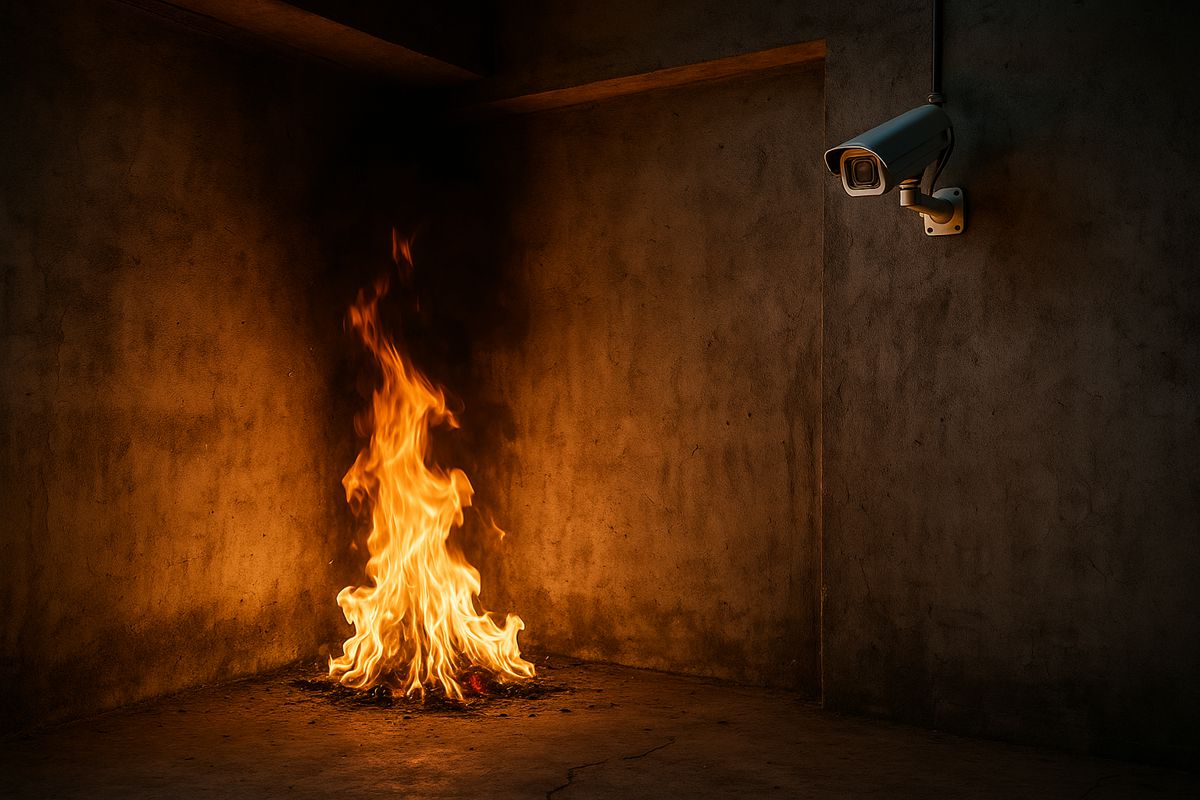
Researchers at the NYU Fire Research Group, based at the NYU Tandon School of Engineering, have developed an artificial intelligence system that aims to transform fire detection. Their work, published in the IEEE Internet of Things Journal, demonstrates a solution capable of identifying flames and smoke in real-time using nothing more than standard security cameras. It analyses frames at a rate of 0.016 seconds per image, which is faster than the blink of an eye, and could furnish building occupants with potentially life-saving extra minutes to escape.
Speed and Coverage at the Core of the System
One of the major advantages of the AI-driven approach lies in its reach. As lead researcher Prabodh Panindre, Research Associate Professor in NYU Tandon’s Department of Mechanical and Aerospace Engineering, explained: “The key advantage is speed and coverage.” He added that a single camera is capable of monitoring areas far larger than what traditional smoke detectors can cover. More importantly, the system detects fires at an early phase, well before enough smoke accumulates to activate conventional alarms.
Statistics underline the urgent need for such innovation. Around 11 percent of residential fire fatalities occur in homes where detectors either did not work or were entirely absent. Failures can result from dead batteries, poor placement, or disabled alarms. More critically, modern furnishings and structural systems generate fast-moving fires. Compared with legacy buildings, structural collapse can occur markedly sooner, making rapid detection vital for survival.
Reducing False Alarms with Ensemble Learning
False alarms have long plagued fire detection technologies, particularly when using video-based analysis. To tackle this problem, the research team adopted an ensemble approach that combines multiple AI algorithms. Instead of relying on a single model that could misinterpret visual cues such as red vehicles or sunset reflections, the system requires several algorithms to agree before classifying an image as fire.
This methodology substantially improves reliability. The team trained its system on a customised dataset representing all five classes of fires defined by the National Fire Protection Association. These include fires involving ordinary combustibles, flammable liquids, electrical sources, metals and cooking-related incidents. The best-performing combination of models achieved an accuracy of 80.6 percent in fire identification.
Tracking Temporal Changes for Improved Accuracy
The system also incorporates temporal analysis to differentiate genuine fires from stationary images or objects that resemble flames. By monitoring motion and patterns across consecutive frames, the AI assesses whether the detected region grows, flickers or shifts naturally.
Sunil Kumar, Professor of Mechanical and Aerospace Engineering, described the value of this approach: “Real fires are dynamic, growing and changing shape.” He added that by tracking these evolving characteristics, the system achieves an impressive 92.6 percent accuracy in eliminating false detections.
A Cloud-Based IoT Framework for Seamless Integration
The AI-driven system is designed within a cloud-based Internet of Things framework. Here, multiple security cameras stream live footage to central servers where the AI engine processes incoming data. Upon detecting a fire, the system automatically compiles short video clips and sends alerts by email and text message.
A key benefit is its compatibility with existing CCTV infrastructure. Organisations do not need to install specialised cameras or sensors, lowering barriers to adoption. For large-scale operators managing office buildings, warehouses or industrial facilities, this retrofit-friendly approach could significantly improve safety without major capital expenditure.
Potential for Wildfire Detection and Early Intervention
Beyond indoor environments, the technology could prove incredibly valuable in tackling wildfires. Drones and unmanned aerial vehicles equipped with the detection system can survey vast forested regions and identify fire outbreaks at an early stage. Swift alerts would allow authorities to dispatch firefighting resources before flames escalate into uncontrollable blazes.
In recent years, extreme heat, prolonged droughts and shifting climate patterns have intensified wildfire activity globally. Early detection, therefore, becomes crucial for protecting ecosystems, infrastructure and lives. UAV-based monitoring can reach remote terrain where conventional sensors and human patrols struggle to operate.
Support for Firefighters and Emergency Responders
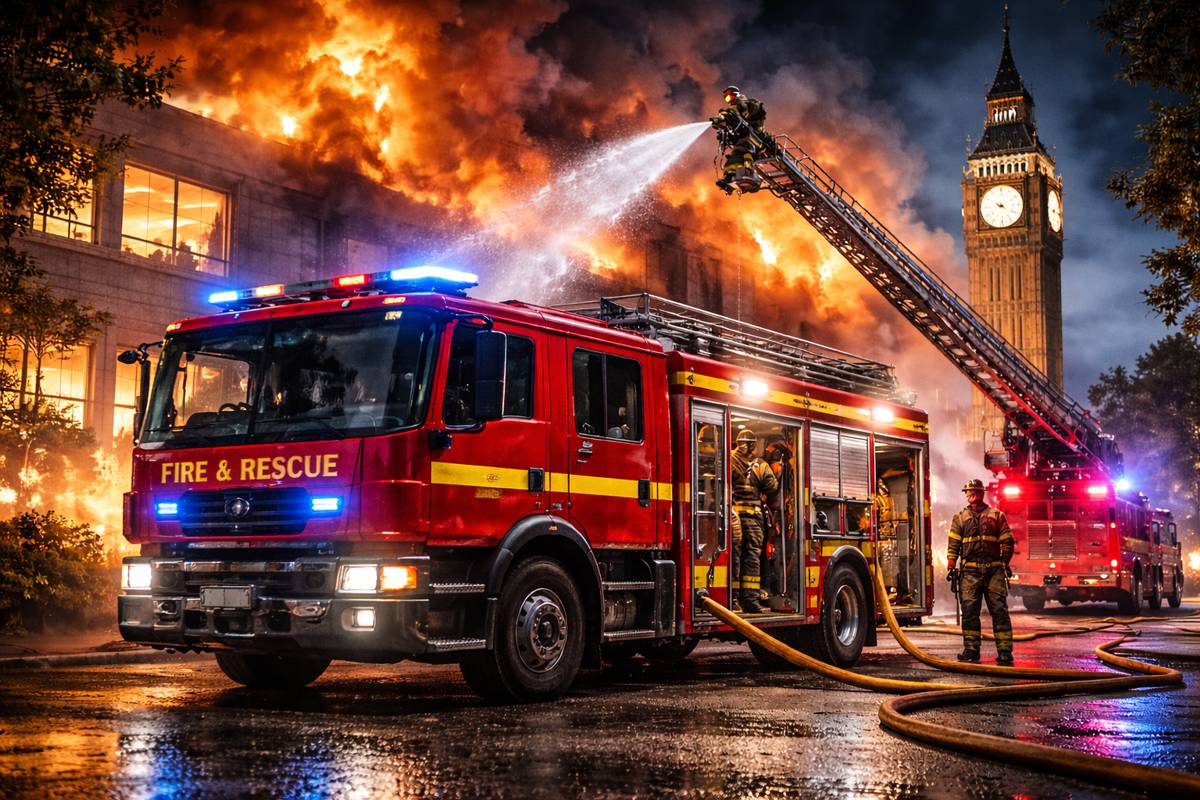
Firefighters face significant risks when entering burning structures. Integrating this AI system into helmet cameras, thermal imaging units, vehicle-mounted cameras and autonomous firefighting robots would provide real-time information during operations. Situational awareness enhances safety, enabling crews to identify fire paths, hotspots and potential areas of collapse.
In dense urban environments, drones outfitted with the technology can provide 360-degree views of buildings, especially when fires occur on high floors. Such aerial perspectives help incident commanders evaluate structural integrity, determine access routes and locate areas where people may be trapped.
Capt. John Ceriello of the Fire Department of New York City highlighted the practical value: “It can remotely assist us in confirming the location of the fire and possibility of trapped occupants.” This capability becomes increasingly important as cities grow vertically and complex building geometries challenge traditional firefighting techniques.
Expanding Applications for Other Emergencies
Researchers believe the underlying architecture could also support a broader range of emergency scenarios. With further development, the system may detect security threats, abnormal human movements or medical emergencies. By tuning the algorithms to recognise changes in behaviour or environmental patterns, the technology could act as an intelligent safety layer across public spaces, transportation hubs or industrial sites.
Extending video-based AI monitoring into these domains would strengthen emergency response frameworks, offering new ways to mitigate risks before they escalate.
Collaboration Behind the Research
The project involves a diverse team of researchers contributing expertise across fire science, artificial intelligence, computer vision and mechanical engineering. Alongside Prabodh Panindre and Sunil Kumar, the research group includes Nanda Kalidindi, Shantanu Acharya and Praneeth Thummalapalli, all of whom brought specialist knowledge to the work.
Their collaborative approach underscores the direction in which emergency technology is moving, combining rigorous engineering principles with cutting-edge computational methods.
A Safer Future Through Smarter Detection
This innovative fire detection system marks a significant step forward in safeguarding buildings, communities and emergency responders. By leveraging existing camera networks and modern AI techniques, the technology promises faster alerts, fewer false alarms and more effective intervention.
As climate risks intensify and urban environments grow more complex, such solutions will increasingly become essential tools for enhancing public safety.