Heidelberg Materials Delivers Sustainable Road Renewal in Cheddar Gorge
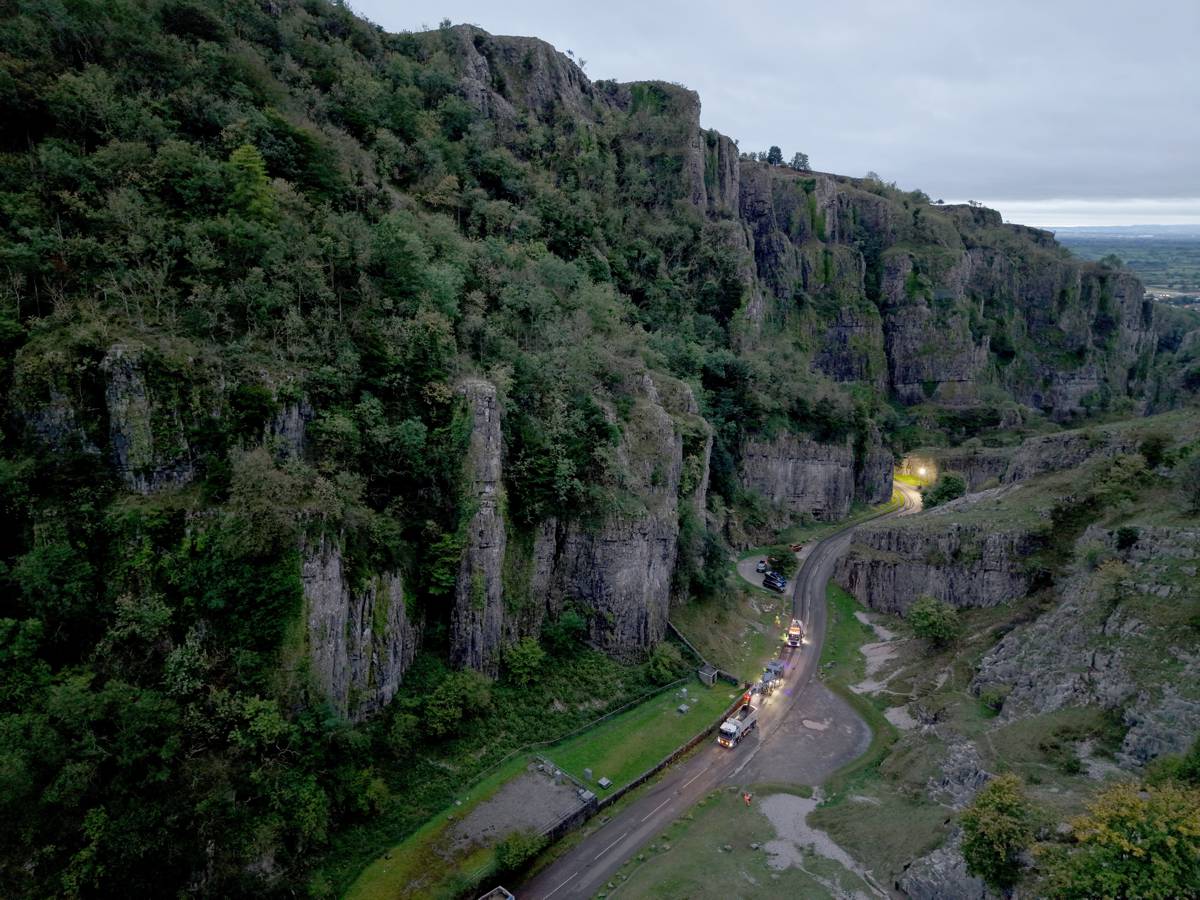
Heidelberg Materials UK has completed a demanding resurfacing scheme along the B3135 through Cheddar Gorge, strengthening one of Britain’s most celebrated scenic roads while advancing sustainable construction practices. The two-mile stretch cuts through steep limestone cliffs in Somerset and attracts thousands of visitors throughout the year, creating a unique set of operational and environmental challenges.
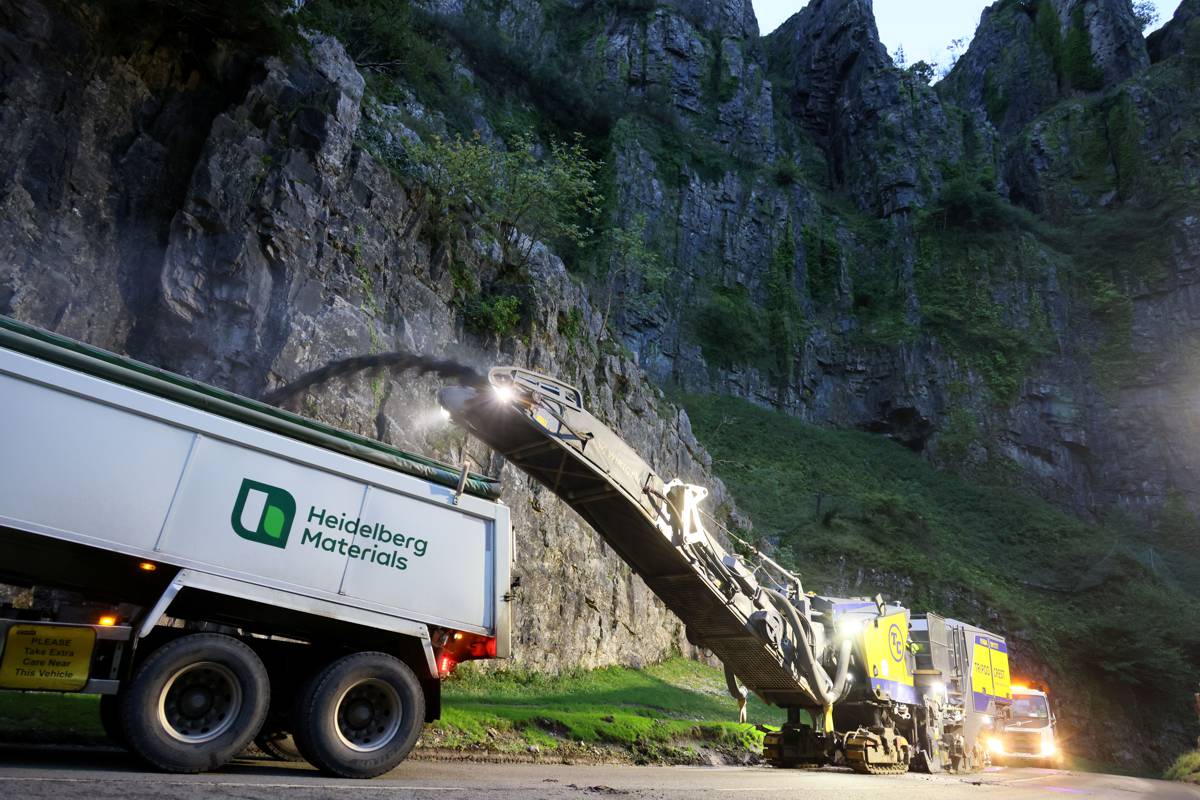
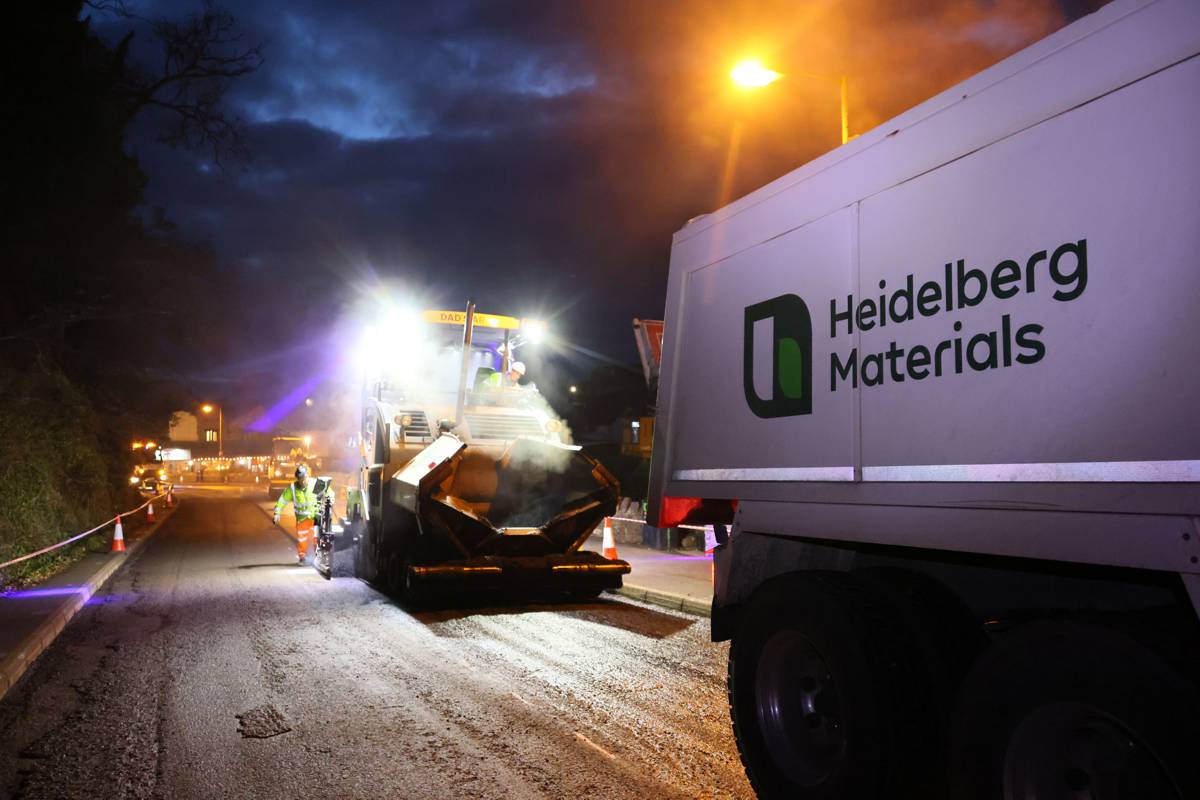
Night-time working, narrow passes and gradients of up to 16 per cent shaped the character of the programme, which formed part of the company’s term maintenance contract with Somerset Council. Despite the difficulties, the project demonstrated how modern asphalt techniques, circular economy principles and low emissions logistics can be applied even in sensitive landscapes.
Navigating a Technically Challenging Landscape
Cheddar Gorge is the deepest natural canyon in England, and its geography dictated every stage of the resurfacing works. Working after dark reduced disruption for residents and tourists, yet it also required careful planning to ensure visibility, access and safety within confined sections bordered by towering rock faces.
The project team employed specialist traffic management and staggered operations to negotiate the tightest areas. These measures maintained operational flow without compromising the sensitive environment of the Site of Special Scientific Interest. Wildlife added to the complexity, as the gorge supports inquisitive herds of wild goats and Soay sheep that roam freely across the route.
Tim Doyle, Somerset Framework Manager at Heidelberg Materials UK, highlighted the unusually diverse conditions: “The B3135 through Cheddar Gorge is one of the most scenic roads in the country. That status, night-time working and the fact that it is bordered by SSSI and home to a large number of inquisitive wild goats and Soay sheep, created some challenging conditions for the team!”
Championing Circular Economy Principles
Sustainability took centre stage throughout the programme. Around 1,300 tonnes of worn out road surface were removed and recycled back into the new asphalt wherever possible. This approach helped reduce both raw material consumption and emissions associated with primary aggregate production.
To further reduce carbon impacts, the company coordinated material transport so that the same lorries carrying planings to the Whatley quarry asphalt plant could return to site with fresh asphalt when feasible. This cut unnecessary mileage and reduced the overall carbon footprint of the works.
Such closed-loop strategies are increasingly central to UK highway maintenance, aligning with the wider push for resource efficiency and lower emissions across the sector. The Cheddar Gorge scheme offers a practical example of how recycling and smart logistics can be integrated into live maintenance contracts.
Delivering High-Performance Asphalt for Demanding Terrain
More than 2,500 tonnes of Heidelberg Materials’ Tufflex asphalt were used to resurface the route. This premium material was selected for its ability to withstand the heavy braking, twisting movements and high stress loads commonly experienced along the steep and winding B3135.
Tufflex incorporates a polymer modified binder that increases flexibility and fatigue resistance, reducing the risk of cracking across the long term. Its low void content protects the surface from water ingress, which is particularly relevant in a gorge environment where drainage and run-off can vary dramatically.
The material’s high deformation resistance helps limit wheel rutting, a crucial consideration on steep descents where heavy vehicles apply greater braking force. These performance characteristics support safer driving conditions and extend the maintenance cycle for the council, offering long-term value.
Councillor Richard Wilkins, Somerset Council’s Lead Member for Transport and Waste, emphasised the importance of this route to the region: “Cheddar Gorge is a British icon, so keeping the road in good condition is essential. This was a challenging project, and I am delighted that Heidelberg Materials has delivered it on time and on budget.”
A Partnership Approach to County-Wide Maintenance
The Cheddar Gorge improvement scheme reflects the broader strategic partnership between Heidelberg Materials UK and Somerset Council through their term maintenance contract. These contracts are designed to create consistent long-term working relationships that support more efficient planning, rapid mobilisation and better use of local resources.
Tim Doyle noted the strength of this collaboration: “The successful completion of the scheme, on time and on budget, is testament to the strong partnership with have developed with Somerset Council through our term maintenance contract.”
Term contracts allow councils to work with local suppliers who understand regional road networks, material sources and site-specific constraints. This familiarity shortens decision-making timelines and helps identify opportunities for carbon reduction, circularity and improved asset performance.
Heidelberg Materials’ Commitment to Low-Carbon Construction
Heidelberg Materials ranks among the world’s largest producers of cement, aggregates, ready-mixed concrete and asphalt. With approximately 51,000 employees across 50 countries, the company continues to shape the evolution of global construction materials.
Environmental responsibility sits at the centre of the company’s strategic direction. As a leader in the industry’s transition to carbon neutrality, it invests heavily in sustainable technologies, digitalisation and circular economy solutions. These initiatives are designed to provide clients with materials that deliver durability while reducing emissions throughout the product lifecycle.
In the UK, the company operates more than 300 manufacturing sites across aggregates, concrete, asphalt, contracting, cement and recycling, employing more than 4,000 people. Its national sustainability strategies are already delivering tangible change, most notably through its work on carbon capture and storage.
Advancing Carbon Capture in UK Cement Production
One of the company’s flagship decarbonisation initiatives is the development of the world’s first carbon capture facility capable of enabling fully decarbonised cement production at the Padeswood works in north Wales. Supported by a final investment decision in partnership with the UK Government, construction of the facility is now underway.
Once operational, the plant will enable the production of evoZero, a carbon-captured near-zero cement expected to enter the UK market in 2029. This milestone represents a major step for the construction materials industry, where cement remains one of the most carbon-intensive products.
Carbon capture and storage technologies are attracting increasing attention in national infrastructure discussions. The UK’s industrial clusters, including the Humber and Mersey regions, are advancing similar initiatives to support decarbonisation of heavy industry.
Heidelberg Materials’ position at the forefront of this transition reinforces its ability to deliver sustainable value across long-term maintenance programmes such as the B3135 works.
Building for the Future
The successful completion of the Cheddar Gorge resurfacing scheme demonstrates how modern materials, sustainable practices and collaborative contracting can reinforce vital transport routes even in challenging landscapes.
As local authorities continue to balance visitor access, environmental responsibilities and asset maintenance, the lessons from this project are likely to support future improvements across the UK road network.