Bridging Continents and Building Futures
Global infrastructure development is forging ahead at an unprecedented scale. From new highways carving through dense jungles to colossal bridges spanning rivers and bays, countries around the world are investing heavily in transportation and heavy infrastructure to drive economic growth and connectivity.
In recent months, ambitious projects, particularly in highways and related sectors, have been approved or accelerated across Asia, Africa, Europe, and the Americas, underscoring a worldwide commitment to upgrade aging assets and construct new links. These initiatives range from multi-billion dollar expressways and runways to innovative public-private partnerships, all set to reshape mobility for decades to come.
Asia-Pacific – Ambitious Highways and Mega-Projects
Asia’s rapidly growing economies are pressing forward with critical highway projects and other infrastructure upgrades to improve connectivity and resilience. In Sri Lanka, the government has earmarked an impressive $2.17 billion for infrastructure in 2026, prioritising long-planned transport corridors and restarting stalled road projects. This includes reviving the Central Expressway link between the capital Colombo and the inland city of Kandy, which had been halted amid the country’s financial crisis. Construction on a 38 km segment of this expressway resumed with a fresh $500 million loan from China’s EXIM Bank, marking the first major funding from Sri Lanka’s largest bilateral creditor since the nation’s debt default.
At the project’s relaunch, leaders struck an optimistic tone about overcoming recent hardships: “Typically, when a country goes through a financial crisis… the country loses a decade of development. But I’m confident that we can reduce this time by half,” Sri Lankan President Anura Dissanayake said, expressing hope that growth will rebound and infrastructure plans can get back on track. Beyond the expressway, Sri Lanka’s 2026 budget directs over $1 billion to nationwide road upgrades and even funds a feasibility study for a new elevated highway in Colombo, aimed at easing urban congestion.
India is likewise making strides in modernising its road network. A prime example is the Mumbai-Pune Expressway, one of the country’s busiest routes, which is being enhanced by a “Missing Link” project to bypass a treacherous stretch of the Western Ghats. The upgrade involves constructing two long tunnel sections and towering viaducts to replace the old Khandala Ghat section, notorious for its steep hairpin turns and landslide-prone slopes. Once complete (expected by early 2026), the new link will shorten the travel distance by 6 km and cut journey times by about 30 minutes. More importantly, it will transform this critical corridor into a much safer, “zero-fatality” route with additional lanes and state-of-the-art safety features.
This long-awaited bypass, managed by the Maharashtra State Road Development Corporation, underscores India’s commitment to tackling infrastructure bottlenecks that have constrained its fast-growing economy. It also highlights how improved engineering, such as 23.5 m wide twin tunnels (the largest in India) and innovative bridge designs, is overcoming challenging terrain to keep pace with surging traffic demand.
Elsewhere in Southeast Asia, Vietnam has approved a series of large bridge projects to bolster regional connectivity. In the Ho Chi Minh City area, local authorities plan to build six new bridges linking the booming metropolis with neighbouring Đồng Nai Province. Three of these will be massive public-private partnership (PPP) projects slated for completion by 2028. The flagship is the Cát Lái Bridge, an 11.6 km crossing with four lanes each way, budgeted at $778 million.
Additional spans, like the 15 km Phú Mỹ 2 Bridge and Long Hưng Bridge, will connect into Ho Chi Minh City’s recently completed Ring Road 3 and key highways, together improving access to fast-growing suburbs and industrial zones. By undertaking multiple bridges simultaneously, largely financed by private capital, Vietnam aims to alleviate chronic congestion on existing links and support its export-driven economy with more efficient transport corridors.
Australia is also contributing to the region’s infrastructure boom. In South Australia, work is underway on a record A$15.4 billion (USD $10 billion) road and tunnel project to upgrade Adelaide’s North-South Corridor. This massive plan, one of the country’s largest ever infrastructure investments, features twin tunnels to finally complete an uninterrupted freeway through the city, cutting travel times and diverting heavy traffic out of urban streets. With strong public backing and contractor teams already mobilised, the project reflects Australia’s determination to modernise aging road networks and spur economic activity, even amid rising construction costs.
Africa & Middle East – Driving Connectivity and Economic Growth
Across Africa, governments are accelerating highway upgrades and new builds to connect communities and boost trade, often with support from international partners or innovative financing models. In Zimbabwe, multiple road rehabilitation projects are now underway to improve key routes criss-crossing the country. One high-priority upgrade is the highway from the South African border at Beitbridge up to Bulawayo (Zimbabwe’s second-largest city) and onward to the famed Victoria Falls.
This corridor, which also passes major wildlife reserves, is being widened and resurfaced to attract more tourism and facilitate commerce. Additionally, authorities are upgrading the highway from the capital Harare northward to Chirundu on the Zambian border, as well as the Harare-Nyamapanda road toward Mozambique. Completion of these works is targeted for March 2026, an aggressive timetable that speaks to their importance for Zimbabwe’s struggling economy. However, the Transport Ministry has already run over its road budget, raising concerns about financing future phases. To bridge the funding gap, Zimbabwe is increasingly turning to public-private partnerships (PPPs) and regional cooperation.
Officials stress that the payoff will be transformative. “Improved road infrastructure along the southern corridor will boost logistics efficiency and attract private sector investment,” said Engineer David Jana, the roads chief in the Ministry of Transport. The overarching vision, as articulated by Transport Minister Felix Mhona, is to turn Zimbabwe from a landlocked country into a “land-linked” transport hub, capitalising on its strategic location in the heart of southern Africa. Modern highways are central to this plan, potentially unlocking new economic opportunities in mining, agriculture, tourism and trade for communities along these corridors.
In Kenya, a landmark expressway project is moving ahead after the country secured a major financing deal, shifting from Western aid to a consortium of new partners. President William Ruto recently launched construction of the Nairobi-Nakuru-Mau Summit highway, a four- to six-lane dual carriageway that will upgrade one of East Africa’s most critical transport arteries. The 233 km route links Kenya’s capital to the Rift Valley region and ultimately the Ugandan border, carrying a third of the country’s traffic. The project, valued at around $1.5 billion, had initially been conceived as a U.S.-backed public transit corridor, but that deal collapsed due to a foreign aid pullback. Undeterred, Kenya turned to China and other partners to finance the highway’s expansion under a PPP model.
Two Chinese firms- China Road and Bridge Corporation and Shandong Hi-Speed, will work with Kenya’s National Social Security Fund to deliver the project in two phases by 2027. Notably, the financing structure is 75% debt and 25% equity, with Kenya’s pension fund providing almost half of the equity, an approach aimed at limiting new public debt. As a senior Kenyan official bluntly put it: “We do not have any room to borrow any more money,” explained Kefa Seda, director-general of the PPP directorate in the Finance Ministry. Instead, the country is leveraging private capital and Chinese credit on concessional terms to realize this long-delayed project. Once complete, the new highway will vastly improve connectivity from the Indian Ocean port of Mombasa through Nairobi to landlocked neighbours in East Africa. The economic impact is expected to be significant, easing the flow of goods and people across Kenya’s agricultural heartlands and beyond, and demonstrating a model for how African nations can fund large-scale infrastructure when traditional aid falls short.
Elsewhere on the continent, other countries are also pushing forward. In West Africa, the government of Ghana has embarked on major highway improvements and even announced plans to construct its first significant railway links, while Nigeria continues to invest in expanding expressways around Lagos and Abuja to tackle chronic congestion. North African nations, from Morocco to Egypt, are similarly upgrading highways and express roads as part of broader economic development schemes.
Meanwhile, countries in the Middle East are investing oil revenues into transportation infrastructure to diversify and modernise their economies. For instance, Oman recently awarded a €102 million contract to Austria’s Strabag for a major road development, reflecting ongoing Gulf region projects to enhance intra-city and cross-border travel. And in Bahrain, a $68.5 million upgrade is underway to improve the road connections to the country’s main international airport. These projects will increase capacity and safety, supporting Bahrain’s role as a regional aviation and business hub. Across the Middle East, from the UAE’s smart highways to Saudi Arabia’s planned megacity roads in NEOM, heavy infrastructure remains a cornerstone of economic strategy.
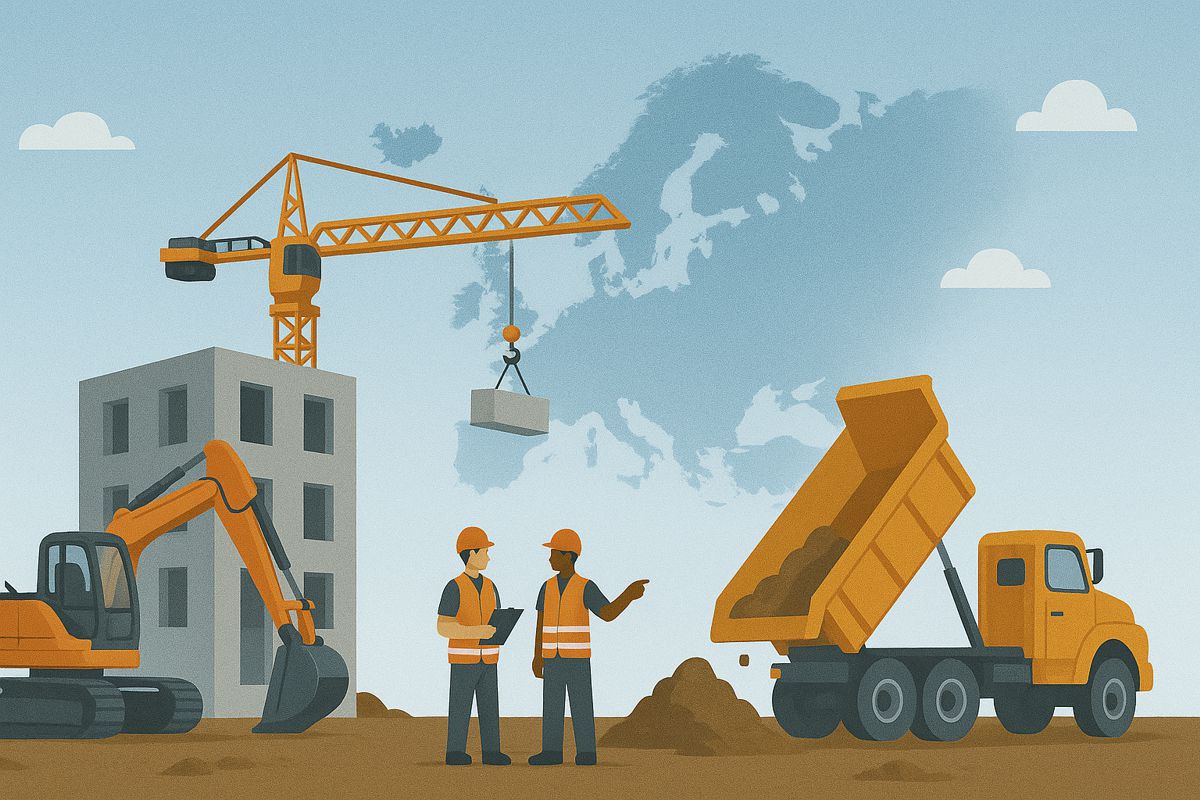
Europe – Expanding Capacity Amid Challenges
Europe is not standing still either, from busy airports to cross-border links, significant projects are in motion to expand capacity and modernise infrastructure, although not without controversy. In the United Kingdom, the government has given the green light to a £33 billion expansion of London’s Heathrow Airport, a colossal plan centred on building a third runway. The new runway, at 3.5 km length, will require an extraordinary engineering feat: relocating a section of the M25 orbital motorway by 150 m and burying it in a tunnel to make room for the airstrip’s footprint.
The project will be privately financed and, once complete, boost Heathrow’s capacity to 756,000 flights and 150 million passengers annually, cementing its status as one of the world’s busiest aviation hubs. Officials aim to have the runway operational by 2035, with development consent expedited by 2029. The decision, announced in late 2025, favoured Heathrow’s proposal over a cheaper rival scheme, underscoring the government’s commitment to “deliverability” even at a higher cost. However, the expansion has raised concerns from environmental groups and airlines alike.
A “swift and robust” policy review is promised to ensure the plans align with Britain’s climate obligations amid likely legal challenges on emissions. And some airline industry stakeholders worry about who will foot the hefty bill. “We have serious concerns about the affordability of the announced proposals,” a spokesperson for British Airways’ parent company IAG remarked, signalling fears that already steep airport charges could climb further to fund the mega-project. Despite these headwinds, Heathrow’s owners, a consortium including international investors from Qatar to Canada, have welcomed the backing, while urging regulators to clarify the framework so construction can proceed without delay. If realised, the expanded Heathrow (alongside approved upgrades at Gatwick and Luton airports) will significantly increase UK aviation capacity, a move proponents argue is vital for economic growth and maintaining global connectivity.
On the European continent, there’s renewed interest in ambitious cross-border infrastructure links. Finland and Sweden, for example, have initiated a joint feasibility study for a potential undersea tunnel and bridge connection across the Gulf of Bothnia, a visionary project that could cost in the range of €10-20 billion. While still in the early concept stage, such a link would unite the Nordic neighbours more closely, slashing travel times and boosting trade. It’s emblematic of Europe’s broader efforts to improve intra-regional transport, whether through new high-speed rail corridors, expanded highways, or modernised ports. At the same time, Europe’s infrastructure drive must balance cost, sustainability, and community impact.
The continent is grappling with high construction material prices and tough emissions targets that influence project design and viability. At a recent European Cement Summit in Frankfurt, industry leaders warned that factors like surging energy costs, global overcapacity in production, and carbon pricing could dramatically inflate cement prices, potentially tripling them, in the coming years. Such an outcome would pose challenges for infrastructure budgets and calls attention to the need for greener, more efficient construction methods.
Many European projects now incorporate sustainability requirements: for instance, the UK’s Lower Thames Crossing tunnel (an £8 billion highway tunnel east of London) is mandating electric construction equipment to reduce its carbon footprint. Similar green measures are expected for the M25 tunnelling at Heathrow’s expansion. These trends show Europe’s attempt to push infrastructure forward while also meeting climate goals and controlling costs, a delicate balancing act.
A notable case of strategic infrastructure in greater Eurasia is Türkiye’s expansive transport development programme, which blends European and Asian ambitions. Türkiye recently secured a $5 billion loan package from a consortium of international banks, including the World Bank, Islamic Development Bank, and others, to fund a slate of major highway and rail improvements.
Among the marquee projects is a new Ankara-Istanbul highway intended to enhance connectivity between the capital and Türkiye’s economic powerhouse city, augmenting existing routes with a modern, high-capacity motorway. Another transformative endeavour is the planned Zangezur Corridor, a multimodal route that will link Türkiye’s eastern city of Kars with the Nakhchivan exclave of Azerbaijan, effectively creating a direct land corridor between Türkiye and its Turkic ally, Azerbaijan. The Zangezur project, involving both highway and railway components through the Caucasus region, is slated for completion by the end of this decade. “Work on the Zangezur corridor will be completed in 2030,” affirmed Turkish Transport Minister Abdulkadir Uraloğlu.
This corridor holds huge geostrategic significance: it would allow travel from Istanbul to Central Asia via the Caspian, bypassing routes through other neighbouring countries, and could unlock an estimated $50 billion in new trade across the region according to some analyses. With construction already underway on segments of the corridor (including road works on the Azerbaijani side and a 224 km rail line from Kars), Turkey’s grand connectivity vision is gradually taking shape. If realised, it will strengthen economic ties between Europe, the Caucasus, and Asia, reinforcing Türkiye’s role as a critical nexus in Eurasian transport networks.

Americas – Rebuilding and Reinforcing for the Future
From North to South, the Americas are witnessing a wave of infrastructure renewal, especially in highways, bridges, and logistical networks. In the United States, decades-old structures are being replaced or upgraded as part of a nationwide effort to improve safety and capacity. A striking example is the planned replacement of the Francis Scott Key Bridge in Baltimore, Maryland, a project now estimated at a staggering $5.2 billion cost.
The original Key Bridge, which carried the I-695 beltway across the Patapsco River, collapsed in a tragic incident when a large container ship lost power and struck the span, causing a partial failure of the structure. (Fortunately, traffic had been halted in time to avoid civilian casualties, though several maintenance workers on the bridge were killed, a sobering reminder of infrastructure vulnerability.) What was initially expected to be a straightforward $1.9 billion replacement job has ballooned in scope and price. Higher material costs, more robust engineering standards, and additional protective technologies to prevent another ship collision have all driven up expenses.
The new design calls for a modern cable-stayed bridge 3.2 km long on roughly the same alignment, featuring a wider central span (305 m) and increased clearance height (70 m versus the old bridge’s 56 m) to accommodate larger vessels. Special reinforced piers and crash barriers will also be installed to shield against maritime accidents. Managed by the Maryland Transportation Authority, the project has enlisted major engineering firms in a joint venture to handle design and construction management. However, despite fast-tracking, the timeline has slipped, the new bridge is now not expected to open until 2030, two years later than initially planned.
The Key Bridge replacement exemplifies the broader challenges in America’s infrastructure push: aging assets can hide complex risks, and modernising them at scale often demands more time and money than anticipated. Still, it’s a critical investment; once complete, the new span will restore a vital freight and commuter link around Baltimore, with safer, more resilient features fit for the 21st century.
Canada, too, is updating its infrastructure. On the West Coast, Vancouver’s iconic Pattullo Bridge, which has connected the cities of Surrey and New Westminster since 1937, is being replaced by a sleek, cable-stayed bridge designed for modern traffic loads. The new bridge, featuring a 168 m tall central tower, will offer wider lanes, better pedestrian and cycling paths, and improved seismic safety. It’s slated for completion by the end of this year, finally retiring the 88-year-old steel truss bridge that long ago outlived its design life.
By year’s end, drivers in Metro Vancouver should be transitioning to the new crossing, which promises enhanced safety (the old bridge had narrow lanes and no median) and the capacity to accommodate future growth. The Pattullo replacement is part of a broader Canadian trend of investing in infrastructure to support urbanisation and sustainable transport, from Montreal’s new Champlain Bridge (opened a few years ago) to ongoing expansions of highways and transit in Toronto and Calgary.
In Latin America, several countries are undertaking major highway improvements as engines for economic development. A noteworthy case is Honduras, where an ambitious new highway project is underway to relieve chronic congestion in the capital region. Backed by the Central American Bank for Economic Integration (CABEI), construction has begun on a vital beltway around southern Tegucigalpa. The project’s scope was recently expanded by an extra 3 km to better address the city’s notorious bottlenecks. It forms part of a sweeping infrastructure programme that CABEI is financing across Central America through 2029, aiming to improve everything from inter-city trade routes to rural access roads.
Crucially, the Honduran highway has incorporated strong community engagement and land acquisition policies to minimise social disruption. Early consultations and fair compensation for affected property owners helped clear hurdles that often derail such projects. Environmental safeguards are also being implemented rigorously: the highway will use durable concrete pavement to withstand heavy tropical rains and traffic, reducing long-term maintenance and ensuring more reliable connectivity. The anticipated benefits go far beyond cutting drive times. As one project manager at CABEI noted, the goal is holistic development: “It’s more than just building a road,” he said. “It’s about empowering the communities through work, better access to services, and a stronger connection to the economy.”
By creating jobs during construction, improving links to markets and schools, and integrating previously isolated areas, the project aims to uplift local communities. Honduras is not alone, Guatemala, Nicaragua, and El Salvador are also seeing major road and logistics investments under CABEI’s regional strategy. Together, these efforts seek to strengthen Central America’s infrastructure backbone, fostering trade and inclusive growth in a region poised for development gains.
Other Latin American nations are similarly investing in highways and transit to spur progress. Brazil, for example, has been expanding its national highway network and recently completed a new 12.4 km bridge over the Paraná River to improve connectivity in the agricultural heartland. Colombia and Peru are advancing mountain highway projects to better link remote highland communities with urban centres and ports.
And in the Caribbean, island nations are upgrading their coastal roads and climate-proofing infrastructure after recent hurricanes highlighted vulnerabilities. Each of these projects, whether large or small, reflects a common understanding: resilient, modern infrastructure is the lifeblood of economic opportunity.
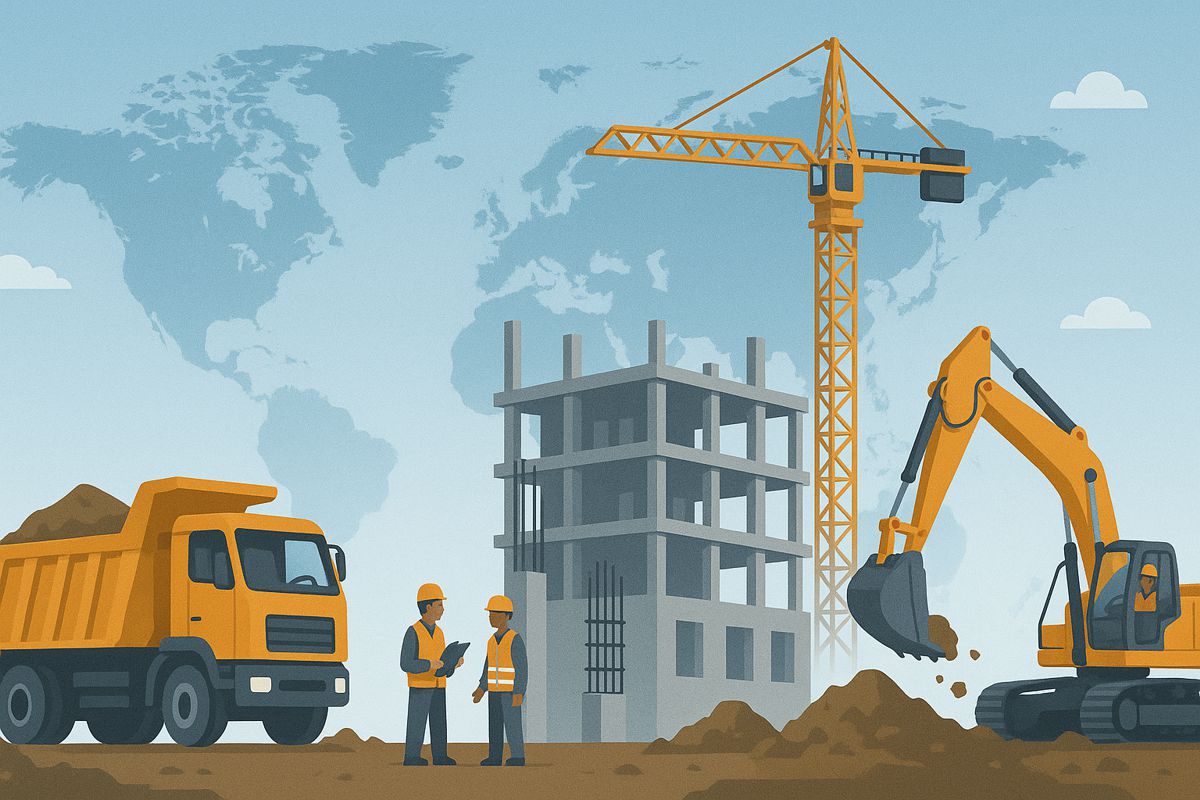
A Connected and Global Outlook
From the foregoing survey, one thing is clear, around the globe, highways, bridges, and heavy infrastructure are being built or rebuilt at a pace not seen in decades. Governments and investors are betting big on concrete, steel and asphalt as foundations for future prosperity. The motivations are as diverse as the locales: improving road safety, cutting travel times, boosting trade, creating jobs, or adapting to climate and technology changes.
In many cases, these initiatives are truly transformative, stitching together regions that were previously divided by geography or underinvestment. A farmer in rural Zimbabwe will soon have smoother access to city markets; a commuter in Bangalore will enjoy a faster, safer daily ride; a truck driver in Kenya will reach the border without grinding through bottlenecks; and a traveller in London may one day take off from an expanded Heathrow, soaring over a realigned motorway that once constrained the airport’s growth.
Yet, delivering these grand projects is not without challenges. Cost overruns, as seen in Baltimore’s bridge replacement or Heathrow’s expansion plans, are a constant risk amid volatile material prices and complex engineering demands. Financing models are evolving, PPPs and multinational loans are filling the gaps where public funds run thin, exemplified by Kenya’s Chinese-funded highway and Honduras’s CABEI-backed road. There’s also an increasing emphasis on sustainability and resilience: builders are integrating environmental safeguards, whether it’s designing highways to better withstand floods and storms or ensuring new infrastructure aligns with decarbonisation goals and community needs.
What stands out is the global scale of ambition. Infrastructure is a universal language of progress; nearly every nation is engaged in some form of monumental build-out or upgrade. As these projects come to fruition in the coming years, the world will be more connected than ever, economically, socially, and physically. Highways and heavy infrastructure might not always steal headlines like tech innovations do, but they quietly enable the flow of commerce and ideas, truly bridging continents and building futures in the most literal sense. With continued investment and cooperation, the hope is that these roads, rails, runways, and bridges will pave the way to a more prosperous and interconnected world for all.