Hearing Protection Innovation For Real-World Environments
Across urban streets, industrial sites, and busy public spaces, sound is a constant companion. Engines roar, horns pierce the air, and construction sites deliver persistent waves of vibration and mechanical noise. While smartphones now warn users when they enter a dangerously loud space, there has been relatively little practical support to guide people in making safe, informed choices about hearing protection.
Public awareness around noise exposure has grown in recent years. In several countries, workplace safety regulators and health agencies highlight the impact of long-term exposure to noise and the cumulative risks to hearing. According to the World Health Organisation, up to one billion young adults are at risk of developing some form of hearing loss because of recreational noise, while occupational exposure continues to affect workers across agriculture, manufacturing, transport, and construction.
Prolonged exposure to noise complicates daily communication, reduces situational awareness, and, over time, leads to fatigue and cognitive strain. Despite growing awareness, few tools make it easy for individuals or safety professionals to analyse their noise environment and select the optimum protection.
Turning Research Into Practical Software
To address that gap, Santino Cozza and a team from Applied Research Associates, Inc. developed the Hearing Protection Optimisation Tool, commonly known as HPOT. Instead of focusing solely on traditional noise reduction ratings, HPOT highlights the real-world performance characteristics that affect comfort, usability, and the quality of protection in different environments.
This user-friendly software platform has been shaped by years of operational research, simulation, and field experience. It helps users select the most suitable hearing protection device, or HPD, for their environment by converting complex acoustic science into accessible information that supports better decisions.
Cozza presented the software as part of the Sixth Joint Meeting of the Acoustical Society of America and Acoustical Society of Japan. The conference is being held from 1–5 December in Honolulu, Hawaii, and Cozza will deliver his presentation on Thursday, 4 December.
Cozza explained the thinking behind the platform: “The underlying science of how humans perceive sound is complex, drawing from acoustics, psychology, and physiology. We designed HPOT to translate that into something usable, empowering smarter, more personalized hearing protection.”
Understanding Real-World Noise Conditions
HPOT guides users through a few straightforward prompts. They begin by entering information about their noise environment, including sound intensity and exposure duration. If detailed measurements are not available, the platform estimates exposure levels from written descriptions of the setting, such as traffic noise, industrial activity, or construction works.
Once the exposure levels are assessed, HPOT applies algorithmic analyses to a database of regulatory-approved hearing protection devices. The system calculates several acoustic and psychoacoustic variables, including insertion loss, speech intelligibility, and sound localisation. While these terms are often difficult for non-specialists to interpret, HPOT converts them into clear visual comparisons that allow users to understand performance at a glance.
The result is a data-driven, tailored approach to hearing protection. The system identifies appropriate HPDs and highlights the differences between them, enabling the user to choose based on comfort, effectiveness, and situational requirements.
Supporting Communication And Situational Awareness
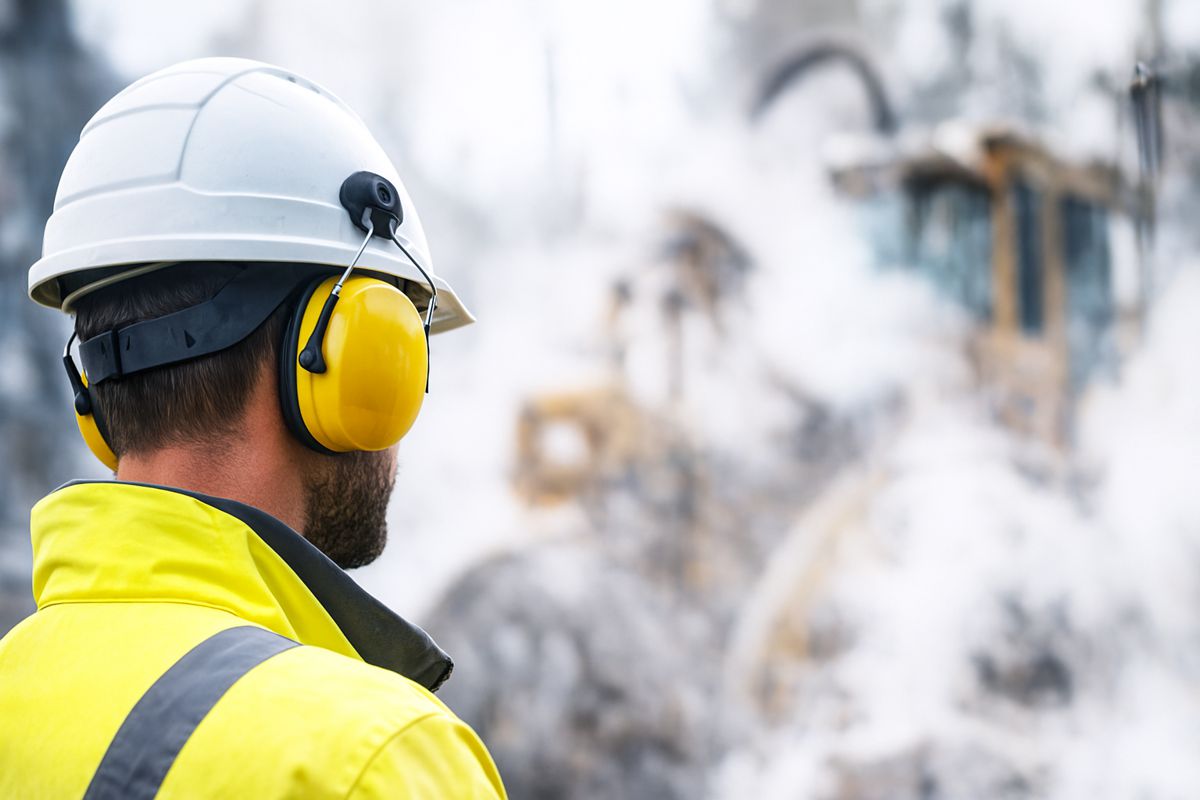
Noise protection involves more than simply blocking loud sounds. Workers on construction sites, military personnel, first responders, and industrial operators often need to hear instructions, alarms, or radio communication while still reducing the overall noise entering the ear. HPOT considers those real-world requirements and allows users to toggle priorities such as communication clarity, mobility, cost, and power requirements.
These visual trade-offs help both safety professionals and general users optimise their choice for their working style or environment. For example, a highway construction worker may need a level of situational awareness that differs from that of a sound technician or an airport ground crew member. The platform brings those considerations into the selection process, rather than focusing solely on decibel reduction.
From Military Operations To Wider Civil Applications
HPOT was originally designed to support complex military hearing protection decisions, including training and operational scenarios where situational awareness and communication are essential. However, Cozza believes the technology has much broader potential across civil society and the workplace.
Cozza noted the tool’s wider reach: “Whether you’re a hearing conservationist protecting workers, an audiologist trying to stay current with new technologies, or just someone choosing earplugs for a concert, HPOT was built to help.”
Hearing protection plays a significant role in aviation operations, industrial manufacturing, mining, tunnelling, road construction, and rail infrastructure. Each setting has unique noise signatures, vibration characteristics, and communication demands. A digital selection tool that accounts for these variations can support safer, more productive working conditions.
Enhancing Workplace Safety Standards
Around the world, occupational safety legislation continues to evolve, particularly in high-exposure industries. Authorities set maximum permissible levels of noise exposure, and employers face increasing expectations regarding staff well-being, equipment safety, and risk management. Digital tools that simplify compliance, record decision-making, and document risk management help companies demonstrate responsible practices.
HPOT aligns well with ongoing industry trends, including smarter personal protective equipment, connected safety platforms, and data-driven asset management. Organisations responsible for major infrastructure projects can improve consistency across worksites, while supervisors benefit from real-time insight and simplified training materials.
Continuous Innovation And Future Capabilities
The developers are currently preparing advanced upgrades designed to increase the platform’s flexibility and usefulness. These include support for impulse noise environments, such as gunfire, blasting, pile driving, or sudden mechanical impacts, and the integration of double hearing protection where extremely high exposure demands a combination of earplugs and earmuffs.
Cozza described the broader industry potential: “HPOT is a blueprint for modernizing how personal protective equipment is selected. We envision a future where intuitive, data-driven tools exist across all categories. Our goal is to simplify those processes using the same science-to-software approach that powers HPOT.”
Looking ahead, this approach could support a range of protective equipment beyond hearing. Respiratory filtration, eye protection, fall arrest systems, and specialised protective clothing can also benefit from intuitive digital selection tools that weigh performance, usability, and cost.
A Smarter Future For Hearing Health
Rising noise levels in cities and on worksites show no signs of slowing. Road networks are busier, public spaces are more active, and industrial systems continue to electrify, intensify, and expand. Modernising hearing protection is therefore becoming an important part of public health and occupational safety.
HPOT’s data-driven approach offers a smarter way forward. By helping individuals and organisations navigate complex acoustic science, it supports more confident decisions, higher safety standards, and better overall well-being. The connection between hearing health and productivity is increasingly recognised, and intuitive tools that make protection easier to understand are set to play a meaningful role in the years ahead.