NDB Accelerating India’s Low Carbon Energy Transition
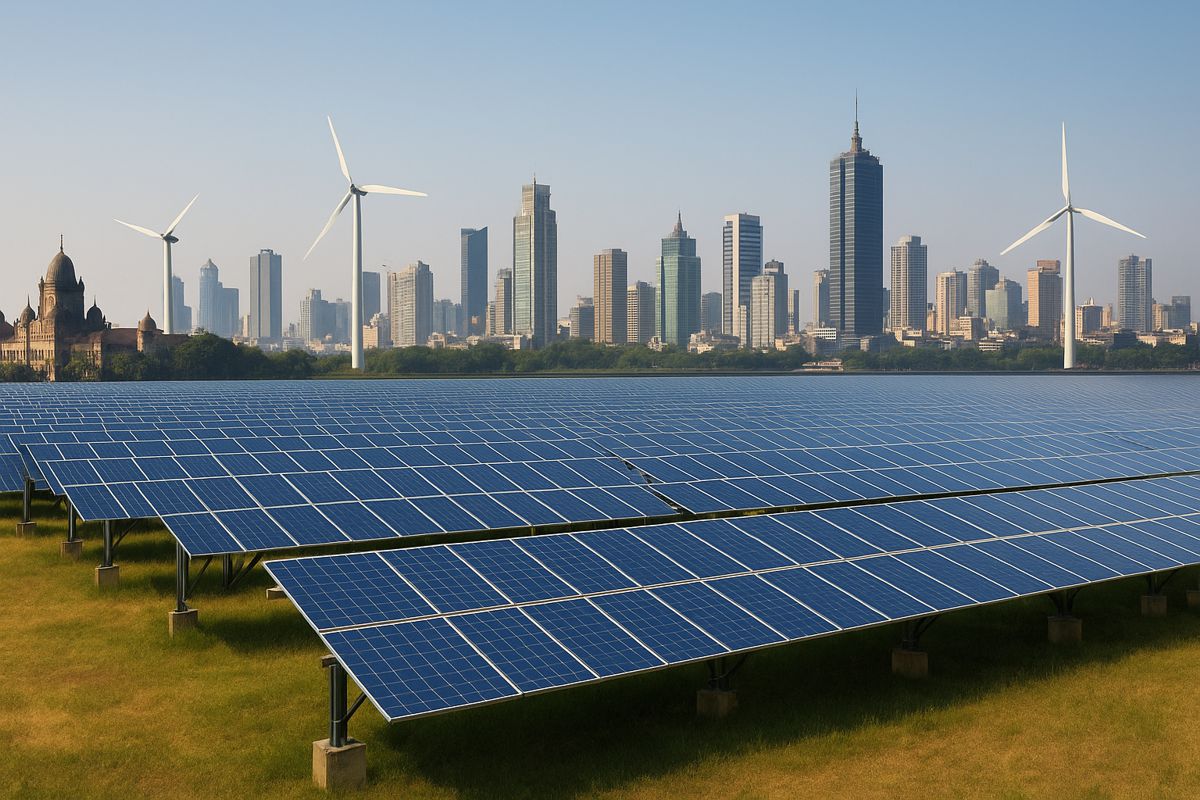
India’s journey towards sustainable energy remains one of the most ambitious in the world. Its expanding population and economic development are driving substantial energy demand, and meeting that demand while reducing emissions requires significant investment in renewables, new infrastructure, and advanced technologies. To address this challenge, the New Development Bank (NDB) hosted a high‑level seminar in Mumbai bringing together policymakers, financiers, innovators, and global experts to share strategies for financing the clean energy transition.
The seminar highlighted a vital truth for emerging economies. Sustained progress depends on access to affordable finance that encourages deployment of solar, wind, green hydrogen, battery storage, and smart grid systems. While India has already achieved a considerable milestone by enabling 50 percent non‑fossil fuel electricity capacity ahead of its 2030 target, long‑term energy security will demand continued innovation and massive capital mobilisation across multiple sectors.
“India has achieved 50% non‑fossil fuel electricity capacity ahead of its 2030 target. At NDB, we are on track to meet our strategic goals of allocating 40% of our financing to climate projects and 30% in local currencies”, as outlined in the Bank’s Strategy (2022‑2026). “As we mark our 10th anniversary, we reaffirm our commitment to innovation, partnerships, and local currency financing.”
The Growing Importance of Local Currency Financing
In regions where currency volatility increases project risk, local currency financing is emerging as a practical strategy for long‑term energy investment. The New Development Bank has prioritised financing solutions in local currencies across its portfolio to improve affordability and reduce funding risks for utilities, state agencies, and private operators.
Local currency financing brings multiple benefits. It enables infrastructure developers to minimise exposure to exchange rate fluctuations, while multilateral development banks can mobilise additional capital from domestic markets. In effect, local currency structures become a catalyst for long‑term stability, improving the bankability of renewable projects and accelerating deployment in emerging economies.
Over the next decade, local currency bonds and green bond markets are expected to play a far greater role in funding distributed renewables, decentralised micro‑grids, and energy‑efficient urban infrastructure. As India continues to advance sustainability reforms, strengthening domestic green finance ecosystems could significantly increase capital flows into priority sectors.
NTPC and the Evolution of a Diverse Energy Mix
The energy transition is about much more than adding solar farms or wind assets. It requires a complete transformation of how energy is generated, managed, and transported, along with the right technologies to support grid modernisation. Gurdeep Singh, Chairman and Managing Director of NTPC Limited, outlined how the company is evolving from a traditional utility to a diversified energy powerhouse.
Singh emphasised that competitive financing remains the cornerstone of India’s transformation. NTPC is rapidly expanding renewables while exploring hydro and nuclear options, reflecting the importance of a balanced and resilient energy mix. As India scales up clean energy, efficient project delivery, digital asset management, green hydrogen pilot plants, and innovative storage solutions will also become essential.
The company’s evolution showcases broader regional trends. Increasingly, utilities across Asia are transitioning into integrated energy platforms, enabling collaboration between public and private stakeholders and opening up new models for funding, operations, and technology integration.
Government of India Priorities for an Equitable Transition
Representing the Government of India, Dr. Prasanna V. Salian of the Department of Economic Affairs reaffirmed the country’s long‑term commitment to an affordable and equitable clean energy transition under the national 2070 net‑zero target.
India has launched numerous flagship initiatives in renewable energy development, offshore wind policy, domestic manufacturing under the Production Linked Incentive schemes, and battery energy storage initiatives. These programmes are designed to scale domestic capability, reduce import dependence, and stimulate technology transfer across sectors.
“While citing various flagship initiatives of the Government of India,” he stressed the vital role of multilateral development banks like NDB in mobilising resources, enabling low‑cost technology transfer, and promoting climate‑smart investments.
India’s clean energy strategy prioritises economic inclusion and energy access, ensuring that rural communities benefit from distributed solar assets, micro‑grids, and next‑generation mini‑hydro projects. With a diverse geography and large population, India’s energy reforms require constant innovation, strong partnerships, and policy clarity.
Energy Storage, Digital Grids and Green Hydrogen Innovation
India’s expansion of renewables has been remarkable, although grid flexibility and intermittency challenges require new investment in battery systems, pumped hydro capacity, and digital grid management. As renewable penetration increases, AI‑enabled forecasting, automated grid balancing tools, and smart metering will become indispensable to maintain reliability.
At the same time, green hydrogen represents a transformative leap for industrial decarbonisation. India has already launched the National Green Hydrogen Mission, allocating billions for scaling production, research, and export capacity. Robust financing from development banks and capital markets will be pivotal to integrating hydrogen into fertiliser production, refining processes, mining operations, and heavy mobility.
The Role of Multilateral Development Banks
Multilateral development banks have played a crucial role in accelerating sustainable infrastructure growth worldwide by sharing technical knowledge, underwriting risk, and supporting project preparation.
Such institutions enable:
- Long‑term concessional lending for energy and infrastructure
- Low‑cost funding for high‑impact public services
- Climate resilience projects in vulnerable regions
- Local currency financing that increases affordability
For India and other emerging markets, financing stability is key to unlocking large‑scale investments in renewable energy, urban resilience, water infrastructure, and sustainable mobility.
NDB’s Strategic Global Mission
Established in 2015 by Brazil, Russia, India, China, and South Africa, the New Development Bank mobilises resources for sustainable energy and infrastructure development across BRICS nations and other emerging economies. Since inception, NDB has approved over USD 40 billion in financing for 120 projects spanning clean energy, water and sanitation, digital connectivity, social infrastructure, and transport networks.
The Bank is rated AA+ by Standard & Poor’s, AA by Fitch Ratings, and AAA by Japan Credit Rating Agency, all carrying stable outlooks. These ratings reinforce its capacity to offer competitive lending that attracts both domestic and international partners.
Building Resilient and Inclusive Global Energy Pathways
The Mumbai seminar underscored a fundamental global message. Successful energy transitions require more than funding. They demand coordinated action between governments, industry, investors, and technology leaders, along with a regulatory environment that supports long‑term certainty.
NDB reaffirmed its commitment to enabling resilient, sustainable, and inclusive growth across its member countries. In doing so, the Bank contributes not only to cleaner global energy systems but also to stronger communities and climate‑ready economic development.
India’s sustainability journey has already achieved major milestones. As large‑scale investments continue, the role of multilateral development banks, innovative financing tools, and a strengthened domestic clean energy ecosystem will be central to securing a more resilient future for the world’s fastest‑growing major economy.
Strengthening Momentum for India and Emerging Markets
India’s success is increasingly becoming a blueprint for other emerging economies. The nation’s holistic approach to energy security, economic growth, and decarbonisation demonstrates how strategic financing partnerships can transform infrastructures in record time.
With more than a decade of experience funding sustainable development across continents, NDB remains well‑positioned to support integrated clean energy ecosystems, cross‑border manufacturing alliances, urban resilience programmes, and digital transformation across energy infrastructure.
As investment accelerates, the transition is not only about power generation. It is about social empowerment, employment, technology innovation, and resilient national development.