Constructing Norway’s Ocean Technology Hub With Liebherr Cranes
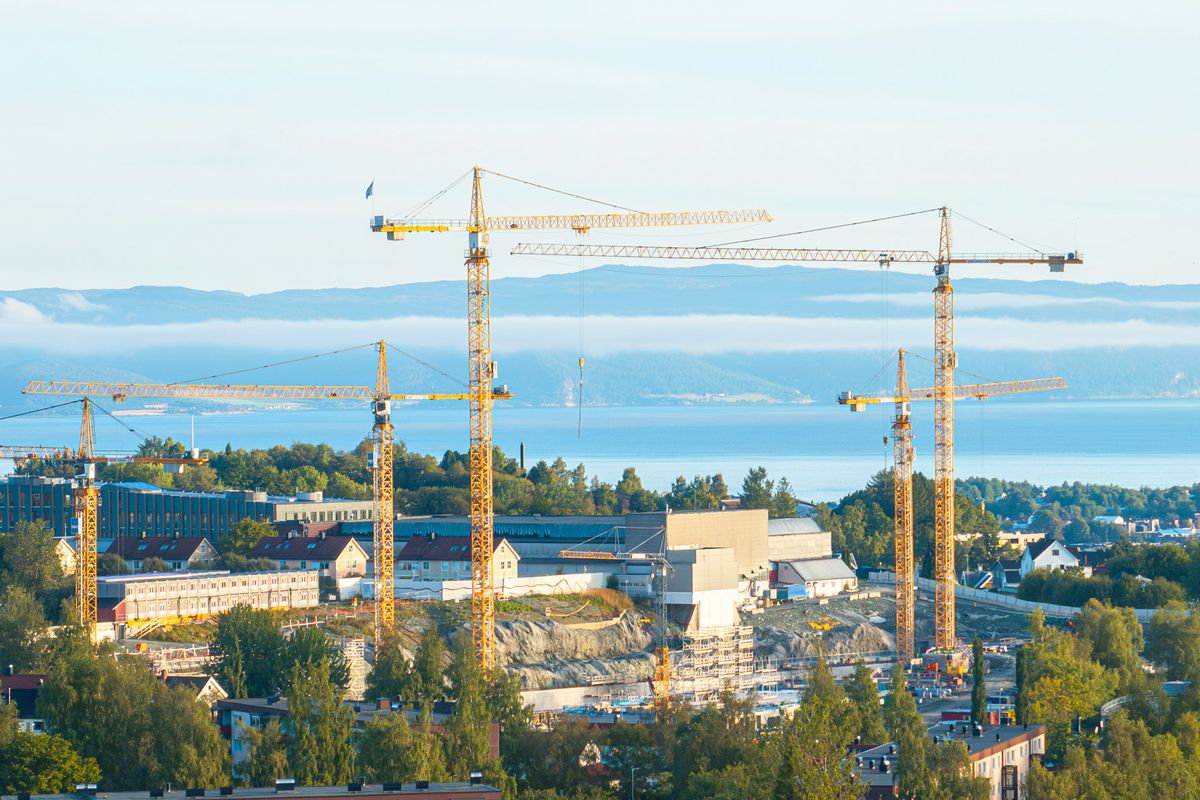
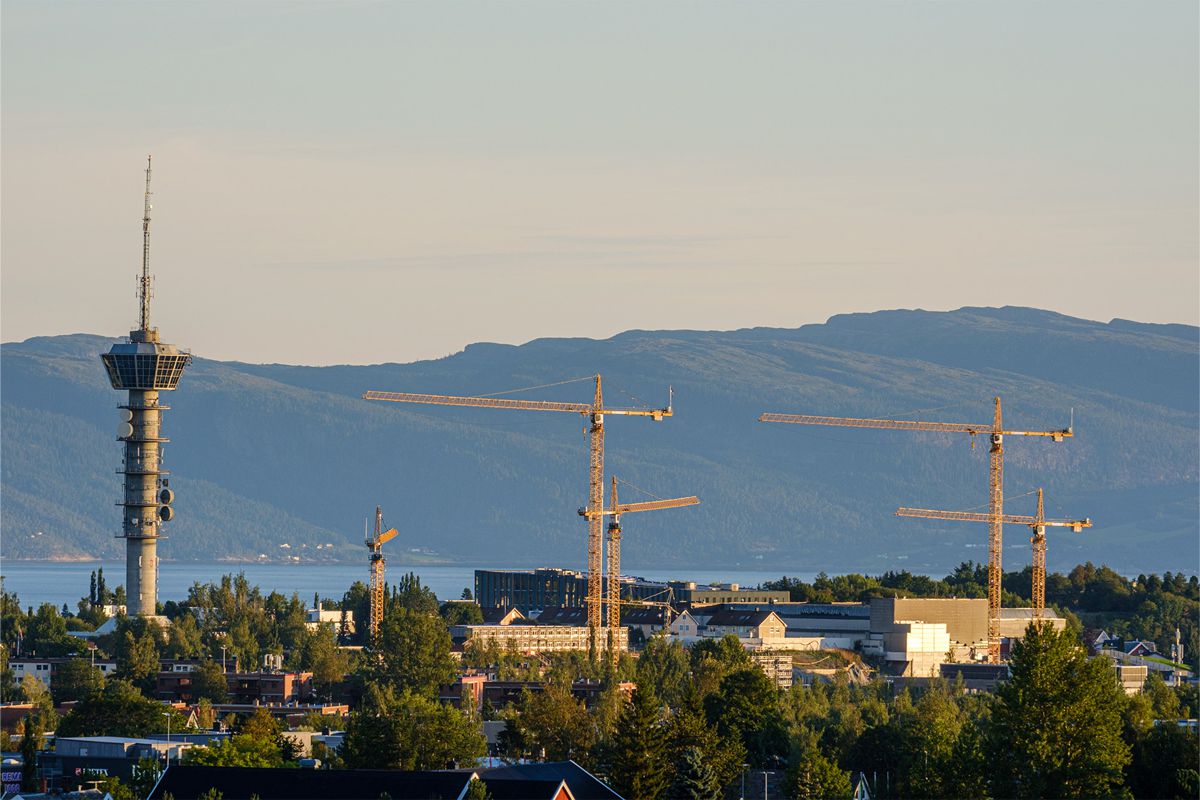
The Norwegian Ocean Technology Centre in Trondheim is widely recognised as one of the most ambitious scientific infrastructure developments in Scandinavia. The project brings together state-of-the-art research, maritime engineering and sustainable ocean technology under a single roof. As part of its construction, six Liebherr tower cranes are carrying out precise lifting operations across a large and technically challenging coastal site.
The new centre is being developed by the Norwegian University of Science and Technology (NTNU) and SINTEF Ocean, representing a major step towards globally sustainable maritime resource management. Scheduled for completion in 2030, the facility will house wet and dry laboratories, technical workshops, specialist test beds, education suites and collaborative work environments for maritime innovators.
Research priorities at the centre will include renewable offshore energy, emission-free shipping systems, environmentally responsible aquaculture, and digital maritime simulation. When fully operational, the facilities will make Trondheim one of the world’s leading hubs for sustainable marine innovation.
Crane Technology Driving Construction Efficiency
A total of six Liebherr tower cranes are currently deployed throughout the extensive project site. These include four Liebherr 280 EC-H 12 Litronic units, one 280 EC-H 16 Litronic, and a versatile 81 K.1 fast-erecting crane. The cranes are responsible for lifting heavy concrete and steel elements, prefabricated wall and formwork structures, and complex modular building components.
Operating next to the Norwegian coastline demands reliable lifting capacity, precise controls and strong wind-load resistance. Maritime conditions shift rapidly during the winter months, and the cranes must consistently support structural installation despite gusting winds, salt exposure and intermittent weather patterns. Liebherr’s Norwegian partner, UCO (Utleiecompagniet AS), has supplied the cranes and continues to provide on-site technical expertise and maintenance services.
The demanding environment makes tower crane performance a critical element of daily construction productivity. Every lifting cycle must be executed with exceptional stability and mechanical accuracy, preventing project delays and safeguarding personnel.
Engineering Support For Complex Maritime Structures
The Norwegian Ocean Technology Centre features several complex architectural geometries and precision testing spaces that require careful alignment of structural components. Liebherr’s Tower Crane Solutions Team is supporting the main contractor, HENT AS, with detailed engineering analysis and specialist lifting recommendations.
Before each crane installation, load-path analysis and precision stability planning are essential. Liebherr engineers provide advanced statics calculations, lifting simulations and on-site advisory support to align crane capacity with each structural task. This engineering service ensures that tower configurations meet safety, wind-load and construction sequencing requirements.
The 81 K.1 fast-erecting crane brings flexible lifting to temporary works and rapidly evolving structural zones. It can be relocated easily, making it ideal for support tasks around new laboratories, pipe installations, mid-span bridge decking and testing facilities.
Maritime Facilities Shaping Research And Industry
Once fully completed, the Norwegian Ocean Technology Centre will deliver cutting-edge capability for multiple maritime sectors. NTNU and SINTEF Ocean intend for the facility to operate as one of the world’s most advanced ocean simulation and testing spaces.
Research and teaching areas will support:
- Autonomous, connected and electric vessel development
- Offshore renewable energy testing
- Sustainable marine resource systems
- Marine materials and life-cycle durability
- Hydrodynamic and environmental simulation
Visitors and researchers will have access to both wet and dry experimental laboratories capable of testing marine equipment, evaluating hydrodynamic performance and simulating extreme environmental conditions.
These spaces will be vital for accelerating real-world maritime transformation, experimenting with emission-free propulsion systems and improving operational safety through digital modelling.
Strengthening Norway’s Maritime Competitiveness
Norway has long been a global leader in sustainable ocean engineering, offshore energy innovation and environmental policy. The Norwegian Ocean Technology Centre is designed to reinforce this international leadership, supporting both domestic industry and global research programmes.
Strategic investment in maritime innovation aligns strongly with the European Green Deal, offshore wind expansion projects, zero-emission shipping initiatives, and long-term ocean stewardship policy. The availability of large-scale testing environments creates international collaboration opportunities for shipbuilders, engineering firms, offshore energy developers and coastal infrastructure specialists.
Liebherr’s lifting technology and operational service will remain instrumental in maintaining programme momentum throughout the multi-year construction cycle. Continuous crane reliability supports structural sequencing, timelines, logistics planning and safe workforce management.
Liebherr Tower Crane Solutions
Liebherr’s Tower Crane Division delivers a wide catalogue of lifting systems designed for both urban infrastructure and coastal research facilities. Its portfolio ranges from high-top tower cranes and luffing jib cranes to fast-erecting tower systems for short-duration or temporary works.
For the Trondheim marine research centre, the selected tower systems provide powerful lifting reserves and high-precision operational characteristics. The cranes’ Litronic control components allow smooth movement, safety monitoring and refined positional control, especially important when working over water or around sensitive laboratory structures.
Versatility is essential on such a site, where heavy components, prefabricated hull sections, scientific test bed steelwork and complex façade systems must be lifted safely. Liebherr cranes are engineered to withstand coastal temperatures, strong gusts, and abrasive salt exposure while maintaining absolute operational stability.
Liebherr Group Global Expertise
The Liebherr Group is a family-owned global technology business, active in tower cranes, mobile construction cranes, material handling systems, and advanced industrial machinery. The company employs over 50,000 staff across more than 150 subsidiaries worldwide.
Established in 1949 by Hans Liebherr in Kirchdorf an der Iller, Germany, the group has remained committed to developing groundbreaking lifting technology, high-performance engineering and long-term customer-focused innovation. By 2024, Liebherr’s cumulative annual revenue exceeded 14 billion euros.
Its Tower Crane Center, Customer Service Division and Tower Crane Solutions Team all contribute to international construction support programmes, from urban high-rise projects and bridge building to offshore energy installations and advanced maritime infrastructure.
Empowering Marine Research For Future Generations
The Norwegian Ocean Technology Centre in Trondheim represents a strategic step forward in sustainable maritime development and clean coastal research capacity. As major laboratories, test beds and digital simulation spaces begin to take shape, the cranes supporting their construction are playing a central role in transforming architectural designs into functional scientific structures.
Liebherr’s engineering service, lifting solutions and collaborative partnership with UCO and HENT AS demonstrate how precise crane performance can enable scientific infrastructure to scale safely and efficiently.
The centre is set to strengthen Norway’s contribution to global environmental innovation, offshore sustainability, zero-emission transport and ocean resource protection for decades to come.