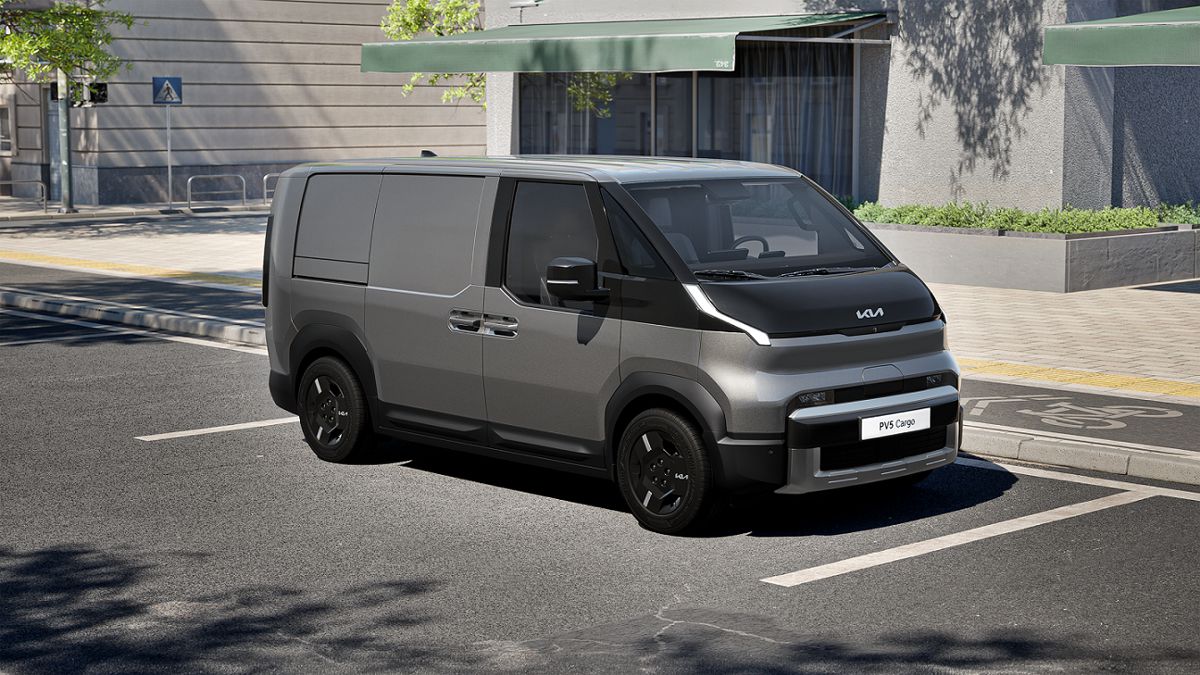
Kia PV5 Cargo Van Triumphs In Global Commercial EV Market
The Kia PV5 Cargo has secured a remarkable double honour at the 2026 What Van? Awards, winning both Van of the Year and Compact Van of the Year. These highly regarded awards recognise exceptional performance, innovation and usability within the light commercial vehicle sector. This latest accolade strengthens Kia’s fast-growing influence in the global LCV and Purpose Built Vehicle (PBV) markets, where demand for practical, efficient and electrified work vehicles has risen sharply.
The What Van? Awards are judged by an experienced panel of industry specialists, who analyse real-world performance, engineering quality and commercial value. Their independent recognition positions the PV5 Cargo as a major competitor on the world stage, especially within the electric light commercial vehicle (eLCV) category. With its dynamic powertrain, versatile design and business-focused features, the PV5 has rapidly gained credibility among fleet operators, urban delivery services and corporate mobility providers.
This achievement follows exceptional feedback from the 2025 What Van? Review, where the PV5 earned a perfect 10 out of 10 rating. It was the only electric light commercial vehicle to achieve such a result that year, providing early validation of Kia’s PBV strategy. The review highlighted driving refinement and cabin comfort, along with real-world range that outperformed conventional expectations for the category.
Paul Philpott, President and CEO of Kia UK, welcomed the award and praised the model’s capability: Winning ‘Van of the Year’ at the What Van? Awards is a tremendous endorsement for the PV5 that arrives just as the very first units arrive in the UK. We believe PV5 sets new benchmarks for the industry, thanks to its flexible platform, advanced electrified powertrain, and great value for customers. We are immensely proud of this new product, and our new UK network of dedicated PBV Centres will lead the way in demonstrating its strengths to customers as we seek to lead electrification efforts in the light commercial vehicle sector.
Why The PV5 Stood Out
The awards panel was impressed with the PV5’s balanced combination of performance, range and practicality. Its refined handling, quiet driving characteristics and smooth acceleration make it particularly suited to busy urban routes, where stop-start traffic, tight manoeuvres and efficiency are central to commercial vehicle operation.
James Dallas, Editor of What Van?, described its attributes clearly: The Kia PV5 Cargo is a well-researched and meticulously developed electric van that immediately jumps to the top of its class. Its sophisticated, versatile design and outstanding real-world range make it an exceptional product.
In many electric vans, payload capacity and usable range can drop significantly under commercial load. The PV5 has been engineered to address these challenges, benefitting from a low centre of gravity and durable body architecture that keeps the vehicle planted and predictable even when fully loaded. These traits offer fleet operators reassurance that electric vans can perform just as reliably as internal combustion alternatives, without compromising efficiency.
In addition, the PV5 delivers a quieter cabin experience than many ICE competitors and stands out for comfort during long workdays. Drivers benefit from a modern ergonomic layout, supportive seating and intuitive controls, reducing fatigue for those working extended hours in delivery, logistics or service roles.
Advanced Electrified Engineering
Kia’s PBV strategy includes a wide range of vehicle formats that are tailored for commercial use rather than adapted from existing passenger cars. The PV5 is built on a purpose-designed electrified platform that prioritises efficiency, rapid charging capability and simplified maintenance.
The model’s battery technology underpins consistent real-world performance. It can be configured to deliver a WLTP range of up to 258 miles, ensuring confidence for regional logistics routes and daily fleet operations. Meanwhile, its quiet driving dynamics help reduce driver stress, while regenerative braking systems conserve battery energy in stop-start urban conditions.
Kia has also introduced over-the-air system updates, allowing fleet owners to keep software and energy-management controls current without physical servicing. This helps reduce downtime, simplifies maintenance schedules and supports long-term operational planning for large fleets.
A Contemporary Cabin With Practical Innovation
The PV5’s interior has been designed to match the technology experience of modern passenger cars. Drivers have access to dual digital displays with Android Automotive OS, providing integrated navigation, communication and fleet-management tools. These displays deliver clarity and ease of use, reducing screen distraction and improving access to essential operational data.
Commercial users appreciate the cabin’s straightforward layout, durable materials and effective storage solutions. Kia has prioritised functionality and comfort without unnecessary embellishment. Standard features include climate control, LED front lighting, a rear camera and a comprehensive suite of safety systems.
Advanced driver assistance technologies contribute to safer fleet operations. These systems support collision avoidance, improve driver confidence and reduce insurance exposure for fleet owners. In urban environments, where unpredictable pedestrian movement, tight junctions and restricted loading zones are common, such features deliver strong value.
Flexible Configurations For Global Markets
One of the PV5’s defining strengths lies in its versatile body configurations. The current L2/H1 format serves as the launch model, offering balanced driving dimensions and good cargo accommodation. Multiple future formats are scheduled for phased introduction through 2026, including L1/H1, L2/H2, Crew Cab and Chassis Cab variants.
The PV5’s modular approach supports diverse commercial requirements, from last-mile deliveries and trades to municipal service fleets and specialist conversion businesses. Multiple heights and lengths allow users to prioritise payload, internal volume or additional onboard equipment.
Core specifications for the PV5 Cargo include:
- Long Range 71.2 kWh battery with up to 258 miles WLTP and 690 kg payload
- Standard Range 51.5 kWh battery with up to 184 miles WLTP and 790 kg payload
- Load volume of 4.4 m³
- Maximum motor output of 120 kW and 250 Nm
This balance of payload and usable range positions the PV5 as a practical workhorse for operators needing effective electric mobility at scale. For many urban or regional fleets, its efficiency profile offers a logical transition away from diesel vehicles without sacrifices in uptime or total operational capability.
Global Recognition And Real-World Validation
The PV5 has also earned prestigious international awards, reinforcing its role in reshaping the electrified van sector. Earlier in the year, it was named 2026 International Van of the Year (IVOTY), a competitive global title awarded by commercial vehicle journalists across Europe. Meanwhile, its PV5 Passenger variant took Family Car of the Year at the BBC TopGear.com Awards 2026, showcasing the platform’s adaptability beyond traditional LCV expectations.
Perhaps its most striking performance milestone came in October 2025, when the PV5 Cargo achieved a Guinness World Records title for the longest distance covered by a light-duty battery-electric van carrying maximum payload on a single charge. The achievement spanned 430.84 miles, or 693.38 kilometres, surpassing typical industry assumptions about usable eLCV range under full working conditions.
This level of real-world proof reassures fleet operators that electric vans can accommodate demanding workloads without compromising reliability. When combined with PBV charging networks and managed fleet planning, such capability substantially reduces operating costs over the vehicle’s lifecycle.
Looking Ahead To The Next Generation
As Kia’s PBV development continues, larger models including the PV7 and PV9 are already in the planning pipeline. The PV7 is expected to arrive by 2027 and aims to deliver greater internal volume, higher payload and expanded body formats. The PV9, scheduled for 2029, will target heavier-duty applications and specialist industrial needs.
These vehicles underline Kia’s ambition to create a full PBV line-up with modular scalability, optimised battery efficiency and intelligent fleet management tools. The manufacturer is working closely with global logistics firms, conversion specialists and infrastructure providers to ensure charging access and operational integration are supported at scale.
Such developments point to an increasingly mature commercial EV market, where battery efficiency, operational uptime and real-world validation form the basis of meaningful adoption. As regulatory pressure escalates around diesel emissions, especially in urban areas, eLCV platforms like the PV5 Cargo will help accelerate a more sustainable commercial mobility landscape.
A Van With Strong Future Potential
The Kia PV5 Cargo demonstrates that electric vans can now deliver genuine capability without compromise. Its awards represent more than marketing recognition; they validate engineering quality, consistent performance and business value across a range of commercial workflows.
For fleet operators considering a shift away from diesel fleets, the PV5 represents a dependable alternative. It provides comfort, impressive range, quiet driving dynamics and adaptable body configurations that accommodate evolving work practices. When combined with Kia’s PBV service network, the model is well positioned to support electrification across industries and regions.
The PV5’s rising global profile indicates a shift in how the market perceives electric commercial vehicles. Rather than niche options for lightweight use cases, they are now capable, cost-effective business tools that meet real daily demand.