Real‑World Simulations Power Safer Autonomous Vehicles
The development of safe autonomous vehicles has entered a new phase where artificial intelligence plays a central role in decision‑making. As more companies move toward fully AI‑driven AV stacks, they face a complex challenge: gathering vast and diverse real‑world data that reflects true driving conditions, edge cases, and unpredictable human behaviour. Collecting that information on live roads can be costly, slow, and rarely captures the rare or nuanced situations required to build dependable autonomous driving technologies at scale.
Foretellix and Voxel51 have introduced a joint Physical AI solution that seeks to resolve this bottleneck by converting real‑world drive logs into high‑fidelity 3D environments and neural reconstructions that feed AV training, testing, and validation pipelines. Their shared workflow aims to improve dataset quality, increase realism, and accelerate safe autonomous vehicle validation.
As autonomous vehicle programmes ramp up globally, demand for richer and more diverse training data continues to surge. Real‑world driving logs offer invaluable insight into natural conditions, yet the volume of data required to test fully AI‑driven AV architectures can span millions of kilometres. Obtaining that scale from live fleets alone may take years and still produce limited edge‑case visibility. By transforming and augmenting existing logs into controllable synthetic environments, Foretellix and Voxel51 enable developers to experiment with unusual or scarce events without needing dangerous or unpredictable field trials.
Foretellix’s Physical AI toolchain supports scenario‑driven simulation and synthetic sensor generation. When paired with Voxel51’s advanced multimodal curation and 3D reconstruction, the combined approach delivers a richer and more scalable method for model training and evaluation.
Addressing Data Quality and Simulation Accuracy
One of the most persistent challenges for AV developers lies in handling incomplete or poor‑quality real‑world datasets. Sensor misalignment, unclear labels, calibration issues, or mis‑classified objects can create flawed reconstructions that mislead training outcomes. Without rigorous auditing, these faults have the potential to create cascading engineering delays and unnecessary compute costs.
The Physical AI Workbench from Voxel51 ensures that every dataset feeding a simulation environment has been rigorously validated and structured. Using multimodal consistency checks, pose calibration detection, annotation evaluation and scene understanding, the platform delivers high‑quality inputs that support accurate reconstruction and neural 3D representation.
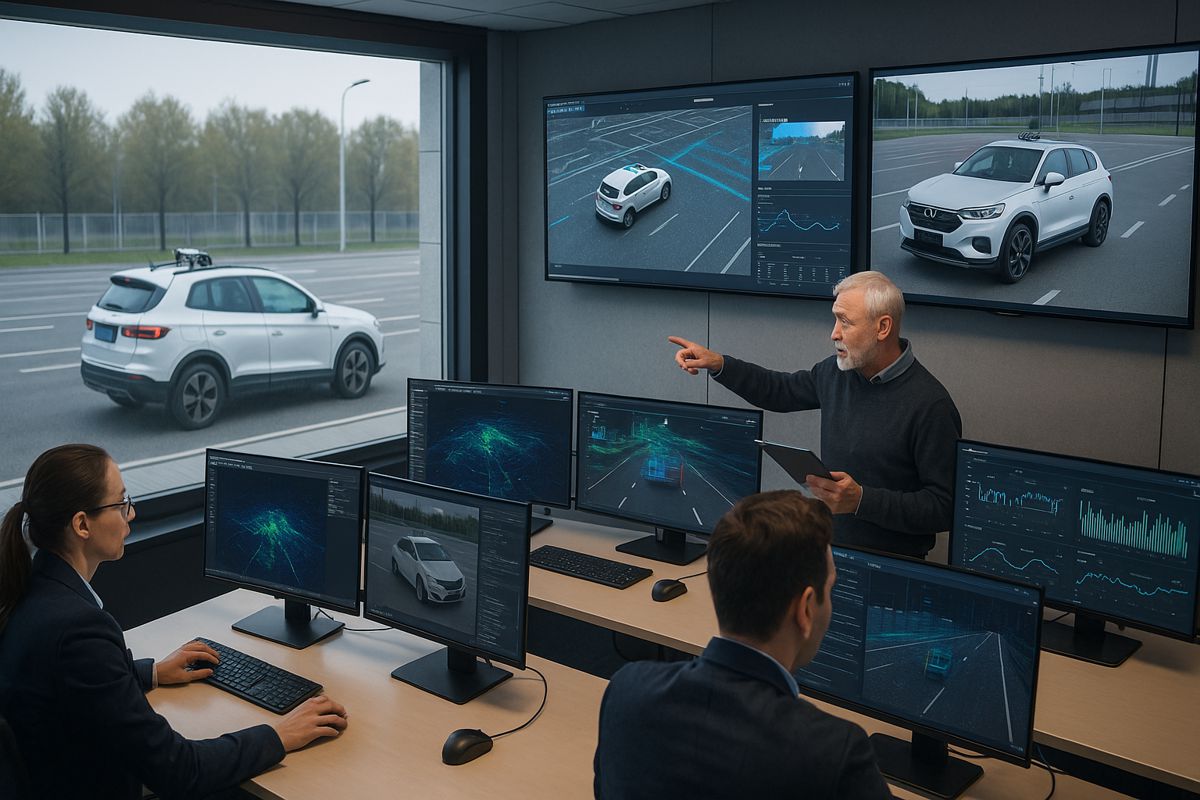
Developers can inspect curated datasets, analyse reconstructed scenes, and explore synthetic datasets inside Voxel51’s FiftyOne environment before training models. This visual transparency helps engineers identify irregularities, validate simulation readiness, and minimise avoidable risk.
Why Neural Reconstruction Matters for AV Safety
Neural reconstruction has emerged as a transformative technique for modelling real‑world environments with greater precision. Traditional simulation methods rely on geometry-driven representations that often lack behavioural nuance or realistic environmental depth. Neural representations, including 3D Gaussian splatting methods, provide higher realism and a more continuous understanding of the world.
Voxel51 integrates NVIDIA’s Omniverse NuRec and 3DGS‑based reconstruction technologies to produce high‑fidelity neural scenes from logged sensor data. These reconstructions allow developers to simulate dynamics, weather, visibility changes, or altered infrastructure layouts without ever returning to the field.
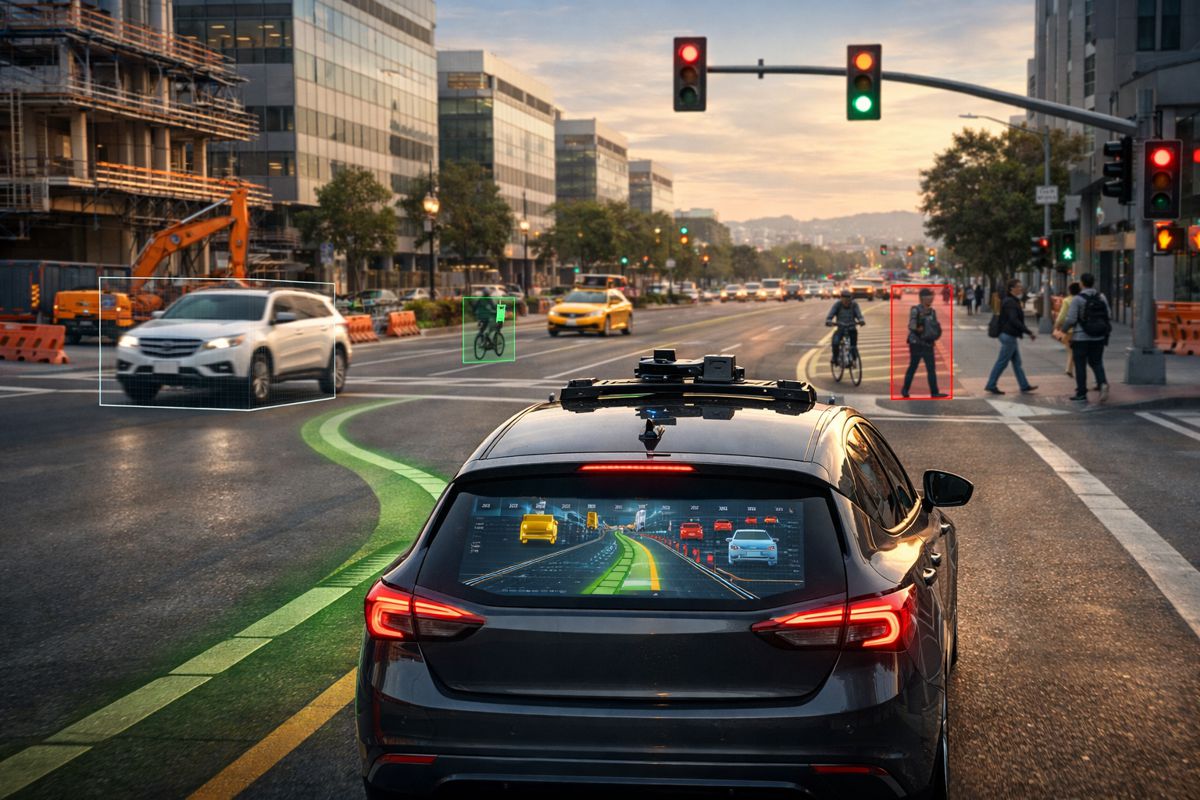
The result is an ability to perform controlled safety assessments and stress tests without exposing vehicles or people to harm. For example, an urban‑night driving dataset can be reconstructed and repeatedly altered to simulate heavy rain, obscured pedestrian crossings, low‑light sensor performance, or unexpected behaviour from cyclists or scooter users. These controlled deviations allow AV stacks to learn from rare or hazardous circumstances that may only appear once in thousands of live driving hours.
The Foretellix–Voxel51 Physical AI Workflow
Foretellix’s open ecosystem enables its Foretify Physical AI platform to integrate smoothly with external tools such as the Voxel51 FiftyOne Physical AI Workbench. This creates an end‑to‑end production‑grade workflow that supports autonomous vehicle testing, evaluation, and model improvement.
The integrated workflow functions as follows:
- Foretellix’s Foretify toolchain ingests natural drive logs to assess and identify gaps in operational design domain (ODD) coverage.
- Foretellix applies scenario‑driven analytics to isolate drive‑log snippets that fill the relevant ODD gaps.
- The curated snippets move to Voxel51 for auditing, enabling automatic detection of annotation errors, calibration issues, sensor misalignment, or structural inconsistencies.
- Voxel51 enriches each dataset with embeddings, context, and scene understanding before preparing it for neural 3D reconstruction.
- Neural reconstruction is completed using NVIDIA Omniverse NuRec and advanced Gaussian splatting methods.
- Foretellix applies scenario‑controlled variations to the neural reconstructions and generates synthetic sensor data for model evaluation.
- The reconstructed and synthetic datasets are inspected within FiftyOne to confirm accuracy and simulation realism.
- The Foretify platform re‑evaluates the updated datasets to measure ODD coverage improvements and ensure that unresolved gaps are fully addressed.
This iterative loop gives development teams the tools to continuously refine their safety coverage without requiring repeated field deployments. It also reduces trial‑and‑error simulation work by enabling early dataset auditing.
Introducing Scenario‑Driven Dataset Expansion
Scenario variation has become an essential part of Physical AI development for autonomous vehicles. Real‑world data can be limited in scope and may not provide sufficient exposure to unusual urban geometries, sudden behavioural changes, or unpredictable environmental conditions.
Foretellix’s Physical AI simulation methods allow engineers to alter neural reconstructions and sensor conditions in a controlled manner. These controlled variations may include:
- Traffic density shifts or mixed mobility interactions
- Altered lighting or visibility conditions
- Weather effects such as glare, fog or rain patterns
- Variations in pedestrian movement or street infrastructure layout
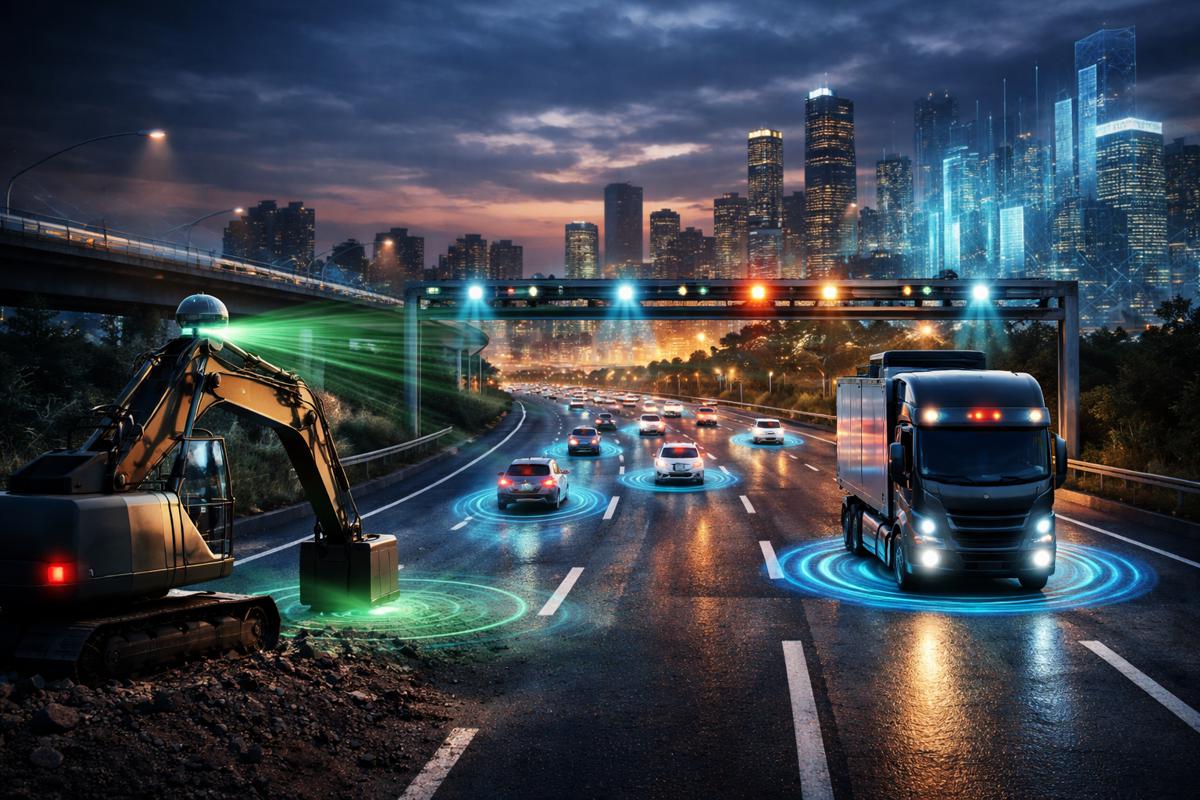
- New road signs, junction changes, or temporary worksite conditions
Synthetic datasets created from these variation cycles help AV developers stress‑test perception, planning, and risk‑response behaviours without over‑reliance on costly on‑road validation.
The Case for High‑Fidelity Data Transparency
As Physical AI platforms generate more autonomous vehicle data than ever before, transparency and auditability have become vital for regulatory confidence, reliability assurance, and safety certification.
The FiftyOne environment gives developers the ability to explore each reconstructed scene visually, verify object relationships, and confirm environmental continuity before training. Engineers can perform granular inspection of mis‑labelled objects, blurred frames or inconsistencies identified during automated audits.
This transparency streamlines debugging, reduces false positives, and helps teams verify whether synthetic sensor patterns reflect genuine environmental conditions. It also increases interoperability when safety certification authorities, insurers or independent research bodies require data provenance verification.
Safety Foundations for Next‑Generation AI Stacks
Ziv Binyamini, CEO and Co‑Founder of Foretellix, highlighted the strategic importance of Physical AI for modern autonomous systems: “Safety is the foundation that Physical AI depends on. As AV stacks shift toward end‑to‑end AI, developers need platforms that can generate and manage vast, diverse data at scale. Foretify delivers that foundation with the depth, power, and automation required for the next era of AI powered autonomous systems. Through our work with Voxel51, we unite real‑world grounding with controllable scenario variation in a single workflow that empowers teams to build stronger, smarter, and safer AI-based AV systems.”
The collaboration is designed to reduce engineering overhead, improve dataset realism, and establish a consistent methodology for Physical AI safety validation.
Brian Moore, Co‑Founder and CEO of Voxel51, reinforced the importance of quality‑led curation: “We’re excited to work with Foretellix to bring high-fidelity reconstructions and synthetic data generation to AV developers. As the volume of Physical AI data continues to explode, data quality has become mission-critical to building reliable systems. Poor quality or incomplete data drains resources and poses serious reliability risks in safety-critical AV applications. Together, we’re helping teams build AI-powered autonomy systems with greater realism, efficiency, and confidence.”
Voxel51 and FiftyOne in the Wider AI Landscape
Voxel51 has established itself as one of the most advanced visual AI data platforms in the market. Its flagship tool, FiftyOne, combines enterprise‑scalable data tooling with an open source environment trusted by researchers and engineering teams worldwide.
The platform’s adoption has expanded across automotive, manufacturing, enterprise robotics, industrial inspection, and precision agriculture. Developers from organisations such as Microsoft, LG Electronics, Precision Planting and Berkshire Grey use FiftyOne to curate vast multimodal datasets, annotate visual AI content, explore reconstruction fidelity, and benchmark autonomous model results.
The rise of simulation‑driven Physical AI models will continue to accelerate demand for consistent dataset curation, transparent auditability and scalable reconstruction. Platforms such as FiftyOne will enable automated compliance checking, deep‑scene context mapping and multimodal performance analytics.
Moving Autonomous Safety Forward
The partnership between Foretellix and Voxel51 signals a shift in how the autonomous vehicle sector approaches safety validation. Instead of relying solely on unpredictable field tests, expensive retrofits or rigid simulation geometry, Physical AI empowers AV stacks to learn from natural data while still leveraging controlled virtual variation.
Developers now have the means to:
- reduce delayed deployments caused by dataset defects
- generate meaningful rare‑event exposure without manual annotation expense
- combine neural realism with scalable synthetic scenario design
- measure coverage improvements iteratively using operational domain analytics
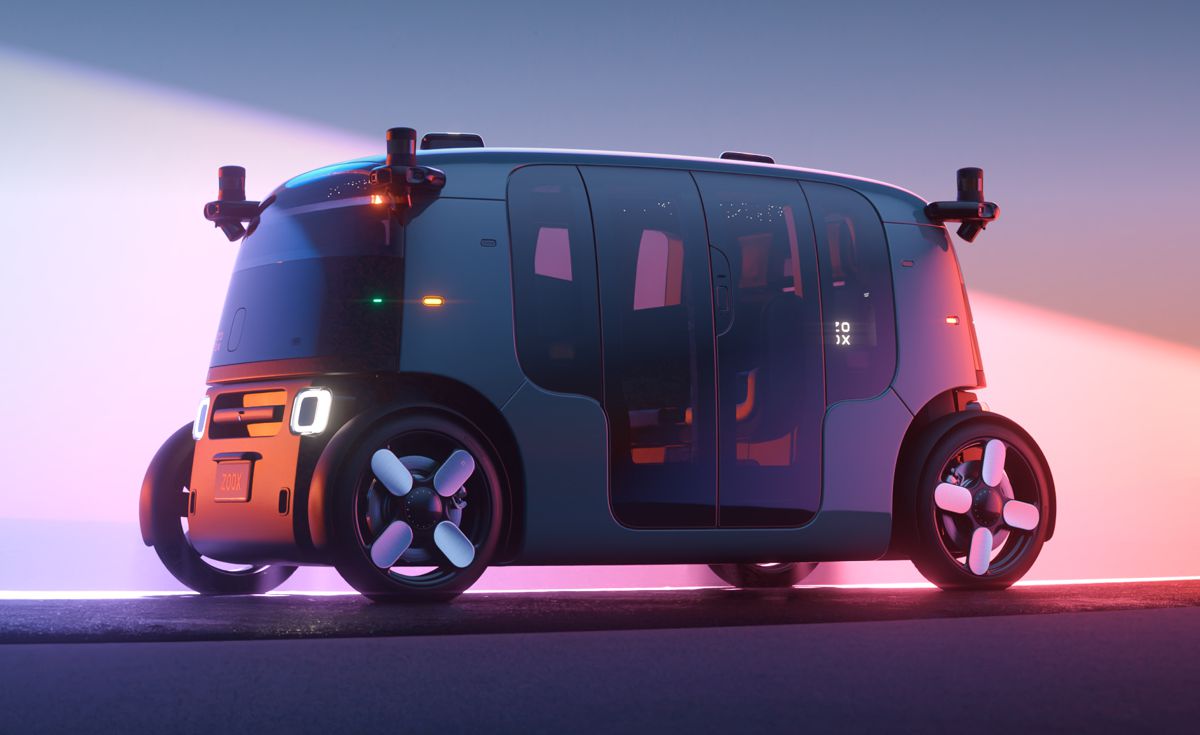
As commercial adoption of fully autonomous systems increases across freight movement, robotaxi platforms, industrial logistics and smart urban mobility, the need for robust safety datasets will become even more pressing. Continuous curation, neural reconstruction and scenario variation can dramatically shorten development cycles while keeping human risk close to zero.
The Foretellix and Voxel51 integration introduces a systematic approach to Physical AI dataset management, giving regulators and industry stakeholders confidence in scalable autonomous safety.