ADB Expands Finance and Infrastructure Investment in Papua New Guinea
Papua New Guinea stands at a pivotal moment in its development trajectory. With a rapidly growing population, vast natural resources, and deeply entrenched geographic challenges, the country faces a familiar dilemma across the Pacific region: how to translate economic potential into inclusive, resilient growth. In response, the Asian Development Bank has approved a coordinated package of project finance investments totalling $275 million, targeting three of the country’s most pressing structural constraints.
Rather than pursuing isolated interventions, the approved programme addresses financial access, energy security, and transport connectivity in parallel. This integrated approach reflects a growing consensus among development institutions that sustainable growth depends as much on institutional reform and service delivery as it does on physical infrastructure. In Papua New Guinea’s case, the alignment of policy reform with investment delivery is particularly significant given the country’s dispersed population and complex terrain.
The three projects aim to expand access to financial services for households and businesses, stabilise and decarbonise electricity supply, and improve rural access to markets and essential services. Taken together, they establish a foundation for private sector participation, productivity gains, and long-term social outcomes that extend well beyond the life of the individual investments.
Unlocking Financial Access to Drive Jobs and Trade
Limited access to finance has long constrained enterprise development in Papua New Guinea, particularly for small businesses, rural households, and women-led enterprises. Geographic fragmentation, limited banking penetration, and high transaction costs have historically restricted the reach of formal financial services, reinforcing dependence on informal systems and cash-based transactions.
To address these challenges, a $100 million policy-based loan has been approved under the first phase of the Improving Financial Access Program. The initiative focuses on strengthening the regulatory and institutional framework governing domestic and international financial services, including payments, remittances, credit, and capital markets. The reforms are designed to modernise oversight, enhance consumer protection, and reduce systemic risk across the financial sector.
ADB Officer-in-Charge for Papua New Guinea Soon Chan Hong outlined the broader ambition behind the programme: “ADB is committed to investing in essential infrastructure, creating a more enabling environment for private sector development, and assisting the Government of PNG to implement transformative power sector reforms that improve lives and livelihoods.”
Beyond immediate regulatory improvements, the programme supports households and businesses in accessing financial tools that enable employment creation and trade expansion. Digital payments, more efficient remittance channels, and improved access to credit are expected to reduce costs and improve liquidity across the economy.
Sustaining Reform Through Institutional Strengthening
The financial access programme has been structured to ensure continuity beyond the initial reform phase. Subprogram two will continue the reform process, embedding regulatory improvements and sustaining progress in financial inclusion. This sequencing recognises that trust, institutional capacity, and market confidence take time to develop, particularly in smaller and more fragmented economies.
Strengthened financial systems also support government objectives related to fiscal stability, transparency, and economic diversification. By encouraging formalisation and improving access to capital, the programme helps create conditions for domestic investment and reduces reliance on external financing over the long term.
Stabilising and Decarbonising the Power Sector
Energy reliability remains one of Papua New Guinea’s most persistent development constraints. Despite abundant renewable resources, electricity access remains limited, and service interruptions continue to affect households, public services, and industrial users. Weak utility performance and underinvestment have compounded these challenges.
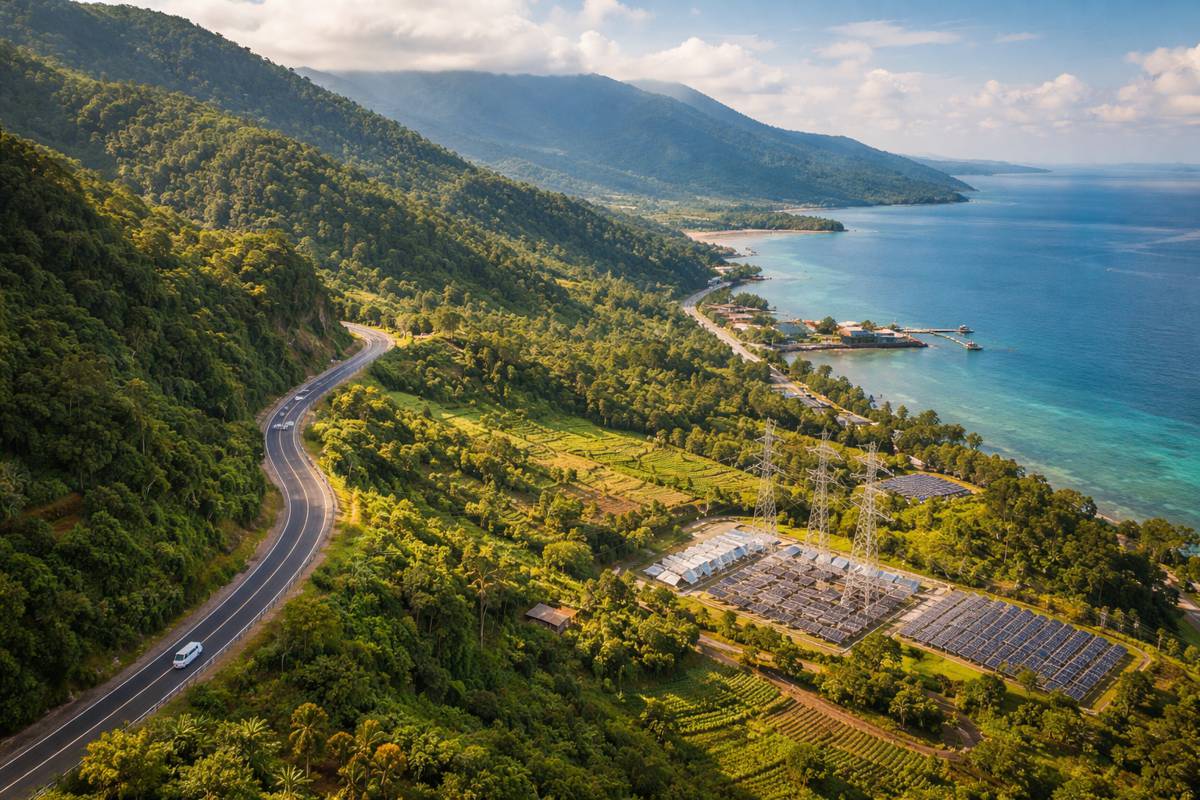
A $100 million loan, complemented by a $10 million grant from the Japan Fund for the Joint Crediting Mechanism, will finance the Sustainable Energy Sector Development Program. Structured around two subprograms, the initiative supports the Government of Papua New Guinea in strengthening the adequacy and sustainability of its low-carbon electricity supply.
The programme places strong emphasis on restoring financial and operational stability within the power sector. Policy reforms are aimed at improving governance, reducing losses, and creating clearer incentives for efficiency and accountability across electricity generation, transmission, and distribution.
Revitalising PNG Power Limited and Attracting Investment
PNG Power Limited plays a central role in the country’s electricity system, yet its performance has been constrained by ageing infrastructure, financial pressures, and operational inefficiencies. The programme supports reforms designed to improve utility performance while establishing a more predictable and transparent operating environment.
A key objective is to increase private sector participation in the delivery of clean, affordable, and reliable electricity. By establishing an enabling policy framework, the programme seeks to attract investment in renewable generation and grid improvements, reducing dependence on imported fuels and improving long-term energy security.
The inclusion of grant financing reflects recognition that early-stage reforms and capacity building often require concessional support to unlock larger flows of private capital and accelerate sector transformation.
Improving Rural Connectivity Through Strategic Transport Investment
While financial and energy reforms create enabling conditions, physical connectivity remains essential for inclusive growth. In Papua New Guinea, rural isolation continues to limit access to markets, healthcare, education, and government services, particularly in mountainous and remote regions.
A $65 million loan will fund the Transport Project Readiness Facility, supporting the upgrading and rehabilitation of subnational roads across all four regions: Southern, Highlands, Momase, and New Guinea Islands. These corridors form part of the country’s economic backbone and are aligned with national development priorities.
The targeted road investments focus on economic corridors that link agricultural production areas with domestic and export markets. Improved transport infrastructure reduces travel times, lowers logistics costs, and minimises post-harvest losses for producers of coffee, cocoa, copra, tea, vanilla, and other commodities.
Strengthening Social and Economic Access
Beyond their economic role, improved roads enhance access to essential social services. Reliable transport links improve connectivity to schools, health facilities, and emergency services, reinforcing social inclusion and regional equity. For many communities, road access is closely tied to resilience during natural disasters and public health emergencies.
The Transport Project Readiness Facility also strengthens planning and implementation capacity, ensuring that projects are well-prepared, climate-resilient, and aligned with long-term asset management strategies.
Aligning with National Development Strategies
The transport investments are embedded within Papua New Guinea’s Medium Term Development Plan IV (2023–2027) and the National Road Network Strategy (2018–2037). This alignment ensures consistency between infrastructure delivery and broader economic objectives, while supporting improved coordination across government agencies.
By prioritising readiness and quality, the facility helps shift infrastructure delivery away from reactive maintenance towards strategic investment that delivers durable value in challenging geographic and climatic conditions.
ADB’s Long-Term Commitment to Inclusive Growth
As a leading multilateral development bank, the Asian Development Bank supports inclusive, resilient, and sustainable growth across Asia and the Pacific. Since its founding in 1966, the institution has combined concessional finance, policy expertise, and technical assistance to address complex development challenges.
In Papua New Guinea, ADB’s evolving engagement reflects a growing emphasis on system-level reform, quality infrastructure, and private sector development. The latest $275 million investment package underscores a long-term commitment to strengthening economic foundations while improving daily living conditions for communities across the country.
Through innovative financial tools and strategic partnerships, ADB continues to play a central role in supporting Papua New Guinea’s efforts to build resilience, expand opportunity, and deliver inclusive development outcomes.