Aviation Finance Investment Reshapes Papua New Guinea Air Transport
Papua New Guinea’s aviation sector has received a significant boost following a new financing agreement with the Asian Development Bank that supports the renewal of the national carrier’s fleet. A structured package valued at $35.8 million has been signed to help modernise aircraft operations, improve safety standards, and strengthen both domestic and international connectivity. In a country defined by rugged mountains, scattered islands, and limited road access, aviation is not a luxury. It is an essential service that underpins economic activity, social inclusion, and national cohesion.
At the heart of the initiative is the replacement of ageing aircraft with newer, more efficient models that are better suited to the country’s operating environment. Fleet renewal is widely recognised across the global aviation industry as one of the most effective ways to improve safety, reduce emissions, and lower operating costs. For Papua New Guinea, the timing is particularly important as demand for reliable air services continues to grow alongside trade, tourism, and regional development ambitions.
Structured Finance with Long-Term Impact
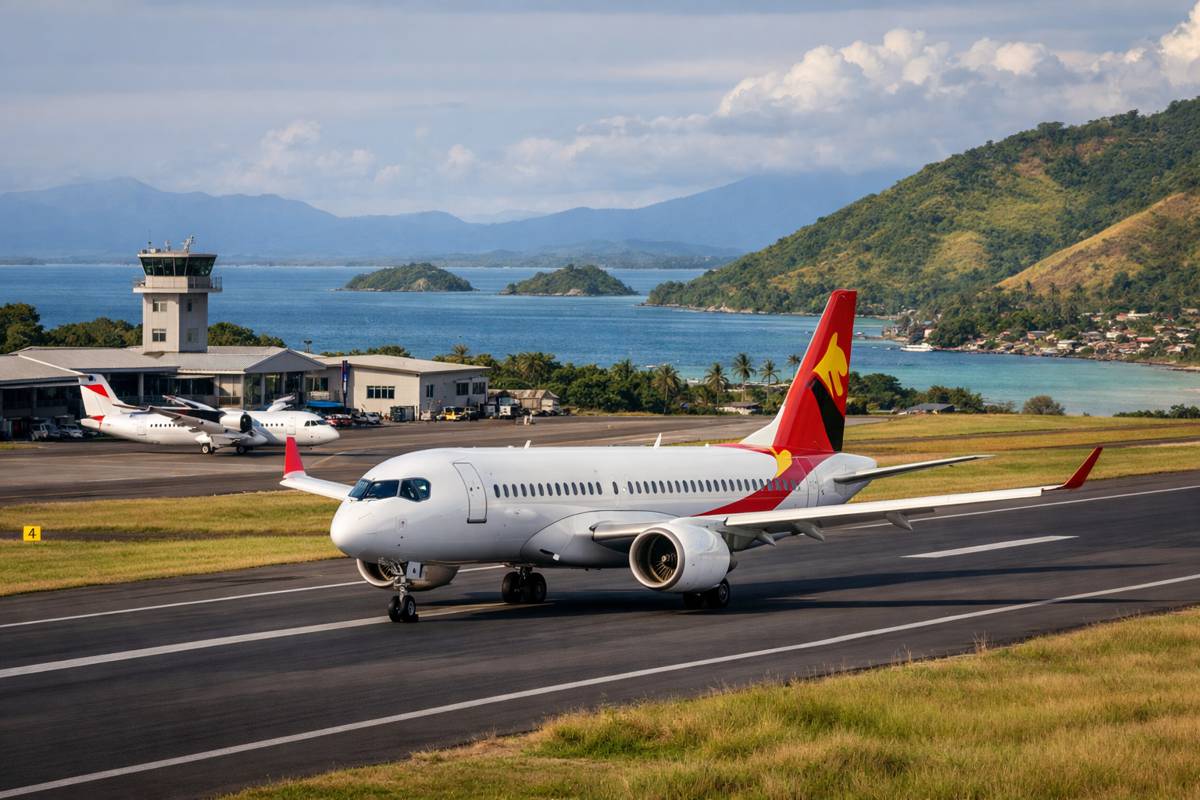
The financing package combines two complementary funding streams designed to support sustainable infrastructure investment. A $19 million loan has been provided from capital resources, alongside a further $16.8 million loan administered through the Leading Asia’s Private Sector Infrastructure Fund 2. Together, these funds will enable the acquisition of six Airbus A220-100 aircraft, replacing older and less efficient planes that have been in service for decades.
This blended financing approach reflects a broader shift in development banking, where public capital is increasingly used to mobilise private sector investment into strategic infrastructure. Aviation, particularly in geographically complex nations, is seen as a catalyst sector. Improvements in air transport reliability often ripple outwards, supporting healthcare access, education, disaster response capability, and regional trade.
A Clear Commitment to Sustainable Development
The project has been positioned squarely within a sustainability framework, with strong emphasis on efficiency, safety, and environmental performance. According to the Officer in Charge of the Papua New Guinea Resident Mission, the investment demonstrates a long-term commitment to inclusive growth: “This project highlights ADB’s commitment to sustainable and inclusive development in PNG. By supporting Air Niugini’s fleet renewal, we aim to improve the country’s connectivity, boost economic growth, and enhance air travel safety in the Pacific region.”
New-generation aircraft such as the Airbus A220-100 typically deliver fuel savings of around 20 percent compared with older regional jets. For airlines, this translates into lower operating costs and improved route viability. For governments and communities, it means reduced carbon emissions and quieter operations, which are increasingly important considerations for airports located close to population centres.
Why Aviation Matters So Much in Papua New Guinea
Papua New Guinea’s geography makes air travel indispensable. Much of the country’s interior is mountainous, heavily forested, or inaccessible by road, while coastal and island communities are separated by vast stretches of ocean. In many regions, aircraft provide the only reliable means of transporting people, medical supplies, and essential goods.
Air Niugini occupies a pivotal role within this system. As the national airline, it connects remote communities with major urban centres, while also linking the country to Australia, Asia, and the wider Pacific. Without dependable air services, economic participation in many parts of the country would be severely constrained. Modern aircraft are therefore not simply commercial assets but national infrastructure.
Modern Aircraft and Safer Skies
Safety has been a central driver behind the fleet renewal programme. Newer aircraft incorporate advanced avionics, enhanced navigation systems, and improved performance on short or challenging runways. These features are particularly relevant in Papua New Guinea, where weather conditions and terrain can make flight operations demanding.
Globally, aviation regulators and insurers consistently link fleet modernisation with improved safety outcomes. Reduced maintenance requirements, better diagnostic systems, and manufacturer support all contribute to higher dispatch reliability and lower operational risk. For passengers, this translates into greater confidence in air travel, while for the airline it supports stronger on-time performance and operational resilience.
Environmental and Cost Benefits Aligned
Fuel efficiency sits at the intersection of environmental responsibility and commercial viability. With fuel representing one of the largest operating costs for any airline, efficiency gains can significantly improve financial sustainability. At the same time, reduced fuel burn directly lowers greenhouse gas emissions, supporting national and regional climate commitments.
The Airbus A220 platform has gained traction worldwide for precisely these reasons. Designed for regional and medium-haul routes, it combines lightweight materials with modern engine technology to deliver strong performance without excessive environmental impact. For island nations and developing economies, such aircraft provide a practical pathway towards greener aviation without compromising connectivity.
The Role of LEAP 2 in Infrastructure Finance
The Leading Asia’s Private Sector Infrastructure Fund 2 plays a critical role in projects such as this by bridging the gap between public development goals and private sector delivery. With a total commitment of $1.5 billion from the Japan International Cooperation Agency, the fund targets infrastructure investments that reduce carbon emissions, improve energy efficiency, and expand access to essential services.
Beyond aviation, LEAP 2 has supported projects across renewable energy, transport, digital connectivity, healthcare, and education throughout Asia and the Pacific. Its focus on commercially viable yet socially impactful investments reflects a growing recognition that sustainable development requires scalable financial models, not one-off interventions.
Air Niugini’s Strategic Role
Established in 1973, Air Niugini remains wholly state owned and continues to serve as a cornerstone of national development. Its domestic network reaches communities that would otherwise be isolated, while its international routes support tourism, trade, and diplomatic engagement. Over the years, the airline has navigated economic volatility, infrastructure constraints, and operational challenges common to carriers operating in remote regions.
The current fleet renewal programme aligns with broader efforts to strengthen governance, improve operational efficiency, and ensure long-term viability. Modern aircraft provide a foundation upon which training, maintenance capability, and service quality can be further enhanced, positioning the airline to meet future demand.
Aviation as an Economic Multiplier
Numerous studies by international aviation bodies have shown that improved air connectivity acts as a multiplier for economic growth. Reliable air services attract investment, support export industries, and enable labour mobility. In tourism-dependent economies, aircraft availability and route stability are often decisive factors in destination competitiveness.
For Papua New Guinea, where resource projects, agriculture, and emerging tourism all rely on dependable logistics, the benefits extend well beyond the airport perimeter. Each new aircraft strengthens supply chains, supports regional development, and enhances the country’s integration into global markets.
A Measured Step Toward Resilient Growth
Rather than a headline-grabbing expansion, this investment represents a measured and strategic step toward resilient infrastructure. By focusing on efficiency, safety, and long-term performance, the project avoids the pitfalls of overcapacity while addressing genuine national needs. It also sends a clear signal to investors and development partners that Papua New Guinea is committed to modernising critical assets responsibly.
As air travel demand continues to evolve across the Pacific, fleet renewal programmes such as this will likely become increasingly common. For Papua New Guinea, the combination of targeted finance, modern technology, and institutional support offers a practical route toward stronger connectivity and more inclusive growth.