Santa’s Smart Logistics
How the North Pole Would Deliver Christmas in the Digital Age
Every December, the same question quietly lingers in the background. How could one operation possibly deliver billions of packages, across every continent, in a single night, without missing a deadline?
Strip away the folklore and the flying sleigh, and Christmas Eve becomes the most demanding logistics exercise on the planet. It is a global, time-critical supply chain that would test the limits of even the most advanced transport networks, data platforms, and infrastructure systems. In that context, Santa’s operation starts to look less like magic and more like the ultimate case study in smart logistics.
If the North Pole were a real-world logistics hub today, it would almost certainly sit at the cutting edge of modern supply chain technology.
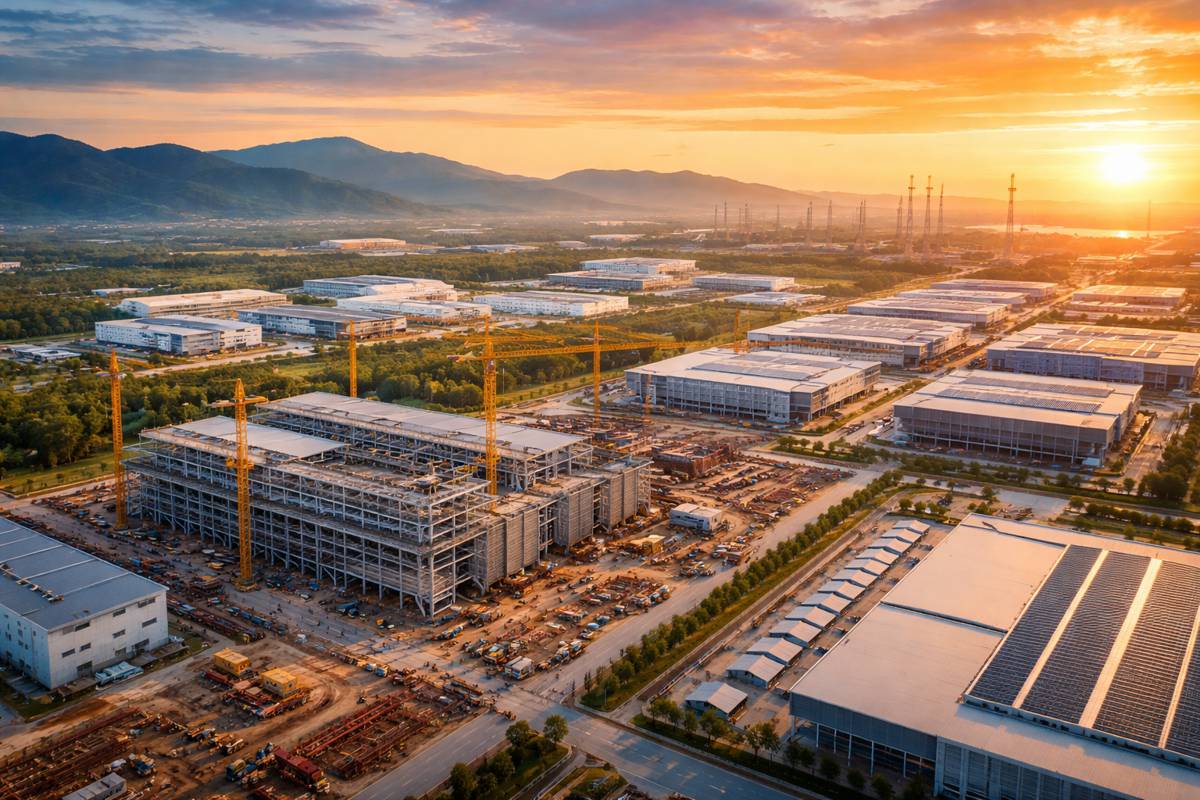
The North Pole as a High-Performance Manufacturing Hub
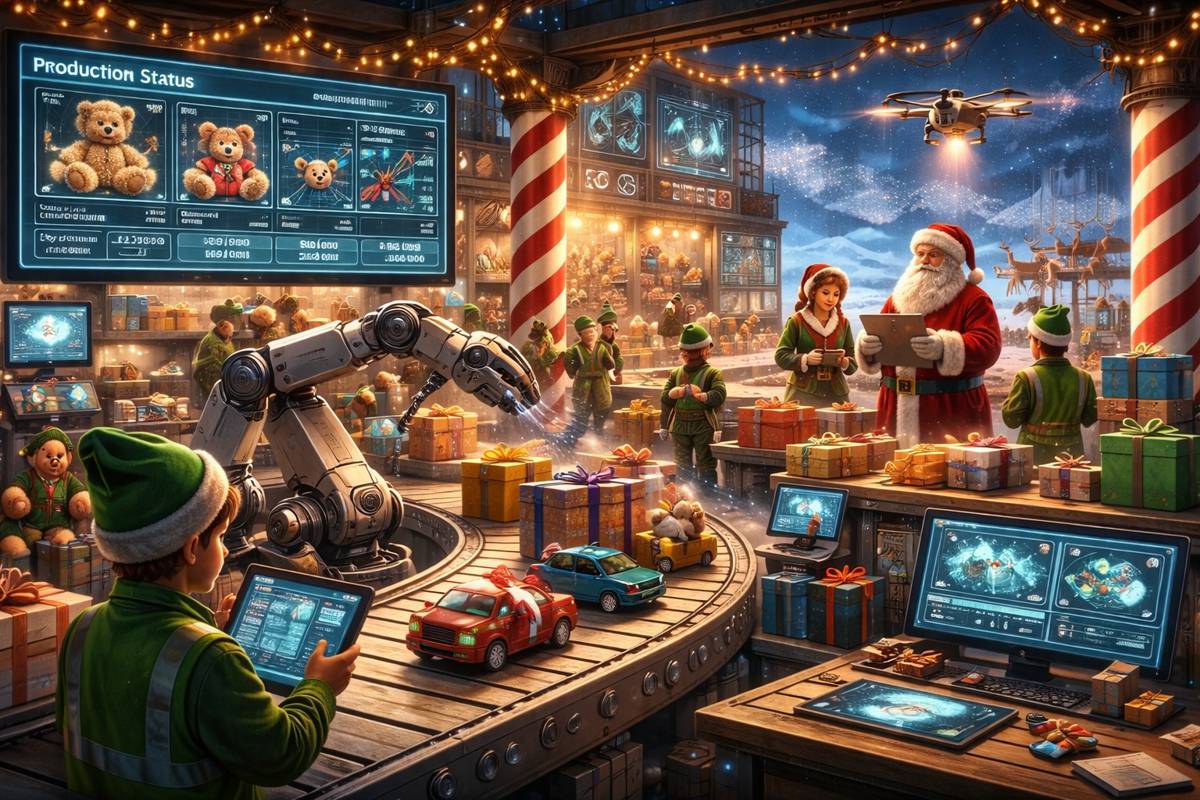
At the heart of Santa’s operation is a manufacturing centre that must respond to wildly fluctuating demand. Unlike conventional factories, production is not driven by bulk orders or long-term contracts, but by millions of individual requests, each with unique specifications, cultural nuances, and delivery constraints.
In modern terms, this is mass customisation at an unprecedented scale. Demand forecasting would rely heavily on behavioural data, historic trends, and real-time inputs. Production lines would need to be flexible, reconfigurable, and capable of rapid changeovers, much like advanced manufacturing facilities serving today’s construction equipment, automotive, or consumer electronics sectors.
Workforce planning would also be critical. The North Pole would need to balance permanent skilled workers with seasonal surge capacity, ensuring quality, safety, and consistency under extreme time pressure. In many ways, it mirrors the challenges faced by infrastructure projects racing to complete works ahead of winter shutdowns or holiday travel peaks.

Route Optimisation on a Global Scale
If manufacturing is the foundation, routing is where the real complexity begins. Delivering to every corner of the world in a single night would require a level of route optimisation far beyond conventional freight operations.
Time zones, rather than being a constraint, would become a strategic advantage. Santa’s departure schedule would be dynamically aligned to local midnight windows, allowing deliveries to roll westward across the globe in a carefully orchestrated sequence. Weather intelligence would be fed continuously into the system, flagging storms, extreme cold, and wind patterns that could disrupt progress.
This is where modern parallels are easy to draw. AI-driven routing platforms already help logistics operators avoid congestion, respond to incidents, and adjust routes in real time. Applied at a planetary scale, such systems would be essential to keep Christmas on schedule.
Underpinning all of this is infrastructure. Roads, bridges, tunnels, ports, and airports form the silent framework that makes movement possible. Even Santa’s mythical sleigh would depend on predictable access routes, clear landing zones, and resilient networks below.

The Reindeer Fleet and the Case for Low-Emission Transport
Santa’s transport fleet is often portrayed as whimsical, but viewed through a modern lens, it is remarkably progressive. A zero-emission delivery system, capable of operating silently, reliably, and efficiently under extreme winter conditions, would be the envy of logistics operators worldwide.
In an era where transport decarbonisation is no longer optional, Santa’s reindeer represent a reminder that performance and sustainability do not have to be opposing goals. Reliability, resilience, and low environmental impact are increasingly central to modern fleet strategies, whether on highways, in cities, or across remote regions.
Maintenance would also be critical. High-performance assets require meticulous care, predictive monitoring, and contingency planning. One failure on Christmas Eve would be unacceptable, reinforcing the importance of redundancy and preventative maintenance, lessons well understood by highway authorities and transport operators alike.

Last-Mile Delivery: Where Christmas Is Won or Lost
The final stretch of any delivery is always the most complex, and Christmas Eve would be no exception. Dense urban environments, rural isolation, informal settlements, and harsh winter conditions all present unique challenges.
Last-mile delivery is where infrastructure quality becomes most visible. Narrow roads, poor lighting, damaged surfaces, and limited access can turn simple drops into logistical headaches. Even with perfect planning, local conditions dictate success or failure.
This reality mirrors the experience of real-world operators delivering food, medical supplies, and essential goods over the holiday period. While most people are celebrating, someone, somewhere, is navigating icy roads, congested city centres, or remote routes to ensure services continue uninterrupted.

Data as the Real Christmas Magic
Behind the scenes, data would be the quiet enabler of Santa’s success. Inventory visibility across millions of items, real-time performance tracking, and constant risk assessment would inform every decision made on Christmas Eve.
Modern logistics thrives on information. Knowing what is where, what is delayed, and what needs intervention allows operators to act before problems escalate. Santa’s operation would be no different. Every second saved, every risk mitigated, would compound across the night.
Crucially, data would not replace human judgement. It would support it. The final calls would still rest with experienced operators who understand that even the best systems cannot account for every variable.

Resilience, Redundancy, and Calm Under Pressure
What ultimately ensures Christmas arrives on time is not speed, technology, or even scale. It is resilience. Backup plans for backup plans. Redundant systems ready to activate instantly. Teams trained to respond calmly when things go wrong.
This is a lesson deeply familiar to those working in highways, transport, construction, and infrastructure. Extreme weather, unexpected failures, and last-minute changes are part of the job. Success is measured not by the absence of problems, but by how effectively they are managed.
Santa’s operation, fictional though it may be, reflects a truth that professionals recognise instantly. Delivering under pressure requires preparation, trust in systems, and confidence in people.
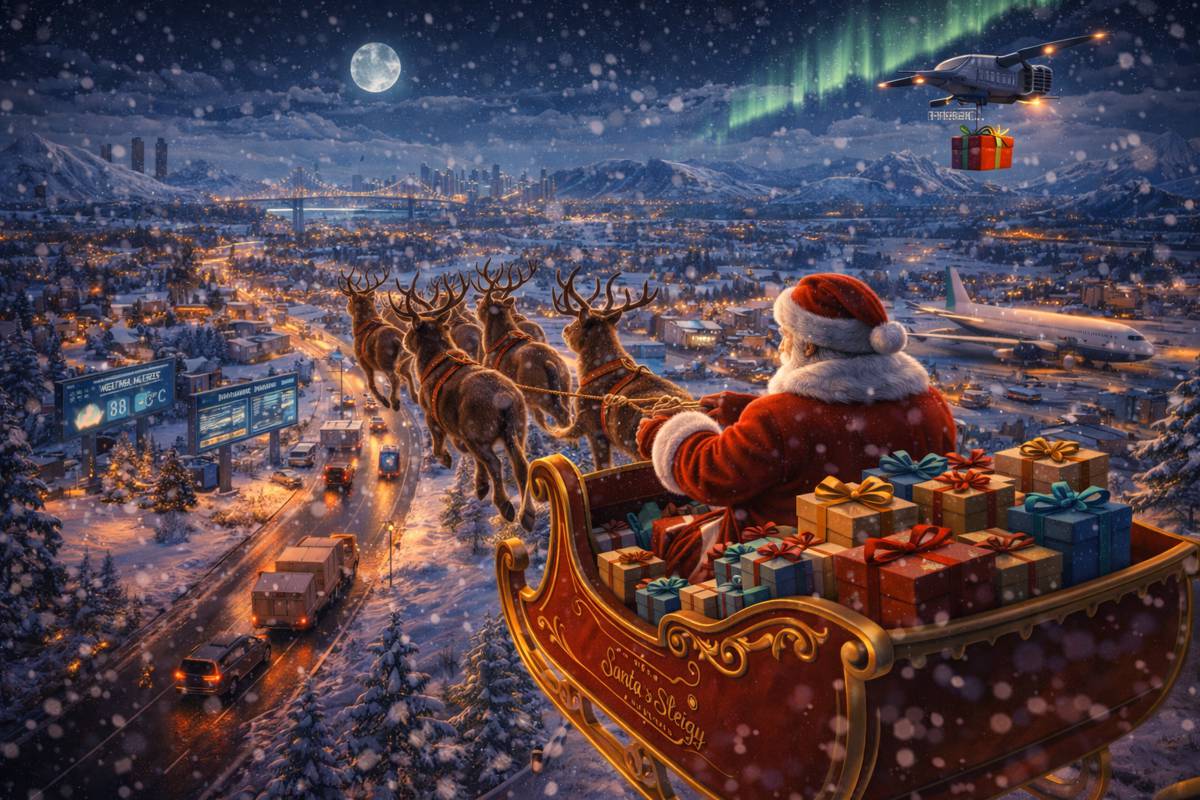
The Real Heroes of Christmas Night
While Santa captures the imagination, the real Christmas logistics story unfolds quietly every year. Road crews clearing snow before dawn. Traffic control teams monitoring holiday surges. Drivers covering long shifts to keep supply chains moving. Engineers ensuring infrastructure holds firm under seasonal stress.
These are the people who make modern Christmas possible. Their work is rarely visible, rarely celebrated, and rarely paused for the holidays. Yet without them, the magic would falter.
In that sense, Santa’s smart logistics operation is less a fantasy and more a mirror. It reflects the dedication, planning, and professionalism that underpin everyday life, especially when the world expects everything to work flawlessly.
And perhaps that is the real Christmas miracle. Not that gifts arrive on time, but that the systems and people behind them do their jobs so well that most of us never have to think about how it all happens.