Almonty and South Korea Take Centre Stage in the Global Tungsten Supply Chain
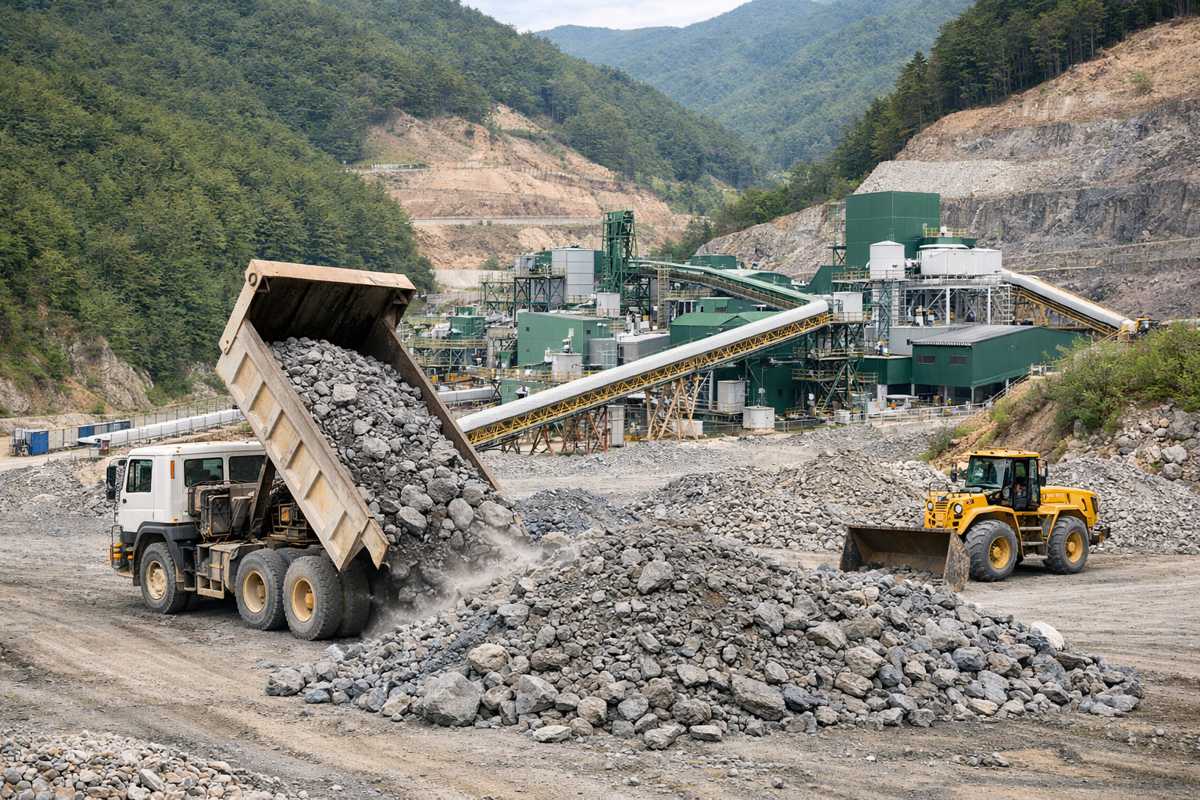
Almonty Industries Inc. has crossed a decisive threshold at its flagship Sangdong Mine in South Korea. The successful delivery of the first truckload of ore to the Run of Mine pad marks the transition from early stage development into active mining operations. In practical terms, this milestone represents the final operational step before the commencement of commercial production. In strategic terms, it signals the emergence of a new pillar in the global tungsten supply chain at a moment when supply security has become a central concern for governments and industry alike.
For Almonty, this moment confirms that years of geological work, engineering design, and careful construction are now translating into tangible output. For policymakers and downstream manufacturers, it demonstrates that a large scale, non China tungsten source is moving rapidly towards production readiness. Tungsten is not simply another industrial metal. It is a cornerstone material for defence, advanced manufacturing, semiconductors, aerospace, and emerging AI hardware, sectors where reliability of supply is non negotiable.
From Development to Active Mining Operations
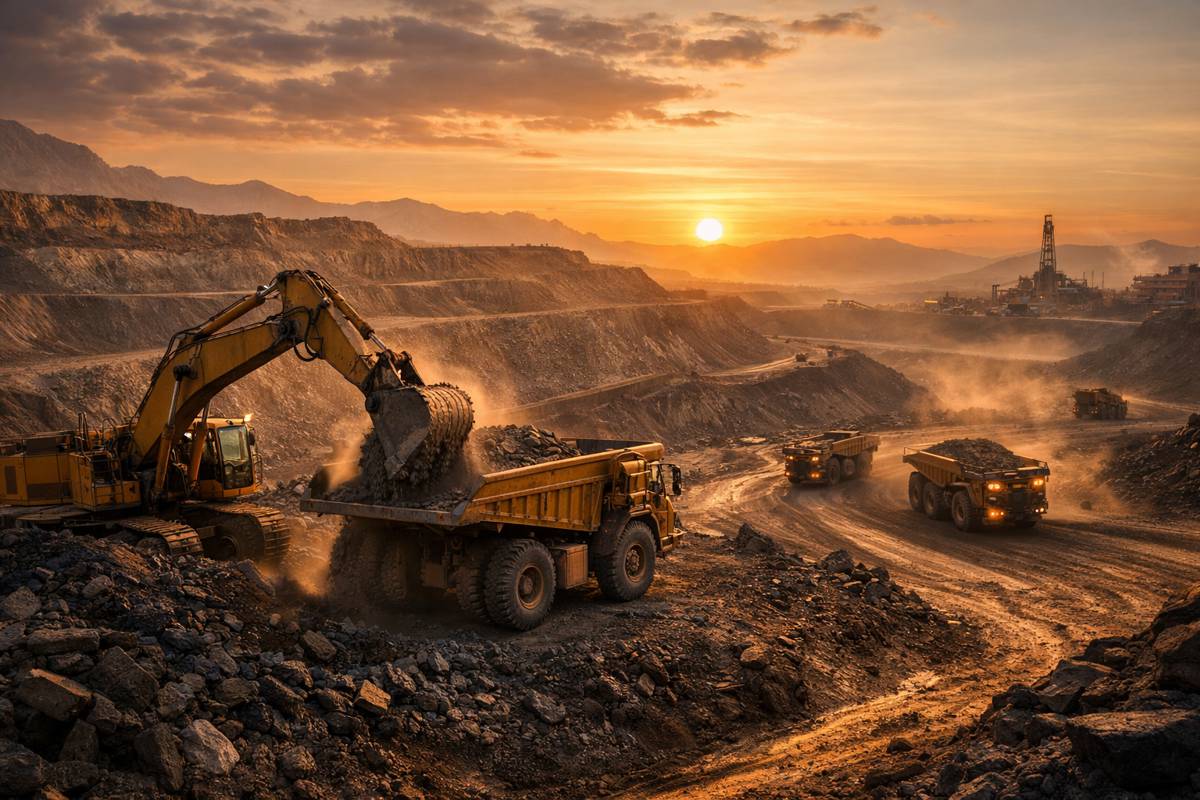
The placement of ore on the ROM pad is often overlooked outside mining circles, yet it carries deep operational significance. Ore is extracted underground through controlled blasting within the mine galleries. It is then collected, moved through the haulage system, and transported by truck to the surface. The ROM pad functions as the first interface between underground extraction and surface processing, serving as a controlled staging and stockpiling area where material is organised by grade.
With this first delivery completed, Almonty has confirmed that the underground workings, haulage routes, traffic management, and surface infrastructure are operating together under real production conditions. That integration is essential. Mines do not fail because of a single piece of equipment, but because systems do not align. The successful execution of this step shows that Sangdong’s operational systems are now functioning as a coherent whole.
Processing Pathway from Ore to Concentrate
Once placed on the ROM pad, the ore begins a carefully sequenced journey through the processing plant. Material first undergoes primary and secondary crushing to reduce it to manageable sizes. From there, it is ground to the precise particle size required for efficient mineral separation. Grinding is a critical control point, as insufficient liberation of tungsten bearing minerals can compromise recovery rates downstream.
After grinding, the material advances to the flotation circuit. Here, tungsten bearing minerals are selectively separated from the surrounding waste rock using reagents, air, and controlled agitation. The resulting concentrate is then thickened, dried, and packaged for delivery to downstream customers. Each of these stages must perform consistently before a mine can be considered commercially viable, and Almonty has designed the Sangdong process flowsheet to meet modern efficiency and quality standards.
Commissioning and Production Stabilisation
With ore now feeding the system, attention turns to commissioning and production stabilisation. This phase focuses on verifying that each processing stage performs reliably under sustained loads, not just during short test runs. Stability, throughput, recovery rates, and product quality are all assessed in parallel.
According to Almonty’s processing leadership, the preparatory work underpinning this stage has already been completed. Geological assessments, ground stabilisation, load testing, and equipment installation were all finalised prior to this milestone. The first ore delivery provides real world confirmation that the ROM pad is fully operational and that operator workflows, equipment coordination, and safety systems function effectively at production scale.
Operational Readiness Confirmed
Arif Priyambodo, General Manager of Processing Operations, underscored the importance of this verification milestone, stating: “Our team has completed all key preparatory work including geological assessment, ground stabilization, load testing, and equipment installation to advance the project to this milestone. The first truckload of ore provides direct confirmation that the ROM pad is ready for operation and that the haulage routes, equipment coordination, and operator workflows are performing safely and effectively under production level conditions. This successful verification demonstrates that the technical foundation of the Sangdong Mine is now firmly established, enabling the commissioning of the crushing, milling, and flotation circuits to proceed as planned and supporting a smooth ramp up toward full production.”
This confirmation is particularly important in a mine of Sangdong’s scale and grade. High quality ore alone does not guarantee success. The supporting systems must deliver repeatable performance from day one if a project is to meet both commercial and strategic expectations.
Strategic Implications for Global Supply Chains
Beyond the mine gate, the implications of Sangdong’s progress are substantial. Tungsten supply remains heavily concentrated, with China currently providing more than 80 percent of global output. That dominance has become a growing concern for Western governments as trade tensions, export controls, and defence procurement restrictions intensify.
Lewis Black, President and Chief Executive Officer of Almonty Industries, framed the milestone in explicitly strategic terms, noting: “This first ore placement represents a strategic inflection point in advancing Almonty’s mission to strengthen the global tungsten supply chain. Sangdong plays a critical role in efforts by the United States, the European Union, and Korea to diversify away from the China dominated market, which currently supplies more than 80 percent of the world’s tungsten. The resumption of production at the Sangdong Mine forms the foundation for securing reliable, non China tungsten supply to key sectors such as defense, semiconductors, AI hardware, aerospace, and other high technology industries.”
For defence contractors and advanced manufacturers, access to verified non China tungsten is no longer optional. Regulatory requirements, particularly in the United States, increasingly mandate conflict free and geopolitically secure sourcing.
Rebuilding Korea’s Tungsten Legacy
Sangdong is not a greenfield curiosity. Historically, it was one of the world’s largest and highest grade tungsten deposits, playing a major role in global supply during the twentieth century. Its redevelopment represents a return to that legacy, supported by modern mining methods and processing technology.
The project also aligns with South Korea’s broader industrial strategy. By re establishing domestic tungsten production, Korea reduces its reliance on imported tungsten oxide, much of which currently originates from China. This shift strengthens national resource security while positioning the country as a strategic supplier to allied markets.
The Korean Trinity Vision
Almonty’s ambitions extend well beyond a single mine. The company is advancing a fully integrated strategic mineral value chain described as the Korean Trinity. This vision combines tungsten mining at Sangdong, an upcoming tungsten oxide processing plant, and the planned development of a molybdenum deposit.
Lewis Black highlighted the long term significance of this integrated approach, explaining: “In the longer term, the Sangdong Mine’s production, combined with our upcoming tungsten oxide plant and the planned development of the molybdenum deposit, will form the basis of a fully integrated strategic mineral value chain referred to as the Korean Trinity. This system will position Korea as a global hub for the production, refining, and upgrading of tungsten. It will also support U.S. defense procurement requirements mandating non China tungsten sourcing after 2027 and reduce Korea’s heavy dependence on Chinese tungsten oxide imports, significantly enhancing national resource security for the United States and its allies.”
Vertical integration of this kind offers resilience. It reduces exposure to external processing bottlenecks and allows tighter control over quality, traceability, and supply assurance.
Tungsten and the Defence Imperative
As geopolitical tensions continue to reshape global trade, tungsten’s role has become more pronounced. Its unique physical properties, including extreme hardness, high melting point, and density, make it indispensable for armour, munitions, aerospace components, and advanced electronics.
Recent export restrictions and defence procurement bans have exposed vulnerabilities in existing supply chains. Sangdong’s projected output is expected to supply more than 80 percent of global non China tungsten production once full capacity is reached. That scale directly addresses critical shortages identified by defence agencies and industrial planners across the United States and Europe.
A Global Portfolio with Strategic Focus
While Sangdong stands at the centre of Almonty’s strategy, it is not the company’s only asset. Almonty maintains established operations in Portugal and continues to advance projects in the United States and Spain. This diversified footprint provides geographic balance while reinforcing the company’s commitment to serving Western allies seeking secure mineral supplies.
Taken together, these assets position Almonty as a leading supplier of conflict free tungsten at a time when demand is accelerating and supply certainty is paramount. The first ore on the ROM pad at Sangdong is therefore more than a construction milestone. It is a signal that a new, strategically aligned tungsten supply chain is moving from concept to reality.