Investing in Power for Saudi Arabia’s Mountain Economy
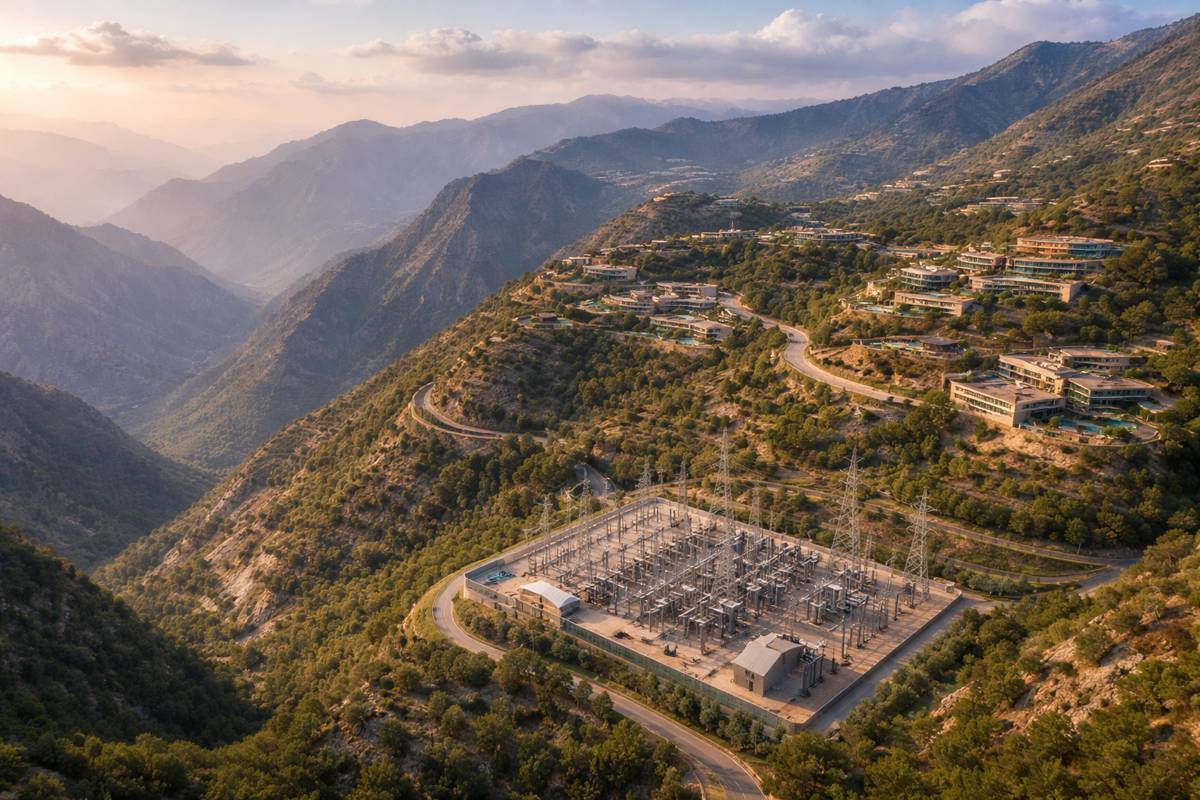
High above the Red Sea coast, where the Sarawat Mountains reshape long-held assumptions about Saudi Arabia’s geography, Soudah Peaks is emerging as one of the Kingdom’s most technically demanding destination developments. Rising to 3,015 metres above sea level, the project occupies a rare climatic and geographic position, one that places extraordinary demands on infrastructure planning, engineering resilience, and long-term operational reliability.
Within this context, Soudah Development, a Public Investment Fund company chaired by HRH Prince Mohammed bin Salman bin Abdulaziz Al Saud, Crown Prince and Prime Minister of Saudi Arabia, has signed a landmark agreement valued at more than SAR 1.3 billion with National Grid, a subsidiary of the Saudi Electricity Company. The agreement focuses on the delivery of advanced power infrastructure that will underpin every phase of development at Soudah Peaks.
While the financial value of the agreement is substantial, its strategic importance runs deeper. Power infrastructure is the unseen framework that determines whether complex, ultra-luxury destinations operate seamlessly or encounter persistent constraints. At Soudah Peaks, electricity supply is being treated not as a background utility, but as a foundational asset critical to performance, experience, and investor confidence.
Engineering Power at Altitude
Mountain developments introduce a distinct set of engineering challenges. High elevation places increased stress on electrical equipment, while temperature variation, terrain accessibility, and environmental sensitivity complicate construction and long-term maintenance. In response, the power system for Soudah Peaks has been designed with capacity, redundancy, and adaptability at its core.
Under the agreement, National Grid will design and construct an integrated electrical network anchored by a 380/132 kV central substation with a capacity of 500 MVA. This will be supported by two 132/13.8 kV high-voltage substations, creating a resilient distribution framework capable of serving hospitality, residential, retail, wellness, and public assets across all development zones.
Crucially, the system is being planned to accommodate phased delivery. Early operational areas will be supplied without compromise, while future phases can be brought online without disruptive upgrades. This approach reduces technical risk and ensures continuity as the destination evolves over time.
Infrastructure as a Driver of Experience
Ultra-luxury destinations are defined as much by operational consistency as by architecture or location. Power reliability underpins everything from climate control and digital connectivity to security systems, lighting design, and wellness facilities. Any interruption, however brief, carries reputational and commercial consequences.
By prioritising infrastructure early, Soudah Development is aligning engineering delivery with guest expectations. Reliable electricity enables operators to focus on service excellence rather than contingency planning, while designers gain the freedom to integrate advanced technologies without concern over capacity constraints.
Eng. Saleh AlOraini, Chief Executive Officer of Soudah Development, described the agreement as a decisive milestone, stating: “This agreement marks a defining step forward in the journey to develop Soudah Peaks, a world-class destination that exemplifies ultra-luxury, excellence, and sustainability. Through our partnership with National Grid SA, we are securing the infrastructure foundation needed to power all of Soudah Peaks development phases.”
The emphasis on foundation reflects a broader philosophy. Rather than reacting to demand as it arises, the project is being built on systems designed to anticipate growth, technological change, and rising operational expectations.
National Grid’s Strategic Role
For National Grid, the agreement reinforces its position as a central enabler of Saudi Arabia’s most complex development programmes. Large-scale tourism destinations place unique demands on power systems, requiring both exceptional reliability and discreet integration within sensitive landscapes.
Eng. Waleed Al-Saadi, Chief Executive Officer of National Grid SA, highlighted the importance of the project, stating: “This agreement represents a pivotal milestone in developing the electrical infrastructure for the Soudah Peaks project. It reflects our firm commitment to supporting major development initiatives in the Kingdom through integrated solutions built on the highest standards of efficiency and reliability.”
He further added: “Our partnership with Soudah Development underscores our central role in enabling luxury tourism destinations and the Kingdom’s growing economic landscape. By establishing an advanced electrical network tailored to meet the project’s needs across all phases, we reaffirm National Grid SA’s continued efforts to enhance the readiness and resilience of the power system in alignment with sustainability goals and Saudi Vision 2030.”
These remarks underline a shift in how power infrastructure is delivered in the Kingdom. Rather than responding after demand materialises, grid development is increasingly integrated into masterplanning from the earliest stages.
Powering Economic Diversification
Tourism plays a central role in Saudi Arabia’s economic diversification strategy. High-value destinations such as Soudah Peaks are designed to attract international visitors, stimulate domestic tourism, and generate skilled employment opportunities in regions beyond traditional urban centres.
Power reliability is fundamental to this ambition. Hospitality brands, investors, and operators require certainty, particularly in remote or climatically demanding locations. By delivering a robust electrical backbone, the project reduces operational risk and strengthens long-term commercial viability.
Infrastructure investment also generates wider economic benefits. Grid construction supports engineering services, specialist contractors, and supply chains, while long-term operations create demand for system monitoring, maintenance, and digital grid management expertise.
Sustainability Built Into the System
Although the agreement focuses on electrical infrastructure, its implications for sustainability are significant. High-capacity substations designed for efficiency and resilience provide the platform required to integrate renewable energy sources, energy storage, and smart grid technologies over time.
Saudi Arabia’s Vision 2030 places increasing emphasis on reducing carbon intensity while supporting economic growth. Achieving this balance requires infrastructure capable of accommodating energy transition without compromising reliability. Grid readiness is a prerequisite for integrating renewables at scale, particularly in geographically complex environments such as mountainous regions.
By embedding these considerations at system level, Soudah Peaks avoids the costly retrofits often associated with late-stage sustainability commitments.
Setting a Benchmark for High-Altitude Development
Globally, high-altitude destination developments remain relatively uncommon due to their technical complexity and cost. Soudah Peaks is positioning itself as a reference project, demonstrating how infrastructure-led planning can unlock new geographies for tourism and investment.
The electrical network being delivered is designed not only for current requirements, but for future demand driven by digitalisation, electrified transport within the destination, and increasingly sophisticated guest services. This long-term perspective enhances resilience and protects asset value.
For the wider construction and infrastructure sector, the project offers clear lessons in sequencing, integration, and risk management, particularly in environments where failure carries outsized consequences.
Turning Vision Into Operational Reality
Major developments are often defined publicly by architecture, branding, or hospitality partnerships. In practice, it is agreements such as this that determine whether ambition translates into durable success.
By securing advanced power infrastructure at an early stage, Soudah Development and National Grid have addressed one of the most critical risk factors facing complex destination projects. The electrical network may operate quietly in the background, but its influence will be felt across every guest experience, operational decision, and investment outcome at Soudah Peaks.
In the long term, this disciplined approach to infrastructure is what transforms bold vision into sustainable reality.