Bobcat Creating a Human First Vision for Smarter Construction Equipment at CES
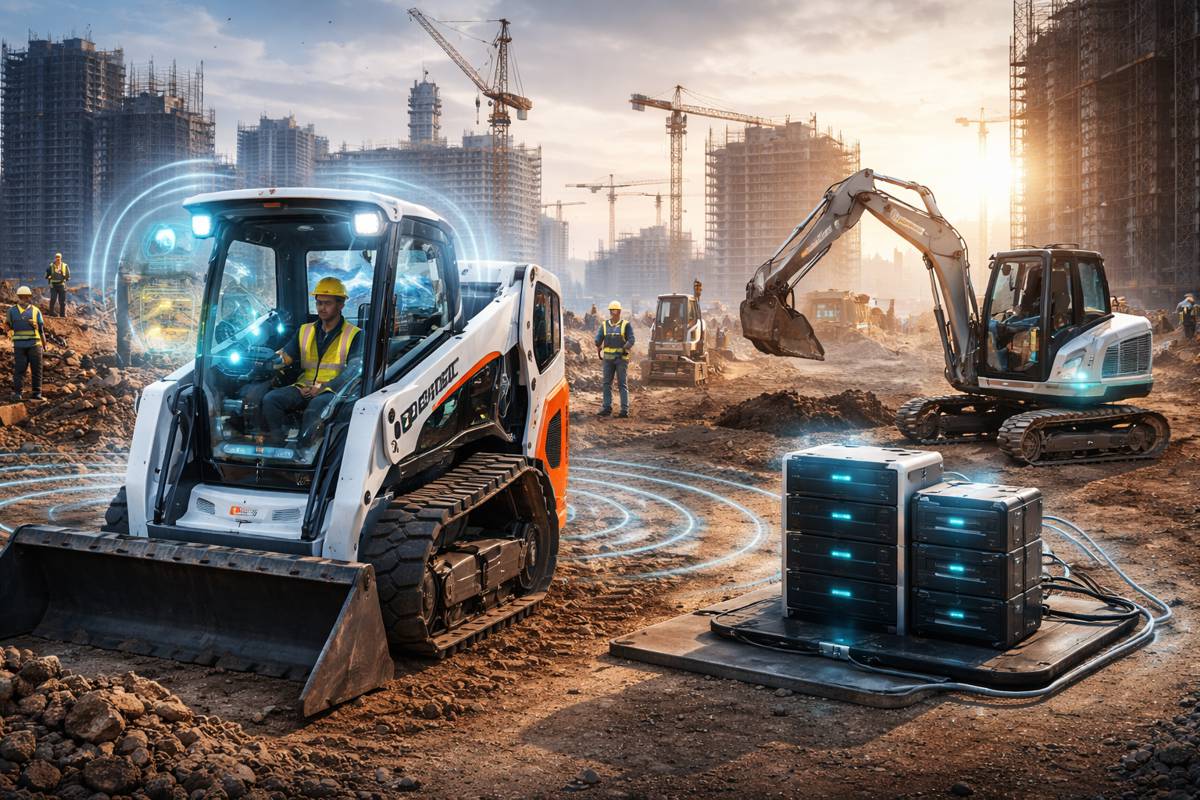
The construction industry does not change overnight, but when it does, the shift tends to be decisive. At CES 2026 in Las Vegas, Doosan Bobcat will step firmly into that moment, setting out a clear vision for how artificial intelligence can move beyond dashboards, clouds and control rooms and into the cab, the jobsite and the hands of the operator.
Rather than chasing abstract automation promises, Bobcat’s approach focuses on practical problems faced every day on sites large and small. Labour shortages, equipment downtime and increasingly complex working environments are no longer future risks. They are here now, shaping project schedules, safety strategies and investment decisions. The technologies previewed at CES aim to address those pressures directly, using AI as an enabler rather than a replacement for human expertise.
Why the Workforce Challenge Comes First
Among the most pressing concerns is the changing construction workforce. In the United States alone, 41 percent of construction workers are expected to retire by 2031, taking decades of hard earned experience with them. Similar demographic trends are visible across Europe, parts of Asia and Australia, where fewer young people are entering the trades and training pipelines are under strain.
Bobcat’s response centres on making machines easier to learn, easier to operate and more forgiving for less experienced users. AI driven systems showcased at CES 2026 are designed to provide real time guidance during operation, helping novice operators complete tasks safely and efficiently without months of seat time. For experienced operators, the same systems aim to enhance precision and productivity by reducing cognitive load and smoothing complex manoeuvres.
Rather than dumbing down machines, the goal is to raise the baseline of competence across the workforce. By embedding intelligence directly into equipment controls and interfaces, Bobcat is attempting to preserve institutional knowledge and make it accessible on demand.
Turning Data Into Real Time Operator Support
Traditional construction equipment relies heavily on operator judgement developed through years of experience. While that expertise remains invaluable, modern jobsites demand faster onboarding and consistent performance across crews. AI enabled operator assistance bridges that gap by translating sensor data and machine feedback into actionable guidance.
At CES, Bobcat will demonstrate how AI can support tasks such as grading, material handling and positioning by offering contextual prompts and corrections in real time. These systems are intended to reduce rework, minimise errors and improve overall job quality, especially on projects where timelines are tight and margins thin.
Crucially, this intelligence lives on the machine. By operating at the edge rather than in the cloud, guidance remains available even in remote locations with limited connectivity, a common reality on infrastructure and civil engineering projects.
Downtime Remains the Enemy of Productivity
While labour challenges dominate strategic conversations, equipment downtime remains a daily operational headache. For many contractors, especially smaller operators, a single machine failure can halt an entire project. Delays ripple through schedules, subcontractors and supply chains, driving up costs and frustration.
Bobcat’s AI powered diagnostics technology aims to compress the time between fault detection and resolution. By combining live machine data with historical repair records and service knowledge, technicians can gain faster insight into what is wrong and how best to fix it.
This approach reduces reliance on trial and error troubleshooting and shortens service visits. For owners, it means more predictable uptime and fewer surprises. For technicians, it provides structured guidance that supports both experienced mechanics and those newer to the trade.
Smarter Maintenance Without Guesswork
Predictive maintenance has long been discussed in construction circles, but practical implementation has often lagged behind the theory. Bobcat’s CES preview suggests a more grounded application, where AI supports maintenance decisions without overwhelming users with dashboards and alerts.
By prioritising clear, relevant insights, the system helps owners understand which issues need immediate attention and which can be scheduled without disrupting operations. Over time, this data driven approach also supports better fleet planning and lifecycle management, an increasingly important consideration as equipment costs continue to rise.
Managing Risk on More Complex Jobsites
Jobsites today bear little resemblance to those of even a decade ago. Mixed traffic environments, tighter urban footprints and the presence of autonomous and semi autonomous machines all contribute to higher risk profiles. Improving situational awareness has become a priority not just for safety managers but for equipment designers as well.
Bobcat will preview radar based technology designed to enhance operator awareness and detect potential hazards in real time. By monitoring surroundings and identifying collision risks, the system can alert operators and support timely intervention.
Rather than replacing vigilance, this technology acts as an additional layer of protection, particularly in environments where visibility is restricted or distractions are unavoidable. As safety regulations evolve globally, such integrated systems are likely to become a baseline expectation rather than a premium feature.
A New Generation of Operator Displays
Alongside AI driven assistance and diagnostics, Bobcat will introduce a next generation operator display concept at CES 2026. This interface integrates essential jobsite and machine information directly into the operator’s field of view, reducing the need to shift attention between controls and external conditions.
The emphasis is on clarity and relevance. Information is prioritised based on task and context, helping operators stay focused without information overload. As digital literacy varies widely across the workforce, intuitive design becomes as important as technical capability.
Exploring the Future With Concept Machines
Concept machines remain a powerful way for manufacturers to test ideas and signal long term intent. Bobcat’s forward looking concept revealed at CES will offer a glimpse into how AI, electrification and modular design could converge in future compact equipment.
While details remain under wraps until the show, the concept underscores Bobcat’s broader strategy of building flexible platforms that can adapt to changing job requirements and regulatory environments. This adaptability is particularly relevant as cities push for lower emissions and quieter construction methods.
Powering Compact Equipment Electrically
Electrification continues to gain momentum across the construction sector, particularly in compact equipment where duty cycles and power demands align well with battery solutions. Bobcat will debut a rugged, stackable electric power system designed specifically for compact machines.
This modular approach allows contractors to scale power capacity based on application, supporting everything from indoor demolition to urban landscaping. By focusing on durability and interchangeability, Bobcat aims to address concerns around battery lifespan and jobsite practicality.
Bringing Intelligence Down to Earth
Taken together, the technologies previewed at CES 2026 reflect a consistent philosophy. Artificial intelligence is most valuable when it operates close to the work itself. By embedding intelligence on the machine, Bobcat reduces dependence on connectivity, lowers barriers to adoption and ensures benefits are realised where they matter most.
As Bobcat has stated: “Together, these technologies represent Bobcat’s vision for bringing AI and next generation intelligence to where it matters most: on the ground, in the machine and in the hands of the people doing the work.”
What to Expect at CES 2026
Full demonstrations and technical details will be unveiled during Bobcat’s CES Media Days press conference on January 5 at 2 p.m. in Mandalay Bay I. Attendees will also be able to experience the technologies first hand at the Doosan booth in the Las Vegas Convention Center, West Hall 5840.
For an industry grappling with workforce transitions, productivity pressures and rising complexity, Bobcat’s CES showcase offers a grounded, operator focused take on how AI can support construction’s next chapter without losing sight of the human at the controls.