Unimogs Reinforce Front Line Flood Response in Britain
When floodwaters rise and access routes disappear, the speed at which equipment and people can reach the front line often determines the scale of damage avoided. Against that backdrop, the Environment Agency’s decision to take delivery of two Mercedes-Benz Unimog vehicles represents a targeted investment in resilience rather than a simple fleet upgrade.
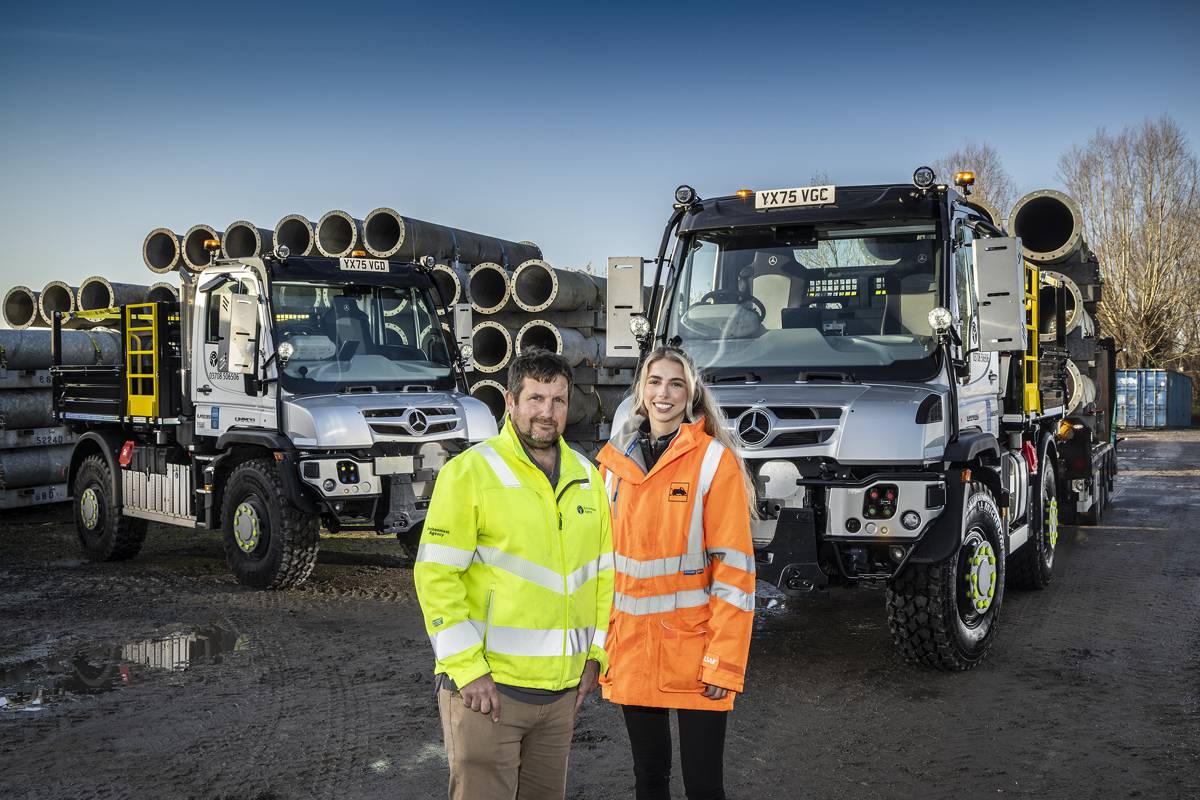
These specialist vehicles have been brought into service to support the Agency’s nationwide incident response role, particularly during flood emergencies where conventional trucks struggle or fail altogether.
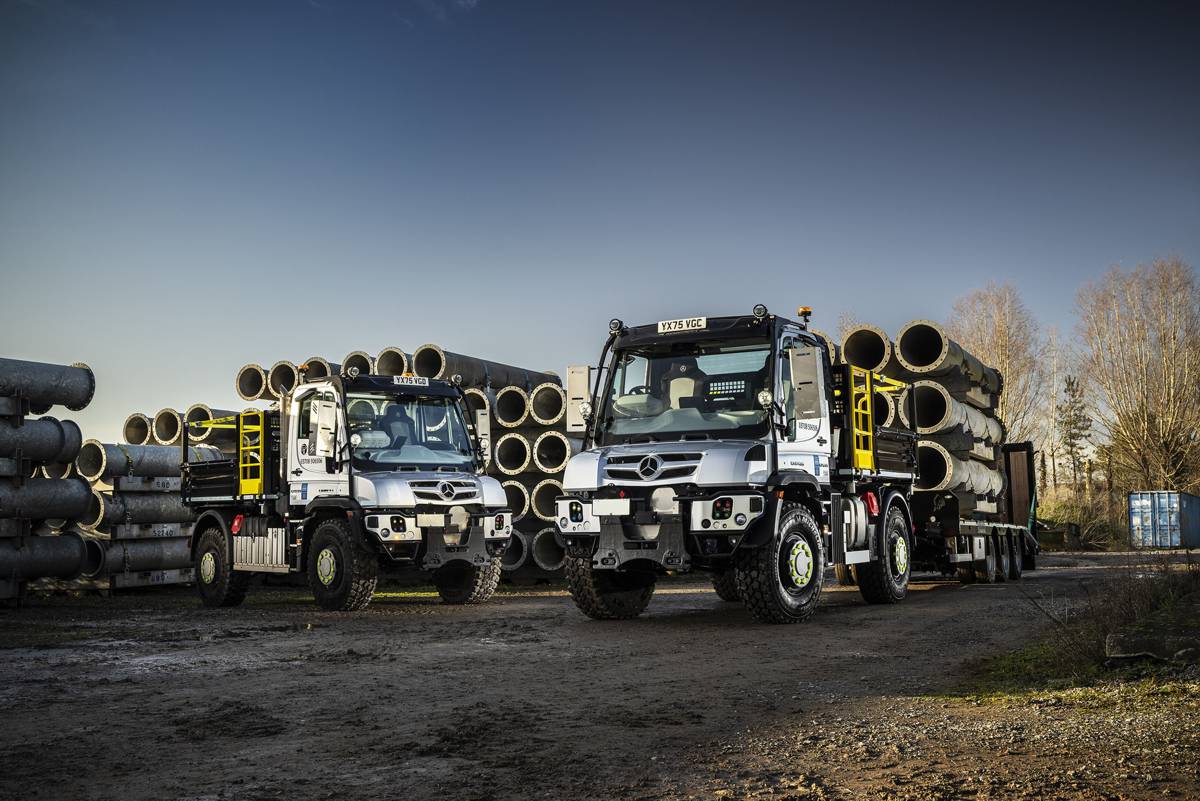
The Unimogs will be deployed when rapid mobilisation is essential, enabling the transport of excavators, heavy machinery, pumps and other critical assets to locations across England. In practical terms, this means fewer delays when rivers overtop, defences breach, or prolonged rainfall overwhelms drainage systems. The vehicles are designed to operate in precisely the conditions that define major flood incidents, including deep water, unstable ground, and damaged road networks.
Designed for Flooded and Failing Infrastructure
Flood response rarely follows a neat script. Access roads may be submerged, surfaces undermined, and bridges closed without warning. The Unimog’s value lies in its ability to operate in these grey areas between land and water, where standard commercial vehicles cannot function safely. Its high wading capability allows it to deliver large pumps directly into flooded zones, ensuring that drainage operations can begin sooner rather than waiting for conditions to improve.
Equally important is the ability to transport materials and equipment into areas that are already inundated. During many flood incidents, time is lost repositioning assets or transferring loads between vehicles. By contrast, the Unimog allows the Environment Agency to move equipment in a single operation, reducing handling risks and accelerating deployment at critical moments.
Meeting the Demands of Prolonged Emergencies
Flood events rarely resolve quickly. Pumps, generators and lighting towers often need to operate continuously for days or even weeks. To support this reality, the new Unimogs have been specified as ADR compliant vehicles, enabling the safe transportation of large fuel cells. This capability is particularly significant during prolonged incidents, where maintaining fuel supply becomes as important as the initial deployment of equipment.
ADR compliance ensures that fuel can be moved legally and safely alongside other essential assets, reducing the number of support vehicles required on site. In a congested or partially flooded environment, fewer vehicle movements translate into improved safety for responders and local communities alike.
A Rigorous Procurement Process
The Environment Agency’s tender requirements reflected the complexity of its operational role. The Agency sought an off road commercial vehicle capable of operating in challenging terrain while also meeting the regulatory standards of an on road Operator Licenced vehicle. High towing capacity, durability, and adaptability were non negotiable.
The Mercedes-Benz Unimog emerged as the solution that could bridge these demands. Its ability to function both off road and on the public highway allows the Agency to deploy nationally without relying on specialist transporters. From motorways to washed out rural lanes, the vehicle can move under its own power, simplifying logistics during rapidly evolving incidents.
Engineering Built for Extreme Conditions
At the heart of the Unimog’s capability is a combination of mechanical design and drivetrain sophistication that has been refined over decades. Exceptional ground clearance, achieved through portal axles, allows the vehicle to pass over debris, uneven ground and submerged obstacles that would immobilise conventional trucks.
An advanced all wheel drive system provides traction across mud, gravel, floodwater and broken surfaces. When combined with significant wading depth and substantial towing capacity, the vehicle becomes a mobile platform for emergency response rather than just a transport solution. For environmental protection work, this means equipment can be positioned precisely where it is needed, even when access routes are compromised.
Voices from the Programme
Industry partners involved in the project have highlighted both the operational impact and the collaborative effort behind the deployment. Ross Paterson, Head of Special Trucks at Daimler Truck UK, emphasised the practical benefits of the new additions: “Adding two Unimogs to the Environment Agency’s incident fleet will help them provide incident response activities to locations needing specialist equipment. The support, handover and training provided to the Environment Agency by South Cave Tractors, has been exceptional and a perfect demonstration of what we can offer customers.”
From the supply side, the project represented a complex challenge that demanded close alignment with regulatory and operational requirements. Abbie Levitt of South Cave Tractors reflected on the process: “Having been involved with this project from the initial tender, it has been amazing to put together a concept that would meet the high demands of this critical role within the Environment Agency. We always knew Unimog would be the perfect fit with its proven off road ability and now meeting the stringent demands of GSR Safety Regulations as a commercial vehicle, so seeing them in action is a proud moment for myself and the whole team at South Cave Tractors Ltd.”
Key Technical Specifications
While individual vehicle configurations can vary, the Environment Agency Unimogs are based on a proven technical platform designed for heavy duty and specialist applications. Typical specifications relevant to flood response include:
- High torque diesel engine designed for sustained low speed operation
- Permanent all wheel drive with selectable differential locks
- Portal axles delivering exceptional ground clearance
- Wading capability suitable for deep floodwater operations
- High gross vehicle weight rating and substantial towing capacity
- ADR compliant configuration for the transport of fuel and hazardous materials
- Compatibility with trailers, plant transporters and auxiliary equipment
These characteristics allow the vehicles to function as both transport and operational assets, supporting a wide range of emergency response scenarios.
Flood Risk, Climate Pressure and Operational Readiness
The deployment of these vehicles comes at a time when flood risk across the UK is increasing. Climate change is driving more frequent and intense rainfall events, placing sustained pressure on rivers, drainage systems and flood defences. According to Environment Agency data, millions of properties are already at risk of flooding, with that number expected to rise in the coming decades.
In this context, investment in specialist response capability becomes a form of preventative action. Faster access, improved logistics and reduced downtime during incidents all contribute to limiting environmental damage and economic disruption. Vehicles like the Unimog do not replace flood defences or long term planning, but they significantly strengthen the ability to respond when systems are overwhelmed.
Strengthening the National Toolkit
The addition of Unimogs to the Environment Agency fleet reflects a broader shift towards adaptable, multi role assets within public sector operations. Rather than relying on single purpose vehicles, agencies are increasingly seeking platforms that can be reconfigured to meet different challenges as they arise.
For flood response teams, this flexibility translates into confidence. Knowing that heavy pumps, generators and machinery can be delivered regardless of conditions allows responders to focus on decision making rather than access constraints. In an era of growing environmental uncertainty, that assurance carries real value for communities on the front line of flooding.