Intertraffic Amsterdam sets the Stage for Traffic Technology and Urban Mobility
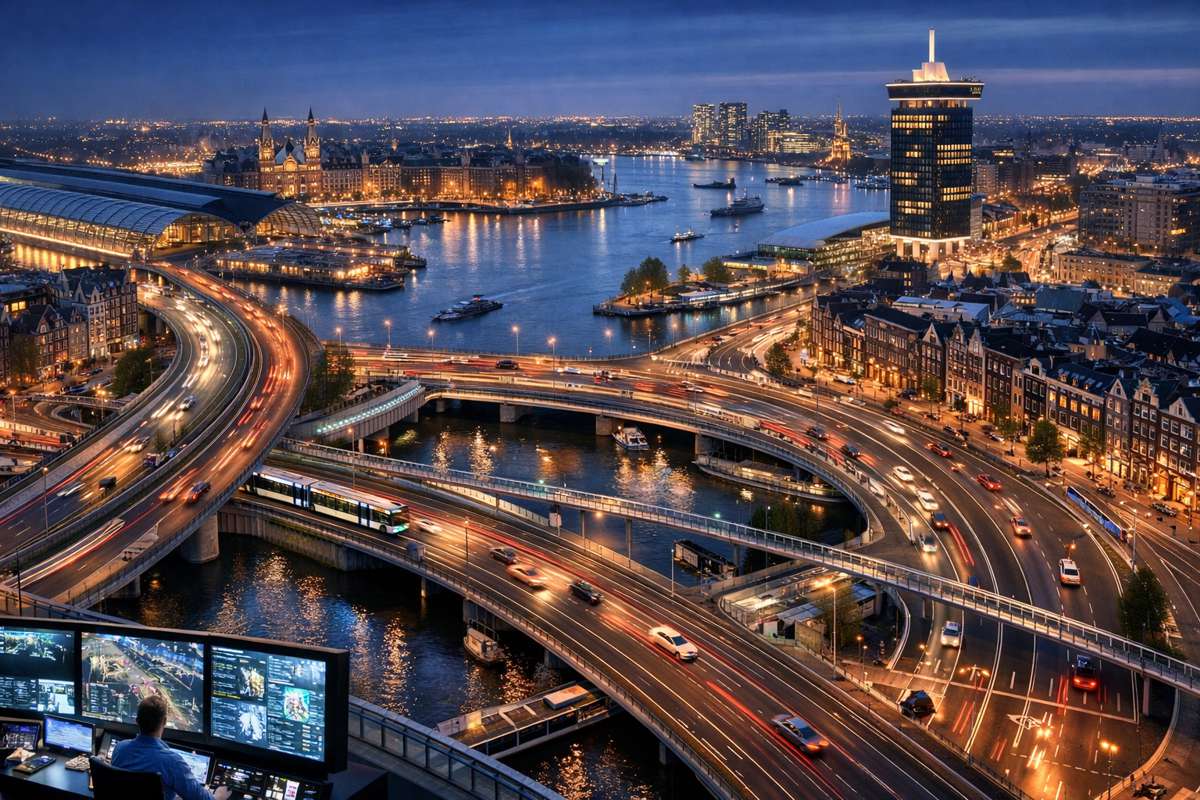
Intertraffic Amsterdam has long been recognised as the world’s most influential meeting place for traffic technology and smart mobility. Since its first edition in 1972, the event has built a reputation for anticipating change rather than reacting to it. Over five decades, it has charted the evolution of traffic management, road safety, and urban mobility, providing a trusted platform where governments, operators, technology providers, and investors meet to exchange ideas and shape policy.
The 2026 edition represents the most ambitious chapter in that history. Taking place from 10 to 13 March 2026 at RAI Amsterdam, Intertraffic will span 12 exhibition halls and host more than 900 exhibitors from over 55 countries. Organisers expect around 30,000 professionals and city and regional delegates from approximately 140 countries. That scale alone would be impressive, yet the true significance lies in the depth of content and the strategic focus on smart, safe, and sustainable mobility systems that are ready for deployment.
A Global Marketplace for Mobility Innovation
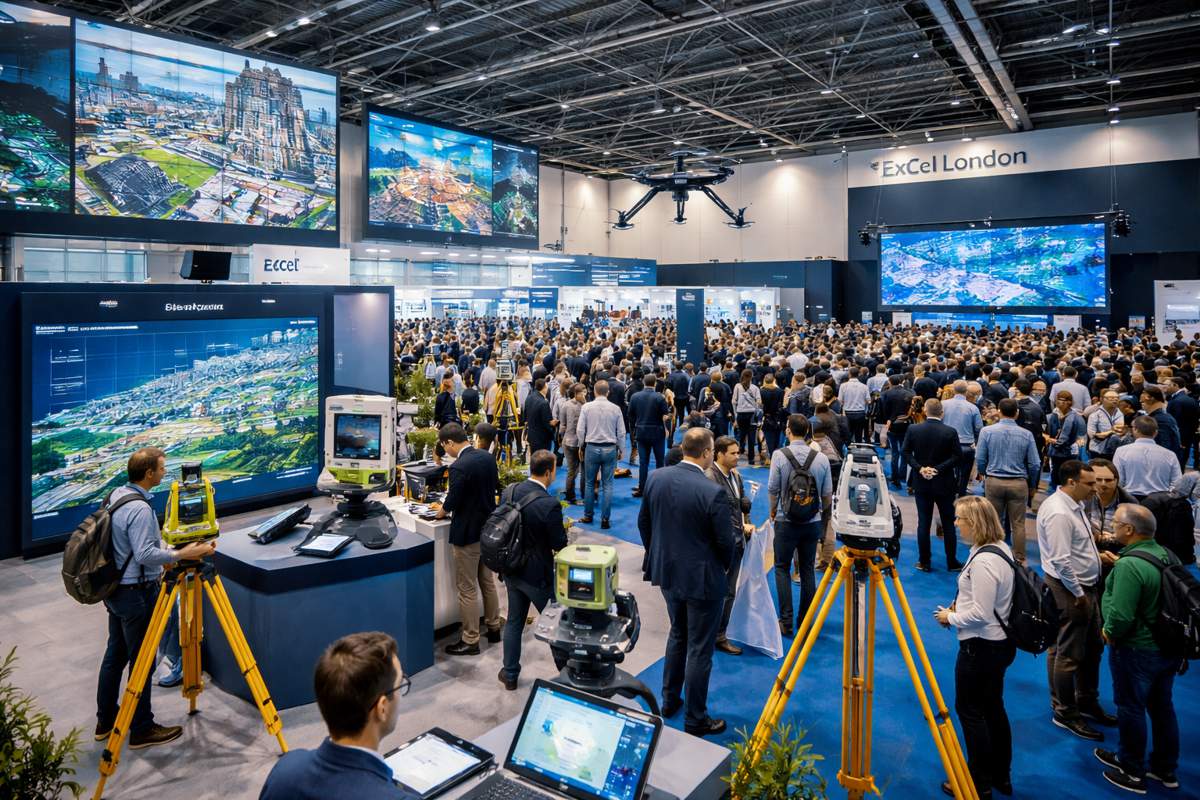
Across the 12 halls of RAI Amsterdam, visitors will encounter a comprehensive showcase of the global mobility ecosystem. From established multinational suppliers to fast-growing technology specialists, the exhibition reflects how broad and interconnected the sector has become. Infrastructure hardware, digital platforms, enforcement systems, data analytics, and software-defined traffic management solutions sit side by side, offering visitors a practical view of how theory translates into delivery.
A major highlight is Next Mobility in Hall 11, Intertraffic’s dedicated space for emerging transport concepts and alternative mobility solutions. This area brings together micromobility providers, electric vehicle and charging specialists, mobility hub developers, last-mile delivery innovators, and urban air mobility pioneers. By clustering these solutions, Intertraffic signals a clear message that future mobility will be multimodal, integrated, and increasingly decentralised.
The Most Extensive Intertraffic Summit Programme Ever
At the heart of Intertraffic Amsterdam 2026 sits its most expansive Summit Programme to date. With more than 300 knowledge sessions, demonstrations, and workshops, the programme has been designed to balance strategic insight with operational relevance. Three large Summit theatres and four open stages ensure that discussions are accessible, visible, and firmly connected to the exhibition floor.
Four thematic open stages make their debut in 2026, each curated in partnership with leading sector organisations. These include the Road Infrastructure Stage in Hall 7, the Road Safety Stage in Hall 9, the Parking Stage in Hall 12, and the Next Mobility Stage in Hall 11. Together, they provide a structured yet flexible framework that allows visitors to tailor their experience according to professional focus and responsibility.
Addressing the Pressing Challenges Facing Cities and Networks
The Summit Programme reflects the realities confronting transport authorities worldwide. Rising road fatalities, mounting climate pressures, ageing infrastructure, and persistent congestion are no longer abstract concerns. They are daily operational challenges that demand coordinated and data-driven responses.
Sessions explore how digitalisation, automation, electrification, and real-time data sharing are reshaping traffic and mobility management. Considerable attention is given to interoperability, recognising that fragmented systems undermine efficiency and user trust. By linking parking with traffic management, traffic management with urban air mobility, and public transport with shared and active travel, Intertraffic promotes an end-to-end view of the traveller journey.
Guiding Tomorrow’s Traveller Through Digital Traffic Management
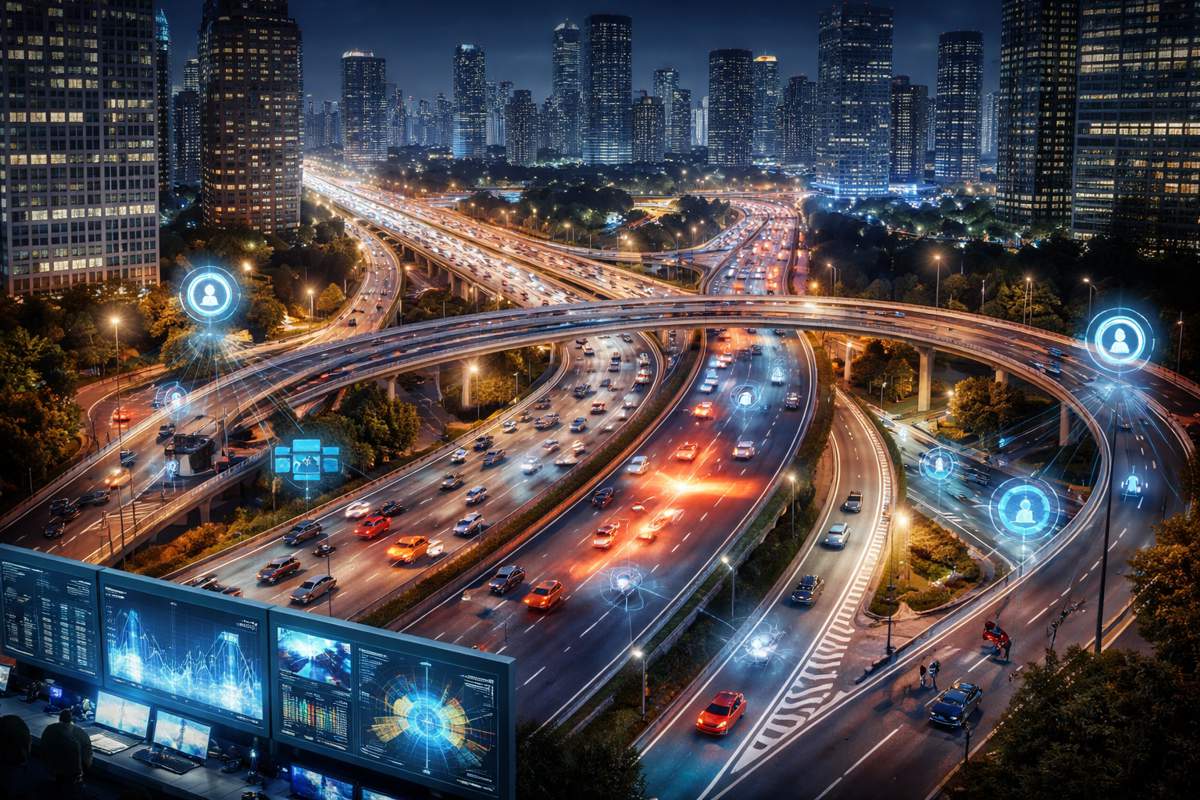
As travellers become increasingly digital, traffic management systems are undergoing a fundamental transformation. The Summit Programme places strong emphasis on technologies that guide road users safely and efficiently, both inside and outside the vehicle. In-car information services, real-time safety alerts, and predictive traffic analytics are no longer optional enhancements but essential tools for modern network operation.
Sessions examine topics such as traffic and road safety analytics powered by advanced artificial intelligence, smart tolling systems, flexible approaches to accident hotspots, and real-time condition sensing. The evolving role of the road operator is explored alongside questions around data ownership and influence, particularly the balance between public authorities and navigation service providers. Procurement strategies, digital twins for traffic signal optimisation, and intelligent traffic light control software are presented as practical levers for change rather than experimental concepts.
From Vision to Reality in ITS and Automated Driving
While automated and connected mobility often attracts bold headlines, Intertraffic Amsterdam 2026 focuses firmly on what is working in practice. The Summit includes extensive coverage of large-scale Intelligent Transport Systems deployment and automated driving initiatives, drawing lessons from pilots, corridors, and cross-border programmes.
Delegates gain insight into connected infrastructure, cooperative ITS, and data-driven services that support both human-driven and automated vehicles. Panels address global ambitions versus real-world results, the relationship between driver shortages and automation, and the integration of connected and automated vehicles into public transport systems. User acceptance, standards, and interoperability feature prominently, reflecting the understanding that technology alone does not guarantee success.
Future-Proof Road Asset Management
Modern road networks must be safe, resilient, and adaptable to new mobility demands. Intertraffic Amsterdam 2026 dedicates significant attention to asset management strategies that respond to climate change, evolving vehicle types, and constrained public budgets.
Sessions explore contraflow management systems, skid resistance planning, noise mitigation, and next-generation crash barrier standards. Discussions on future road funding models and mobility pricing highlight the financial dimension of sustainability. Research-driven applications of artificial intelligence for asset monitoring and maintenance demonstrate how data can extend asset life while improving safety and performance.
Parking as an Integral Part of the Mobility Ecosystem
Parking has moved from a standalone operational concern to a central component of integrated mobility strategies. The Summit Programme reflects this shift through dedicated sessions and a focused Open Stage developed with Parking Network.
Topics range from smart enforcement and free-flow parking to integrated payment platforms and kerbside management. Data emerges as a recurring theme, with discussions on how licence plate recognition, dynamic pricing, and user-centric design can improve convenience while generating revenue. Urban mobility hubs, off-street parking integration, and the link between parking and charging infrastructure illustrate how parking supports wider transport objectives.
Data-Driven Road Safety and Protection of Vulnerable Users
Improving road safety remains a core priority, and Intertraffic Amsterdam 2026 approaches the challenge through the lens of data and technology. Sessions showcase intelligent enforcement, digital twins, advanced detection systems, and predictive analytics designed to reduce risk and support evidence-based decision-making.
Special focus is placed on work zone safety and the protection of vulnerable road users. Workshops explore best practices in safety asset deployment, road safety audits, and the use of AI-based warning systems to protect road workers. Global programmes aimed at sustainable behaviour change underline the importance of combining technology with policy and education.
Accelerating Active Travel and Sustainable Mobility
The Next Mobility Stage provides a platform for discussions on active travel, micromobility, and multimodal services. Sustainable urban mobility is examined through practical case studies rather than abstract targets, highlighting what cities can implement today.
Sessions cover digital platforms for Mobility as a Service, integrated parking and charging, cycling infrastructure, and public-private frameworks that support sustainability goals. Urban logistics, last-mile delivery, and urban air mobility receive dedicated attention, including a special Urban Air Mobility Day on Thursday 12 March. The emphasis remains on interoperability and user experience, recognising that seamless design encourages behavioural change.
Showcasing Dutch Public and Private Collaboration
The Netherlands has earned a reputation as a frontrunner in traffic management and modal integration. Intertraffic Amsterdam 2026 highlights this leadership through a joint public-private presentation that showcases Dutch innovation and collaboration.
The Focus NL knowledge programme, delivered in Dutch and staged on Friday 13 March, targets national and regional road authorities and policymakers. Themed Working Towards Future-Proof Mobility in the Netherlands, it demonstrates how coordinated governance, real-time traffic management, and data-driven planning can deliver tangible results.
A Strong International ITS Community
The 2026 edition sees a significant expansion in the participation of national ITS organisations. A broad network of ITS associations from across Europe and beyond will be present, reinforcing Intertraffic’s role as a truly global meeting point.
This international presence supports knowledge exchange on standards, interoperability, and cross-border collaboration. It also reflects the growing recognition that mobility challenges rarely stop at national boundaries.
Supporting the Next Generation Through ITSUP
Innovation depends on new entrants as much as established players. Intertraffic’s integrated startup platform, ITSUP, provides emerging businesses with visibility and access to investors, partners, and customers.
Located within a dedicated area of the exhibition, ITSUP enables startups to demonstrate solutions in a commercial context. Participation criteria and registration details are available through the Intertraffic website, reinforcing the event’s commitment to nurturing future industry leaders.
Recognising Excellence with the Intertraffic Awards
The Intertraffic Awards will be presented during the opening ceremony of the 2026 edition. Categories include the Green Globe Award for sustainability, the User Experience Award for human-centred design, the Inspiration Award for innovation leadership, and the new Startup Award.
An international jury of industry specialists will select a shortlist of nominees, announced at the end of January 2026. The awards underline the event’s role in celebrating solutions that deliver measurable impact.
Planning and Participation Made Simple
To help visitors maximise their time, Intertraffic offers a comprehensive Event Planner. This digital tool supports matchmaking, meeting scheduling, session planning, and navigation of the exhibition floor.
With access to the digital catalogue, interactive floorplan, and agenda, registered participants can prepare in advance and engage more effectively on site. Both web and mobile versions are available, reflecting the event’s focus on usability and efficiency.
Registration, Access, and Visiting Hours
Intertraffic Amsterdam 2026 operates a paid entrance policy aligned with its expanded programme and networking opportunities. Early bird rates for a four-day full event pass start at 75 euros, while free registration remains available through exhibitors.
Visiting hours are from 09.30 to 17.30 on Tuesday 10, Wednesday 11, and Thursday 12 March, and from 09.30 to 15.00 on Friday 13 March. With full access to the Summit Programme, opening ceremony, and networking events, the visitor pass positions Intertraffic as an essential investment for mobility professionals worldwide.