Brazil Reopens Consultation for Strategic Port Lease at São Sebastião
Brazil’s port sector rarely stands still for long, yet some decisions carry more weight than others. The reopening of public consultation on the leasing of area SSB01 at the Organized Port of São Sebastião sits firmly in that category. Approved by Brazil’s National Waterway Transportation Agency in late December 2025, the move signals a determination to refine one of São Paulo state’s most strategically located port assets before it is committed to private operation for more than three decades.
Set against the backdrop of growing pressure on Brazil’s logistics networks, the renewed consultation reflects lessons learned from earlier stakeholder feedback and a broader recalibration of port policy. With global trade patterns shifting, containerisation accelerating, and environmental scrutiny tightening, authorities appear keen to ensure the final concession model is both commercially attractive and institutionally robust.
Why São Sebastião Matters in Brazil’s Port System
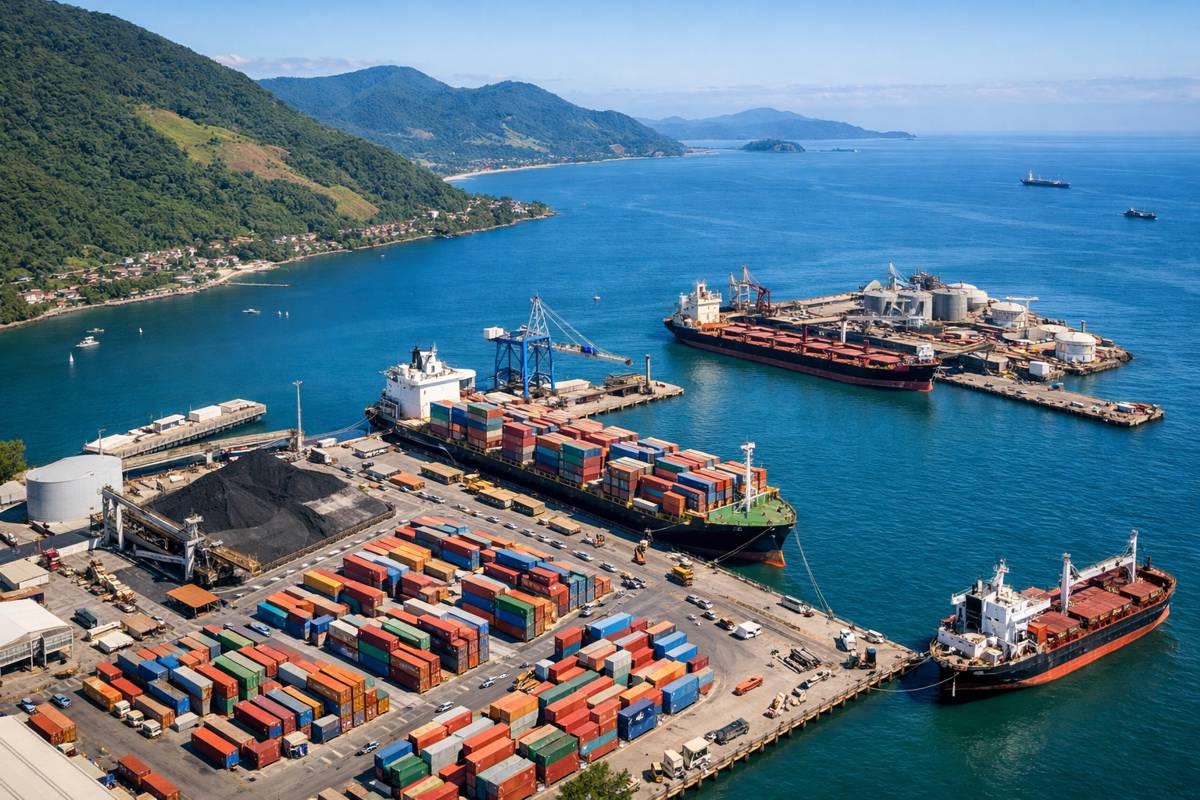
Tucked along the northern coast of São Paulo state, the Port of São Sebastião occupies a unique geographic niche. Unlike the vast container terminals of Santos, it operates with more limited hinterland connections but enjoys deepwater access and proximity to major industrial and consumption centres. That combination has long positioned the port as a flexible alternative for specific cargo streams rather than a volume-driven giant.
Over recent years, congestion at Brazil’s larger ports has prompted renewed interest in secondary and regional facilities. São Sebastião, with its capacity for expansion and modernisation, fits neatly into that strategic rethink. Enhancing its ability to handle solid bulk, general cargo, and increasingly containerised freight could ease pressure elsewhere while strengthening supply chain resilience across the southeast.
Lessons from the First Consultation Round
The initial public consultation, which ran from late September to mid-December 2024, provided a detailed stress test for the original leasing proposal. Contributions from terminal operators, logistics firms, local authorities, and industry associations highlighted both opportunities and shortcomings in the draft technical and legal framework.
Among the most significant outcomes was a clear signal that the original scope underestimated future demand. Stakeholders pushed for broader cargo flexibility, particularly the ability to handle containerised goods alongside traditional bulk and breakbulk operations. That feedback, taken on board by regulators, reshaped the project’s ambition and scale.
Expanded Scope and Revised Project Parameters
Following the first consultation, several substantive changes were introduced. The most visible was the expansion of container handling capacity within the leased area. This adjustment reflects a wider trend across Brazil, where even ports historically focused on bulk commodities are adapting to the steady rise of container traffic.
Equally important was the decision to increase the total leased area to 261,941 square metres. That additional space is intended to support modern terminal layouts, efficient yard operations, and future-proofing for new handling technologies. Alongside this, mandatory investment thresholds were raised, reinforcing expectations that the future lessee will commit significant capital to infrastructure, equipment, and operational systems.
A Second Consultation with a Sharper Focus
The second public consultation, open from 29 December 2025 to 27 January 2026, is designed to fine-tune rather than overhaul the proposal. By this stage, the broad direction is set. What remains is to ensure legal clarity, technical feasibility, and alignment with market realities before the concession proceeds.
Submissions must be made exclusively through the agency’s electronic form, a move intended to standardise responses and streamline analysis. Supporting digital materials, including maps, plans, and photographs, may be submitted separately by email. An in-person or virtual public hearing will be scheduled at a later date, offering stakeholders a further opportunity to test assumptions and raise concerns.
The Economics of a 35-Year Lease
At the heart of the proposal lies a 35-year lease term, a duration chosen to balance investor certainty with public oversight. Long-term concessions are now a familiar feature of Brazil’s port sector, providing operators with sufficient runway to amortise large upfront investments while embedding performance obligations within the contract.
Earlier estimates suggest total investments in the region of R$660 million, equivalent to approximately US$118.6 million. While final figures may shift as documents are refined, the scale underlines the seriousness of the undertaking. These funds are expected to support berth upgrades, cargo handling equipment, storage facilities, and digital systems aimed at boosting throughput and operational efficiency.
Implications for Cargo Owners and Operators
For cargo owners, the redevelopment of SSB01 could translate into greater choice and improved service reliability. Expanded container handling capacity opens the door to new shipping services, potentially shortening transit times and reducing dependence on congested hubs.
Terminal operators, meanwhile, are presented with both opportunity and obligation. The revised investment requirements raise the bar for entry, favouring well-capitalised players with a long-term view of the Brazilian market. At the same time, the diversified cargo profile offers revenue stability by reducing reliance on a single commodity stream.
Environmental and Community Considerations
Port development in Brazil increasingly unfolds under the watchful eye of environmental regulators and local communities. São Sebastião is no exception, given its coastal setting and proximity to sensitive ecosystems. While the consultation documents focus primarily on technical and legal aspects, environmental compliance remains an implicit cornerstone of the project.
Modern terminal design, cleaner equipment, and efficient logistics planning can mitigate many traditional port impacts. The consultation process itself provides a forum for local stakeholders to raise concerns, ensuring that economic development does not come at the expense of environmental stewardship or community wellbeing.
Governance, Transparency, and Regulatory Confidence
The decision to reopen consultation also speaks to governance maturity. By revisiting the proposal rather than pressing ahead unchanged, regulators signal a willingness to engage, adapt, and improve. That approach is critical in attracting credible investors who value regulatory predictability and transparent decision-making.
Clear rules, well-defined obligations, and realistic performance metrics reduce risk premiums and support more competitive bidding. In the long run, that benefits not only the concessionaire but also the wider economy through better infrastructure and more efficient trade flows.
Positioning São Sebastião for the Next Decade
Brazil’s trade profile continues to evolve, shaped by commodity exports, industrial diversification, and shifting global supply chains. Ports that can adapt to those changes will play an outsized role in sustaining growth. The proposed lease of area SSB01 is less about incremental capacity and more about strategic positioning.
By accommodating a broader mix of cargoes and embedding significant investment commitments, São Sebastião is being positioned as a flexible, resilient node within the national port system. If executed well, the project could serve as a model for how smaller ports can complement larger hubs rather than compete directly with them.
A Case Study in Contemporary Port Policy
As the second consultation period draws to a close, attention will turn to how feedback is incorporated into the final concession package. The process remains iterative, but the direction of travel is clear. Authorities are seeking a balanced outcome that delivers infrastructure upgrades, operational efficiency, and long-term public value.
For industry observers, the SSB01 lease offers a revealing case study in contemporary port policy. It illustrates how consultation, revision, and strategic clarity can converge to shape infrastructure decisions with lasting economic impact.