GIGABYTE Defining Scalable AI from Data Centre to Desktop at CES
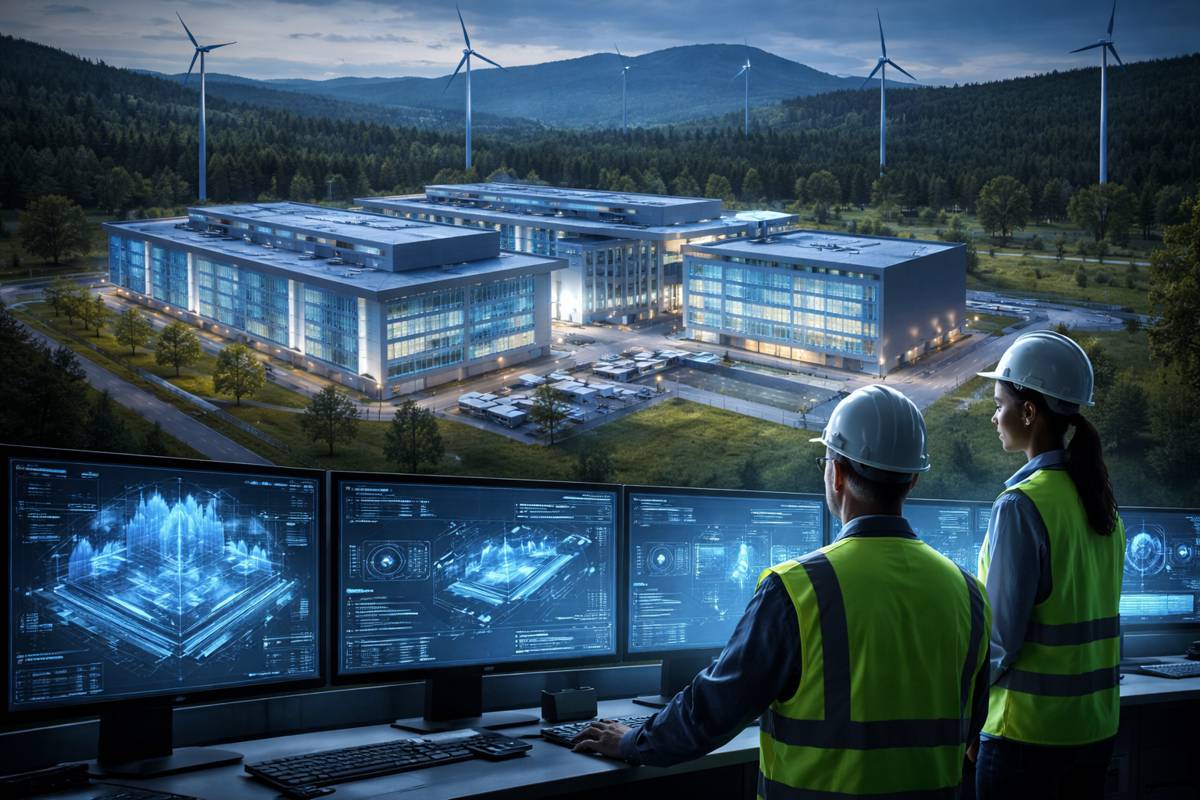
GIGABYTE Technology has spent decades cultivating a reputation for engineering depth rather than marketing noise. That philosophy comes into sharp focus at CES 2026, where the company presents its complete computing ecosystem under the banner AI Forward. Rather than isolating products by form factor or market segment, GIGABYTE positions AI as an end to end system that spans cloud data centres, edge environments, and personal devices, all designed to work together with minimal friction.
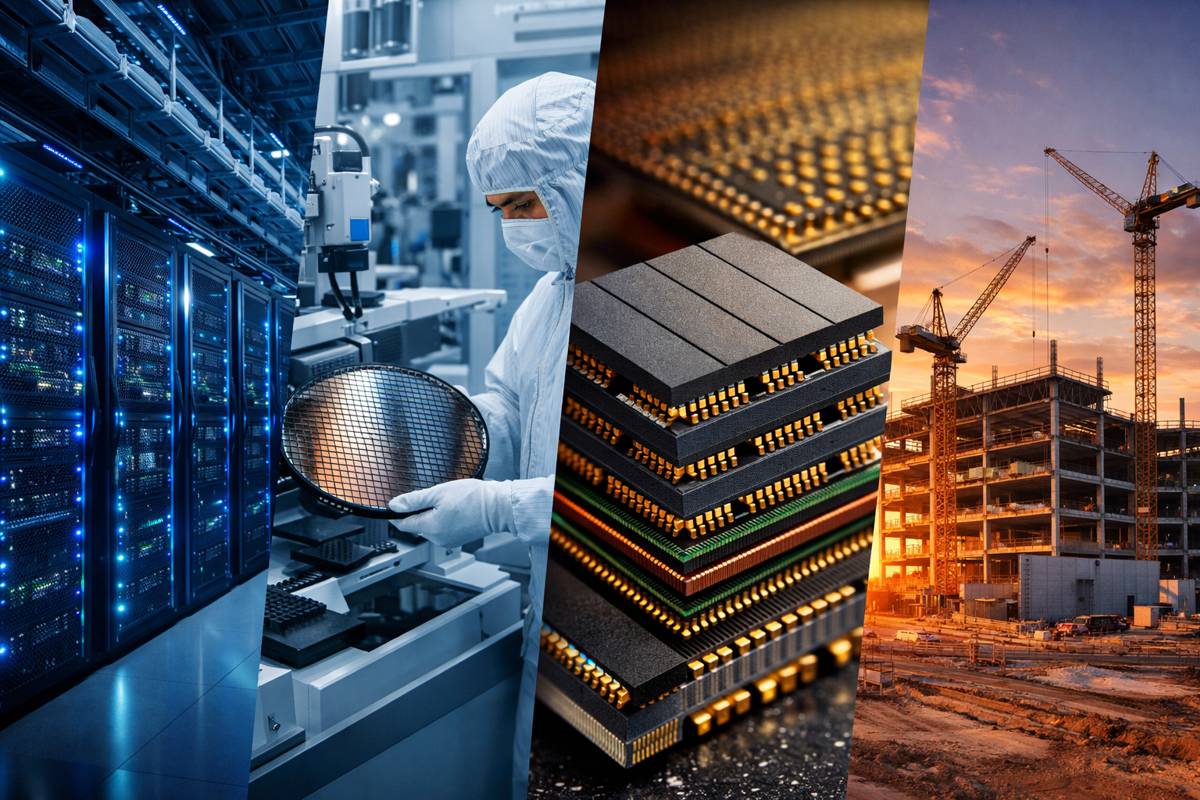
This approach reflects a broader shift across the AI industry. Organisations are no longer experimenting at the margins. They are building AI factories capable of sustained training, inference, simulation, and deployment at scale. GIGABYTE’s CES showcase speaks directly to that reality, highlighting how infrastructure design, thermal efficiency, management software, and secure networking now matter just as much as raw compute performance.
Building the Enterprise AI Factory
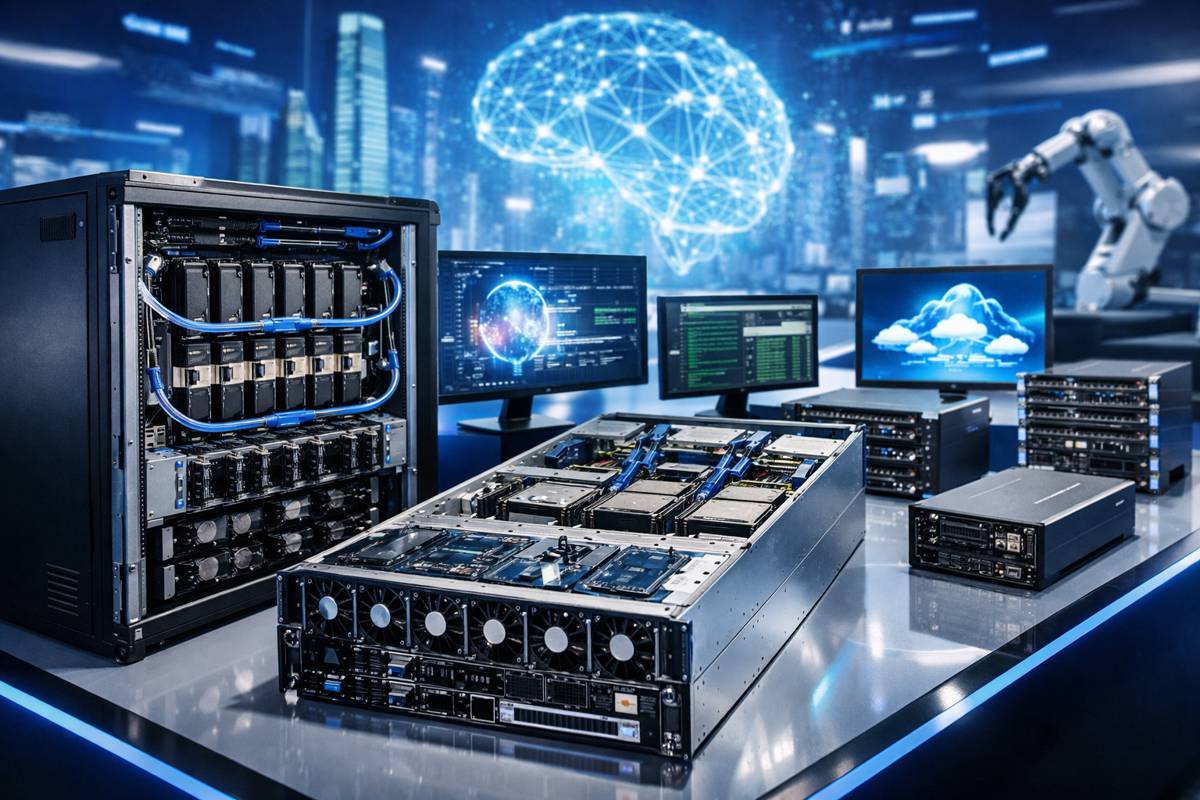
At the centre of GIGABYTE’s CES 2026 strategy is GIGAPOD, a modular AI data centre platform designed around a building block philosophy. Instead of treating servers, cooling, networking, and management as separate procurement challenges, GIGAPOD integrates them into a validated, repeatable architecture that shortens deployment cycles and reduces operational risk.
GIGAPOD combines high performance compute nodes, high speed networking fabrics, and the GIGABYTE POD Manager software layer. Together, these components streamline infrastructure design, validation, and lifecycle management. For enterprises and cloud providers racing to bring AI capacity online, this integrated approach accelerates time to value while maintaining flexibility as workloads evolve.
Advanced Cooling and Compute Density
The compute core of GIGAPOD is built around direct liquid cooling servers from the G4L4 and G4L3 families. These platforms support Intel Xeon 6 processors paired with NVIDIA HGX B300 systems, as well as AMD EPYC 9005 and 9004 processors working alongside AMD Instinct MI355X accelerators. This dual vendor strategy allows organisations to align silicon choices with workload characteristics without redesigning the surrounding infrastructure.
Liquid cooling is no longer a niche requirement reserved for extreme HPC installations. As AI models grow larger and power envelopes rise, thermal efficiency becomes a constraint on scalability. By designing DLC into the platform rather than retrofitting it later, GIGABYTE enables higher rack densities while improving energy efficiency and long term reliability.
Intelligent Rack Management
Complementing the compute hardware is GIGABYTE’s in house Rack Management Switch. Packaged in a compact 1U form factor, it centralises management for up to eight direct liquid cooled racks. Support for multi vendor CDU communication protocols ensures interoperability across diverse cooling ecosystems, while integrated leak detection adds an additional layer of operational safety.
This focus on rack level intelligence reflects a growing recognition that AI infrastructure failures are rarely caused by compute alone. Power distribution, cooling anomalies, and management blind spots often present the greatest risks. By addressing these challenges directly, GIGABYTE sets a new benchmark for scalable and resilient AI data centre design.
Scaling Up With Grace Blackwell Ultra
For organisations operating at hyperscale, GIGABYTE expands its portfolio with the NVIDIA Grace Blackwell Ultra NVL72 platform. This rack level compute node integrates 72 NVIDIA Grace CPUs and is supported by NVIDIA Quantum X800 InfiniBand and NVIDIA Spectrum X Ethernet networking. According to NVIDIA benchmarks, the platform can deliver up to fifty times the inference performance of the previous Hopper generation.
Such performance gains are not incremental. They redefine what is possible in real time inference, digital twins, and large language model deployment. For industries ranging from autonomous systems to scientific research, this level of capability opens new operational and commercial opportunities.
High Performance Systems for Training and Inference
Beyond rack scale solutions, GIGABYTE showcases purpose built supercomputing platforms designed for training, simulation, and high volume inference. The G894 SD3 AAX7 leverages NVIDIA HGX B300 acceleration, while the XL44 SX2 AAS1 is powered by NVIDIA RTX PRO 6000 Blackwell Server Edition GPUs. Both systems are equipped with dual Intel Xeon 6 processors, DDR5 memory, and high speed InfiniBand or Ethernet connectivity.
Security and data movement efficiency are enhanced through the integration of NVIDIA BlueField 3 DPUs. These components offload networking and security tasks from the CPU, improving overall system throughput while strengthening isolation between workloads.
Bringing Server Class AI to the Workstation
AI development does not always begin in the data centre. Recognising this, GIGABYTE introduces the W775 V10 L01 workstation, which brings server class GPU performance and closed loop liquid cooling to creators, engineers, and small enterprises. This system enables on premises AI workflows without the latency or data sovereignty concerns associated with cloud only deployments.
For many organisations, such workstations act as a bridge between experimentation and production. Models can be developed locally before being scaled out across larger infrastructure, maintaining continuity across the AI lifecycle.
Compact Edge Solutions for Physical AI
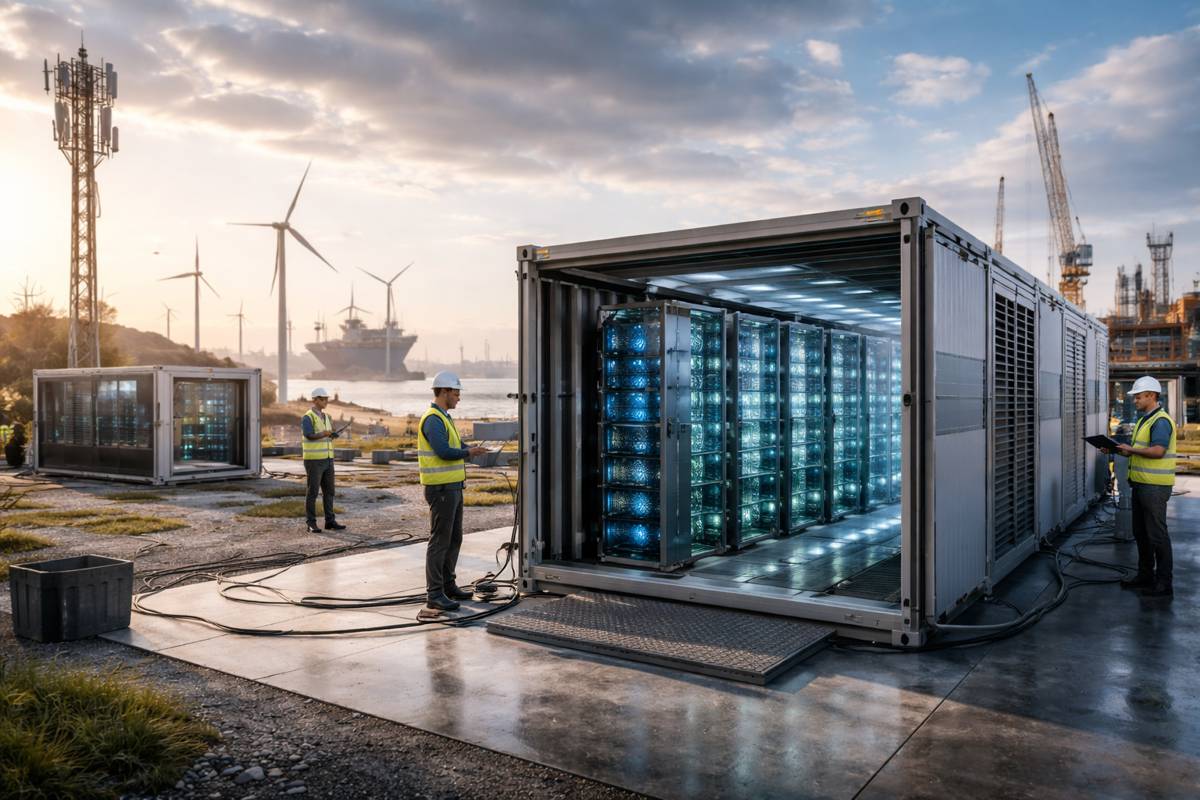
While data centres remain the heart of AI training, inference increasingly happens where data is generated. GIGABYTE addresses this shift with a comprehensive range of embedded systems and industrial PCs designed for low latency, always on edge environments. At CES 2026, these capabilities are demonstrated through a smart warehouse showcase that illustrates real world deployment scenarios.
The showcase features compact edge computers delivering high TOPS AI inference, low power embedded systems coordinating AGV and AMR fleets, and industrial PCs controlling robotic arms and conveyor systems. Versatile I O configurations support sensors and machine vision, enabling AI systems to perceive and respond to their surroundings in real time.
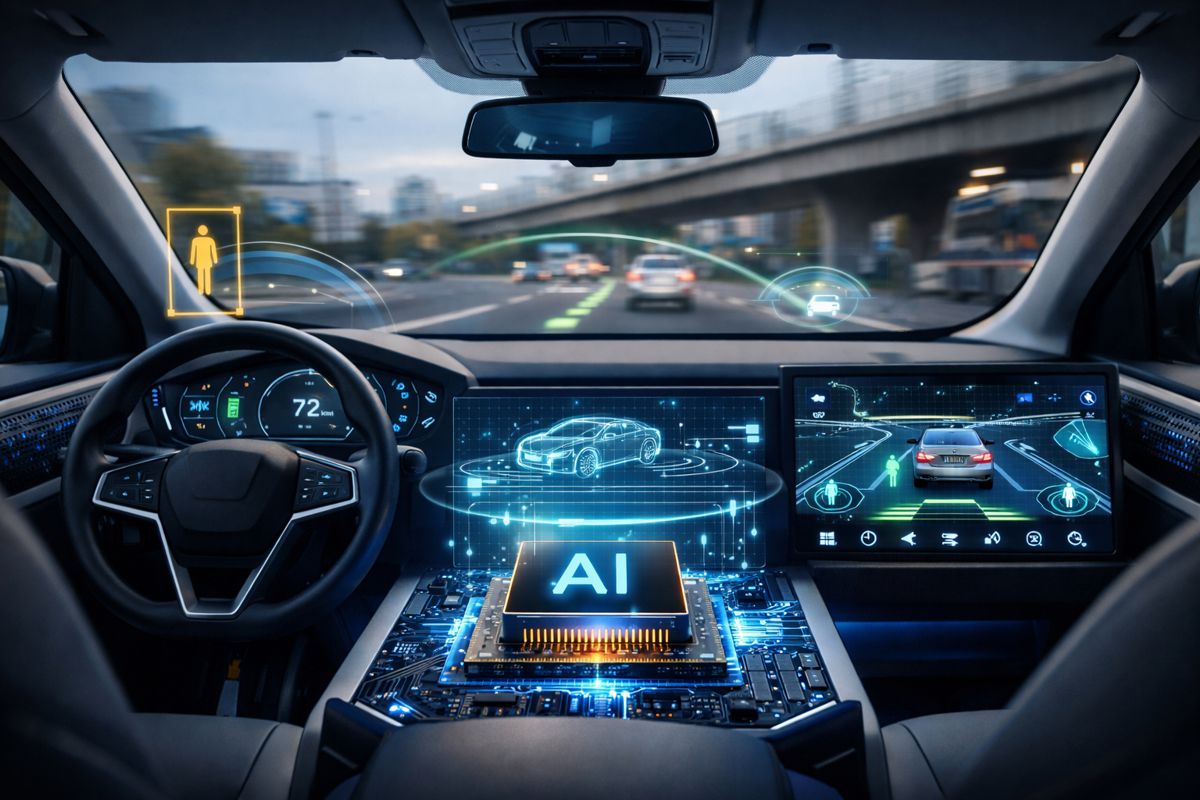
This transition from digital intelligence to physical action represents a key milestone in the evolution of AI. By extending compute reliably into harsh industrial environments, GIGABYTE supports the emergence of Physical AI across logistics, manufacturing, and infrastructure operations.
Shaping the Era of Agentic AI
As AI systems become more autonomous, the concept of Agentic AI is gaining momentum. GIGABYTE responds with the AI TOP series, including the AI TOP ATOM, AI TOP 100 Z890, and AI TOP 500 TRX50 desktop platforms. These systems are designed to run local large language and multimodal models, support fine tuning, and enable retrieval augmented generation using standard electrical infrastructure.
Local execution addresses growing concerns around data privacy, latency, and cost predictability. By keeping sensitive workloads on premises, organisations gain greater control while reducing dependence on external cloud services.
Simplifying AI With AI TOP Utility
Hardware alone does not guarantee usability. To that end, GIGABYTE introduces AI TOP Utility software, providing an intuitive interface for setup, model management, and deployment. By abstracting complexity, the software lowers the barrier to entry for organisations adopting AI at the edge or on the desktop.
This emphasis on usability aligns with a broader industry trend. As AI adoption widens, tools must support not only data scientists but also engineers, operators, and domain specialists.
AI Enhanced Client Computing
GIGABYTE also expands its AI optimised client portfolio with laptops integrated with the GiMATE AI companion. Designed for creators and professionals, GiMATE delivers on device assistance without continuous cloud connectivity. This approach supports productivity while maintaining user control over data.
For notebook users requiring additional performance, the AORUS RTX 5090 AI BOX introduces Thunderbolt 5 connectivity paired with the GeForce RTX 5090 GPU. This external solution delivers near desktop AI and graphics performance, extending the lifespan and capability of mobile systems.
A Coherent AI Vision
Taken together, GIGABYTE’s CES 2026 announcements illustrate a coherent vision rather than a collection of isolated products. AI Forward is about building the computational backbone required to support AI at scale, across environments, and throughout the lifecycle from development to deployment.
For construction, infrastructure, industrial automation, and public sector organisations, this matters deeply. AI is no longer abstract. It is embedded in physical systems, operational workflows, and strategic decision making. GIGABYTE’s integrated approach positions it as a key enabler of this transition.