Intel Core Ultra Series 3 Setting new Benchmarks in AI Computing at CES
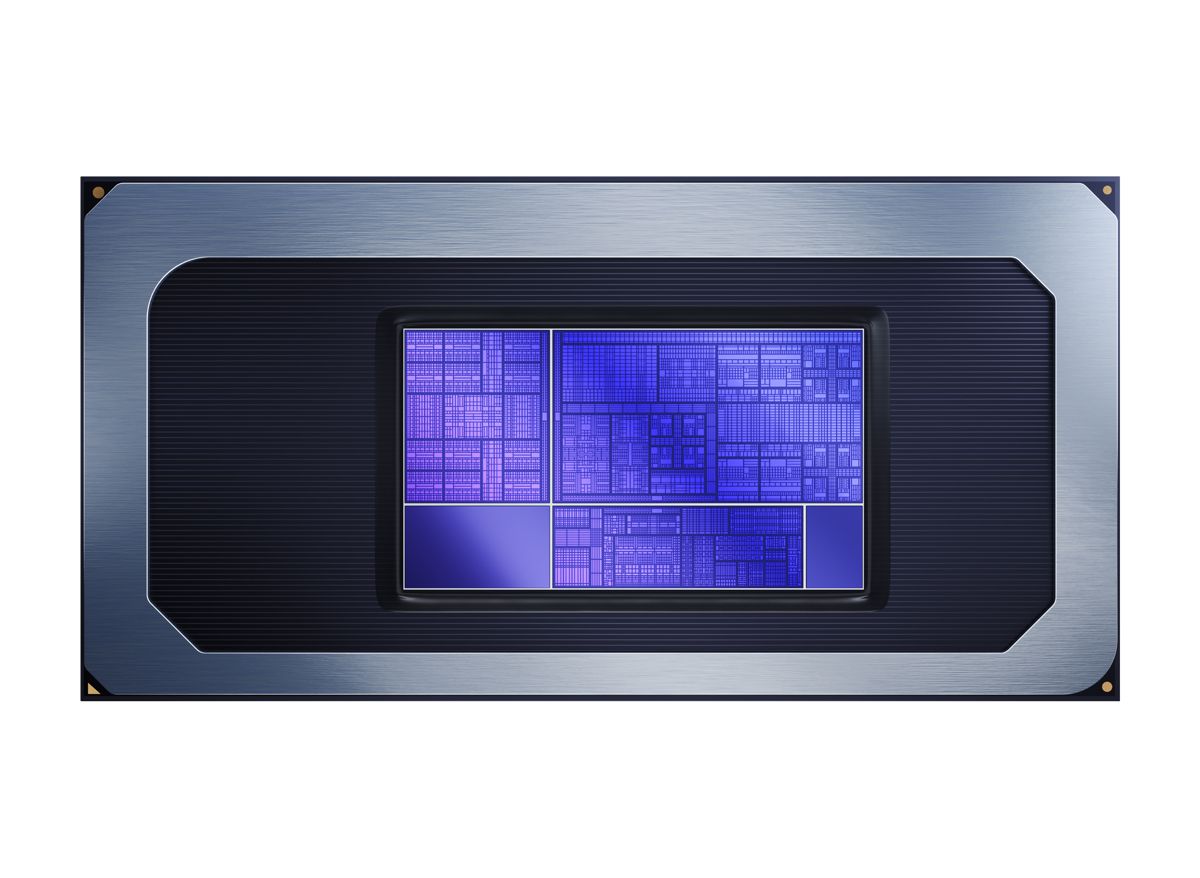
The global technology industry gathered at CES 2026 with expectations running high, and Intel did not disappoint. The company unveiled Intel Core Ultra Series 3 processors, marking a defining moment not only for personal computing but also for the wider industrial and embedded landscape. This launch represents the first compute platform built on Intel 18A, described as the most advanced semiconductor process ever designed and manufactured in the United States. For an industry grappling with supply chain resilience, performance ceilings and energy efficiency, that detail alone carries significant weight.
What sets this release apart is its breadth. Intel Core Ultra Series 3 is not confined to a narrow slice of premium laptops. Instead, it spans mobile computing, mainstream systems and, for the first time, fully certified edge and industrial deployments. With more than 200 PC designs already planned by global partners, Series 3 is positioned as Intel’s most widely adopted and globally available AI PC platform to date.
Built on Intel 18A Process Technology
At the heart of Intel Core Ultra Series 3 lies Intel 18A process technology. This manufacturing milestone underpins Intel’s long term strategy to reclaim process leadership while strengthening domestic semiconductor production. The process delivers meaningful gains in transistor density, power efficiency and performance per watt, all of which translate directly into real world benefits for system designers and end users.
For construction technology providers, industrial automation specialists and infrastructure operators, these advances matter. Edge systems increasingly need data centre class capabilities without the luxury of unlimited power or cooling. Intel 18A provides the foundation for compact, energy conscious platforms capable of handling AI inference, real time analytics and complex visual workloads at the point of use rather than in the cloud.
A Platform Designed for Scale and Adoption
Intel has been explicit about its ambition for Series 3 to reach scale quickly. Powering more than 200 PC designs at launch, the platform spans premium mobile devices through to accessible mainstream laptops. This breadth reduces fragmentation across the ecosystem and simplifies software optimisation, a long standing advantage of the x86 architecture.
The Series 3 family includes both Intel Core Ultra processors and Intel Core processors built on the same architectural foundation. This deliberate approach allows OEMs to offer more efficient and capable systems at a range of price points, expanding access to AI enhanced computing without forcing compromise on performance or battery life.
A New Class of Intel Core Ultra X9 and X7
Within the mobile lineup, Intel introduced a new class of Intel Core Ultra X9 and X7 processors. These flagship SKUs target professionals and power users who expect desktop class capability in portable systems. They combine high core counts with advanced integrated graphics and dedicated AI acceleration.
Top configurations feature up to 16 CPU cores, 12 Xe cores within Intel Arc graphics and up to 50 NPU TOPS. According to Intel, this enables up to 60 percent better multithread performance, more than 77 percent faster gaming performance and battery life extending to as much as 27 hours. For mobile professionals in construction management, design engineering and field operations, that balance of power and endurance is particularly compelling.
Integrated Intel Arc Graphics and AI Acceleration
Graphics capability has become a defining factor in modern processors, particularly as visual workloads expand beyond gaming into simulation, digital twins and immersive collaboration. Intel Core Ultra Series 3 integrates the highest performing Intel Arc graphics yet, bringing strong raster performance and media processing into a single system on chip design.
Alongside graphics, the inclusion of a robust neural processing unit allows AI workloads to be handled efficiently on device. Tasks such as image recognition, natural language processing and predictive analytics can be processed locally, reducing latency and minimising reliance on cloud connectivity. This is increasingly important for job sites, transport networks and industrial facilities where connectivity may be intermittent or constrained.
From PC to Edge and Industrial Deployment
Perhaps the most strategically significant aspect of the Series 3 launch is its extension beyond traditional PCs. For the first time, Intel Core Ultra processors are tested and certified for embedded and industrial use cases. This includes support for extended temperature ranges, deterministic performance and continuous 24 by 7 operation.
These characteristics open the door to deployment across robotics, smart cities, automation systems and healthcare environments. Edge platforms powered by Series 3 can consolidate workloads that previously required multiple discrete components, simplifying system design while reducing power consumption and total cost of ownership.
Accelerating AI at the Edge
Intel positions Series 3 as a catalyst for accelerating AI adoption at the edge. The company highlights up to 1.9 times higher large language model performance, up to 2.3 times better performance per watt per dollar for end to end video analytics and up to 4.5 times higher throughput on vision language action models.
These gains are not theoretical. In practical terms, they enable real time monitoring of infrastructure assets, intelligent traffic management, automated inspection using robotics and enhanced situational awareness in critical facilities. By integrating CPU, GPU and AI acceleration within a single SoC, Series 3 reduces system complexity and improves deployment economics.
Power Efficiency and Software Compatibility
Power efficiency sits at the centre of Intel’s Series 3 narrative. Improvements in performance per watt translate directly into longer battery life for mobile devices and lower operating costs for embedded systems. This focus aligns closely with sustainability goals across construction, transport and urban development sectors.
Equally important is software compatibility. Intel continues to emphasise the reliability of the x86 ecosystem, ensuring that existing applications run efficiently while new AI enabled software can take advantage of integrated acceleration. This continuity reduces risk for enterprises and public sector organisations investing in long life infrastructure systems.
Reflecting on the launch, Intel’s Senior Vice President and General Manager of the Client Computing Group, Jim Johnson, framed the strategy: “With Series 3, we are laser focused on improving power efficiency, adding more CPU performance, a bigger GPU in a class of its own, more AI compute and app compatibility you can count on with x86.”
Implications for Construction and Infrastructure Technology
For construction professionals and infrastructure owners, Intel Core Ultra Series 3 arrives at a pivotal moment. Digital twins, AI driven asset management and autonomous equipment are moving from pilot projects to operational reality. These applications demand local compute power capable of handling complex workloads without sacrificing reliability.
Series 3 provides a common platform that can span design offices, site cabins, vehicles and fixed installations. This consistency simplifies IT management while enabling data to flow more seamlessly across the project lifecycle. From planning and simulation to construction execution and long term maintenance, the same underlying architecture can support increasingly intelligent workflows.
Availability and Market Rollout
Intel has outlined a clear rollout schedule for Series 3. Pre orders for the first consumer laptops will begin on 6 January 2026, with global availability starting on 27 January. Additional designs are expected to follow throughout the first half of the year, expanding choice across form factors and price points.
Edge systems powered by Intel Core Ultra Series 3 processors are scheduled to become available from the second quarter of 2026. This timeline aligns with growing demand for AI enabled edge solutions across industry, transport and smart city projects.
A New Generation of AI Infrastructure and Construction Tech
Intel Core Ultra Series 3 is more than a processor refresh. It represents a convergence of advanced manufacturing, AI acceleration and platform scale at a time when computing demands are expanding rapidly beyond the desktop. By unifying PC and edge capabilities under a single architectural umbrella, Intel is signalling a future where intelligent systems are deployed wherever data is generated.
For industry stakeholders, the significance lies not only in raw performance figures but in the flexibility and confidence the platform offers. With domestic manufacturing, broad ecosystem support and a clear roadmap into embedded and industrial markets, Series 3 sets the stage for a new generation of AI powered infrastructure and construction technology.