Lyte Showcasing the Future of Physical AI Perception at CES
Lyte has stepped out of stealth with a clear statement of intent and a substantial financial runway. The Mountain View based company has secured an aggregate of $107 million in funding to tackle one of the most persistent and under appreciated challenges in robotics and automation. Its mission is straightforward to articulate but technically demanding to deliver. Lyte aims to give machines the ability to see, understand, and safely operate in the physical world.
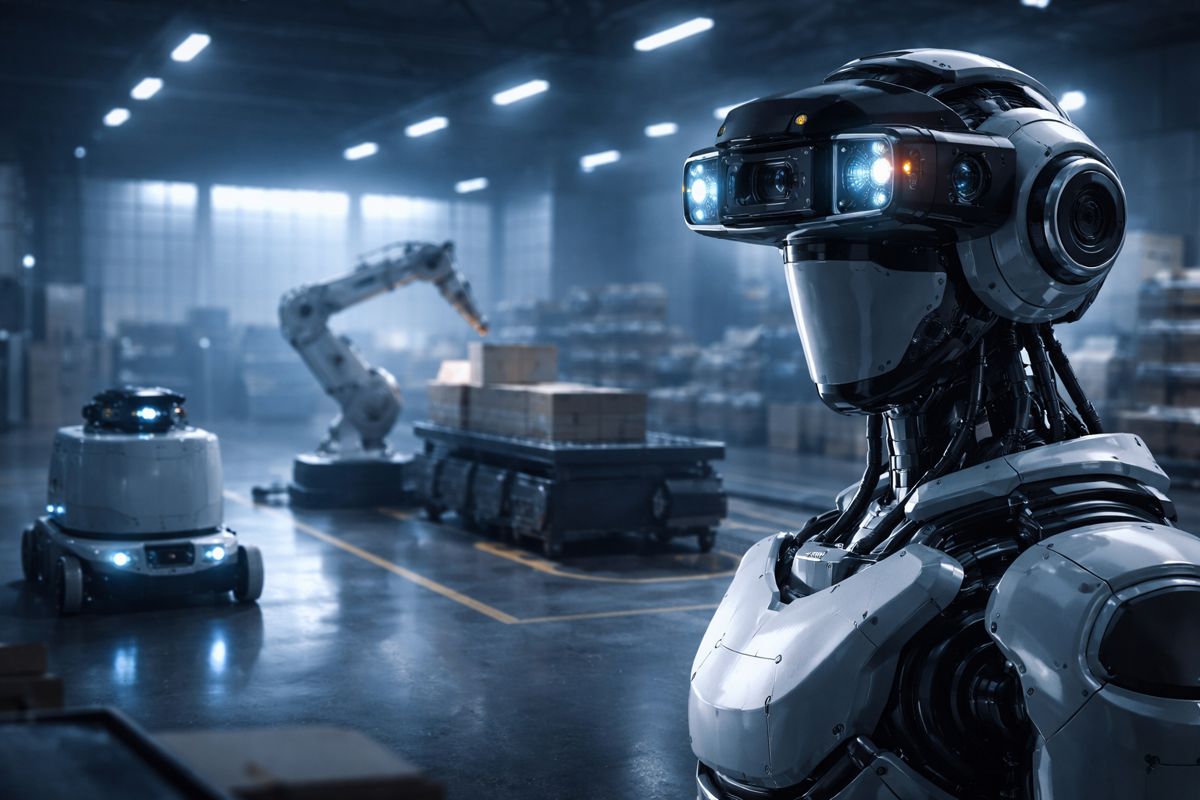
At a time when artificial intelligence is advancing at a remarkable pace in software, perception remains a bottleneck for real world autonomy. Robots can calculate, predict, and optimise at extraordinary speed, yet without reliable perception they struggle to function safely beyond controlled environments. Lyte positions itself squarely at this inflection point, focusing on perception as core infrastructure rather than an add on.
Founders With A Track Record Of Changing How Machines See
The company was founded by Alexander Shpunt, Arman Hajati, and Yuval Gerson, a team whose experience in depth sensing and perception technologies spans more than a decade at the highest level. Their work helped define how consumer devices understand three dimensional space, experience that now underpins Lyte’s ambitions in robotics and Physical AI.
Alexander Shpunt, Lyte’s Chief Executive Officer, is best known as the co founder and former Chief Technology Officer of PrimeSense. That company developed the 3D sensing technology that powered Microsoft Kinect and later became the foundation of Apple’s depth platform following its acquisition in 2013. The transition from gaming peripherals to billions of consumer devices offers a clear lesson in how foundational perception technologies can reshape entire markets.
Building A Team Around Sensing, Silicon, And Physical AI
Lyte has assembled a team that reflects the complexity of the problem it is trying to solve. Rather than focusing narrowly on software or hardware, the company brings together expertise across sensing, custom silicon, and Physical AI. This full stack mindset is central to its strategy and differentiates Lyte from perception vendors that supply individual components.
The company’s founding investor and Chairman of the Board is Avigdor Willenz, a semiconductor entrepreneur whose career has been defined by building platforms rather than point solutions. His involvement signals both confidence in the technical approach and an expectation that Lyte’s technology can underpin multiple future markets.
$107 Million To Build A Perception Foundation
Lyte’s $107 million in aggregate funding comes from a group of investors with deep experience across technology, finance, and industrial innovation. Participants include Avigdor Willenz’s group, Fidelity Management and Research Company, Atreides Management, Exor Ventures, Key1 Capital, and Venture Tech Alliance.
This level of backing provides more than just capital. It gives Lyte the ability to invest in custom silicon development, long term research, and rigorous safety engineering, areas that are often constrained by shorter venture cycles. With this funding, the company is focused on building what it describes as the perception foundation for autonomous machines.
LyteVision And A Unified Approach To Perception
At the heart of Lyte’s offering is LyteVision, a platform designed to integrate advanced 4D sensing, RGB imaging, and motion awareness into a single system. Rather than treating these inputs as separate data streams, LyteVision delivers unified spatial and visual data through one connection.
This integration matters. In many robotics programmes today, perception is assembled from multiple sensors sourced from different vendors. Teams then spend months calibrating hardware, writing sensor fusion software, and debugging integration failures. Lyte’s vertically integrated stack is designed to remove that cycle entirely, reducing development time and operational risk.
Designed For Physical AI At Scale
LyteVision is engineered for safety, reliability, and performance from the hardware layer upward. It is paired with an AI driven operating layer that evolves alongside advances in vision, language, and action models. As these models improve, the perception system improves with them, enabling robots to perceive, reason, and act with increasing intelligence over time.
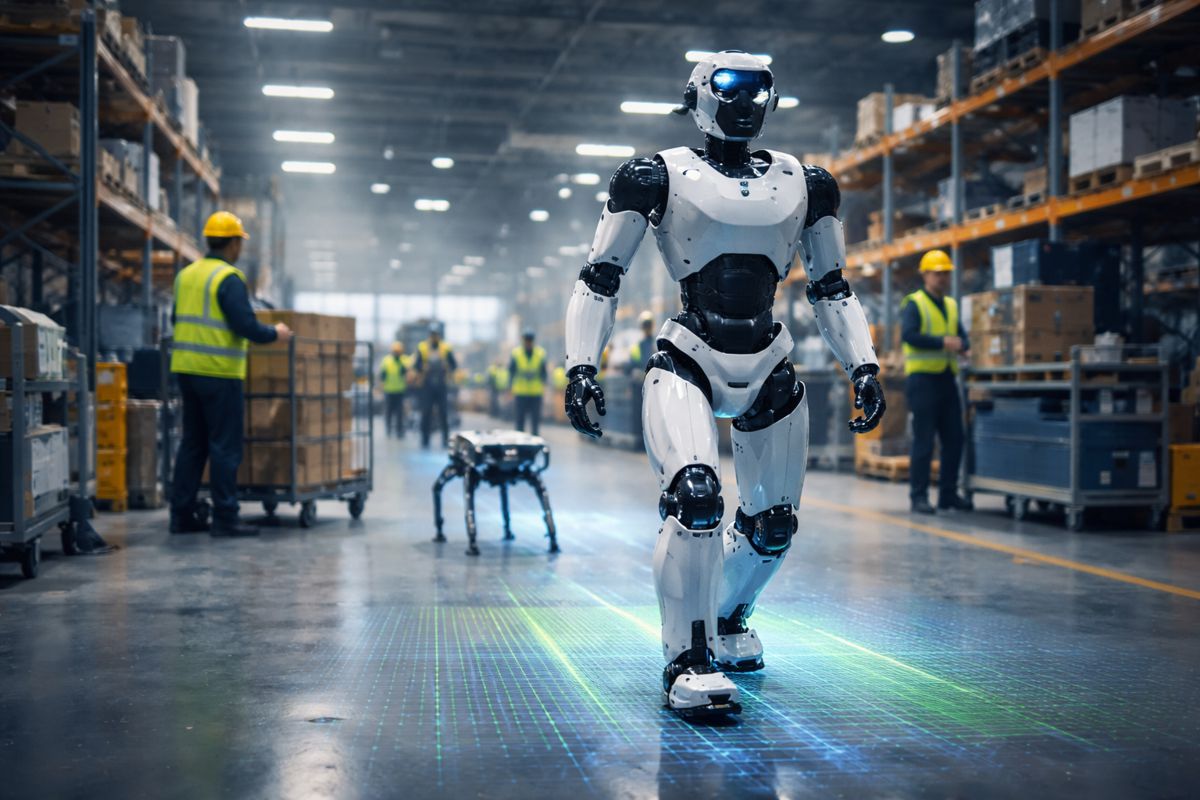
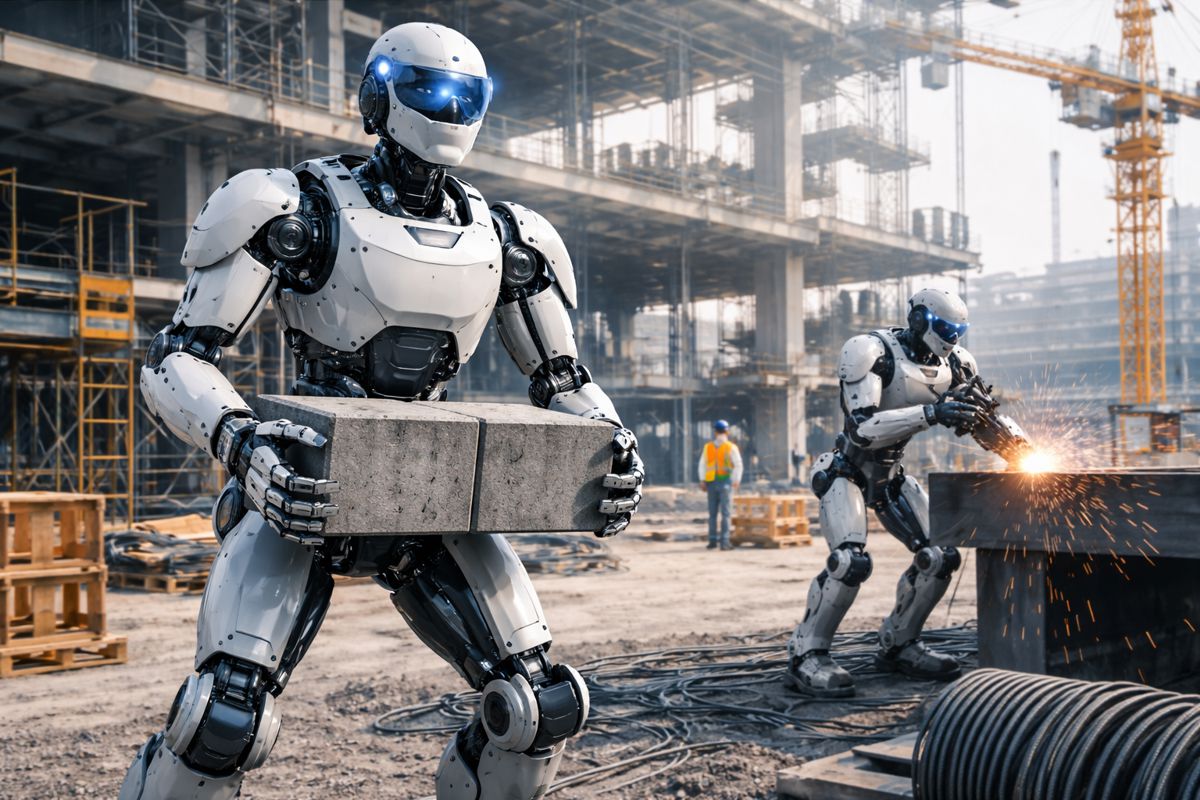
The platform is intended to support a wide range of Physical AI applications, including autonomous mobile robots, robotic arms, quadrupeds, robotaxis, and humanoid systems. By focusing on perception as shared infrastructure, Lyte aims to serve multiple industries without forcing each to reinvent the same foundational technology.
Addressing A Structural Problem In Robotics
The robotics industry faces a structural challenge that goes beyond individual use cases. According to McKinsey, more than 60 percent of industrial companies lack the internal capability to implement robotic automation, including sensor integration. This skills gap slows adoption even as the economic case for automation strengthens.
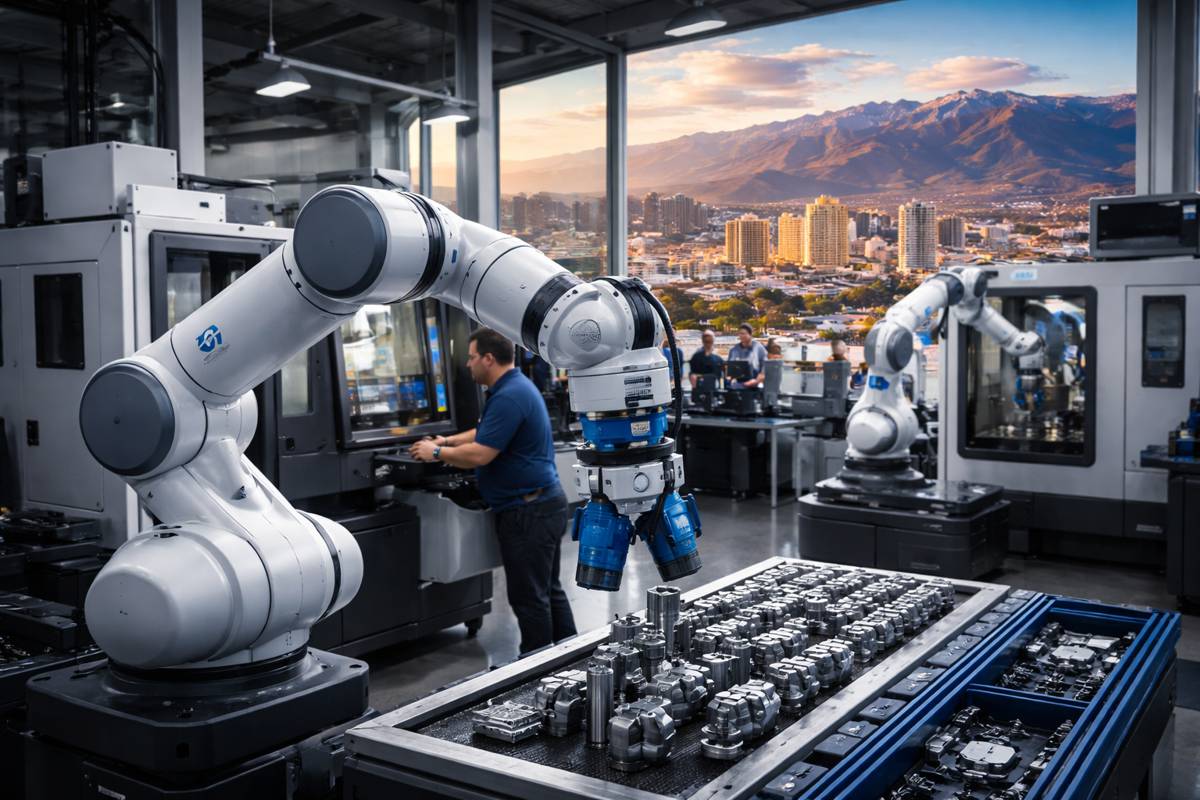
Lyte’s approach directly targets this constraint. By delivering perception as a coherent system rather than a collection of parts, the company reduces the need for specialist integration teams. For manufacturers, logistics operators, and mobility providers, this could lower the barrier to deploying autonomous systems in real world environments.
A Market Poised For Rapid Growth
The broader market context reinforces the urgency of Lyte’s work. Leading researchers project that the AI robotics market could reach $125 billion by 2030. Growth is expected across industrial automation, logistics, mobility, and service robotics, all of which depend on reliable perception to operate safely at scale.
Despite this momentum, perception remains one of the least standardised layers in robotics. Lyte’s ambition is to change that by offering a platform approach that can become a default choice for developers building Physical AI systems.
The Importance Of Perception
Alexander Shpunt has been clear about the stakes involved: “Physical AI will change how the world works, but only if robots can see it clearly. After helping shape how billions of people interact with technology, we’ve assembled an extraordinary team to build the perception layer that enables robots to operate safely and reliably at scale.”
From an investor perspective, Avigdor Willenz emphasised the importance of solving perception as a system rather than a collection of features: “Lyte is building at the right layer, at the right moment. I’ve seen how foundational technologies unlock entire industries. What stands out here is the depth of the team and the discipline to solve perception as a system where lasting value is created.”
Gavin Baker, Managing Partner at Atreides Management, highlighted the continuity between the founders’ past achievements and Lyte’s current direction: “Lyte is building core infrastructure for Physical AI, a perception platform that helps robots safely understand and interact with the real world. The founders already pioneered one era of 3D sensing and are among the select few with the credibility and technical depth to usher in a new frontier defined by coherent 4D vision and full stack perception.”
Recognition At CES 2026
Lyte’s technology has already attracted industry recognition. At CES 2026, the company’s perception platform received a Best of Innovation Award in Robotics and was also named an Honoree in Vehicle Tech and Advanced Mobility. The awards were selected from a record 3,600 submissions, placing Lyte among a highly competitive field.
Such recognition matters in an industry where credibility and trust are essential. For developers and operators evaluating new perception technologies, independent validation can accelerate adoption and partnership discussions.
Beyond Robotics Into Mobility And Automation
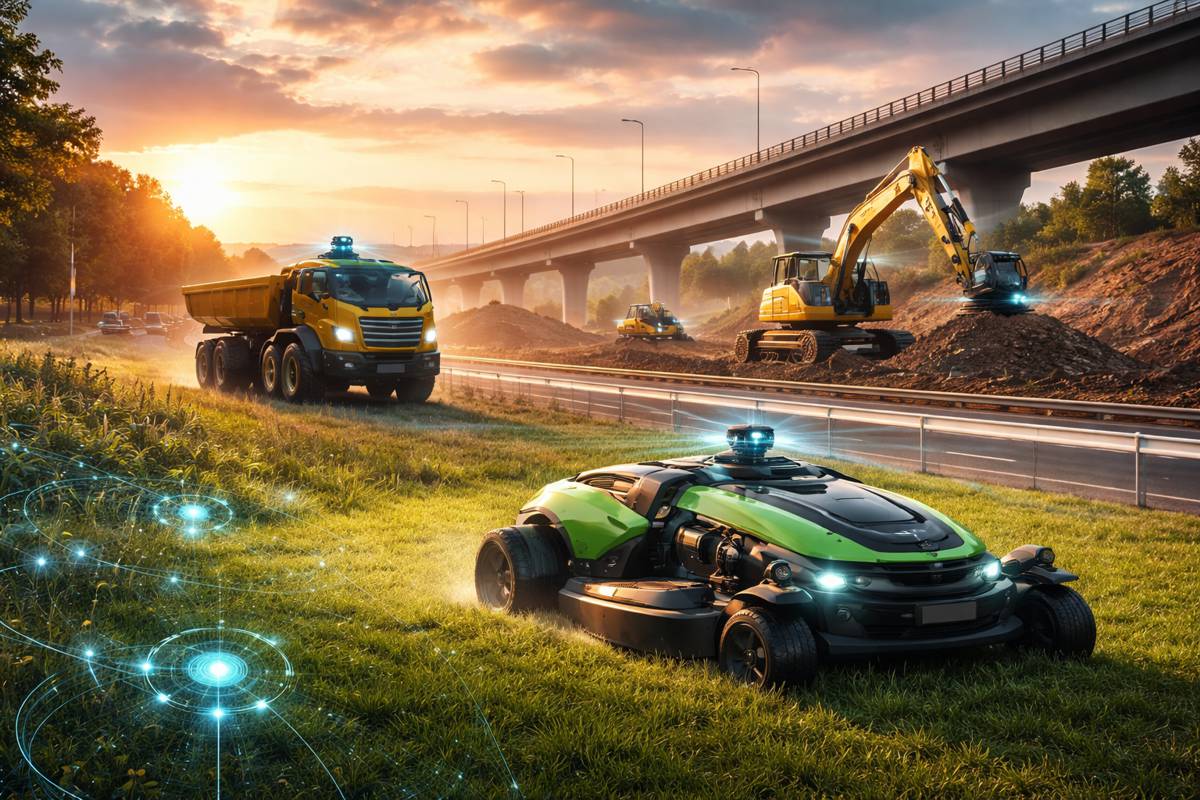
While robotics is a central focus, Lyte’s platform is designed for broader applications across mobility and next generation automation. Complex environments such as warehouses, construction sites, and urban streets demand perception systems that can handle dynamic conditions, variable lighting, and unpredictable obstacles.
By combining custom silicon, integrated sensors, and software into a unified platform, Lyte aims to deliver perception systems that are robust enough for these environments without imposing excessive computational or integration overhead.
Establishing Perception As Core Infrastructure
Lyte’s emergence from stealth marks an important moment for the Physical AI ecosystem. As autonomy moves from pilots to scaled deployment, perception can no longer be treated as an experimental layer. It must be reliable, repeatable, and safe by design.
Headquartered in Mountain View, California, with a global presence, Lyte is positioning itself as a foundational technology provider rather than an application specific vendor. If successful, its approach could simplify how robots and autonomous systems are built, deployed, and trusted in the physical world.