The Smart Quarry and the Age of Data Driven Extraction
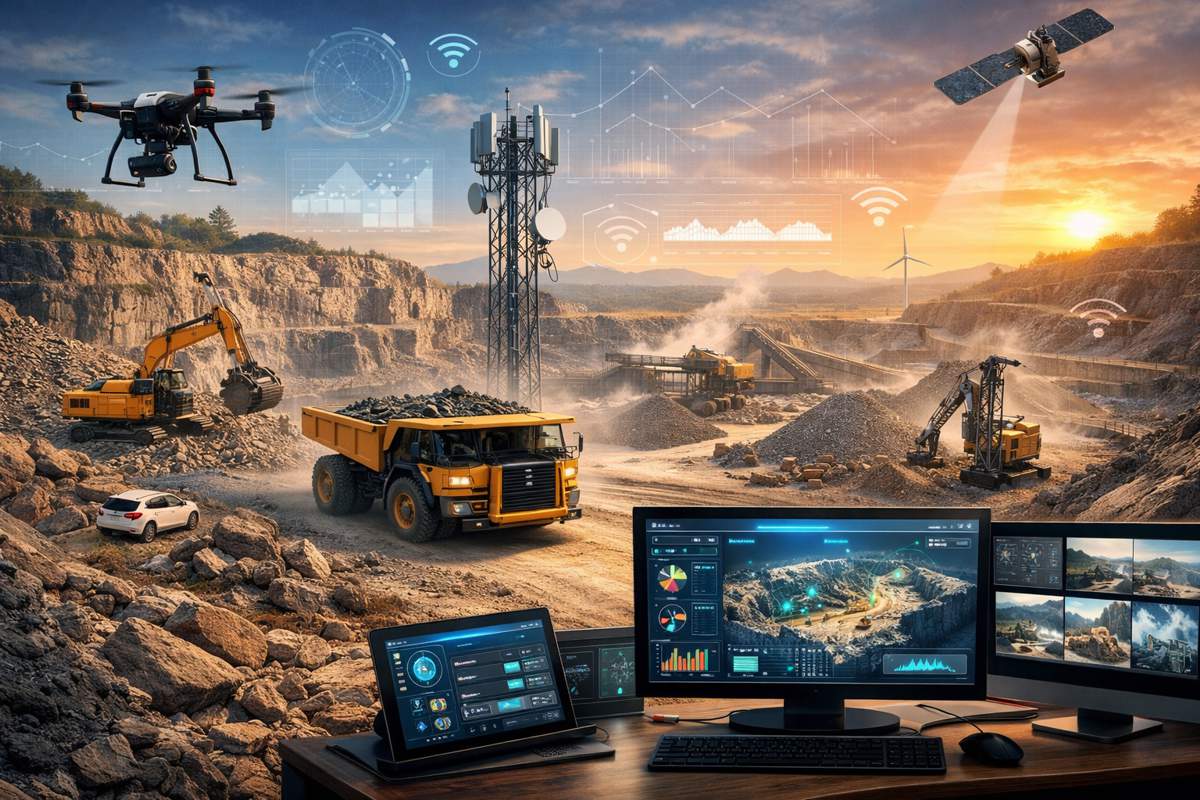
Modern quarrying is undergoing a quiet revolution. Once perceived as dusty, rugged sites relying on brute force and old-school intuition, quarries are now being reimagined as digitally-driven operations rich with data and automation. In fact, recent research found that traditional quarries currently use less than 1% of the data they generate.
Today, a new wave of technology is allowing quarry operators to tap into the other 99% of their data, ushering in smarter decision-making, greater efficiency, and safer work environments. From artificial intelligence (AI) optimizing haul routes to drones mapping stockpiles in minutes, the “smart quarry” is no longer a distant concept but an emerging reality.
This transformation is not about technology for technology’s sake. It’s driven by tangible business benefits and pressures familiar to every aggregate producer: improving safety, meeting production targets, reducing downtime, and satisfying environmental and community expectations. Digitalisation, the integration of digital technologies into everyday quarry processes, offers tools to monitor and manage operations in real time. Automation is taking over repetitive or dangerous tasks, while data analytics extract insights that human eyes might miss. As one industry expert put it, the future of quarrying will hinge on the ability to turn raw data into actionable intelligence. In this article, we delve into how AI, Internet of Things (IoT) sensors, autonomous machinery, and other innovations are reshaping the quarry from the inside out.
Real-Time Monitoring Becomes Business-as-Usual
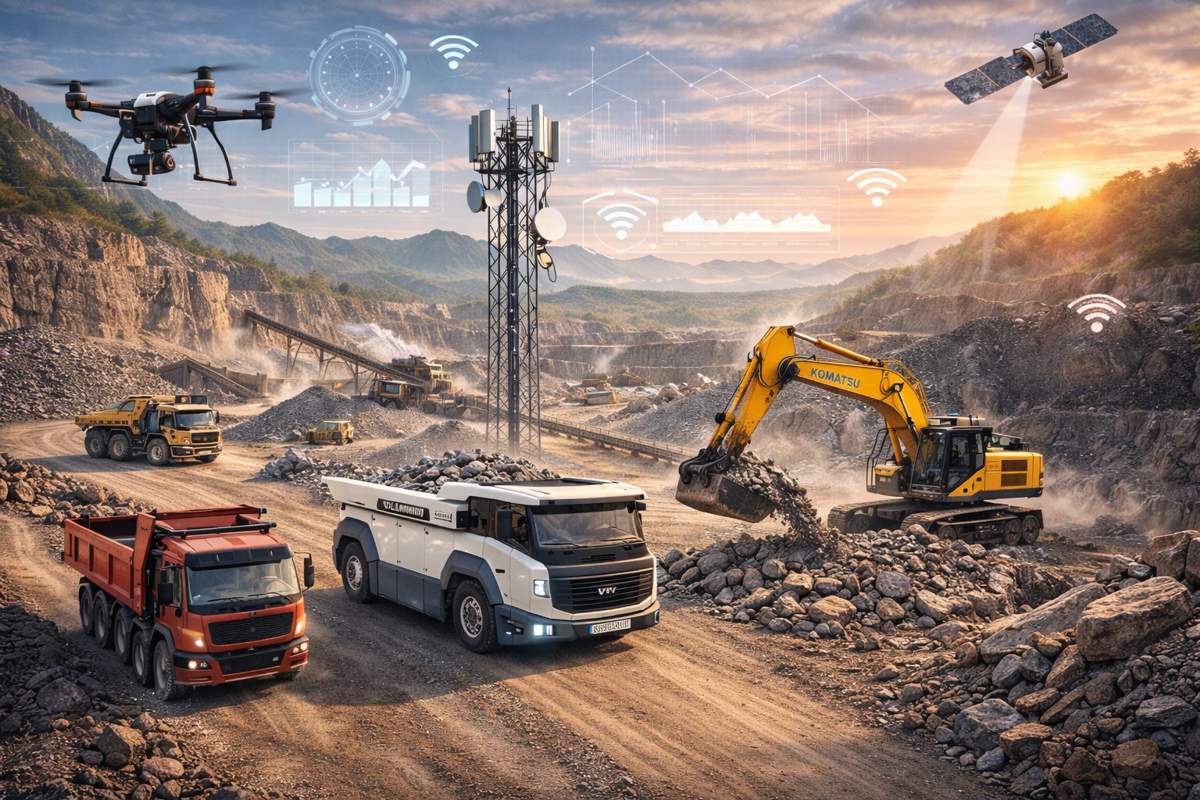
Walk onto a cutting-edge quarry site today and you may notice something different: a plethora of sensors and connected devices tracking nearly every facet of operations. Real-time monitoring of production, equipment status, and safety conditions has become business-as-usual in these smart quarries. Heavy machinery is now often equipped with IoT sensors beaming data on engine health, fuel consumption, payload weights and even operator driving patterns back to a central system. Site managers can glance at live dashboards in the quarry office (or on a tablet) and see exactly how many tonnes have been crushed this hour, which haul truck is idling too long, and whether dust levels at the perimeter are within permitted limits.
Quarry operators are leveraging all-in-one telematics platforms to make sense of this flood of information. For example, Komatsu Europe recently announced a “Smart Quarry Site” system as a brand-agnostic fleet management solution for quarries. Its focus is holistic, covering six key areas of site performance: safety, production, machine health, maintenance, fuel consumption, and CO₂ emissions. The software aggregates real-time data from every machine in the fleet, regardless of manufacturer, giving a comprehensive live overview of the operation. Daniel Heussen, Komatsu Europe’s General Manager of Business Transformation, explained the value of this bird’s-eye view: “Smart Quarry Site gives our quarry and large construction customers an ongoing real-time overview of every machine’s movement and condition and allows [them] to visualize opportunities and achieve targets for each”. In practical terms, this means managers can spot bottlenecks or underperforming equipment at a glance, rather than discovering issues days or weeks later through manual reports. As Heussen noted, “Important KPI’s for the whole fleet, such as payload, fuel use and machine work time, are reported to let site managers make educated decisions without having to spend hours analysing raw data”.
Real-time oversight isn’t limited to production metrics, it’s also enhancing safety. Many modern quarry vehicles come with collision avoidance systems and fatigue monitors, which can alert operators or supervisors the moment a potential hazard is detected. Site surveillance cameras combined with AI now watch for unsafe behaviours or unauthorized entries in real time. In essence, the quarry is becoming a digitally observant environment, where issues surface on a screen immediately rather than lurking unseen. The result is not only a more efficient operation, but a safer one: problems like an overheating crusher or a risky slope condition can be addressed before they lead to unplanned downtime or accidents. And thanks to advances like wireless mesh networks on site, even fleets in remote pit areas stay connected. Komatsu’s system, for instance, uses peer-to-peer data exchange so that when a loader and truck come back in range, all their cached data uploads automatically. The upshot is a quarry that effectively runs with one central nervous system, continuously sensing and responding to keep performance on track.
AI and Predictive Analytics Dig Deeper into Data
Collecting data is one thing; making sense of it is another. This is where artificial intelligence steps into the spotlight. AI-driven analytics are helping quarry managers dig deeper into their operations data to reveal patterns and insights that would be impossible to spot with the naked eye. Sophisticated algorithms can scrutinize years’ worth of information on equipment vibrations, fuel burn, or motor temperatures and learn the subtle precursors to a component failure. The payoff is predictive maintenance: identifying maintenance needs before a breakdown grinds production to a halt. According to McKinsey, predictive maintenance techniques can slash machine downtime by up to 50% while also extending machinery life by 20-40%. For quarry operators, who know that a single hour of crusher downtime can cost thousands in lost output, these AI-enabled predictions are proving invaluable.
Take the example of preventative maintenance scheduling. Instead of fixed service intervals, AI models analyse real-time sensor readings and maintenance logs to determine exactly when a loader’s hydraulic pump is likely to wear out or when a conveyor’s motor is running outside normal parameters. Maintenance can then be performed just in time, not too early (which wastes component life), and definitely not too late. The result is a significant reduction in unexpected breakdowns. As one industry analysis noted, “Predictive maintenance utilizes continuous monitoring and data analytics to identify optimal maintenance interventions, reducing costly unplanned downtime”. In dollar terms, global industries are seeing billions in savings through this approach, and quarries are tapping into the same strategy of fixing things before they fail.
AI is also optimizing active operations. Machine learning models can automatically adjust crusher settings or screen configurations based on the properties of raw material being fed, ensuring optimal throughput and product quality. In load and haul operations, AI-based fleet management software might analyse haul cycle times and spotting locations, then suggest route changes or loader-truck pairings that minimize idle time. Some quarries have started experimenting with AI “dispatchers” that allocate trucks to shovels dynamically as conditions change, much like an air traffic control system for the pit. All of this leads to tighter control of variability in the extraction process. As a result, mid-sized quarry operations that invest in these digital tools are finding they can squeeze more productivity out of their existing assets, a critical edge when margins are thin.
One notable AI application is in quality control of output. By using sensors and machine vision on conveyor belts, AI systems can monitor the size distribution of crushed rock in real time and adjust crusher parameters on the fly to maintain the target gradation. This reduces waste and reprocessing. AI’s predictive powers can even extend to longer-term planning: some algorithms help forecast equipment wear and tear or future maintenance budgets by analysing usage patterns and historical costs. In short, data that used to gather dust in logbooks or disparate spreadsheets is now being harnessed to provide forward-looking intelligence. The smart quarry is not just automated; it’s increasingly autonomous in decision-making, with AI engines recommending (or automatically implementing) adjustments continuously. Little wonder that industry veterans are starting to view data as the new oil in quarrying, a critical resource that, when refined by analytics, can lubricate the entire operation.
Drones and Digital Twins Offer New Vantage Points
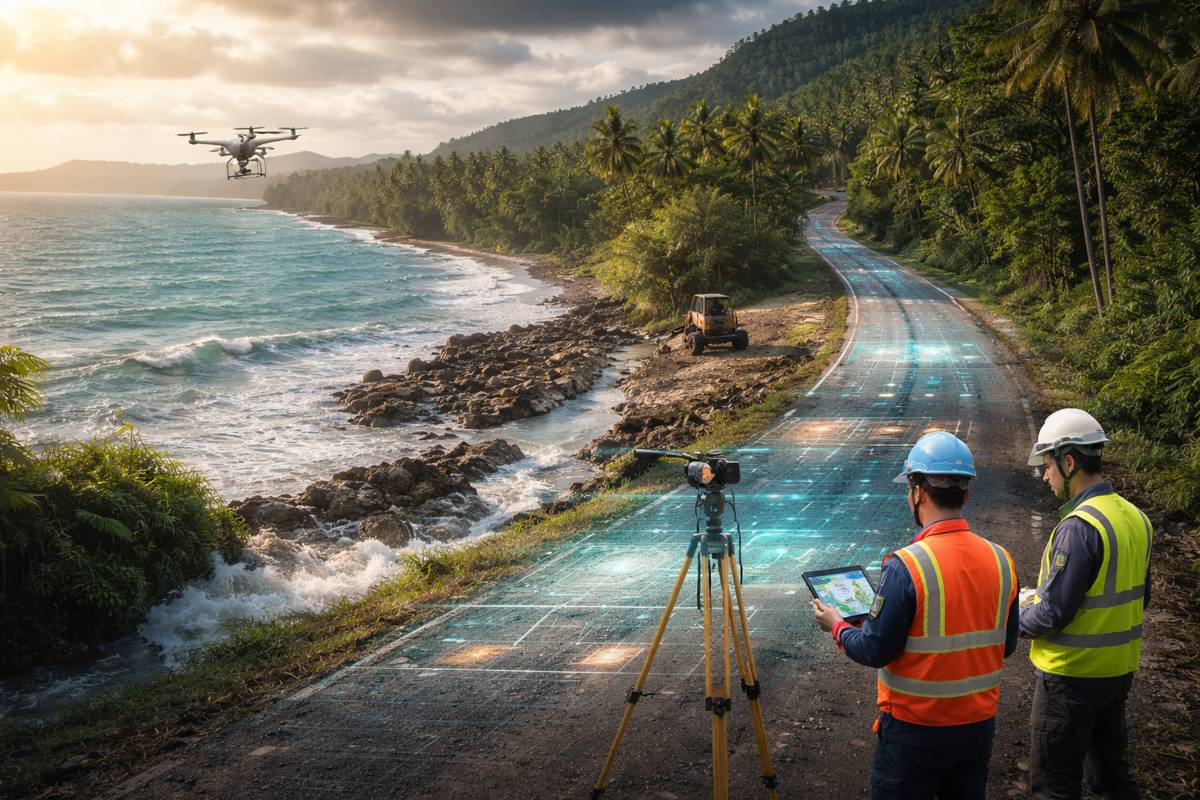
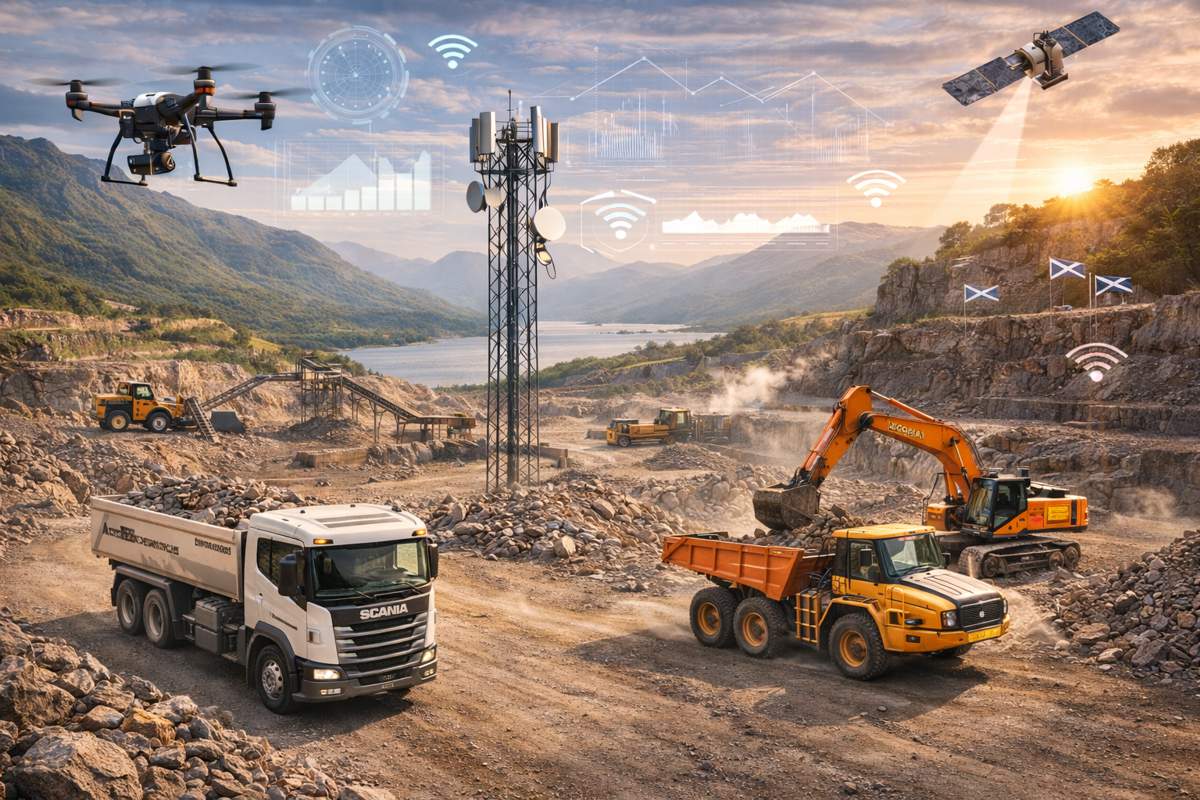
Perhaps the most visible change at high-tech quarries is the frequent buzz of drones overhead. What started as a novelty for taking aerial photos has evolved into a must-have tool for modern site management. Unmanned aerial vehicles (UAVs) now perform regular topographic surveys, stockpile volumetrics, and inspection tasks that once required hours (or days) of manual labour. A single drone flight can capture the 3D geometry of an entire pit and processing area in exquisite detail. The data from these flights, often millions of points in a point cloud or high-resolution orthophotos, feeds directly into what’s known as a digital twin of the quarry. This is a virtual replica of the site, constantly updated with real-world data, that managers and engineers can use for planning and simulation.
The impact on efficiency is dramatic. Traditionally, surveyors might have taken weeks clambering over a 30-hectare quarry with GPS rovers and total stations to produce an accurate map of the terrain. Today, drones can do it in a single day. Nuno Santos, founder of Aerisurvey, recounted one such case: his team mapped 21 quarries in 60 days using drones, a task that would have been nearly impossible with classical surveying methods. Santos highlighted the cost advantage, noting: “If we had to extract the same density and quantity of data through classical methods, we would quickly reach an unbearable cost for any company.” The level of detail drones capture, from high walls to stockpile heights, not only improves operational oversight but also enhances safety. Steep pit walls or areas prone to rockfall can be surveyed from the air without putting workers in harm’s way. As Santos observed, especially in quarries with tricky, uneven terrain, “a UAV-based solution stands far above traditional surveying methods… if we add the safety issue and the amount of geographic data that can be produced through an aerial survey, it makes the comparison almost meaningless.”
Enter the era of the digital twin. By integrating continuous drone survey data, IoT sensor inputs, and even real-time production figures, quarry operators are building living digital models of their sites. These models allow them to simulate “what if” scenarios with minimal risk. For example, before expanding a pit or changing a haul road layout, the plan can be tested virtually on the digital twin to see its effect on cycle times or fuel usage. Digital twins can also help in environmental management, simulating blast vibrations or dust dispersion under different conditions to aid in compliance planning. One European aggregates company described their digital twin initiative as a way to “simulate various scenarios, assess environmental impacts, and optimize resource utilization” on the computer before implementing changes in the field. In essence, the quarry’s digital double provides a sandbox for innovation and optimization, where ideas can be tried risk-free and data from past operations is always at one’s fingertips.
Drones themselves continue to advance in capability. Many quarries now fly automated drone missions on a weekly or even daily basis, using software that plans the flight path and later stitches the images into maps. Emerging systems promise real-time drone data processing, meaning a site manager could dispatch a drone and, within minutes of it landing, see updated stockpile volumes and cut/fill measurements on a dashboard. As data integration becomes more seamless, experts predict we’ll see drones permanently stationed on larger quarries, launching on schedule or on-demand to provide continuous eyes in the sky. “Over the past decade, drones have experienced an incredible exponential evolution,” noted Santos, adding that in quarries, “I believe this type of service will soon be standard in most operations. The advantages are already immense.” As drone technology and digital twin software mature, even mid-size quarries can afford these tools, lowering the entry barrier to high-tech quarry management. The result is an aerial vantage point and a virtual planning room now accessible to operations of almost any scale.
Autonomous Haulage Arrives on Site
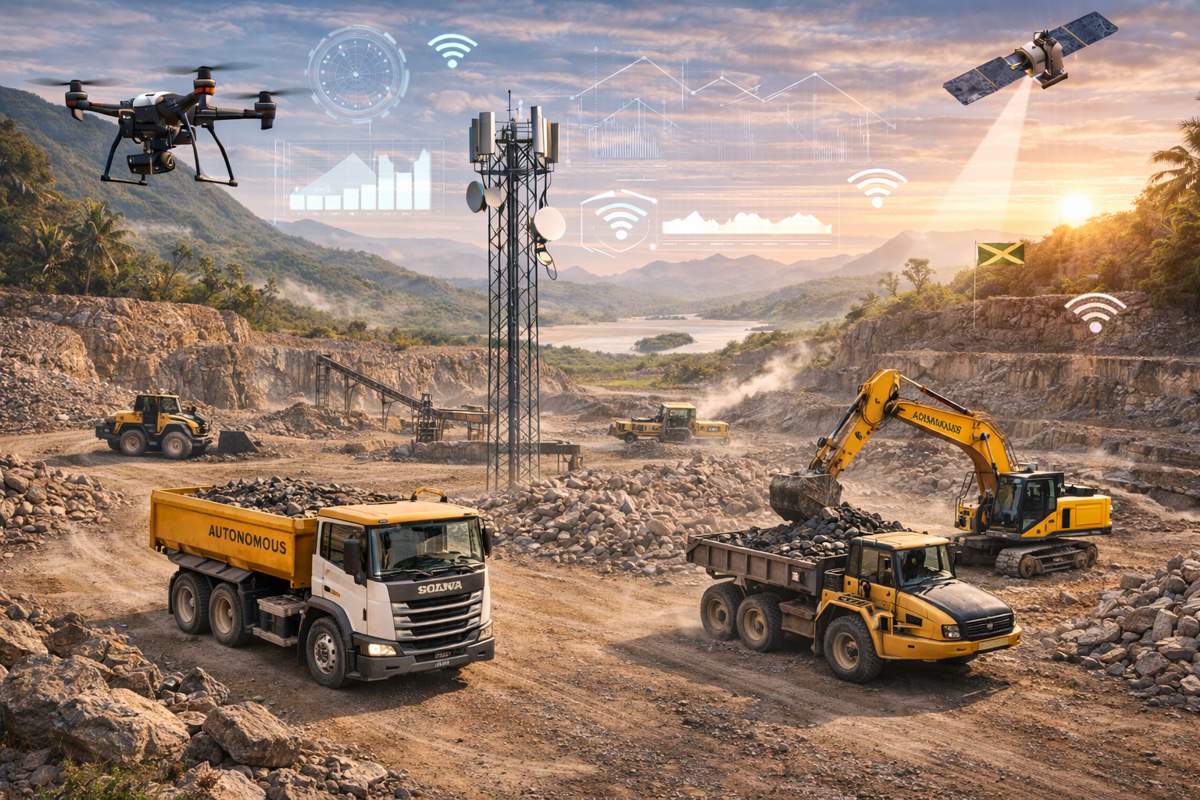
On the ground, another transformation is literally rolling forward: the rise of autonomous and semi-autonomous vehicles in quarry operations. The idea of driverless haul trucks and loaders has been proven in large-scale mining for over a decade, and it’s now filtering down to quarries of various sizes. The reason is simple, autonomous machines can work longer and safer. In Western Australia, for instance, Rio Tinto has deployed dozens of self-driving ore trucks in its iron ore mines that operate nearly 24 hours a day, 7 days a week, only stopping for fuel and maintenance. No coffee breaks, no shift changes, and importantly, no fatigue-related accidents. While those ultra-class trucks roam the Pilbara mines, a similar logic applies to quarry haul roads on a smaller scale.
Manufacturers like Caterpillar and Komatsu have developed autonomous haulage system (AHS) kits that can be fitted to large rigid trucks, and companies such as Volvo and Scania are piloting smaller autonomous haulers ideal for quarries. Early deployments in controlled environments have been promising. These robotic trucks navigate using a fusion of GPS, lidar, and radar, automatically following pre-programmed routes and adapting if an unexpected obstacle appears. At a quarry in Switzerland, Volvo tested its “Electric Site” concept, using automated electric haulers to ferry material from the pit to the crusher, reportedly achieving substantial fuel savings and lower emissions. The safety benefits are clear, with no driver in the cab, the risk in hazardous areas is reduced, and the machines have 360-degree sensor vision that never blinks. Dr. Bernhard Jung of TU Freiberg in Germany predicts that “fully automated man-less mines operated by machines” are on the horizon, especially for difficult or dangerous locations. Quarries are likely to see a gradual progression: first remote-controlled or operator-assisted vehicles, then convoys of autonomous trucks in more and more areas of the site.
Even a semi-autonomous approach can deliver gains. For example, some quarries use operator-assisted drilling rigs that can drill blasting patterns autonomously under remote supervision, increasing precision and keeping workers out of harm’s way. And in the load and haul circuit, there are systems where a single operator can oversee multiple trucks from a control room, intervening only when needed. The business case for automation rests not just on labour savings but on productivity. Caterpillar has reported that autonomous haul trucks already achieve about 20% higher productivity than their manned counterparts. They move more consistently and efficiently, with optimized speed and braking controls that minimize wear and fuel burn. Additionally, they don’t make human errors, no over-speeding, no random downtime, and they can be scheduled to match the crusher’s capacity perfectly.
For mid-size quarries concerned about the complexity of such systems, the good news is the technology is becoming more accessible and vendor-agnostic automation solutions are emerging. Companies are now offering retrofit kits that can turn a mixed fleet of different truck brands into an integrated autonomous convoy. In Australia, one gold mine (Stawell) recently implemented an agnostic automation retrofit to its mixed fleet, demonstrating that you don’t need a brand-new fleet to start reaping the benefits of autonomy. Across the industry, there’s a hunger for automation that fits existing operations rather than requiring a ground-up overhaul. The path may start with simple steps like automated braking or collision avoidance, and lead eventually to fully self-driving haulage. Crucially, every step in automation tends to bring safety improvements alongside efficiency. Fewer people exposed to vehicle traffic means fewer chances for accidents. For quarry owners, that dual win of protecting workers and boosting output is a powerful motivator to explore autonomous tech sooner rather than later.
Making the Business Case for Digital Investment
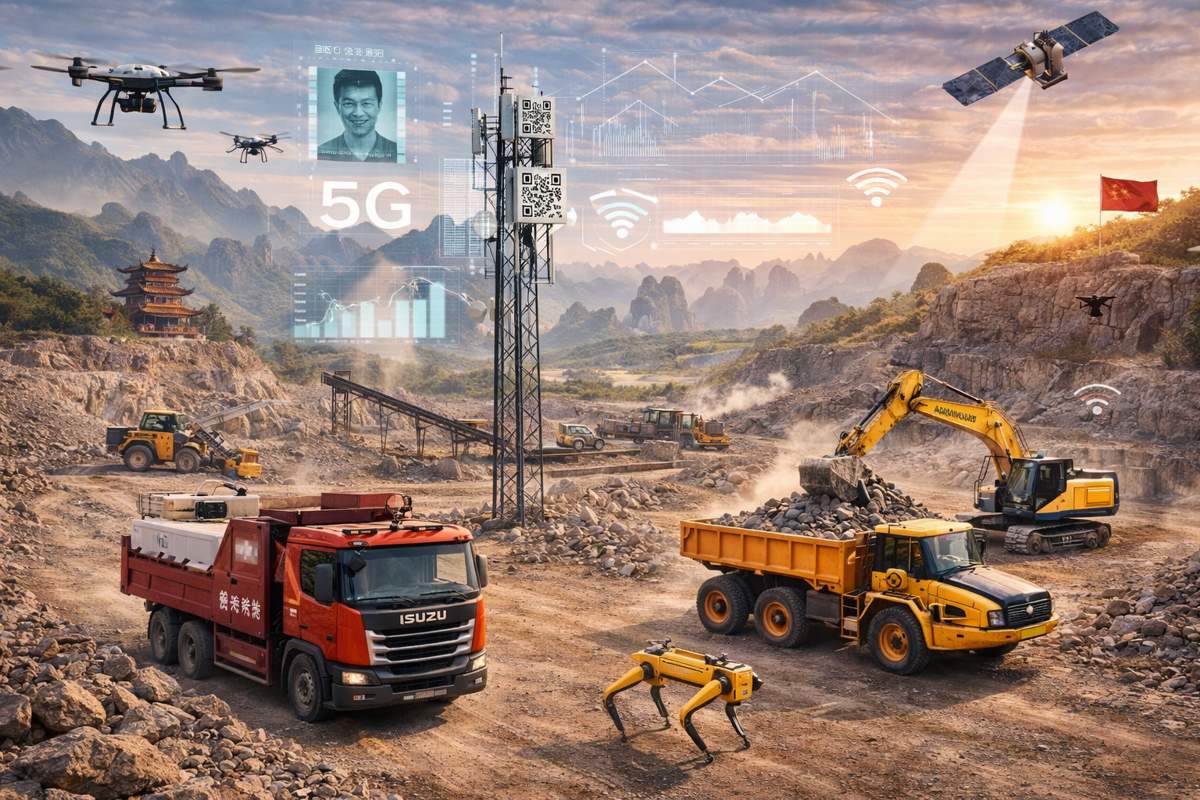
Investing in high-tech systems, whether drones, AI software, or autonomous trucks, naturally comes with costs. For mid-sized quarry businesses, the business case for digitalisation must be clear and compelling. Fortunately, as the technology matures, there is a growing body of evidence and examples that show strong returns on investment (ROI) for going digital. The key is often to start smart and scale up incrementally. Industry advisors suggest identifying a high-impact area of the operation where digital tools can quickly pay for themselves. This could be something like a fuel management system that cuts idling time (saving thousands in diesel costs), or a predictive maintenance platform that reduces expensive breakdowns by, say, 20%. When that initial project delivers a solid ROI, those savings can be reinvested into the next digital upgrade in a step-by-step fashion. In other words, you don’t have to transform everything overnight. Establish a clear ROI threshold, implement one solution, and use its success to fund and inform the next.
Quarry executives are increasingly framing discussions with tech suppliers around these ROI metrics. Rather than being sold on flashy features, they ask pointed questions: What’s the payback period? How will this increase my output or reduce my costs? As Jonathan Hart of Washington Rock Quarries explained at a recent industry roundtable, the producer-manufacturer relationship now revolves around ROI: “What’s the return on investment going to be? How fast is it going to be? And how much more material, or better aggregate material, are we going to be able to produce for what we’re getting?”. These are pragmatic questions, and tech providers have had to respond with real data and case studies. For instance, a telematics system might be justified by showing it can reduce fleet idle time by 30%, translating to a specific fuel savings per year. An aerial drone program might be pitched on how it can eliminate the cost of hiring external surveyors every quarter. In many cases, mid-sized quarries find that relatively modest investments (in the tens of thousands of dollars range) can unlock outsized gains.
To illustrate, consider a mid-size aggregate quarry that invested in a connected crusher and screen control system. The immediate cost was perhaps significant, but within months they saw a boost in throughput and a drop in unplanned stops. This meant more saleable product each week and fewer contractor call-outs for repairs, benefits that could be directly quantified in financial terms. Similarly, quarries adopting advanced fleet management have reported lower maintenance expenses because operators improved their driving habits once their performance was being tracked (hard braking and over-revving incidents tend to decrease when everyone knows the system is monitoring). Digital investment can also help quarries avoid regulatory fines or community complaints, which have indirect financial benefits through risk reduction. For example, having an automated dust monitoring and suppression system could ensure compliance with environmental limits and avoid costly shutdowns or penalties.
In making the business case, it’s also important to account for the non-monetary returns: safer operations leading to better staff retention and morale, or digital transparency building stronger community relations (and therefore smoother permitting or expansion approvals). These factors, while harder to put on a balance sheet, contribute to the long-term viability of a quarry business. Forward-thinking owners treat money spent on digital upgrades as capital investments in future-proofing their operations, not just expenses. Still, caution is warranted, not every shiny new tech will suit every site. The wise approach is to pilot technologies at a small scale, measure results, and then expand usage if the benefits pan out. By doing so, even conservative operations can gradually transform, spending where it makes sense and pausing where it doesn’t. The good news is that costs for many of these technologies, drones, sensors, cloud software, have been trending down, while their user-friendliness has improved, meaning quarries don’t necessarily need a full IT department to deploy and maintain them.
Key Areas Where Digital Tools Deliver ROI:
- Improved Efficiency: Automation and analytics optimize processes (e.g. haulage, crushing), leading to more output with the same resources.
- Reduced Downtime: Predictive maintenance and real-time monitoring prevent breakdowns and stoppages, keeping production on schedule.
- Lower Operating Costs: Better fuel management, optimized machine use, and energy savings (like using smart controls) cut overhead costs.
- Enhanced Safety: Fewer accidents mean less disruption and liability. Safety tech investments pay off by avoiding costly incidents.
- Compliance and Reputation: Digital tracking of environmental and safety metrics ensures compliance, avoiding fines and strengthening community trust.
Each quarry will weigh these factors differently, but across the board the trend is clear: those who embrace digitalisation strategically are reaping measurable rewards, while those who stick strictly to traditional ways may miss out on efficiency gains that their competitors are already capturing.
Data Transparency for Regulators and Communities
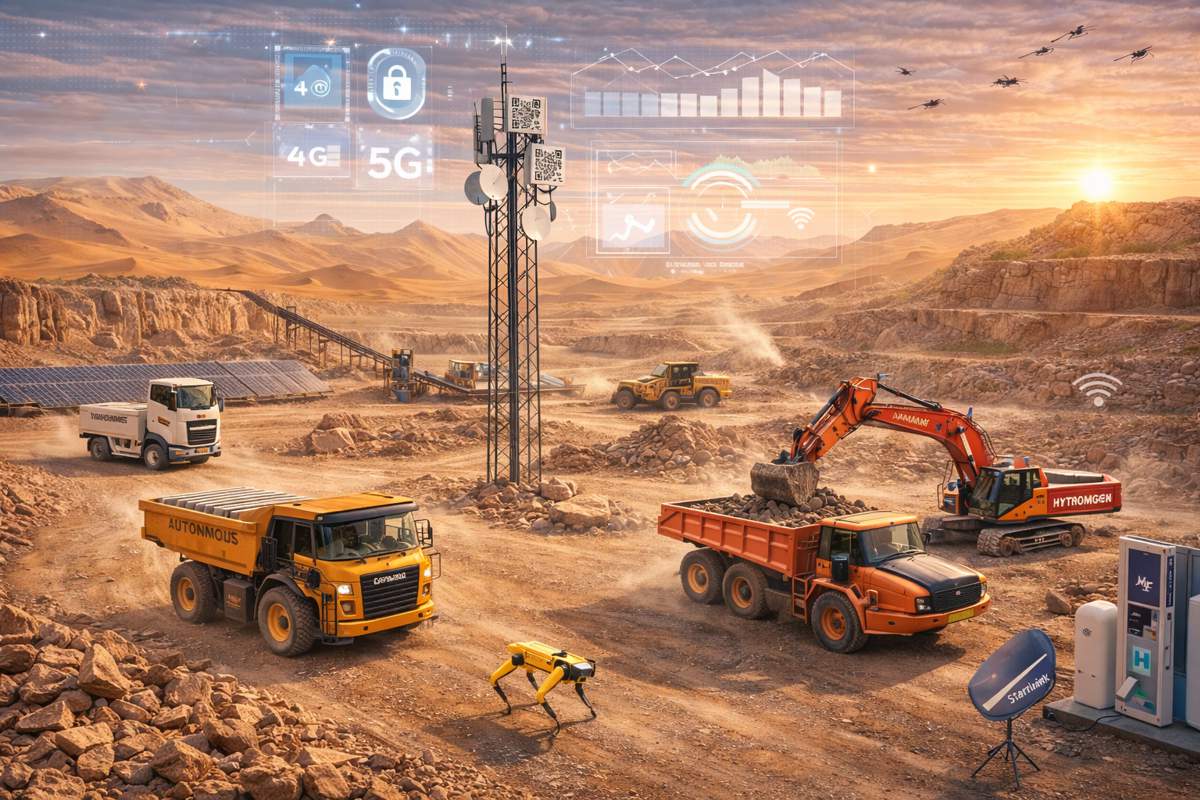
Beyond internal efficiencies and cost savings, digitalisation is helping quarries build trust with external stakeholders. In an age of heightened environmental and safety awareness, regulators and local communities expect greater transparency from quarry operators. Digital tools are enabling companies to openly share data on their environmental performance and safety measures, which can demystify operations and demonstrate responsibility. For example, some quarries now use continuous monitoring devices around their perimeter to track dust levels, noise, and vibrations from blasting. Instead of keeping this information in-house, they are publishing summaries in community newsletters or live on a public website. When residents can see that particulate or vibration levels stay below regulatory thresholds, backed by real data, it goes a long way to easing concerns. It shows that the quarry “has nothing to hide” and is in control of its impacts.
Regulatory compliance reporting is also being streamlined. Digital systems automatically log everything from how many hours a water pump ran (critical for water use permits) to the amount of explosives used in each blast (for vibration and safety records). Generating required reports for authorities becomes far less painful when accurate data is captured in real time and stored centrally. In some regions, quarries are even providing regulators direct access to certain data feeds, so oversight bodies can verify compliance remotely without frequent site visits. This proactive sharing can foster a more collaborative relationship rather than an adversarial one. It also means when the quarry seeks a permit for a new extraction phase or extended hours, they have a solid foundation of trust to help secure approvals.
A case in point is how blast management has evolved. Modern blasting software (often part of the digital twin ecosystem) can predict vibration outcomes at various distances, allowing engineers to tailor each blast to stay within community comfort levels. One UK firm’s blasting platform provides real-time vibration predictions and results tracking, enabling precise communication with neighbours. Ryan Ward, a commercial manager at EPC-UK (an explosives and drilling specialist), highlighted how sharing accurate blast information improves community relations: “Having access to real-time data and accurate insights into how a blast will behave allows quarry owners and workers to disseminate more precise information to communities living around a blast site. We know from experience that this transparency… is helping to build more positive relations between quarries and their neighbours.”. In other words, by using data to set expectations and then showing that reality matched the expectations, quarries can replace fear with facts. Community members are far less likely to complain or oppose operations when they feel they are being kept informed and that the site is actively managing its impact.
Transparency isn’t just about mitigating conflict, it can also highlight positive contributions. Digital tracking can quantify, for instance, how much recycled material a quarry operation has used or how it has reduced its carbon emissions over time through new technology. Sharing such metrics publicly can boost the industry’s image and give local stakeholders a sense of pride or acceptance that the operation is modern and responsible. Some quarries invite local school or community groups for open days where they showcase their “control room” and digital monitoring in action, which often leaves a strong impression that this is not an old polluting dinosaur of a industry, but one embracing innovation for sustainability. As one industry commentary noted, building public trust often comes down to clear communication and education. Digital visualisation tools (even simple 3D models or virtual reality tours of the quarry’s future rehabilitation plan) can make it easier for the public to understand what’s happening and what’s planned, countering the fear of the unknown that so often fuels opposition.
In summary, data transparency is becoming a new pillar of a quarry’s social license to operate. By leveraging their digital systems to share the story behind the numbers, quarries can engage with regulators and communities on the basis of facts and real performance, rather than perceptions. This not only helps in day-to-day harmony but can smooth the path for operational changes and growth in the future.
Bridging the Digital Skills Gap
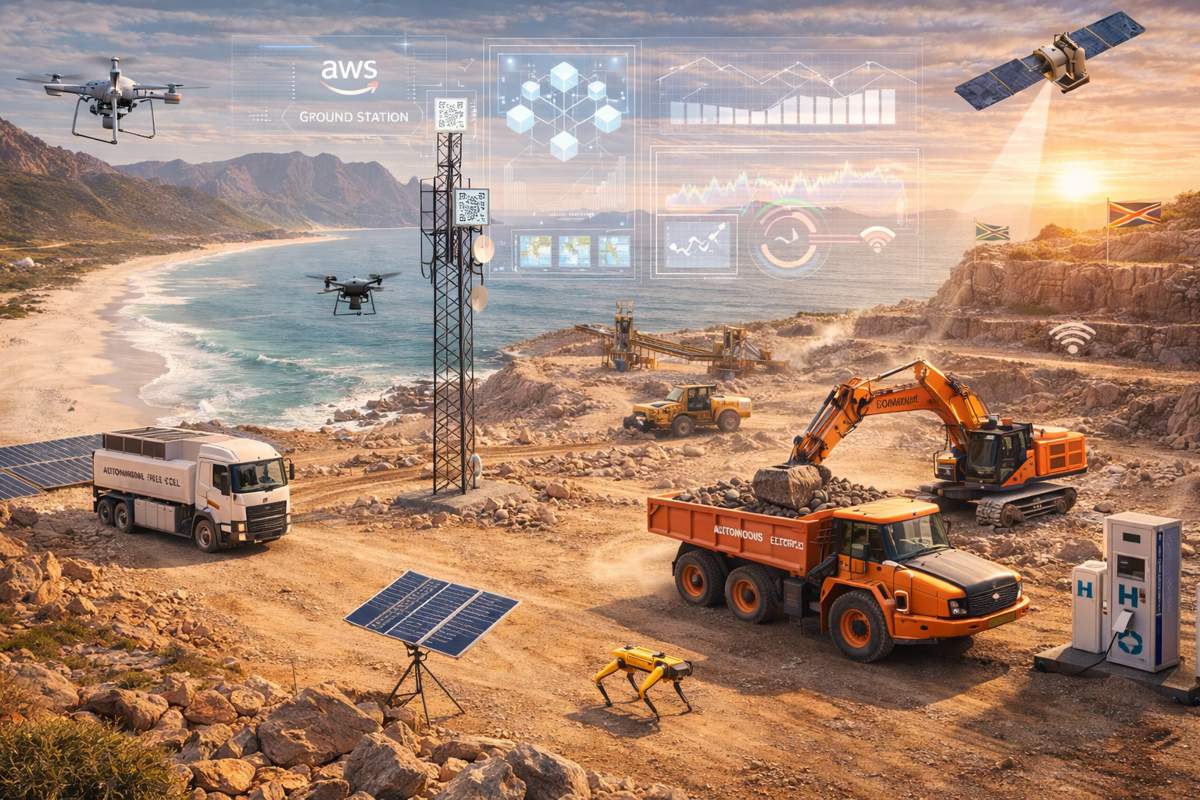
As quarries race toward a digital future, one challenge looms: ensuring the workforce can keep up with the technological change. The industry faces a digital skills gap, with many current employees having grown up in an era of paper logs and manual controls rather than data dashboards and automation consoles. At the same time, the next generation of tech-savvy workers may overlook quarrying and mining unless the sector can shed its image as a “low-tech” field. Mining industry studies warn that attracting young talent is difficult when the work is perceived as hard, dirty, and old-fashioned. Over two-thirds of young people surveyed in one country said they would not consider a mining career, a statistic that should sound alarm bells for quarry operators planning their future workforce.
To close this gap, companies are investing in training and upskilling programs for their existing staff, and ramping up recruitment efforts for digitally proficient talent. Equipment manufacturers often provide training modules when quarries adopt their high-tech systems, helping veteran operators learn how to interpret telematics data or use drone mapping software. Some quarry firms have partnered with technical colleges or launched in-house “digital academies” to teach skills like data analysis, programming simple automation routines, or maintenance of high-tech sensors. The goal is to turn seasoned blasters, mechanics, and plant operators into “blaster-data analysts” or “digital mechanics” who can blend their deep practical experience with new digital tools. It’s not always an easy transition, but many workers embrace the opportunity once they see that technology can make their jobs safer and perhaps more interesting. For instance, rather than manually inspecting a dangerous highwall, a surveyor can now fly a drone, a task that requires learning some new software but ultimately reduces risk and effort.
From the hiring side, the industry is actively trying to change perceptions and highlight the innovative, high-tech nature of modern quarrying. Outreach programs, participation in robotics competitions (as Caterpillar has done), and promoting success stories of young engineers in mining are all part of the strategy. The message is that a quarry today might involve working with AI systems, designing drone flight plans, or managing renewable energy microgrids to power electric loaders, cutting-edge stuff that appeals to tech enthusiasts. As one mining recruitment expert put it: “Miners must adapt rapidly and bring new digital skills into their workforce to drive the productivity and sustainability of their operations.” This sentiment is echoed across the sector: the future quarry team will include roles like data engineers and automation specialists alongside the traditional geologists and heavy equipment operators.
Governments and industry bodies are also pitching in. In regions rich in mining and quarrying, educational curricula are being updated to include mine automation, data science, and even VR simulations of operations to prepare students. Apprenticeship programs now sometimes rotate young recruits through the IT department as well as the pit, so they gain a holistic view of how tech underpins production. Bridging the digital skills gap is admittedly a long-term effort as cultural change in an established industry doesn’t happen overnight. But there are encouraging signs: some quarries report that after initial scepticism, their crews quickly took pride in mastering the new systems and even started suggesting further improvements. The end game is a workforce that’s not just unafraid of technology, but actively leveraging it to make quarrying smarter, safer, and more sustainable. The companies that succeed in this workforce transformation will likely have a significant competitive advantage in the coming decades.
The Road Ahead for Data-Driven Quarrying
A walk inside a smart quarry today might feel like a visit to an industry on the cusp of a new era. In the control room, large screens display real-time data streams and CCTV feeds. On the benches and haul roads, high-precision drills and perhaps a driverless truck or two go about their work with methodical efficiency. Survey drones buzz overhead on scheduled missions. It’s a far cry from the purely mechanical operations of the past. Yet for all the advances so far, the digital transformation of quarries is really just beginning. In the years ahead, we can expect the integration of systems to deepen, the various islands of automation (crushing, hauling, maintenance, etc.) will connect into a fully optimized whole. The concept of the Intelligent Quarrying System (IQS) that researchers have envisioned, where sensors on everything from the excavator to the conveyor belt feed into a central “brain” coordinating the entire site is moving from theory to practice. Early pilot projects in Europe have already demonstrated that connecting all quarry processes in real time can markedly improve productivity and sustainability, by adjusting operations on the fly to meet targets and minimize waste.
Challenges will certainly arise on the road ahead. Mines and quarries operate in tough conditions that test any technology, extreme dust, vibration, weather, and rugged topography. Digital systems will need to be robust and reliable in the face of these conditions, otherwise operators will not trust them for mission-critical tasks. Cybersecurity is also a consideration; as operations become connected and remotely accessible, protecting these industrial control systems from unwanted interference becomes paramount. But solutions are evolving here too, with more companies adopting secure cloud platforms and strict network protocols to safeguard their data and control systems.
On the flip side, the opportunities are expanding. The convergence of technologies like AI, cloud computing, and even 5G connectivity promises to supercharge what digital quarries can do. With ultra-fast wireless networks, even mobile equipment deep in a pit could stream high-definition data to analytics engines in real time, enabling things like augmented reality maintenance (where a technician wearing smart glasses sees live diagrams and sensor readings while working on a machine). The rise of electric vehicles in quarries, paired with smart energy management, could further reduce costs and emissions, imagine autonomous electric haulers that not only move rock but also regenerate power on descents and coordinate their charging schedules intelligently during lull periods.
Crucially, the transformation of quarries is as much about people as technology. The most successful digitalisation efforts are those where management and crews work together to implement changes, where training is invested in, and where a culture of continuous improvement is nurtured. In such environments, every worker becomes a sensor and a source of ideas, complementing the electronic sensors spread around the site. Employees begin to see data as a helpful tool rather than a threat, and management sees value in feedback from the ground when configuring their shiny new systems.
The data-driven extraction revolution aligns well with broader trends in construction and infrastructure. Downstream customers (like asphalt or concrete producers) increasingly want consistency and sustainability from aggregate suppliers, and a smart quarry is well positioned to deliver that. Regulators and communities want accountability, digital quarries provide it through transparency. Investors and owners demand efficiency and risk reduction, automation and AI tackle those demands head-on. In sum, embracing digitalisation, automation, and data isn’t just an add-on for quarries; it’s becoming fundamental to staying competitive and responsible in the industry.
The vision of the future quarry is one where human expertise and advanced technology work in tandem: the seasoned quarry manager armed with real-time insights at their fingertips; the young engineer programming a drone survey route while algorithms suggest pit improvements; the maintenance lead receiving an AI alert that prevents a crusher failure; and all the while, trucks and drills humming along autonomously in the background. It’s a future that seemed far-fetched not long ago, but is now materializing one innovation at a time. The journey inside the smart quarry has well and truly begun, and it’s digging up rewards on multiple fronts, from the balance sheet to the community and environmental footprint. The quarries that embrace this journey will likely be the ones carving out the best path in the years to come.