Greening Riyadh Through Yokogawa Intelligent Urban Control
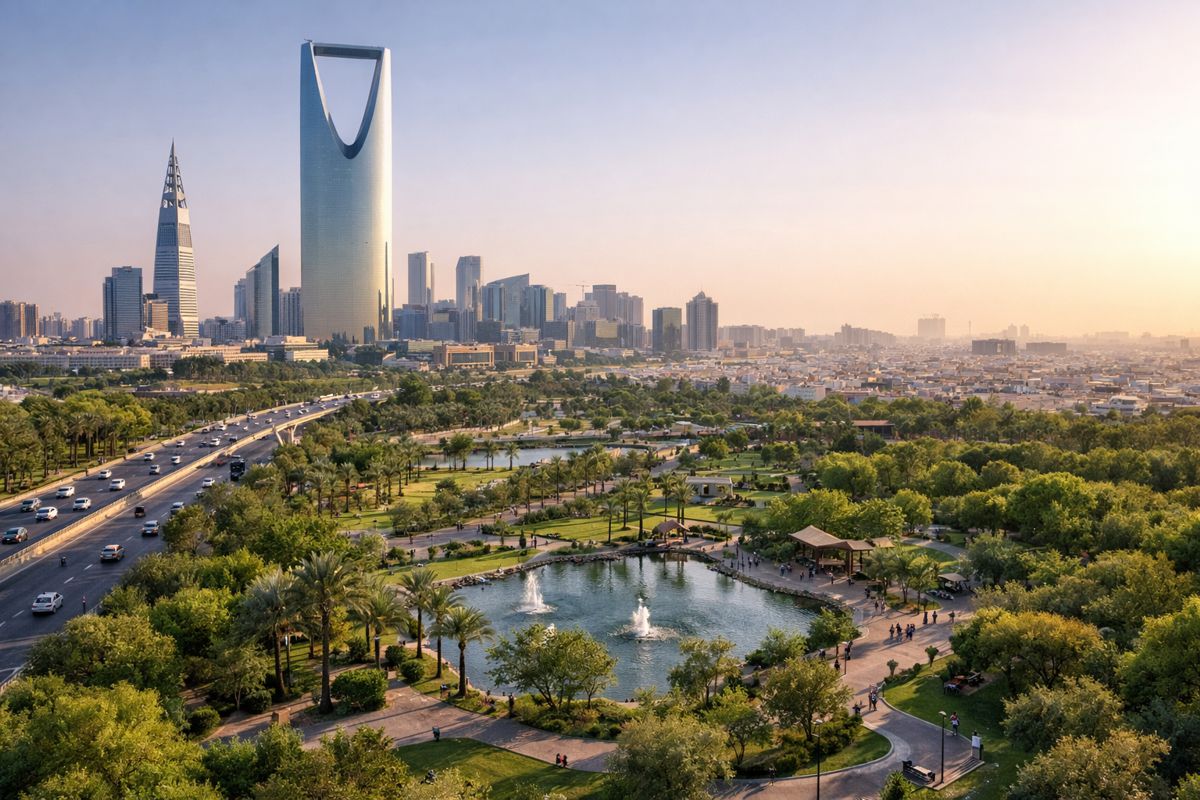
Riyadh is in the middle of a profound transformation, one that places environmental quality and liveability at the heart of urban planning. The Green Riyadh programme, led by the Government of Saudi Arabia, sits firmly within the ambitions of Saudi Vision 2030, aiming to reshape the capital into one of the most liveable cities on the planet. It is not a cosmetic exercise or a symbolic gesture. It is a long term, data driven intervention designed to change how the city breathes, cools itself, and supports daily life.
Against this backdrop, Yokogawa Electric Corporation has confirmed that its Saudi Arabian subsidiary has secured a contract from the Royal Commission for Riyadh City to deliver the systems and services for the main command and control centre of the Green Riyadh project. This appointment places digital infrastructure at the centre of an urban greening initiative that is unprecedented in scale across the Middle East.
Reimagining Urban Green Space at Scale
By 2030, Green Riyadh will see the planting of 7.5 million trees across parks, roads, public facilities, and healthcare campuses. That figure alone signals ambition, yet the true measure of impact lies in how the city’s green space per capita will rise from just 1.7 square metres to 28 square metres. Few global capitals have attempted such a dramatic expansion within a single decade.
The programme is designed to do more than beautify streets and parks. Urban afforestation on this scale directly influences air quality, urban heat island effects, and energy consumption patterns. Increased tree cover helps lower ambient temperatures, reduces the need for air conditioning, and contributes to healthier lifestyles by encouraging outdoor activity. Social cohesion also benefits, as green public spaces tend to become focal points for community interaction.
Water Stewardship as a Cornerstone
In a region where water efficiency is paramount, Green Riyadh places treated wastewater at the centre of its irrigation strategy. Using reclaimed water ensures that the programme does not place additional pressure on potable water supplies while still supporting large scale planting.
Managing this irrigation network is, however, a complex undertaking. It requires continuous oversight of water availability, soil moisture, weather conditions, and system performance. Without intelligent control, the environmental gains of urban greening could easily be undermined by inefficiencies or waste. This is where digital integration becomes essential rather than optional.
The Command and Control Challenge
The Royal Commission for Riyadh City’s decision to invest in a centralised command and control centre reflects a growing recognition that modern cities must operate as interconnected systems. Green Riyadh touches transport corridors, public lighting, water networks, environmental monitoring stations, and park infrastructure. Each of these elements traditionally operates in isolation.
Yokogawa’s role is to bring these elements together into a single operational picture. By doing so, city managers gain the ability to monitor conditions in real time, anticipate issues before they escalate, and make informed decisions grounded in data rather than assumptions.
Yokogawa’s Integrated Digital Platform
To support this vision, Yokogawa will deploy its OpreX Collaborative Information Server alongside the OpreX Intelligent Manufacturing Hub as a unified digital platform for the command centre. Although originally developed for industrial environments, these systems have increasingly found relevance in complex infrastructure projects where multiple data streams must be aligned.
The platform will integrate inputs from environmental sensors, weather forecasting services, and operational databases. This consolidated view allows operators to see how conditions evolve across the city, whether that involves temperature spikes, irrigation demand, or lighting requirements in public spaces. The emphasis is on actionable insight rather than raw data.
From Monitoring to Predictive Management
Real time visibility is only part of the equation. The greater value lies in predictive analytics that help city authorities move from reactive responses to proactive management. By analysing trends in weather patterns, water usage, and plant health, the system can support decisions that optimise irrigation schedules and reduce unnecessary energy consumption.
Lighting systems in parks and public areas also stand to benefit. Intelligent control can balance safety and accessibility with energy efficiency, adjusting illumination levels based on usage patterns and environmental conditions. Over time, these incremental efficiencies translate into significant operational savings.
Designed for Growth and Adaptation
One of the defining features of Yokogawa’s proposed architecture is scalability. Green Riyadh is not a static project with a fixed endpoint. As new parks are developed and additional assets are brought online, the command and control system must be able to evolve without fundamental redesign.
The platform has been designed to accommodate future integration, whether that involves additional environmental sensors, expanded water networks, or other city wide initiatives aligned with Vision 2030. This flexibility ensures that the investment remains relevant well beyond the initial planting phase.
Aligning With a System of Systems Philosophy
Yokogawa’s involvement in Green Riyadh reflects its broader approach to complex infrastructure management. Rather than treating individual assets as standalone entities, the company promotes what it describes as a system of systems model. Under this philosophy, independently operated systems are connected to create a larger, more capable whole.
This approach is particularly well suited to smart city environments, where transport, utilities, public services, and environmental assets increasingly intersect. By enabling these connections, cities can unlock efficiencies and insights that would otherwise remain hidden.
Leadership Perspective
Kunimasa Shigeno, President and Chief Executive Officer of Yokogawa Electric, underlined the significance of the project in his comments on the award: “We are proud to be entrusted to work on such a large scale urban transformation project. This project aligns with Yokogawa’s goal to deliver synergies and new value through the system of systems approach, in which independently operated and managed systems are connected to form a larger system. We look forward to contributing to similar initiatives in the region and globally.”
His remarks highlight both the scale of Green Riyadh and its potential to act as a reference point for future urban greening programmes worldwide.
Setting a Benchmark for Sustainable Cities
Green Riyadh is increasingly viewed as a benchmark for how cities in arid climates can pursue sustainability without compromising resource security. The integration of treated wastewater, advanced monitoring, and predictive analytics demonstrates a pragmatic approach to environmental stewardship.
Internationally, cities are grappling with rising temperatures, air pollution, and pressure on infrastructure. Projects that successfully combine physical greening with digital oversight offer valuable lessons. Riyadh’s experience is likely to inform similar initiatives across the Middle East, Asia, and beyond.
A Model With Global Implications
As urban populations continue to grow, the demand for healthier, more resilient cities will only intensify. Green Riyadh illustrates how technology providers, government authorities, and infrastructure planners can collaborate to deliver tangible environmental and social benefits.
By placing intelligent control systems at the heart of urban greening, the project moves beyond tree planting as a symbolic act. Instead, it frames greenery as critical infrastructure, managed with the same rigour as transport or energy networks. That shift in mindset may prove to be its most enduring legacy.