Kubota Demonstrates the Future of Smart Agriculture at CES
Kubota used its media briefing at CES 2026 to restate a long held ambition that now feels increasingly tangible. The company’s vision of becoming an Essentials Innovator for Supporting Life is no longer a philosophical statement but a practical framework for product development, commercialisation and long term impact. In a world grappling with labour shortages, demographic change and rising pressure on food systems, Kubota is positioning technology as an enabler rather than a disruption.
At its core, the strategy is about making work easier without stripping away human agency. Kubota’s leadership was clear that productivity, sustainability and quality of life are inseparable. Machines must work harder, but they must also work smarter and more intuitively, reducing cognitive load on operators while improving outcomes in the field.
Tackling Global Labour and Productivity Pressures
Across agriculture, construction and land management, the same pressures keep resurfacing. Skilled labour is scarce. Workforces are ageing. Younger generations expect technology to feel natural rather than imposed. Kubota’s response is rooted in right sized equipment that blends physical capability with embedded intelligence.
Rather than chasing scale for its own sake, Kubota continues to focus on compact and mid range machinery where precision, versatility and ease of use matter most. These segments often carry the greatest operational complexity, particularly in specialty crops, vineyards and mixed use environments. By embedding sensing, autonomy and AI into familiar platforms, Kubota aims to lower barriers to adoption while delivering measurable efficiency gains.
Autonomous Solutions Built for Real Work
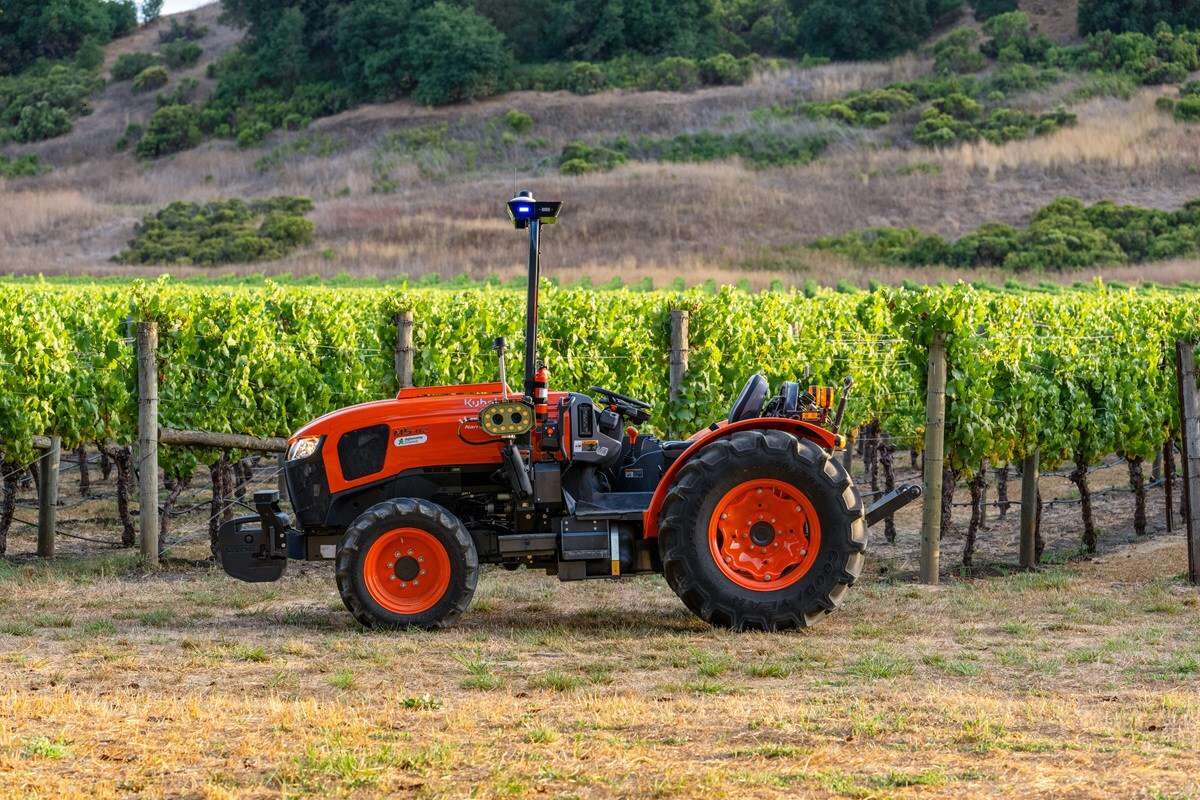
One of the most significant announcements at CES 2026 was the commercialisation of a fully integrated autonomous solution for the specialty crop market. Developed in partnership with Agtonomy, the system is built directly into the 105.7 horsepower diesel Kubota M5 Narrow tractor. This is not an aftermarket add on or experimental prototype but a production ready machine designed for daily use.
Advanced sensing, artificial intelligence and real time decision making allow the tractor to operate autonomously during routine tasks such as mowing and under vine cultivation. Importantly, Kubota has avoided framing autonomy as a replacement for people. Instead, it is positioned as a way to handle repetitive, time consuming work more consistently, freeing skilled teams to focus on higher value tasks.
The approach reflects a broader shift in industrial automation. Success is no longer defined by removing humans from the loop, but by giving them better tools and clearer information. Kubota’s autonomous platform is designed to integrate seamlessly into existing workflows, reducing rework, minimising errors and improving overall operational rhythm.
Versatility Through Modular Robotics
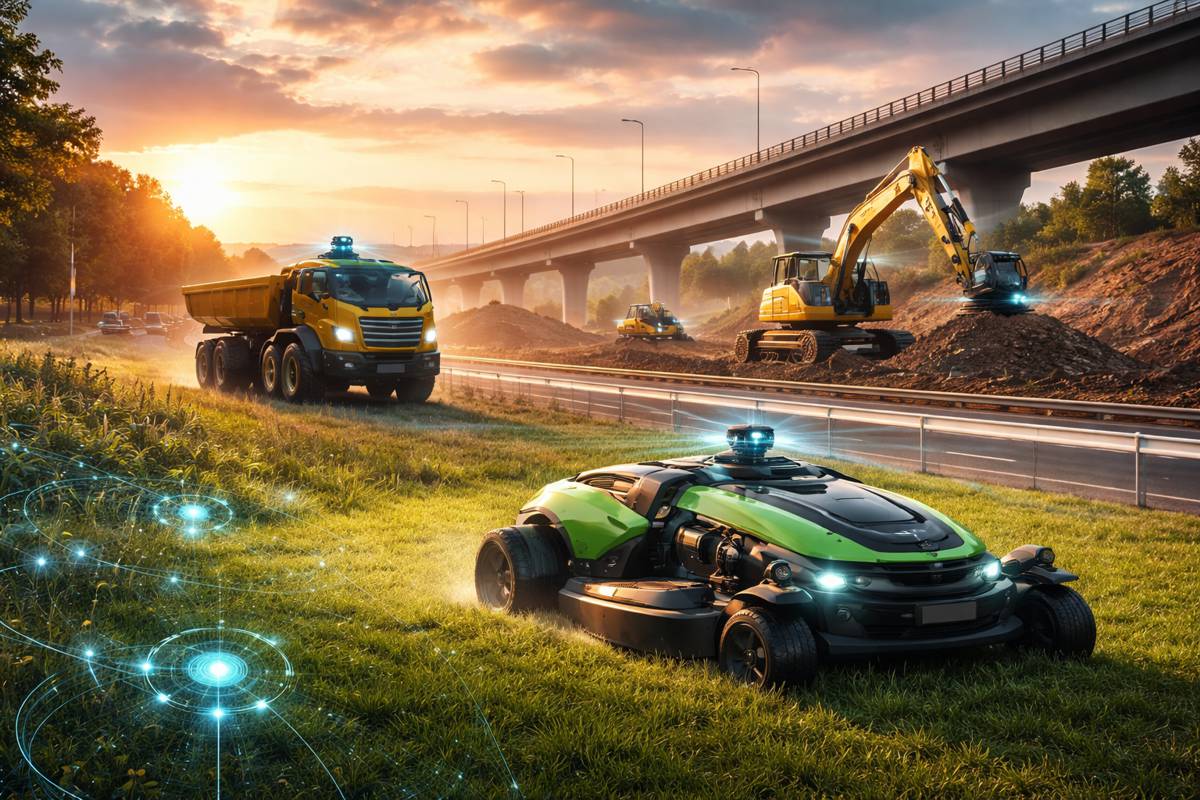
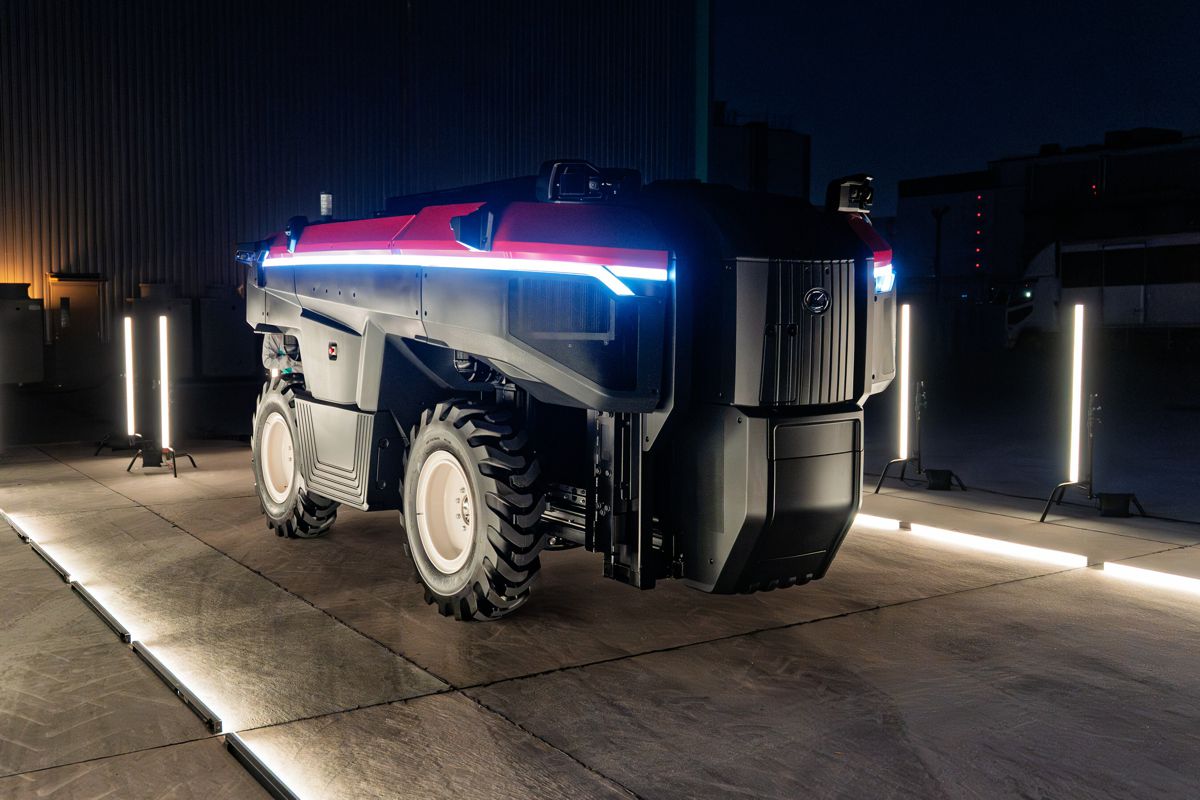
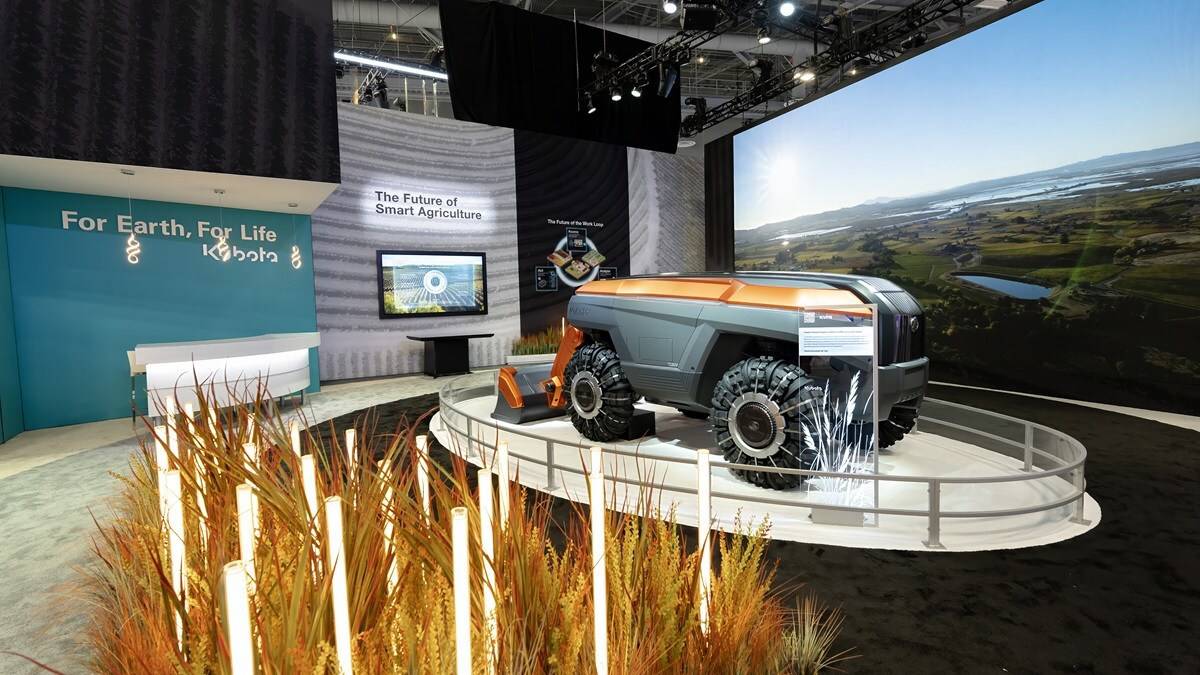
Beyond tractors, Kubota also revealed a concept versatile platform robot known as KVPR. Described internally as a transformer robot, the platform can expand, contract and move along multiple axes. The idea is deceptively simple. One adaptable machine can perform the work of several specialised units across different seasons and operational contexts.
For customers managing fluctuating workloads, this kind of flexibility has real economic value. Capital investment can be reduced while utilisation rates increase. Just as importantly, operators interact with a consistent interface rather than relearning new machines each season. Kubota sees this as a critical part of making advanced technology feel accessible rather than intimidating.
Digital Twinning as an Operational Backbone
Complementing its physical machines, Kubota showcased a Digital Twinning system designed for persistent, real time monitoring. The system is capable of tracking data at an extraordinary level of granularity, from the development of a single bud to the performance of an entire operation.
Digital twins are increasingly recognised as a foundation for predictive maintenance, resource optimisation and long term planning. Kubota’s approach emphasises continuity rather than snapshots. By maintaining a living digital model, customers can make decisions with greater confidence, supported by historical context and real time insight.
This capability also opens the door to broader sustainability gains. Inputs can be applied more precisely. Equipment can be maintained proactively. Waste is reduced not through mandates but through better information.
Rethinking Automation Around Human Experience
Kubota’s leadership repeatedly returned to the idea that smarter solutions do not have to mean more complex ones. Todd Stucke, General Manager of Agri Solutions Headquarters at Kubota Japan and President of Kubota North America, framed the company’s philosophy succinctly: “Big challenges don’t just need big machines; they need smarter solutions that make life easier.”
He went on to emphasise that Kubota’s commercial offerings are the result of a customer driven innovation cycle. The objective is not to automate legacy workflows blindly, but to rethink how work can be done more intuitively and efficiently from the ground up.
This mindset is evident in Kubota’s insistence on customer choice. Operators can remain in the seat or manage tasks through a digital interface. Performance and ease of use remain non negotiable, even as intelligence increases.
Physical AI and the Next Inflection Point
For Kubota, artificial intelligence is no longer confined to data analytics or remote dashboards. Brett McMickell, Chief Technology Officer for Kubota North America, described the emergence of Physical AI as a turning point: “Physical AI is a key inflection point for our industry and for Kubota.”
He highlighted how decision making, obstacle detection and voice recognition now allow AI driven insights to inform task allocation, labour planning and efficiency improvements in real time. Crucially, the goal is not technical sophistication for its own sake. McMickell stressed that technology must be designed around human needs, enhancing how customers live and work rather than overwhelming them.
The ability to manage greater complexity with more certainty and simplicity reflects a maturation of industrial AI. Systems are becoming robust enough for real world variability, yet refined enough to remain intuitive.
Real World Validation in the Vineyard
Practical validation came from Treasury Wine Estates, which joined Kubota at CES to share its experience testing autonomy in the field. As a leading luxury wine supplier, the company operates in environments where precision and consistency are paramount.
Marc Di Pietra, Regional Service Maintenance Manager at Treasury Wine Estates, explained how the M5 Narrow tractor has been deployed: “We put Kubota’s M5 Narrow tractor to work during mowing and under vine cultivation.”
He noted that autonomous operation across every row and block reduced rework, increased efficiency and gave teams more time to focus on higher value activities. The comment underscores a recurring theme. Autonomy succeeds when it quietly improves outcomes rather than demanding attention.
A Legacy of Purpose Driven Engineering
Kubota’s current trajectory is best understood in the context of its history. Founded in 1893 by Gonshiro Kubota, the company began by producing cast iron pipes to deliver clean drinking water and prevent the spread of cholera in Japan. From the outset, engineering was tied to public health and societal resilience.
Over the past 130 years, Kubota has built a reputation as a pioneer of sub compact and compact tractors, as well as compact excavators. Its open platform approach continues that tradition, accelerating the delivery of smarter solutions by embracing partnerships and flexibility rather than closed systems.
Organisational Scale with Local Focus
Kubota North America Corporation, headquartered in Grapevine, Texas, serves as the central hub for operations across the United States and Canada. By closely connecting resources and sharing talent across business lines, the organisation maintains consistency while remaining responsive to regional needs.
At a global level, Kubota Corporation in Osaka oversees a diverse portfolio that spans tractors, construction equipment, lawn and garden machinery, hay tools and matched implements. This breadth allows technology developed in one sector to inform innovation in others, reinforcing the company’s emphasis on compact, versatile solutions.
The Role of Agtonomy in Embedded Intelligence
Agtonomy plays a critical role in translating AI research into deployable industrial systems. As an AI and software services company specialising in intelligent automation for agriculture and turf, its platform is designed to operate in complex, unpredictable environments.
By embedding directly into industrial machinery, Agtonomy’s technology enhances efficiency, safety and sustainability while preserving operator control. The partnership with Kubota illustrates how collaboration between OEMs and software specialists can accelerate meaningful innovation without compromising reliability.
Engineering Simplicity for What Comes Next
Kubota’s CES 2026 briefing made one point abundantly clear. The future of work in agriculture and construction will not be defined by spectacle or scale alone. It will be shaped by technologies that respect human expertise, adapt to real world conditions and quietly make demanding work more manageable.
By combining autonomy, physical AI, digital twins and modular robotics within familiar, compact platforms, Kubota is laying the groundwork for a more resilient and humane approach to mechanisation. In doing so, it reinforces a belief that has guided the company for more than a century. Progress matters most when it supports life, not just productivity.