Mobileye and Mentee Robotics to Shape the Future of Physical AI
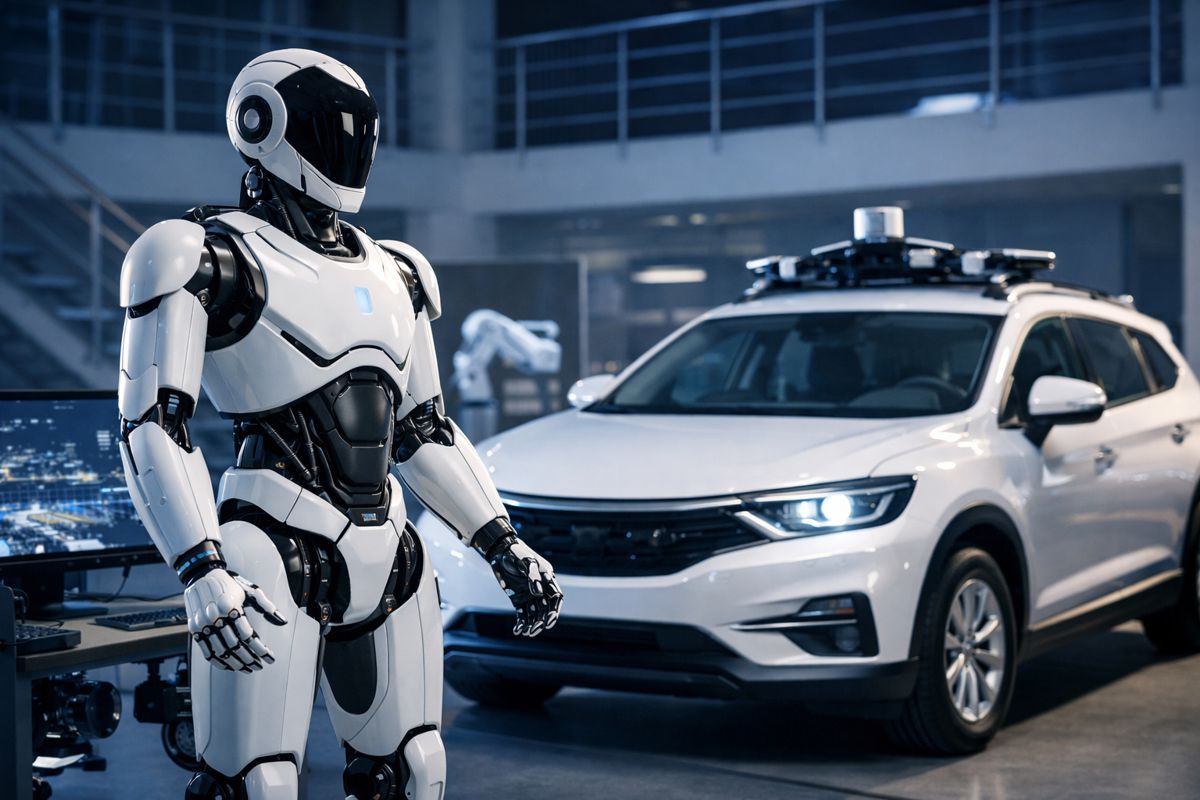
Mobileye’s agreement to acquire Mentee Robotics signals more than a conventional technology acquisition. It represents a deliberate expansion from vehicle autonomy into the wider and far more complex arena of Physical Artificial Intelligence. By bringing together Mobileye’s maturity in automotive-grade AI with Mentee’s humanoid robotics platform, the transaction sets out to bridge two markets that have long evolved in parallel rather than in unison.
Over the past decade, autonomous driving has matured from a laboratory ambition into a commercially credible technology stack. Advanced Driver Assistance Systems have moved into mass production, regulatory frameworks have taken shape, and safety models have been tested at scale. Humanoid robotics, by contrast, has often struggled to cross the divide between impressive demonstrations and economically viable deployment. This acquisition aims to change that balance by applying the discipline, safety culture, and industrialisation experience of automotive autonomy to general-purpose robots designed to work alongside people.
From ADAS Leadership to Physical AI at Scale
Mobileye enters this transaction from a position of strength. Its automotive revenue pipeline now stands at $24.5 billion projected over the next eight years, an increase of more than 40 percent compared with early 2023. That growth reflects strong demand for both advanced vehicle autonomy and core ADAS technologies, validated across multiple global OEM programmes.
Rather than treating humanoid robotics as a distant or speculative bet, Mobileye is positioning it as a logical extension of its autonomy stack. Over recent years, that stack has evolved beyond goal-driven navigation into systems capable of holistic, context-aware and intent-aware reasoning. These same capabilities are essential for robots that must interpret human behaviour, understand shared spaces, and act safely in unpredictable environments. The acquisition therefore broadens the business into Physical AI in general, defined not by novelty, but by systems that can operate reliably and economically in the real world.
Transaction Structure and Timeline
Under the definitive agreement, Mobileye will acquire Mentee Robotics for a total consideration of $900 million, subject to customary adjustments. The structure includes approximately $612 million in cash and up to around 26.2 million shares of Mobileye Class A common stock, with final figures dependent on the vesting of Mentee options prior to closing.
The transaction is expected to close in the first quarter of 2026, subject to standard regulatory and closing conditions. From an operational standpoint, Mentee will continue to function as an independent unit within Mobileye. This structure is designed to preserve the start-up’s pace and culture while giving it access to Mobileye’s global AI training infrastructure, safety frameworks, and production expertise. Operating expenses are expected to rise modestly in 2026, by a low single-digit percentage, reflecting the early integration phase.
Remarkable Progress in Just Four Years
Mentee’s trajectory since its founding has been notably rapid. In four years, the company has designed and prototyped a third-generation humanoid robot platform engineered for scalable deployment rather than one-off demonstrations. Cost efficiency has been a central design principle, with hardware and software developed in tandem to support volume manufacturing rather than bespoke assembly.
At the core of this progress is an AI architecture built around human-to-robot mentoring, few-shot learning, and simulation-first training. Unlike approaches that rely heavily on large-scale real-world data collection or continuous teleoperation, Mentee’s platform is designed to learn from natural demonstrations and intent cues. Over time, this allows robots to acquire new skills incrementally while maintaining predictable and safe behaviour, an essential requirement for environments shared with humans.
A Technology Moat Built on Rapid Learning
Mentee’s humanoids are engineered to deliver robust functionality straight out of the box. This includes advanced scene understanding, natural instruction following, and end-to-end autonomous task execution without teleoperation. Locomotion, navigation, and safe manipulation of rigid objects are treated as baseline capabilities rather than optional modules.
Development is now progressing towards few-shot generalisation, a capability that would allow robots to learn new tasks after only a small number of human demonstrations. If realised at scale, this approach could fundamentally change deployment economics. Instead of lengthy reprogramming cycles, robots could be introduced into new tasks and environments quickly, acting as both labour multipliers and collaborative partners alongside human workers.
Two Pillars Underpinning the Platform
Mentee’s technology advantage rests on two tightly coupled pillars. The first is its scalable AI architecture. The platform integrates advanced foundation models with reinforcement learning based motion models, allowing perception, reasoning, and control to be developed as a coherent whole rather than as loosely connected subsystems.
A defining feature of this approach is simulation-only training supported by technologies designed to minimise the Sim2Real gap. By reducing dependence on large-scale real-world data collection, Mentee accelerates skill acquisition while keeping costs under control. Simulation becomes not just a testing environment, but the primary engine for learning and validation.
The second pillar is deep vertical integration of hardware and embedded software. Critical components are developed in-house, including proprietary actuators optimised for torque density and compact form factors, precision motor drivers that enhance control transparency, and practical robotic hands that use motor-based tactile sensing. Hot-swappable batteries support continuous operation, a practical requirement for industrial environments.
This level of integration supports round-the-clock availability, simplifies maintenance, and underpins cost-effective volume manufacturing. Just as importantly, it reinforces the link between simulation and real-world performance, reducing uncertainty when systems move from development into deployment.
Where Vehicle Autonomy and Humanoid Robotics Converge
Despite serving different markets, autonomous vehicles and humanoid robots face remarkably similar technical challenges. Both must operate reliably in environments designed by humans and for humans. Performance must be consistent, safety must be verifiable, and systems must function efficiently on edge-compute platforms.
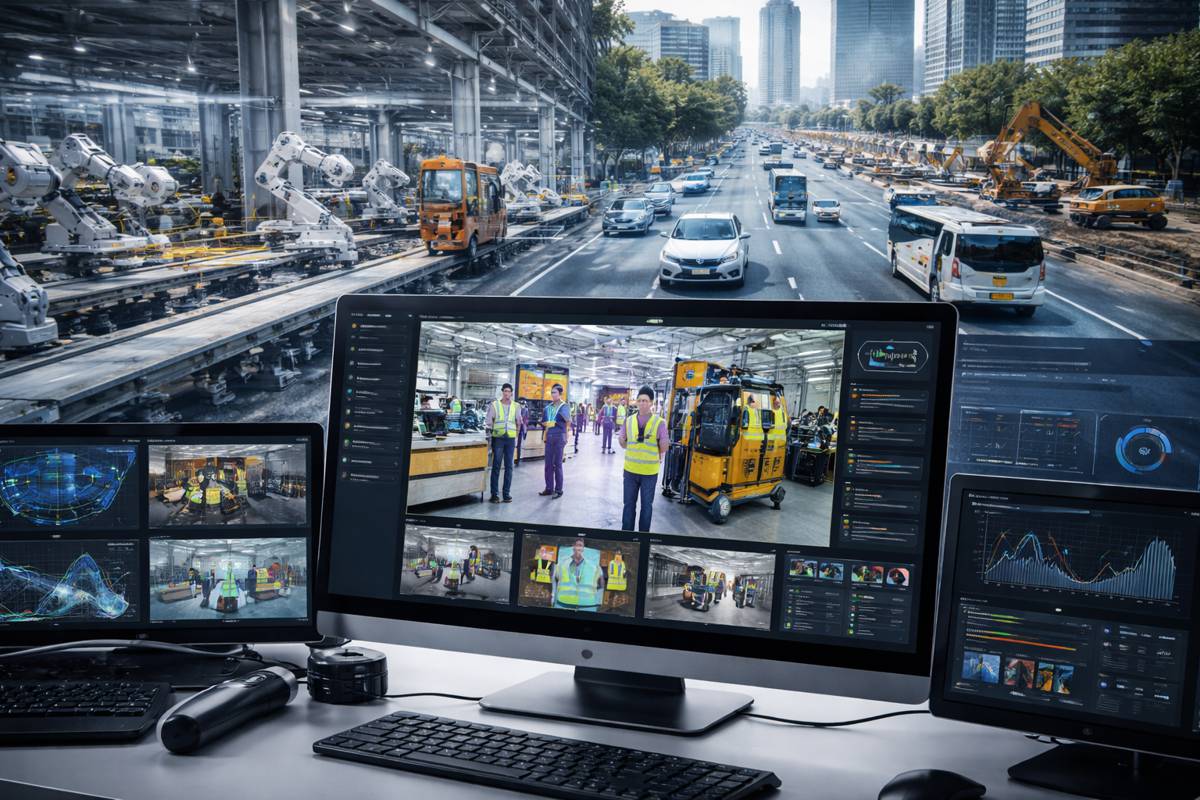
As a result, both domains depend on a shared Physical AI stack. Multimodal perception, world modelling, intent-aware planning, precision control, and decision-making under uncertainty are not domain-specific luxuries, but foundational requirements. Progress in one area can therefore inform and accelerate progress in the other, creating opportunities for compounding innovation.
Strategic Synergies Unlocked by the Acquisition
The integration of Mentee into Mobileye is expected to unlock several strategic synergies. One of the most immediate lies in the autonomy stack itself. Mentee’s work in vision-language-action models and large-scale simulation complements Mobileye’s existing capabilities, particularly in handling long-tail scenarios and adapting to new environments.
These advances have direct implications for autonomous driving, where rare and complex situations often define system safety and public trust. Improved generalisation and faster validation cycles strengthen both robotics and vehicle autonomy development, reducing time to deployment while improving robustness.
Raising the Safety Bar for Humanoids
Safety represents perhaps the most critical point of convergence. Humanoid robots operating near people must go beyond reactive collision avoidance. They need to reason in real time about human intent, shared spaces, movable objects, and fragile surroundings, while producing behaviour that is predictable and auditable.
Mobileye brings a safety-first approach honed in the automotive sector, including formal safety models such as Responsibility-Sensitive Safety, mathematically grounded decision-making under uncertainty, and system-level redundancy architectures validated at scale. Applied to humanoid robotics, these frameworks offer a pathway to defining and verifying safe behaviour in environments far less structured than roads. This foundation is essential for regulatory acceptance and for building the trust required for large-scale commercial adoption.
Accelerating Commercialisation
Beyond technology, Mobileye’s experience in bringing advanced systems to market is expected to accelerate Mentee’s go-to-market strategy. First on-site proof-of-concept deployments with customers are targeted for 2026, with robots operating autonomously rather than through teleoperation. Series production and broader commercialisation are planned for 2028.
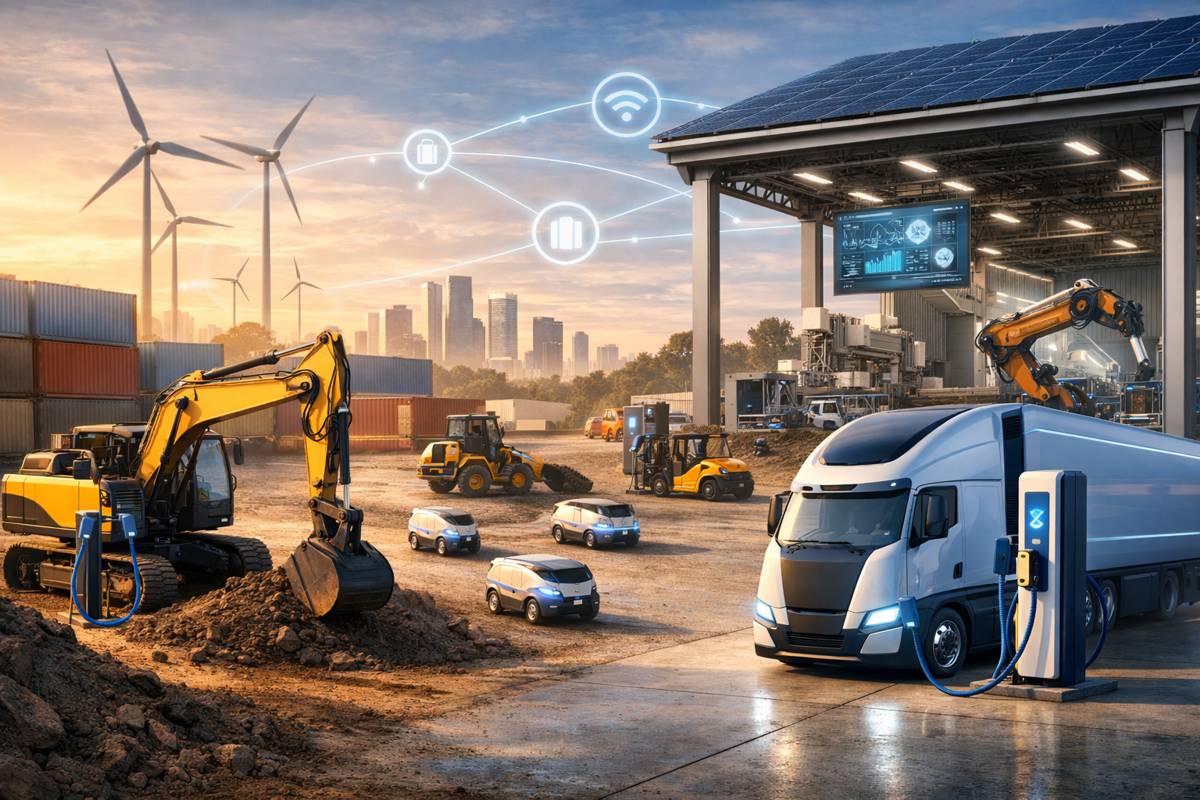
Mobileye’s relationships with high-volume precision manufacturers, combined with its compliance with stringent safety standards, provide an industrial backbone that many robotics start-ups lack. Factories, warehouses, and other industrial environments are likely to be early beneficiaries, where labour shortages and repetitive tasks create clear use cases for humanoid systems.
Leadership Perspectives on a New Chapter
The strategic ambition behind the acquisition is reflected in leadership commentary. Prof. Amnon Shashua, President and CEO of Mobileye, framed the move as a defining moment for the company: “Today marks a new chapter for robotics and automotive AI, and the beginning of Mobileye 3.0. By combining Mentee’s breakthroughs in humanoid robotics with Mobileye’s expertise in automotive autonomy, and its proven ability to productize advanced AI, we have a unique opportunity to lead the evolution of physical AI across robotics and autonomous vehicles on a global scale.”
From Mentee’s perspective, the transaction is positioned as an acceleration rather than an exit. Prof. Lior Wolf, CEO of Mentee Robotics, highlighted both the technical and commercial rationale: “I am immensely proud of what Mentee’s multidisciplinary team has accomplished in just four years. We set out to build a platform that combines cutting-edge AI with deeply integrated hardware to make humanoid robots truly useful in real-world environments. Joining forces with Mobileye gives us access to unparalleled AI infrastructure and commercialization expertise, accelerating our mission to bring scalable, safe, and cost-effective humanoid solutions to market.”
Governance and Independence
The acquisition has been approved by Mobileye’s Board of Directors following the recommendation of a strategic transaction committee composed of independent directors, as well as by Intel, Mobileye’s largest shareholder and sole Class B shareholder. Prof. Shashua, who also serves as Chairman and Co-Founder of Mentee, recused himself from the board’s consideration and approval process, underscoring the governance safeguards applied to the transaction.
Operational independence for Mentee within Mobileye is intended to preserve continuity and focus. At the same time, access to Mobileye’s AI training infrastructure is expected to accelerate integration of software and hardware capabilities, ensuring that early deployments benefit from automotive-grade validation and safety processes.