Oshkosh Corp Showcases Autonomous, AI and Electric Solutions at CES
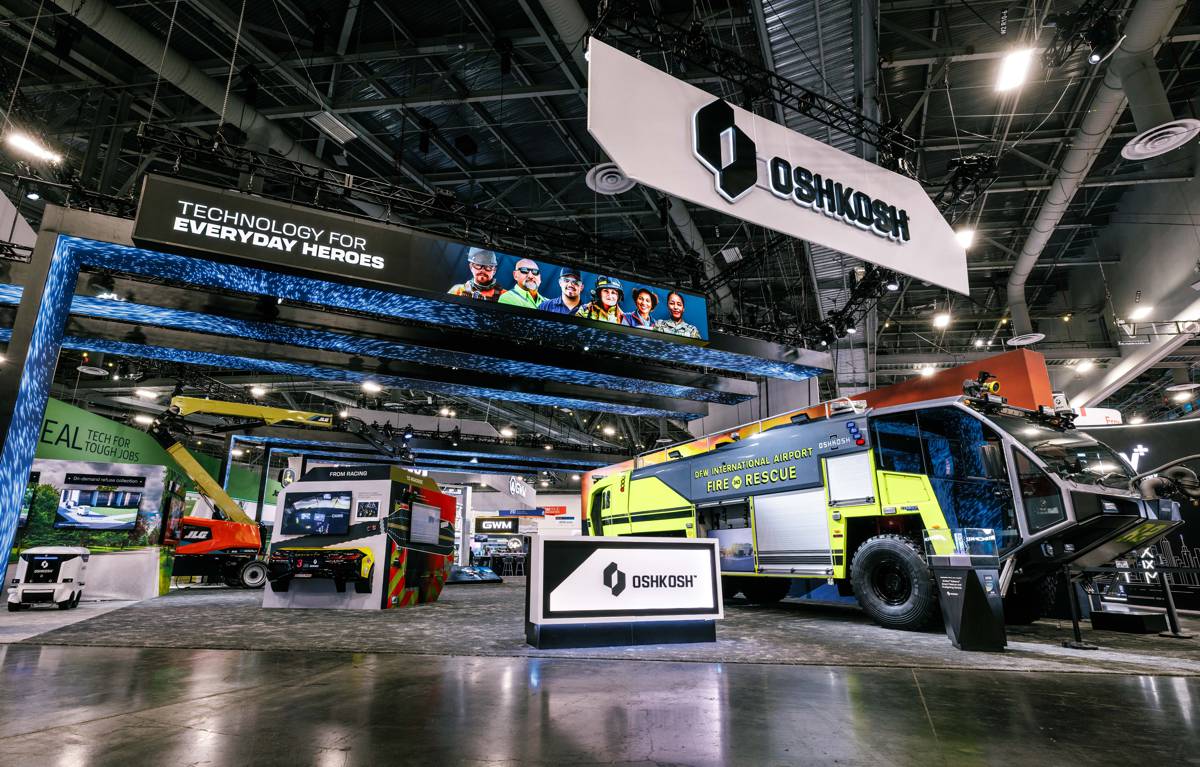
At CES, booth #4418 in the West Hall of the Las Vegas Convention Center became a showcase for how work is evolving across construction sites, neighbourhoods and airports. Oshkosh Corporation used the global technology stage to demonstrate how autonomy, artificial intelligence, connectivity and electrification are no longer future concepts but practical tools reshaping how essential work gets done.
The focus was squarely on what Oshkosh calls everyday heroes. Firefighters, airport ground crews, construction workers, refuse operators, soldiers and public service teams were at the centre of a technology strategy designed to improve safety, productivity and sustainability. Rather than isolated innovations, the company presented an integrated ecosystem where machines, data and people work in concert across demanding environments.
This convergence of technologies reflects a broader shift in heavy industry. Automation is moving beyond pilot projects, AI is becoming operational at the edge, and electrification is proving its worth in high performance, mission critical roles. CES offered Oshkosh the platform to show how those trends translate into tangible benefits on the ground.
Reimagining Safety and Productivity on Construction Job Sites
Construction remains one of the most complex and hazardous industries in the world. Work at height, fragmented workflows and disconnected equipment continue to drive risk and inefficiency. Oshkosh addressed these challenges through its JLG Industries brand, unveiling technologies that move beyond traditional equipment toward autonomous job execution.
The strategy centres on creating an intelligent ecosystem that connects people, equipment, tools and materials. Instead of operators manually positioning machines for every task, connected and autonomous systems take on repetitive or high risk activities, reducing exposure while improving consistency and throughput.
One of the most striking developments was a next generation electric articulated boom lift equipped with an autonomous robotic end effector. This innovation transforms a familiar piece of access equipment into an industrial scale robotic platform. Tasks such as welding, painting, duct installation and material handling can now be performed without an operator working at height. Electrification adds another layer of value, enabling quiet operation in noise sensitive environments and eliminating emissions on enclosed or urban sites.
Recognition followed quickly. The JLG Boom Lift with Robotic End Effector received top honours in the Robotics category at the CES 2026 Innovation Awards and was also named an honouree in the Construction and Industrial Tech category. The awards underline how rapidly construction robotics is moving from concept to credible deployment.
Complementing this approach were micro sized scissor lifts featuring leader follower technology. An operator in a lead lift can guide multiple follower units, moving equipment and materials efficiently across constrained sites. The system also enables autonomous material handling. For example, two lifts can synchronously position an I beam, then notify a nearby boom lift that the component is ready for welding through ClearSky Smart Fleet connectivity. These compact platforms are particularly suited to data centres and other space limited projects where precision and coordination matter.
Accelerating Autonomy Through Construction Robotics
Oshkosh’s vision for the job site of the future has been further strengthened through the acquisition of core technology developed by Canvas. Canvas developed the world’s first robotic drywall finishing system, tackling one of construction’s most labour intensive and physically demanding trades.
The relationship between the two companies began six years ago when Canvas selected a JLG platform as the foundation for its robotic system. Since then, the technology has matured into a flexible end effector platform capable of automating repetitive finishing tasks while delivering consistent, high quality results. By bringing this capability in house, Oshkosh expands its portfolio of intelligent equipment designed to address persistent job site challenges.
This move also reflects a wider industry trend. Labour shortages, rising quality expectations and growing safety pressures are accelerating interest in robotics that can take on repetitive or ergonomically challenging work. By integrating robotics with proven access platforms, Oshkosh is positioning itself at the intersection of automation and practical construction delivery.
Transforming Neighbourhoods Through Intelligent Collection and Safety
Beyond construction sites, Oshkosh is extending its technology roadmap into everyday community environments. Many of the solutions first previewed at previous CES events are now moving into production, particularly in refuse collection and roadside safety.
A major focus has been the challenge of recycling contamination. A significant proportion of materials placed in recycling bins ultimately end up in landfill due to contamination from non recyclable items. Oshkosh’s AI powered contamination detection system addresses this issue at the point of collection.
At CES 2026, the company demonstrated how advanced cameras and on the edge AI processing can scan materials as they are collected. The system detects and classifies contaminants such as plastic bags or textiles in real time and maps them to precise pickup locations. This data provides actionable feedback to municipalities, hauliers and residents, enabling education, behavioural change and improved diversion of materials from landfill.
Autonomous collection is another area where Oshkosh is pushing boundaries. HARR E, the Hailable Autonomous Refuse Robot Electric, was first introduced at CES 2025. Designed for on demand collection, the robot allows residents to request pickups via a smartphone app or virtual assistant.
The latest evolution features a two piece design that simplifies lifting and transfer into central containers. It measures volume and weight at each pickup, alerts operators when containers approach capacity and uses AI optimised routing to serve multiple requests efficiently. Planned communities, campuses, corporate parks, stadiums and even indoor environments such as malls and senior living facilities stand to benefit from this flexible approach.
Protecting Roadside Responders With Predictive AI
Roadside work remains one of the most dangerous environments for emergency and service crews. Oshkosh addressed this risk with its Collision Avoidance Mitigation System, a purpose built AI powered platform designed to anticipate potential collisions.
First introduced at CES 2025, the system has since been field tested with fire departments in major cities. Feedback highlighted the value of an always on layer of situational awareness working in the background. Oshkosh is now scaling the platform to support EMS crews, police officers managing traffic and tow truck operators assisting disabled vehicles. Future enhancements include mobile units that can be rapidly deployed on highways or dark shoulders upon arrival.
Together, contamination detection, HARR E and CAMS illustrate how AI and autonomy can be applied in practical, everyday settings. Rather than abstract concepts, these technologies are designed to solve specific, well understood problems faced by communities and service providers.
Next Generation Airports Powered by Electrification and Robotics
Airports represent some of the most complex operational environments in modern infrastructure. High safety standards, tight turnaround times and growing passenger volumes demand reliable, high performance solutions. Drawing on decades of airport experience, Oshkosh presented two major innovations aimed at transforming airfield operations.
The Oshkosh Striker Volterra Electric Airport Rescue and Firefighting Vehicle stands out as a flagship example of electrification in a mission critical role. Built on the company’s Volterra technology, the vehicle combines zero emission operation with world class firefighting performance. It accelerates a 45 tonne vehicle from zero to fifty miles per hour in under 25 seconds, delivering a significant performance improvement over traditional internal combustion ARFF vehicles while maintaining consistent power delivery.
The Striker Volterra ARFF received top honours in the CES Innovation Awards Travel and Tourism category. Its presence on the show floor also underscored the scale of electrification now possible, with attendees invited to step inside what is expected to be one of the largest vehicles at CES.
Autonomous airport robots formed the second pillar of Oshkosh’s airport strategy. These modular, autonomous machines are designed to assist ground support equipment crews during the critical window between aircraft touchdown and takeoff. Tasks such as setting wheel chocks, connecting ground power and handling repetitive ramp operations can be supported by robots operating reliably in all weather and lighting conditions.
Originally developed for defence applications, the underlying robotic platform combines autonomous mobility, AI driven perception and task configurable hardware. Applied to commercial aviation, it offers flexibility, utilisation and return on investment while helping airlines manage costs, uptime and performance.
A Connected Vision for Everyday Heroes
Oshkosh’s presence at CES highlighted how autonomy, AI, connectivity and electrification are converging across sectors. Rather than isolated innovations, the company is building a cohesive portfolio designed to support those who perform demanding work in challenging environments.
As John Pfeifer, president and chief executive officer of Oshkosh Corporation, put it: “The future is taking shape, now. At CES, we are showcasing our vision of the job sites, neighborhoods and airports of the future and how Oshkosh’s advanced technology empowers everyday heroes with safe, intuitive, productive and clean solutions. Together with our customers, we’re transforming how we live, move and work.”
From robotic construction platforms to AI enabled refuse collection and electrified airport firefighting vehicles, the message was clear. The technologies shaping the future of work are already here, and they are being designed with real world users firmly in mind.
Experience the Future at CES
Visitors to CES can explore these technologies first hand at booth #4418 in the West Hall of the Las Vegas Convention Center.
Demonstrations and discussions offer a glimpse into how intelligent machines, connected systems and clean powertrains are redefining job sites, neighbourhoods and airports around the world.