Ventiva Redefines Thermal Design for the AI Era at CES
Thermal management has quietly become one of the defining constraints of modern computing. As artificial intelligence workloads expand across laptops, edge devices, and hyperscale data centres, heat generation has surged in both intensity and duration. Systems designed for intermittent bursts of activity are now expected to operate at sustained performance levels, often around the clock. Traditional cooling architectures, largely unchanged for decades, are struggling to keep pace.
Against this backdrop, Ventiva has used CES 2026 to introduce its Zoned Cooling reference design, positioning it as a practical response to the new realities of AI-driven computing. Rather than forcing more air through the entire system, the approach focuses on cooling only where it is needed most. CPUs, GPUs, NPUs, memory, and storage components receive targeted airflow, while unnecessary movement of air is eliminated. The result is a more efficient, quieter, and spatially flexible thermal architecture suited to the demands of the AI era.
Why Conventional Cooling Has Reached Its Limits
For decades, electronic systems have relied on a centralised cooling model. Mechanical fans pull air through a chassis, pushing it broadly across components whether they require cooling or not. This approach worked well when workloads were lighter and heat was more evenly distributed. AI has changed that balance entirely. Large language models, on-device inference, and graphics-intensive processing generate concentrated heat loads that overwhelm generalised airflow.
Mechanical fans also impose physical and acoustic penalties. They consume valuable space, introduce vibration, and generate noise that users increasingly find unacceptable. In compact devices such as laptops, these compromises limit design freedom and restrict battery size, storage options, and overall form factor innovation. In data centres, the inefficiency is even more pronounced, with the majority of airflow failing to reach the hottest components at all.
Zoned Cooling as a New Architectural Model
Ventiva’s Zoned Cooling reference design challenges the assumption that cooling must be uniform across a system. Instead, it introduces a modular, zone-based architecture that directs airflow precisely to high-heat components. This spatial precision allows designers to rethink internal layouts, reduce mechanical complexity, and reclaim space previously sacrificed to oversized cooling assemblies.
According to Ventiva, this shift represents more than an incremental improvement. It reframes thermal management as a first-order design consideration rather than a constraint addressed late in development. By treating cooling as a distributed, intelligent subsystem, OEMs and ODMs gain flexibility to optimise performance, cost, and form factor simultaneously.
Leadership Perspective on Design Freedom
Carl Schlachte, Chairman, President, and CEO of Ventiva, described the significance of the approach clearly: “Our Zoned Cooling approach to thermal management represents a meaningful step forward in system design. By cooling only where it’s needed, designers can reclaim valuable motherboard space, simplify internal layouts, and reduce reliance on bulky mechanical components, enabling thinner, quieter devices with fewer tradeoffs while still meeting the thermal demands of AI workloads.”
His comments underline a broader industry shift. Thermal design is no longer a secondary engineering challenge. It is now central to enabling the next generation of AI-capable systems across consumer and enterprise markets.
Laptops and Client-Side Edge Devices Take Priority
The most immediate impact of Zoned Cooling is visible in laptops and client-edge devices. These platforms are evolving rapidly from general-purpose computers into powerful AI machines capable of local inference and advanced graphics processing. Yet mechanical fans have reached practical limits in both performance and adaptability.
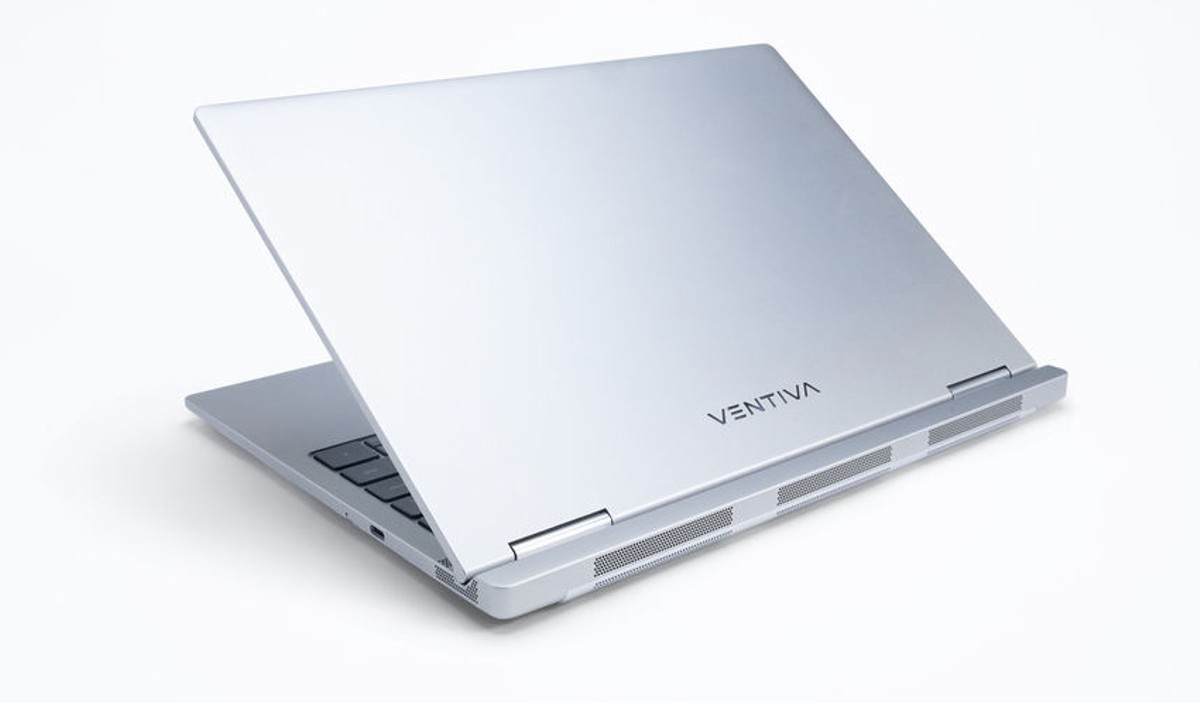
Ventiva’s AI-ready laptop reference design demonstrates how a zone-based approach can remove those limitations. By positioning all vents at the rear of the device and replacing fans with Ventiva’s thermal management subsystem, designers gain a cleaner internal architecture. Noise and vibration are reduced, while airflow is delivered directly to the components generating the most heat.
The benefits for system designers are tangible:
- Up to 7,200 mm² of motherboard space can be reclaimed for batteries, memory, storage, or new features
- Simplified construction reduces system cost and inventory complexity
- Modular thermal components lower total cost of ownership
- Thinner, quieter designs become viable without sacrificing performance
Performance Without Compromise in Thin Designs
Ventiva’s reference platform illustrates that efficiency does not require compromise. Powered by three 62 mm Ventiva modules, the AI-ready laptop supports a 28 W CPU and 44.3 W total platform power within a sub-16 mm chassis. Despite its slim profile, the design accommodates a battery capacity of up to 77 Whr, full 2280 SSD support, and readiness for Microsoft Copilot+ workloads.
The parallel module array and rear-edge venting reduce airflow impedance, improving cooling efficiency while establishing a scalable pathway for future systems. As AI workloads continue to evolve, this scalability becomes essential, allowing manufacturers to adapt without redesigning entire thermal architectures.
Data Centres Face a Different Scale of the Same Problem
While laptops highlight user-facing benefits, data centres reveal the full economic impact of inefficient cooling. In conventional 1U server racks, only around 25 percent of airflow reaches compute components. The remaining 75 percent is expended simply moving heat out of the chassis. Uneven airflow leads to hotspots, triggering thermal throttling that reduces performance precisely when AI workloads demand consistency.
Zoned Cooling introduces precision into this environment. By directing airflow specifically to CPUs, GPUs, NPUs, and other heat-intensive components, systems maintain stable operating temperatures and sustain peak performance levels. Localised cooling also reduces the need for over-provisioned airflow, lowering energy consumption across the rack.
Efficiency Gains and System Longevity
Ventiva estimates that localised cooling can save up to five percent of a server’s overall power budget. While that figure may appear modest in isolation, at scale it represents significant energy and cost savings. More importantly, reducing hotspots limits thermal stress on critical components, extending system lifespan and improving reliability.
Ventiva’s ionic cooling technology plays a central role here. By delivering micro-channelled airflow, it targets emerging hotspots around memory, storage, and accelerators that traditional airflow patterns often miss. The technology also frees chassis space, enabling higher rack densities and new system design possibilities. In data centres exploring hybrid cooling strategies, it can augment liquid cooling solutions rather than replace them, offering flexibility during transition phases.
A Scalable Vision from Edge to Hyperscale
Schlachte emphasised the broader implications of this approach: “AI is rewriting the rules of system design, and thermal architecture is now a first-order design requirement. Our Zoned Cooling design gives designers back the space, efficiency, and flexibility they’ve been losing to traditional cooling methods. It shows what becomes possible when cooling is no longer the limiting factor, and this approach scales from laptops all the way to data centres.”
This scalability is central to Ventiva’s strategy. A single thermal philosophy can now support consumer devices, enterprise systems, and hyperscale infrastructure, reducing fragmentation and accelerating innovation across the ecosystem.
The Technology Behind Zoned Cooling
At the core of Ventiva’s solution is its solid-state ionic cooling technology. Based on the principles of electrohydrodynamic flow, the system moves ionised air molecules through an electric field. Airflow is generated electronically rather than mechanically, eliminating fans altogether.
This approach delivers several advantages. Operation is silent and vibration-free, an immediate benefit for laptops and office environments. The absence of moving parts improves reliability and simplifies integration. Just as importantly, the technology scales easily, allowing multiple modules to operate in parallel or independently depending on system requirements.
Intelligent Control and System-Level Integration
Ventiva’s thermal management subsystem extends beyond hardware. Embedded monitoring continuously adjusts airflow in response to system demands, delivering more or less cooling as required. Advanced algorithms enable real-time optimisation, aligning thermal performance with overall system behaviour.
When combined with broader system monitoring, the solution supports a holistic approach to thermal management. Rather than reacting to temperature spikes after they occur, systems can anticipate and respond dynamically, maintaining efficiency under variable AI workloads.
Enabling a New Era of Design Freedom
Ventiva’s Zoned Cooling reference design arrives at a moment when the industry is actively searching for alternatives to fan-centric architectures. As AI continues to reshape computing, the ability to deliver sustained performance without sacrificing acoustics, efficiency, or form factor has become a competitive differentiator.
By rethinking how and where cooling is applied, Ventiva is not simply improving thermal performance. It is opening new design pathways for OEMs, ODMs, and data centre operators alike. The company’s white paper, Zoned Cooling Unlocking a New Era of System Design Freedom, outlines this vision in greater detail and signals a broader shift in how thermal challenges are addressed across the technology landscape.