PrimeBot Reimagines Personal Robotics at CES
Personal robotics has long promised to step out of laboratories and factory floors, yet for decades that future remained just out of reach. Industrial automation flourished, service robots found niche roles, but individual ownership stayed largely theoretical. PrimeBot has set out to change that narrative. With the global introduction of its Prime personal robot series, the company is advancing a clear and deliberate shift toward robots designed not for deployment, but for living alongside people, adapting over time and growing through shared experience.
At its core, PrimeBot’s vision challenges the prevailing robotics model. Instead of closed, task specific machines optimised for a single function, Prime robots are conceived as long term companions shaped by their owners. This approach positions robotics as a personal technology, closer in spirit to computing or creative tools than to industrial equipment. The result is not simply a product launch, but a reframing of what ownership means in the age of embodied intelligence.
A Market Moment for Personal Robots
The timing of PrimeBot’s debut is no accident. Advances in miniature actuators, force control, edge AI, and open source development frameworks have converged to make personal robotics viable at scale. While humanoid robots have attracted intense media attention in recent years, most remain either research platforms or corporate demonstrations with limited accessibility. PrimeBot’s approach addresses that gap directly by designing for individual users from the outset.
That intent was underscored with the launch of Prime Q1 across major Chinese platforms on December 31, where media coverage described the release as a meaningful inflection point for the humanoid robotics sector. Commentators pointed to its compact force controlled joints, portable full body form factor, and open co operative creation system as evidence that robotics was finally moving toward personal ownership rather than institutional control.
Open Co Creation as a Design Philosophy
Central to the Prime series is an open co creation architecture. Rather than sealing hardware and software behind proprietary layers, PrimeBot has built its robots as adaptive embodied systems. Owners are encouraged to participate in shaping aesthetics, interaction patterns, and functionality over time. In practice, this turns robotics ownership into an ongoing creative process rather than a static purchase.
This philosophy aligns with broader trends in open hardware, maker culture, and modular design that have reshaped other technology sectors. By allowing users to modify components, experiment with behaviours, and extend capabilities, PrimeBot positions its robots as platforms for exploration. The robot does not arrive finished in a definitive sense. It evolves alongside its owner, learning from interaction and adapting through updates and personalisation.
The Prime Series Takes Shape
The global debut of the Prime series introduces two distinct personal robots, each reflecting a different user journey. Prime Q1 and Prime T1 are not variations of the same product, but complementary expressions of a shared vision. Together they provide an entry point into personal robotics that spans deep creation, everyday usability, and long term exploration.
This dual launch strategy recognises that personal robotics is not a single use case. Some users want to build, experiment, and push technical boundaries. Others want a robot that integrates seamlessly into daily routines. By addressing both ends of that spectrum, PrimeBot broadens the appeal of personal robots without diluting its core philosophy.
Prime Q1 and the Compact Humanoid Frontier
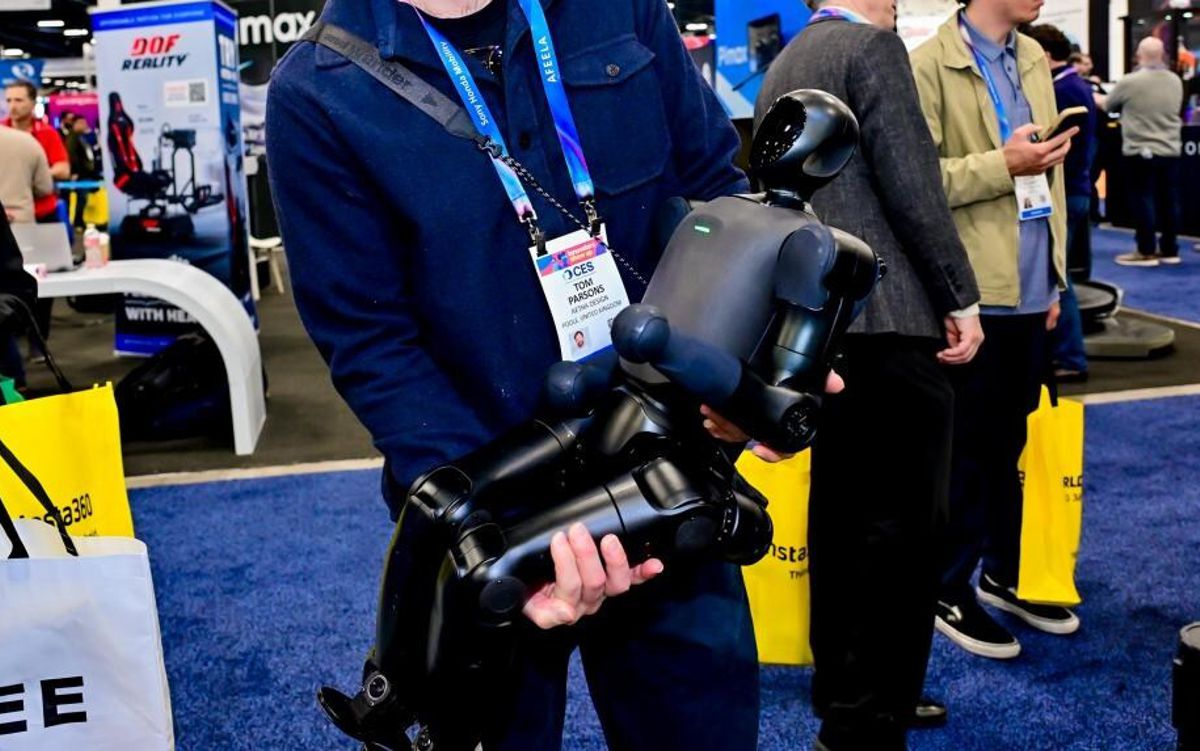
Prime Q1 represents the most concentrated expression of PrimeBot’s approach to embodied intelligence. Described as the world’s smallest full body force controlled humanoid robot, it compresses advanced motion, intelligence, and playability into a remarkably compact form. The design prioritises expressiveness and control rather than sheer scale, enabling nuanced interaction within a portable footprint.
Targeted at developers, educators, and technology enthusiasts, Prime Q1 functions as an embodied intelligence creation platform. It moves beyond the idea of a novelty gadget and into the realm of practical experimentation. Use cases span research environments, classrooms, and domestic settings, where its size makes it approachable without sacrificing capability.
Despite its small stature, Prime Q1 supports expressive full body motion and emotionally responsive interaction. Modular components allow owners to reconfigure hardware, while optional 3D printed shells open the door to aesthetic experimentation. Behavioural customisation runs deep, enabling users to define personality, interaction style, and functional focus from the ground up. In this sense, Prime Q1 behaves less like a finished product and more like a living project.
Embodied Intelligence for Learning and Companionship
One of the most compelling aspects of Prime Q1 lies in its emphasis on real world scenarios. Rather than focusing solely on technical demonstrations, PrimeBot positions the robot as a companion capable of participating in learning, play, and family life. This reflects growing research interest in socially interactive robots that support education, emotional engagement, and long term human robot relationships.
By combining force controlled motion with adaptive behaviour, Prime Q1 offers a tangible way to explore how embodied intelligence develops over time. For educators, it provides a hands on platform for teaching robotics, AI, and human machine interaction. For enthusiasts, it becomes a canvas for experimentation. For families, it introduces robotics in a form that feels personal rather than intimidating.
Prime T1 and the Shape Shifting Robot
While Prime Q1 focuses on creation and experimentation, Prime T1 is designed for everyday life. Marketed as the world’s first consumer grade transformable robot, it addresses a different set of needs centred on mobility, interaction, and lifestyle integration. Its defining feature is a user defined form that can adapt to varied environments.
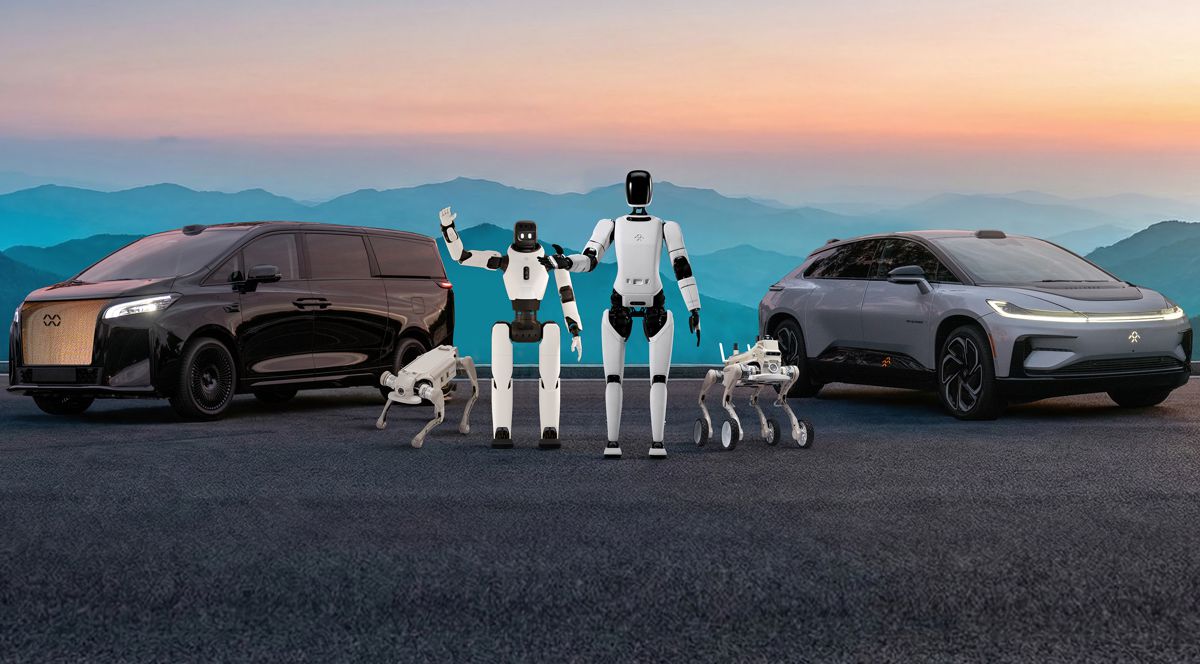
Prime T1 transitions seamlessly between a wheeled humanoid configuration for efficient indoor movement and a bionic quadruped form suited to outdoor traversal. This includes navigating stairs and steep inclines, environments that challenge many consumer robots. The transformable design is not a gimmick but a practical response to the fragmented spaces of modern life.
Living With a Robot That Adapts
Beyond mobility, Prime T1 incorporates cinematic motion control and intelligent visual tracking. These capabilities support dynamic follow shots and immersive scene capture, positioning the robot as a creative partner for content creators and families alike. Multimodal interaction enables communication through voice, movement, and visual cues, while contextual awareness allows the robot to respond appropriately to its surroundings.
Long term memory further distinguishes Prime T1 from conventional consumer robots. Rather than resetting with each interaction, it builds a persistent understanding of routines and preferences. Over time, this allows the robot to participate more naturally in daily life, reinforcing the idea that personal robots should grow with their owners rather than remain static tools.
Redefining Robotics Adoption
Taken together, Prime Q1 and Prime T1 establish a new model for how robots enter everyday life. Instead of requiring users to adapt to rigid systems, PrimeBot’s robots adapt to users. This balance between deep creation and immediate accessibility addresses one of the long standing barriers to robotics adoption: complexity.
At CES 2026, PrimeBot’s presence signals more than a product unveiling. It represents a statement about the future direction of the industry. By framing robots as personal, ownable, and evolvable, the company challenges manufacturers to rethink design priorities and user relationships. The implication is clear. Robotics does not have to remain the domain of factories and institutions.
A Mission Grounded in Everyday Impact
PrimeBot’s stated mission is to create a better life through embodied intelligence, with the goal of enabling everyone to have a robot. This ambition aligns with broader societal conversations about how intelligent systems integrate into daily routines without displacing human agency. By focusing on co creation rather than automation alone, PrimeBot positions its technology as augmentative rather than disruptive.
The company’s outlook emphasises collaboration between humans and intelligent entities. Personal robots are not presented as replacements for human effort, but as companions and tools that enrich experience. In that sense, PrimeBot’s vision reflects a measured and pragmatic understanding of robotics’ role in society.
Personal Robotics Look Ahead
As personal robotics continues to evolve, platforms that prioritise openness, adaptability, and long term engagement are likely to shape the market. PrimeBot’s approach suggests that success will not be defined solely by technical specifications, but by how naturally robots fit into human lives.
With the Prime series, PrimeBot has laid down a marker. Personal robotics is no longer a distant aspiration. It is an emerging category defined by ownership, creativity, and shared growth. For an industry long dominated by industrial priorities, that shift may prove to be the most significant innovation of all