QwikOS Launches Universal Operating System for Humanoid Robotics
QwikOS has arrived at a pivotal moment for humanoid robotics, unveiling what it calls the world’s first universal operating system and app store for humanoid robots. The platform aims to bridge a long standing divide in the industry, namely the fragmentation of robot software that has forced developers to commit to closed and proprietary ecosystems. Available on iOS and Android, QwikOS delivers a hardware agnostic environment for robot owners and creators, promising to simplify discovery, deployment and monetisation of robot features across diverse hardware platforms.
For industry professionals and investors, the launch signals a shift toward greater interoperability and scalability in robot applications. Where manufacturers have historically locked customers into proprietary stacks, QwikOS proposes a unified interface that sits above those systems. In effect it introduces a common language for humanoid robots that could accelerate commercial adoption and reduce development friction across industries.
Solving Software Fragmentation in Robotics
The modern humanoid robotics sector has matured rapidly, yet software remains deeply fragmented. Each hardware manufacturer typically maintains its own SDKs, development tools and application frameworks. That fragmentation makes it expensive for developers to port capabilities between platforms and difficult for users to benefit from a growing software ecosystem.
QwikOS addresses this problem by standardising the user experience while leaving low level robot behaviour under the control of each manufacturer’s SDK. In practice this means a feature developed once can be deployed across multiple humanoid platforms without rewriting the entire application stack. This model mirrors what mobile operating systems achieved for smartphones, where shared platforms unlocked massive innovation.
Universal Hardware Compatibility
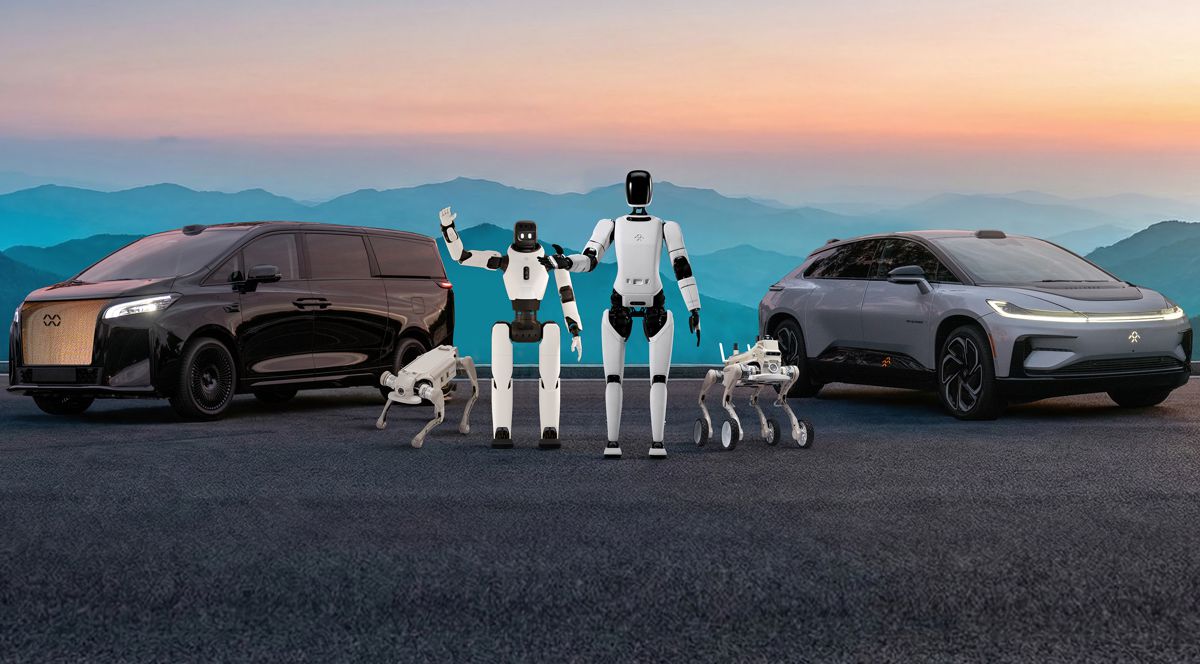
QwikOS integrates with any humanoid robot that exposes an open software development kit. It has already completed production validation on the Unitree Robotics G1 EDU models and is currently the only third party operating system supporting the full G1 series. Beyond Unitree, QwikOS lists compatibility with Pollen Robotics, Booster Robotics, Agibot Tech, MagicLabs Robotics, EngineAI and LimX Dynamics.
That breadth is strategically important. As more humanoid platforms enter the market, the ability to support multiple vendors through one interface becomes a commercial advantage. Organisations deploying robots in construction, logistics or inspection environments can mix and match hardware while retaining consistent software control.
The QwikOS App Store
At the core of the platform sits the QwikOS App Store. It is positioned as the industry’s first universal marketplace for humanoid robot capabilities. Developers can publish features that extend what robots can do, from motion behaviours to AI powered task execution.
For robot owners, this creates a consumer style discovery model. Instead of relying on vendor specific firmware updates or custom development, new capabilities can be browsed, installed and configured from a single interface. This lowers the barrier to experimentation and speeds up real world deployment.
Developer Monetisation and the Platform Economy
QwikOS also introduces a monetisation layer for developers. Through its developer console, creators can submit software across multiple hardware platforms from one portal. The App Store supports paid features, licensing models and commercial distribution, enabling developers to earn revenue directly from adoption.
This economic layer is more than a convenience. It aligns incentives between developers and users, encouraging continuous improvement and long term maintenance of high quality robot features. For investors and enterprise buyers, this signals the emergence of a sustainable robotics software economy rather than one off experimental deployments.
Integrations and Extended Capabilities
The platform supports integrations with third party technologies, including large language models such as ChatGPT and external hardware like VR headsets. These integrations allow organisations to extend humanoid capabilities using existing digital ecosystems while presenting them through a single control interface.
This convergence of physical robotics and AI driven software reflects a broader trend in industrial automation. As embodied AI becomes more capable, software layers that unify intelligence, perception and motion will become as valuable as the hardware itself.
Positioning in the Robotics Landscape
QwikOS enters a market shaped by open source frameworks such as ROS, which has long provided middleware for robot development. While ROS focuses on tools and communication between components, QwikOS focuses on application deployment and commercialisation.
The two approaches are complementary. QwikOS builds on the reality that developers already rely on open SDKs and middleware, but need a higher level platform to distribute, monetise and manage applications at scale. If widely adopted, it could become the commercial layer of the humanoid robotics stack.
From Research Labs into Real Work Environments
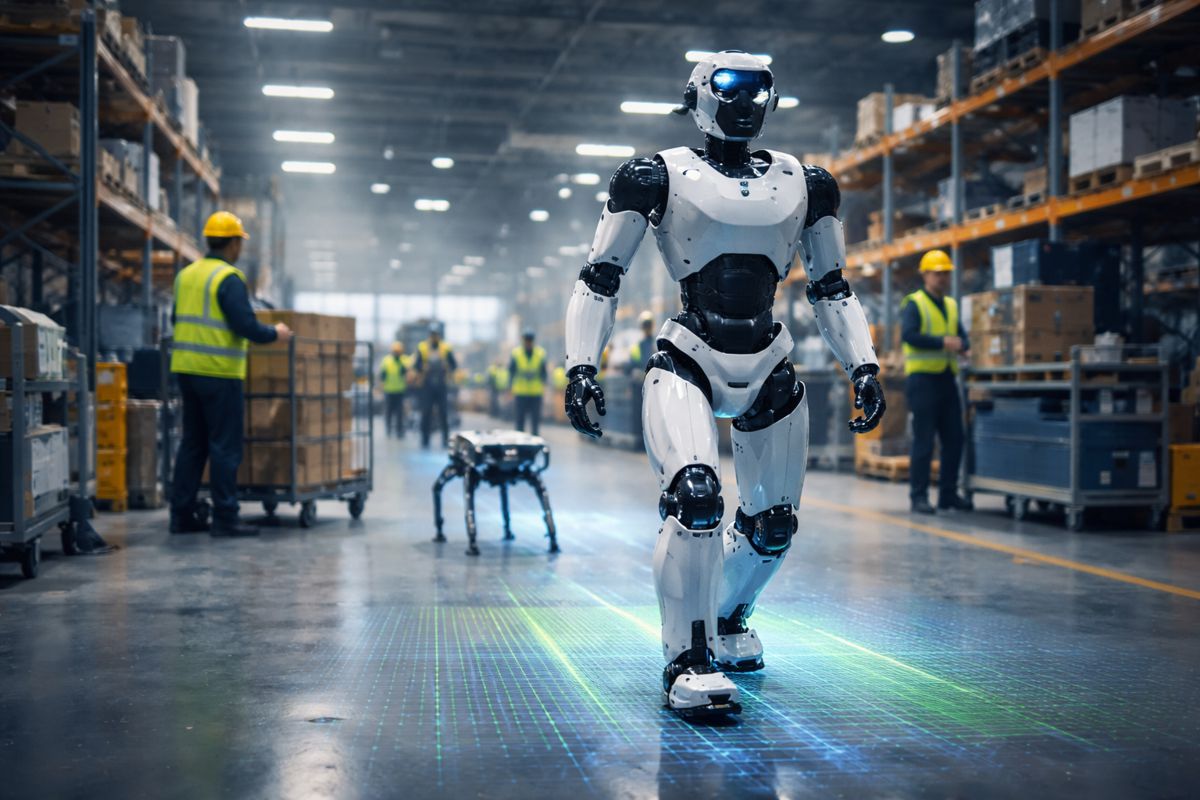
For construction, infrastructure and logistics operators, humanoid robots are moving from research labs into real work environments. Software fragmentation has been one of the main brakes on that transition. A universal operating system reduces training costs, simplifies fleet management and allows organisations to upgrade capabilities without replacing hardware.
From an investment perspective, QwikOS represents the emergence of platform economics in humanoid robotics. Hardware margins are likely to compress over time, but software ecosystems tend to generate durable recurring revenue. A universal OS creates a foundation for that shift.